
Key takeaways
- Average feet: usual size per reviewers.
- Wide feet: consider half a size up, particularly for the narrower toebox.
- Lateral movement: the rubber side wrap Nike describes is meant to keep the foot on the sole, so take time to lace the shoe securely before side-to-side drills.
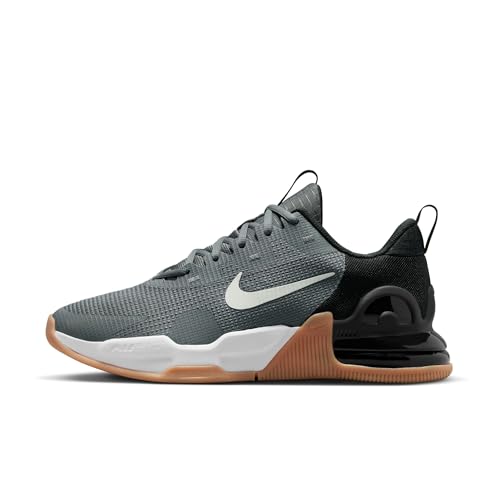
The Nike Air Max Alpha Trainer 5 is best for general gym work, light to moderate lifting, circuit-style classes and casual gym-to-street wear, and it is a poor pick for serious powerlifting, running or hot, high-volume sessions. Nike describes it as a men’s workout shoe with a heel Max Air unit and a wide, flat base for stability. RunRepeat scores it as decent overall, noting a heavy build, a high drop, poor breathability and a toebox that scuffs through easily.
Our top picks


As an Amazon Associate we earn from qualifying purchases at no extra cost to you.
What the Alpha Trainer 5 Is
Nike’s page pitches the shoe as helping you finish the last rep with power, with Max Air cushioning giving comfortable stability for lifting on a light or heavy day. A wide, flat base is listed for stability and grip, and a foam midsole carries a Max Air unit at the heel. Nike adds a foam collar, an enhanced rubber tread pattern, rubber that wraps up the side to hold the foot on the sole during lateral movement, forefoot flex grooves designed for lunges, a durable breathable mesh upper and a heel pull tab.
The model is the fifth generation in the Alpha Trainer line, and Nike has since released the Air Max Alpha Trainer 6, so the Alpha Trainer 5 is now a previous generation, as are earlier versions such as the Alpha Trainer 4. RunRepeat’s review of the Alpha Trainer 6 reports a similar heavy, high-drop build (about 373 g and an 11 mm drop), so much of the guidance below also applies to the newer shoe, though measurements differ slightly between generations. Remaining Alpha Trainer 5 stock and colourways vary by region.
At a Glance
| Item | Detail | Source |
|---|---|---|
| Category | Gym and cross-training shoe | Nike |
| Cushioning | Foam midsole with heel Max Air unit | Nike |
| Weight | About 13.8 oz (392 g) measured | RunRepeat |
| Heel and forefoot stack | About 36.2 mm and 24.2 mm, a drop of about 12 mm | RunRepeat |
| Fit | True to size, narrower toebox | RunRepeat |
| Breathability | Rated low | RunRepeat |
| Toebox durability | Rated low | RunRepeat |
| Best for | General gym, light lifting, classes | Reviewers |
| Limits | Not for advanced lifting or hot sessions | Reviewers |
The shoe is sold in men’s and women’s-targeted listings in some regions, and colourways rotate. Nike also notes it is made in Indonesia on its product page. Specs such as stack and weight come from RunRepeat’s measurements, not Nike.
Gym Use, Stability and Lifting
RunRepeat gives the shoe an overall score in the decent range, with a lifting sub-score slightly above its cross-training score. Its review says the shoe is not designed for heavy lifting but provides moderate stability. Torsional rigidity is stiffer than average, and the midsole is wide at the heel (about 87.8 mm) and forefoot (about 110.1 mm). Smart Selects calls it suitable for weightlifting and cross-training but not for heavy lifting or serious powerlifting.
The key point is the heel. With about a 12 mm drop and a Max Air unit, the shoe sits less grounded than a flat trainer. One reviewer found it less planted than Metcons for max-effort deadlifts and squats. For moderate loads, machine work, dumbbells and general fitness, reviewers find it stable enough. For heavy squats and maximal pulls, many lifters prefer a flatter, firmer shoe.
For cardio, RunRepeat’s sub-score is the lowest of the three, partly because of weight and warmth. The shoe runs warm, so long cardio sessions may feel hot. It is not intended for running distances.
Fit and Sizing
RunRepeat reports the shoe runs true to size with average forefoot width but a narrower toebox. People with wide feet may benefit from sizing up half a size, a view Smart Selects repeats. Nike’s size charts should be your reference for length, and the shoe’s heel pull tab helps with entry.
- Average feet: usual size per reviewers.
- Wide feet: consider half a size up, particularly for the narrower toebox.
- Lateral movement: the rubber side wrap Nike describes is meant to keep the foot on the sole, so take time to lace the shoe securely before side-to-side drills.
Durability and Care
This is the shoe’s weakest area according to RunRepeat, which rated toebox durability very low and reported holes forming under its abrasion check. RunRepeat’s pros list a durable outsole, though. The takeaway is that rope climbs, burpees and toe drags may wear through the upper before the outsole wears out. Heavy abrasion workouts are the main risk.
Care steps that stay conservative:
- Remove laces and insoles, and let the shoes air out after each session.
- Brush off chalk and dirt with a soft brush.
- Test mild soap and lukewarm water on a hidden spot, then wipe the mesh gently.
- Air dry in a ventilated space away from direct heat; avoid dryers.
- No bleach, and never mix cleaning products.
Because the shoe runs warm, drying it fully between sessions helps manage odour. Rotating with a second pair gives the foam time to recover.
Breathability, Weight and Comfort Over a Session
RunRepeat measured the shoe at about 392 g and called it a heavy training shoe, a result of the substantial cushioning stack. Its breathability rating is below average, and the review says the shoe is less breathable than most trainers and unsuitable for hot gym environments. That matters most in long circuits, warm studios and summer sessions. In cooler or air-conditioned gyms, and for shorter sessions built around sets and rest periods, the heat is less of an issue.
On the plus side, RunRepeat lists smooth transitions and an appealing design among the strengths, and says the shoe delivers good value for the money in its category. The wide, flat base and side-wrapping rubber that Nike describes are meant to keep the foot planted during lateral work, and the flex grooves under the forefoot are intended to let the shoe bend for lunges. Reviewers who use the shoe for mixed workouts say it handles a bit of everything adequately without excelling at any single task.
The high drop is useful to understand before you buy. A drop of about 12 mm, as measured by RunRepeat, tilts the body slightly forward compared with a flat trainer. Some lifters like that heel lift for squatting comfort, while others prefer a flat platform. Research on how drop affects lifting form is limited and individual, so if you have joint pain or mobility concerns, a physiotherapist or coach can give personalised advice.
Pick the Alpha Trainer 5 If…
| If you… | Then… |
|---|---|
| Do general gym work with machines and dumbbells | It offers a stable, cushioned base |
| Want one shoe for the gym and casual wear | The Air Max styling suits both |
| Lift heavy or compete in powerlifting | Choose a flatter, firmer lifting shoe |
| Do rope climbs or lots of toe drag | Expect upper wear; consider a sturdier trainer |
| Train in a hot gym | Look for a more breathable shoe |
| Run for fitness | Use a running shoe |
How It Compares With Alternatives
Nike Metcon
RunRepeat’s review names the Metcon series as preferable for serious lifting with better durability. Metcons use a flatter, firmer platform, so squats and deadlifts feel more planted. The trade-off is less cushioned comfort for casual wear.
Nike Free Metcon
The Free Metcon is a hybrid aimed at workouts that mix lifting with more movement and flexibility. Nike positions it between a flexible trainer and a Metcon. It suits mixed sessions better than the Alpha Trainer’s heel-cushioned build, though Nike’s Free Metcon line has moved on to newer numbers, including the Free Metcon 7 per RunRepeat.
Nike MC Trainer 3
RunRepeat lists the MC Trainer 3 as roughly 100 g lighter, which suits classes and cardio-heavy workouts.
Reebok Nano X3
RunRepeat says the Nano X3 offers superior toebox durability, which matters for rope-climb and abrasive training. Reebok has since released newer Nano versions, such as the Nano X5, so the X3 is also a previous generation.
Style and Everyday Use
Because the shoe borrows the Air Max name and a visible-style heel unit, many buyers also use it as a casual sneaker. Nike lists several colourways, including black and white options and tones with gum-style soles. The stiff, wide base makes it feel planted for walking, though the weight and warmth mean it is less suited to hot-weather daily wear than a lighter lifestyle shoe. As a gym-to-street option for cooler climates, it fits the brief.
Who Should Skip It
Skip the Alpha Trainer 5 if you need a lightweight shoe, a breathable upper, a flat lifting platform or a trainer for abrasive workouts. If you have a wide forefoot, try before committing.
Frequently Asked Questions
Is the Nike Air Max Alpha Trainer 5 good for lifting?
For light to moderate lifting, reviewers find it stable. RunRepeat says it is not designed for heavy lifting, and Smart Selects does not recommend it for serious powerlifting.
Can I run in the Alpha Trainer 5?
It is a gym shoe, not a running shoe. At about 392 g and warm-running, reviewers do not position it for distance running.
Does it run true to size?
RunRepeat says true to size with a narrower toebox. Wide-footed lifters might consider half a size up.
How durable is it?
The outsole is described as durable, but RunRepeat rated the toebox upper poorly after abrasion checks. Avoid heavy toe-drag workouts if you want it to last.
How does it differ from the Metcon?
Metcons have a flatter, firmer platform and are favoured for serious lifting. The Alpha Trainer 5 has a heel Max Air unit and a higher drop, giving a more cushioned feel.
How do I clean it?
Brush off dirt, test mild soap on a hidden spot, wipe gently and air dry away from heat. Avoid bleach and do not mix cleaners.







