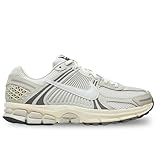
Key takeaways
- RunMorph and other reviewers describe the Structure 26 as moderate to narrow in fit. Runners with wider feet should look at Nike’s wide option where it is offered.
- Nike’s size chart, plus a try-on late in the day, remains the best baseline. Leave about a thumb’s width of room at the toe.
- If you wear orthotics, remove the stock insole and check that the footbed volume still allows a secure heel.
- Judge the Structure Plus separately: tall sidewalls change how the midfoot feels, and reviewers disagree about how intrusive they are.
The Nike Structure is Nike’s stability-leaning daily trainer, and it suits runners who want guided, supportive cushioning for easy and steady miles rather than a light, fast shoe. The current numbered model is the Structure 26, and Nike also lists the newer Structure Plus, which uses ZoomX foam for a softer feel.
Our top picks

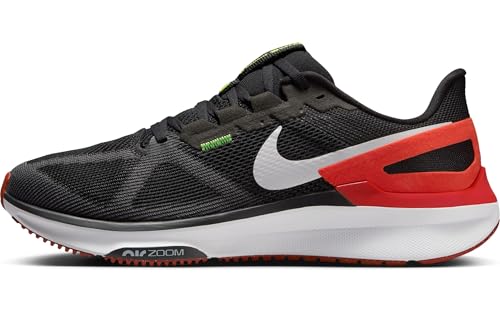


As an Amazon Associate we earn from qualifying purchases at no extra cost to you.
Nike Structure at a Glance
| Model | Best for | Key stated specs | Limits reviewers mention |
|---|---|---|---|
| Structure 26 | Everyday miles with moderate support | Full-length ReactX midsole with guiderail-style side support; advertised 10 mm drop, 38 mm heel and 28 mm forefoot stack; reviewers report roughly 10.4 to 11.3 oz (294 to 320 g) in men’s sizes | Heavy; limited energy return; moderate to narrow fit; mixed forefoot durability reports |
| Structure Plus | Runners wanting plusher support | ZoomX midsole in a ReactX carrier with tall sidewalls; reviewers cite a 42 mm heel, 32 mm forefoot, 10 mm drop; about 10.8 oz (309 g) in men’s US 9 | Bulky; some find the midfoot sidewall intrusive; dated 10 mm drop |
| Structure 25 (previous generation) | Reference point only | Had a ZoomX forefoot pod, per Doctors of Running | Firmer than the 26, per the same reviewer |
What “Stability” Means Here
Stability shoes aim to limit excessive inward or outward movement of the foot through design features such as wider bases, firmer medial foam or raised sidewalls. In the Structure 26, reviewers describe a guiderail-style approach: the foot sits within raised edges on both sides rather than on a rigid medial post. RTINGS rated the shoe’s stability highly and said the side support keeps the foot from rolling inward or outward without feeling overly intrusive.
A word on evidence. Running-shoe categories such as neutral and stability are marketing and design shorthand. Research on whether choosing a stability shoe based on pronation reduces injury is limited and mixed, and comfort is often treated as the more practical guide. If you have recurring pain, a podiatrist or physiotherapist can assess your feet and running mechanics far better than a shoe label can.
Structure 26: Cushioning and Ride
Doctors of Running and RunMorph both note that the 26 uses a full-length ReactX midsole and dropped the ZoomX forefoot pod found in the Structure 25. Doctors of Running describes the result as a softer forefoot and a solid upgrade over the 25. RTINGS rated energy return low, which fits the shoe’s positioning as an easy-day trainer rather than a racer.
The weights reviewers publish vary: Doctors of Running lists 11.3 oz (320 g) for men’s size 10 and 9.2 oz (261 g) for women’s size 8, while RTINGS measured about 294 g. RunMorph calls the combination of 320 g and a 10 mm drop dated beside recent competitors. RTINGS measured the drop at about 8.5 mm against the advertised 10 mm, a gap that is common between lab measurements and brand listings.
Structure Plus: What Changed
The Structure Plus, released in January 2026 according to lineup reports, is described as the first Structure to use ZoomX. Reviewers at Doctors of Running describe it as a moderate-to-high stability shoe and the most stable Nike has offered in years, mostly because of tall medial and lateral sidewalls around the ZoomX layer. T3 describes the support as subtle rather than restrictive, and Road Trail Run’s reviewers describe adaptable guidance that is not posted or overly firm.
Criticisms are also on record. Believe in the Run flagged an intrusive midfoot sidewall for flatter feet and a stiff forefoot, and Doctors of Running reported pressure in the medial arch and lateral heel plus a clunky heel transition. Several reviewers say ZoomX makes the shoe plusher without making it especially bouncy.
Fit and Sizing
- RunMorph and other reviewers describe the Structure 26 as moderate to narrow in fit. Runners with wider feet should look at Nike’s wide option where it is offered.
- Nike’s size chart, plus a try-on late in the day, remains the best baseline. Leave about a thumb’s width of room at the toe.
- If you wear orthotics, remove the stock insole and check that the footbed volume still allows a secure heel.
- Judge the Structure Plus separately: tall sidewalls change how the midfoot feels, and reviewers disagree about how intrusive they are.
Durability and Care
RunMorph reports mixed forefoot durability for the Structure 26. Stability shoes with guiderails and dense foam often show wear on the lateral heel and forefoot first, so check the outsole every few weeks. As a general rule of thumb in running guides, daily trainers lose their midsole feel after several hundred miles; that is a guideline and not a Nike statement.
- Brush off dry dirt first, then use a soft cloth with mild soap and lukewarm water. Test on a hidden spot.
- Do not use bleach, do not mix cleaners, and ventilate the room.
- Skip the machine washer and tumble dryer; air dry away from heat.
- Replace insoles only with ones that keep the shoe’s fit and support balance.
Comparison with Alternatives
| Shoe | How it differs | Choose it over the Structure if |
|---|---|---|
| Nike Pegasus 42 | Neutral, ReactX with Air Zoom, more versatile | You do not need extra guidance and want a lighter all-rounder |
| Nike Vomero 18 | Neutral max-cushion trainer | You want maximum softness and no guiderails |
| Brooks Adrenaline GTS | Long-running stability trainer from a rival brand | You want a familiar guiderail design with a long track record |
| Asics Gel-Kayano | Cushioned stability option from a rival brand | You want a structured, supportive ride with a different feel underfoot |
Runners often compare the Structure 26 to the Pegasus because both are daily Nike shoes with ReactX. The practical difference is that the Structure adds wider sides and a firmer, more guided ride, while the Pegasus is lighter and more flexible. Lineup guides also note that the older Infinity Run 4 maps to either the Vomero 18 or the Structure 26 depending on whether you want cushion or support.
Pick the Right Structure
| Pick this if… | Choose |
|---|---|
| You want moderate, unobtrusive support at an everyday pace | Structure 26 |
| You want the softest stability option Nike offers | Structure Plus |
| You have a wide foot | Check wide-width availability before choosing either |
| You want a light shoe for varied paces | Pegasus 42 instead |
| You like a low drop | Look beyond the Structure; both versions use about 10 mm |
Who Should Skip It
Runners who want a light, responsive shoe, who prefer lower drops, or who find sidewall-based support uncomfortable under the arch should skip it. Those with a wide forefoot should be careful, since the 26 fits moderate to narrow according to RunMorph. Anyone choosing a shoe to treat pain should speak to a podiatrist or physiotherapist first, because the evidence that stability shoes prevent or fix injuries is limited.
How to Decide Between Neutral and Stability
Many runners pick a stability shoe because someone told them they overpronate. Pronation, the natural inward roll of the foot after landing, is a normal part of running, and the research linking how much you pronate to injury is limited and inconsistent. Several reviewers of the Structure line, including those at Doctors of Running and T3, describe the shoe in terms of feel: wide base, supportive sides, steady ride. That is a more useful lens than a label.
A practical approach is to try one neutral and one stability shoe in the same cushion class, for example the Vomero 18 and the Structure Plus, and see which feels more natural on a short jog. If a shoe feels pushy under the arch or restrictive at the heel, it is probably not the right one regardless of category. Anyone with recurring pain or a known foot condition should have it assessed by a podiatrist or physiotherapist rather than trying to solve it through footwear alone.
Using the Structure in a Training Week
Reviewers place both Structure models at easy and steady paces. RTINGS found low energy return on the 26, and others describe a muted feel when speeding up. A sensible pattern is to use the Structure for most weekly miles and long runs, with a lighter shoe for workouts if you do them. Some people also like stable cushioned shoes for long hours on their feet, but Nike does not make medical claims for that use.
Whichever version you choose, introduce it gradually. Swap it in for a couple of easy runs, check for rubbing at the heel and pressure under the arch, and only then use it for your long run. Sidewall-based support changes how the midfoot feels, and it can take a few runs to judge it fairly.
Frequently Asked Questions
Is the Nike Structure a good shoe for flat feet?
Some runners with flatter feet find the guided side support comfortable, but reviewers also report that raised midfoot sidewalls on the Structure Plus can feel intrusive. Evidence that shoe type changes outcomes for flat feet is limited, so fit and comfort should lead the decision. A podiatrist can advise if you have pain.
What is the difference between the Structure 26 and the Structure Plus?
The 26 uses a full-length ReactX midsole and is firmer, while the Plus puts ZoomX in a ReactX carrier with taller sidewalls for a softer, more cushioned feel. The Plus is taller and a little heavier by most reviewer figures. Both keep a 10 mm advertised drop.
Can neutral runners wear the Structure?
Many do, since the guidance is described as subtle rather than rigid. Neutral runners who want more flex and a lighter feel will probably prefer the Pegasus. Comfort during a short try-on and a few easy runs is a sensible check.
Is the Structure good for walking or standing all day?
Reviewers focus on running, but the padded, stable build is the reason some people use it for long days on their feet. Nike does not make medical claims for it, so treat that as a comfort choice. Persistent foot pain should be checked by a professional.
How long does a Structure last?
Nike does not publish a mileage figure, and reviewers report mixed forefoot durability on the 26. A common guideline is a few hundred miles, but wear depends on body weight, surface and gait. Replace the shoe when the midsole feels flat or the outsole wears through.
Should I size up in the Structure?
Reviewers describe the 26 as a moderate to narrow fit, so most start with their usual size and consider the wide version rather than going longer. Use Nike’s size chart and leave a thumb’s width in front of the toes.