
The best golf wedges for most players are a forgiving gap wedge around 50°–52°, a versatile sand wedge around 54°–56°, and a lob wedge only when your short game and course conditions justify 58°–60°.
The right choice is less about selecting the most expensive head and more about matching loft gaps, bounce, sole shape, grooves, and turf interaction to your delivery. A high-bounce wedge can prevent digging, while a low-bounce, narrow-sole model can give a shallow swinger more versatility from tight lies—but the wrong combination can make distance control and contact inconsistent.
Our top picks
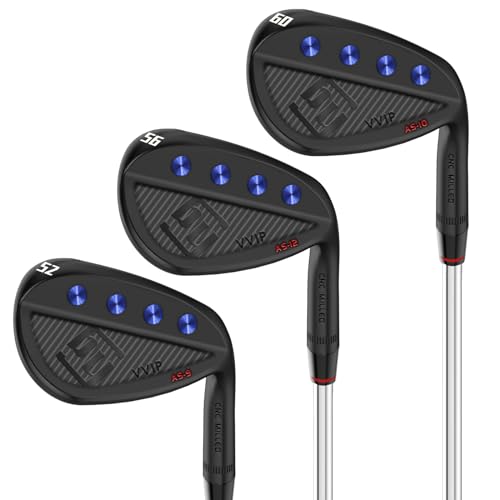 Yamato Full Face Golf Wedge Set or
- Superior Forgiveness: Our golf wedges are designed with…
- Full Face Groove Wedge: Our golf wedges feature…
- Optimal Distance Control: Achieve precise distance control with…
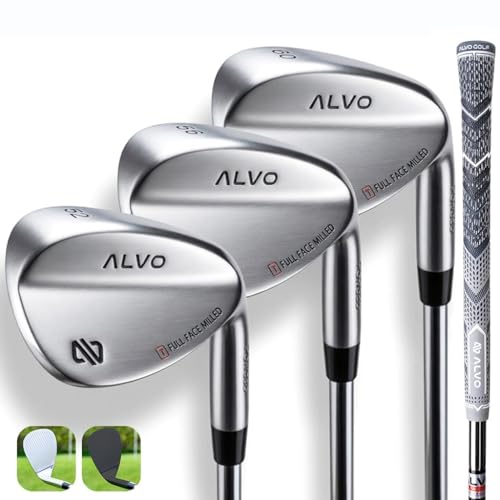 ALVO GOLF Premium Golf Wedges 52/56/60 Sets
- CNC-milled full face golf wedges deliver surgical spin—stick…
- 56 degree sand wedge and golf wedge set…
- 60 degree lob wedge delivers flop-shot precision and…
 Wilson Harmonized Unisex Golf Wedge
- Wilson Harmonized Unisex Golf Wedge - Right Hand,…
- Hand: Right
- Loft: 56
| Product | Key specs | |
|---|---|---|
| Yamato Full Face Golf Wedge Set or | Superior Forgiveness: Our golf wedges are designed with… Full Face Groove Wedge: Our golf wedges feature… Optimal Distance Control: Achieve precise distance control with… | Check price |
| ALVO GOLF Premium Golf Wedges 52/56/60 Sets | CNC-milled full face golf wedges deliver surgical spin—stick… 56 degree sand wedge and golf wedge set… 60 degree lob wedge delivers flop-shot precision and… | Check price |
| Wilson Harmonized Unisex Golf Wedge | Wilson Harmonized Unisex Golf Wedge - Right Hand,… Hand: Right Loft: 56 | Check price |
 Cobra Tour Trusty Golf Wedge Set Cobra Tour Trusty Golf Wedge Set | Performance Gapping & Maximum Versatility- The 52° wedge… Full-Face Grooves- Tour Trusty 56° and 60° are… Cobra Notch- A refined trailing-edge relief that lowers… | Check price |
As an Amazon Associate we earn from qualifying purchases at no extra cost to you.
Best golf wedges by player situation
| Player situation | Recommended setup | Loft and bounce starting point | Why it works |
|---|---|---|---|
| Newer player or steep swing | Forgiving cavity-back or perimeter-weighted wedges | 50°–52° / 10°–12°; 54°–56° / 12°–14° | More sole support and a larger effective hitting area reduce the penalty for heavy contact. |
| Neutral swing, mixed course conditions | One full-sole gap wedge, one versatile sand wedge, optional lob wedge | 50°–52° / 8°–10°; 54°–56° / 10°–12°; 58° / 8°–10° | A balanced combination handles fairway, rough, bunkers, and ordinary pitch shots. |
| Shallow delivery or firm turf | Narrower sole with moderate or low bounce | 50°–52° / 6°–8°; 56° / 8°–10°; 58°–60° / 4°–8° | Less trailing-edge resistance helps the head enter firm turf without excessive skidding. |
| Soft turf or very steep delivery | Wide sole and higher-bounce sand or lob wedge | 50°–52° / 10°–12°; 56° / 12°–14°; 58°–60° / 10°–14° | More bounce keeps the leading edge from digging deeply into soft ground or sand. |
| Low-handicap player who opens the face | Specialized grind with heel and trailing-edge relief | 54°–56° / 8°–12°; 58°–60° / 6°–10° | Relief allows face manipulation without presenting the full sole at impact. |
Loft gapping comes before wedge brand
Start by checking the loft of your pitching wedge. Modern iron sets may have pitching wedges between approximately 41° and 46°, so a traditional 52° gap wedge may leave either a useful or awkward distance gap.
A practical target is roughly 4°–6° between wedges. For example, a set with a 44° pitching wedge might work well with 50°, 56°, and 60°. A 46° pitching wedge could suit 50°, 54°, and 58°. These are starting points rather than rules: carry distances and partial-shot confidence matter more than perfectly even loft intervals.
Worked example: if your pitching wedge carries 125 yards and your 54° wedge carries 95 yards, a 30-yard gap may be too large for your normal approach distances. Adding a 50° wedge that carries about 110 yards can divide the gap into 15-yard and 15-yard sections. The exact numbers should come from launch-monitor data or a consistent on-course distance session, not the loft stamped on the sole alone.
How bounce and sole grind change turf interaction
Bounce
Bounce is the angle and lowest point of the sole that helps the club resist digging. It is not simply “forgiving” or “unforgiving.” Its effect depends on attack angle, shaft lean, release pattern, lie, and ground firmness.
- Low bounce, about 4°–8°: useful from tight lies and for shallow swingers, but less tolerant of excessive forward shaft lean or steep contact.
- Mid bounce, about 8°–12°: the most adaptable range for many players and ordinary course conditions.
- High bounce, about 12°–16°: helpful in soft turf, fluffy sand, and steep swings, although it may feel cumbersome to a shallow player on firm ground.
Sole grind
A full sole preserves support across the width of the club and is often a dependable choice for a gap or sand wedge. Heel-relief grinds remove material near the heel, making it easier to open the face without raising the leading edge excessively. Toe or trailing-edge relief can improve maneuverability and reduce sole drag through impact.
Do not choose a grind solely because it is marketed for a certain handicap. A player who takes shallow divots may need a different sole from another player with the same handicap but a steep angle of attack. Divot depth and typical lies are more useful clues.
Grooves, face materials, and spin: what matters in practice
Most premium wedges use precision-milled grooves in a cast or forged stainless-steel, carbon-steel, or specialty alloy head. The groove pattern, face texture, groove sharpness, loft, and impact quality all affect spin. Face material alone does not guarantee more stopping power.
Some wedges use roughened or laser-textured areas between grooves to help preserve friction on partial shots. Those textures can be particularly useful when the ball and face are dry and clean. Moisture, grass, dirt, and an imperfect strike reduce friction dramatically, especially on open-face shots.
Full-face grooves can extend groove coverage toward the toe, which may help players who frequently strike that area. Traditional groove layouts leave more room for shaping and may suit golfers who center the ball consistently. Neither design replaces proper loft gapping and contact.
Grooves wear gradually rather than suddenly. Frequent practice from abrasive mats or sandy conditions can dull the edges sooner. Wipe the face after shots, clean grooves with a non-metal brush or suitable groove tool, and avoid hitting range balls from gritty concrete or bare gravel. A wedge used several times per week may need a condition check after roughly 50–100 practice sessions; occasional players may go much longer.
Head-to-head: common wedge designs
Players blade versus cavity-back wedge
A blade-style wedge usually offers a compact profile, traditional shaping, and more freedom to manipulate the face. It rewards centered contact and appeals to golfers who want consistent visual feedback. A cavity-back wedge moves some mass away from the center and can make mishits less punishing, especially on full swings with a gap wedge.
For many mid- and high-handicap players, a cavity-back or slightly oversized gap wedge is the sensible compromise, while a blade-style sand or lob wedge can be added later if shotmaking becomes a priority.
Forged versus cast construction
Forged carbon-steel wedges are often chosen for their soft impact sensation and shaping options. Cast stainless-steel or specialty-alloy wedges can provide durable finishes, complex sole geometry, and consistent production. Feel is influenced by head geometry, shaft, ball, impact location, and sound—not just the manufacturing process.
Raw, plated, and dark finishes
Raw or unplated faces may develop surface patina and can show wear more visibly. Chrome and other plated finishes generally offer stronger cosmetic durability, while dark finishes can eventually reveal bright wear marks on the sole and face. Rust or patina does not automatically create more spin; clean grooves and quality contact matter more.
Wedge setups that make sense
Two-wedge setup
A 50°–52° gap wedge and a 56° sand wedge suit golfers who want simplicity. Choose a 56° wedge with enough bounce for your usual turf and bunker conditions. This arrangement is often better than adding a difficult-to-control 60° wedge that is used only occasionally.
Three-wedge setup
A 50°–52°, 54°–56°, and 58° combination offers useful coverage for golfers who regularly face partial approaches, bunker shots, and short-sided pitches. Keep the loft gaps consistent and vary the bounce or grind only where your course conditions require it.
Four-wedge setup
Four wedges can work when the pitching wedge is strong-lofted and the rest of the iron set leaves room in the bag. A possible sequence is 48°, 52°, 56°, and 60°, but the top loft may duplicate the pitching wedge. Four wedges are worthwhile only if each one produces a distinct carry distance or a clearly useful shot.
How to choose the right wedge in a fitting
- Measure your pitching-wedge loft and carry distance. Do not rely on model names or old assumptions about loft.
- Test full and partial swings. A wedge that performs well only on a full shot may be a poor scoring-club choice.
- Try at least two bounce options. Hit from a fairway lie, rough, and bunker if possible. Watch strike location and how the sole moves through the ground.
- Open the face. Check whether the leading edge sits acceptably low and whether the heel or toe catches the ground.
- Compare carry, not just total distance. Wedge shots need predictable landing distances, especially in wind.
- Check shaft weight and length. A wedge shaft that is substantially heavier than your iron shafts may improve control for some golfers but disrupt tempo for others.
Ownership costs and common mistakes
Current premium wedges commonly occupy a broad general market range of about $120–$200 per club, while older-generation models and value-oriented designs may cost roughly $80–$130. The cheaper purchase is not necessarily cheaper ownership if the lofts duplicate one another or the sole does not suit your conditions.
The most common mistakes are buying a 60° wedge before fixing distance gaps, selecting low bounce because it sounds versatile, and ignoring grip size or shaft weight. Another mistake is using a lob wedge for every short shot; a lower-lofted wedge often produces a simpler, lower-risk running pitch.
For most golfers, the best golf wedges are the ones that create reliable carry intervals, interact with the turf predictably, and remain comfortable on partial swings. Begin with loft and bounce, compare sole shapes against your divots and course conditions, then choose groove design, finish, and brand preferences within that fit.







