
The best golf swing trainers depend on the fault you are trying to change: choose the Orange Whip Trainer or SKLZ Gold Flex for tempo, the Eyeline Speed Trap 2.0 or a Tour Striker training club for swing plane and face contact, SuperSpeed Golf for speed and sequencing, and a Tour Striker Smart Ball for connected arm-and-body motion.
Our top picks
 FODESAN Retractable Golf Swing Trainer
- 【Instant Swing Feedback for Precision Training】A practical golf…
- 【Ergonomic Golf Grip Trainer for Perfect Hand Placement】Designed…
- 【Versatile Training Anytime, Anywhere】 Whether you're warming up…
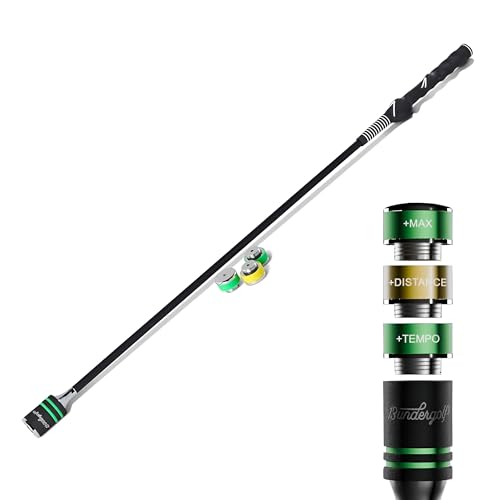 Golf Swing Trainer Aid Without Ribbon
- California Proposition 65 Notice: ⚠️ This product and its packaging…
 Amazon Basics Golf Swing Trainer Aid and
- Golf swing trainer designed to help improve speed,…
- Includes a golf swing trainer with a flexible…
- Elastic rod in the shaft automatically springs back…
| Product | Key specs | |
|---|---|---|
| FODESAN Retractable Golf Swing Trainer | 【Instant Swing Feedback for Precision Training】A practical golf… 【Ergonomic Golf Grip Trainer for Perfect Hand Placement】Designed… 【Versatile Training Anytime, Anywhere】 Whether you're warming up… | Check price |
| Golf Swing Trainer Aid Without Ribbon | California Proposition 65 Notice: ⚠️ This product and its packaging… | Check price |
| Amazon Basics Golf Swing Trainer Aid and | Golf swing trainer designed to help improve speed,… Includes a golf swing trainer with a flexible… Elastic rod in the shaft automatically springs back… | Check price |
 Orange Whip Golf Swing Trainer Aid Orange Whip Golf Swing Trainer Aid | THE ORIGINAL #1-RATED GOLF TRAINING AID: Don’t settle… The Orange Whip trainer increases your flexibility and… The proprietary flexible shaft coordinates the rhythm between… | Check price |
As an Amazon Associate we earn from qualifying purchases at no extra cost to you.
Best golf swing trainers by training goal
| Trainer | Primary target | Construction and size | Portability | Best for |
|---|---|---|---|---|
| Orange Whip Trainer | Tempo, balance and sequencing | About 48 inches long; flexible shaft with weighted ends and rubber grip | Fits in most golf-travel bags; requires roughly 6 feet of clearance | Golfers who rush the transition |
| SKLZ Gold Flex | Tempo, loading and warm-up strength | Common versions are 40 or 48 inches; flexible shaft and weighted head | Portable, though the longer model needs a large indoor practice area | Pre-round rehearsal and general athletic movement |
| Eyeline Speed Trap 2.0 | Swing path, low point and face contact | Low-profile practice base with replaceable or adjustable visual barriers | More car-boot friendly than a full hitting mat; used stationary | Players who hit fat, thin or across the ball |
| Tour Striker Smart Ball | Arm-body connection and sequencing | Inflatable foam ball with an adjustable strap; roughly hand-sized when inflated | Excellent; deflates or packs easily | Short practice sessions and indoor rehearsals |
| SuperSpeed Golf system | Clubhead speed and speed sequencing | Set of three weighted training clubs with different resistance levels | Portable, but needs a full-swing area of about 10 feet by 10 feet | Golfers committed to a structured speed program |
| Tour Striker training club | Strike quality, forward shaft lean and ball-first contact | Purpose-built iron with a reduced or concentrated hitting area | Nearly as portable as a normal club; used with real balls or practice balls | Players who need feedback on impact rather than a swing motion |
Dimensions and configurations vary by model and generation, so check the current specification before buying. The more important distinction is how each aid delivers feedback. Some give immediate physical feedback when your arms separate or your path changes; others simply make a poor strike more difficult.
Best choices for different golfers
| Your situation | Most suitable choice | Why | What to avoid |
|---|---|---|---|
| Budget under $60 | Smart-ball style connection aid or basic alignment sticks | Low cost, compact and useful for repeatable rehearsals | Buying a speed system before you can control contact |
| New golfer learning fundamentals | Orange Whip Trainer or SKLZ Gold Flex | Encourages smooth motion without requiring technical analysis | A very restrictive path aid used without instruction |
| Experienced golfer with a slice | Eyeline Speed Trap 2.0 plus alignment sticks | Makes path and starting direction visible during slow swings | Using a weighted club to chase speed while the path remains inconsistent |
| Small apartment or office | Smart Ball and putting-length mirror or alignment stick | Allows short-motion rehearsals with minimal clearance | Full-length weighted trainers near walls, ceilings or furniture |
| Plays or practices four times weekly | Tour Striker club or SuperSpeed system | Frequent use can justify a more specialized feedback tool | A novelty aid that cannot be connected to normal club practice |
How the main categories differ
Tempo trainers: Orange Whip and Gold Flex
Tempo trainers use a flexible shaft and a weighted head to make abrupt acceleration uncomfortable. The goal is not to swing as hard as possible. It is to let the clubhead load during the backswing, change direction without a violent jerk, and finish in balance.
The Orange Whip has a distinctive counterbalanced design and a prominent flexible shaft. It is a good option when your practice swings look rushed or when you lose balance at the finish. The SKLZ Gold Flex follows a similar idea and is commonly chosen as a warm-up tool because its weighted head creates noticeable resistance.
Use either trainer for two sets of 10 slow swings, followed by five normal swings with a real club. If your normal club swing becomes faster and less balanced after the drill, reduce the intensity. The aid should improve rhythm, not teach you to force the transition.
Plane and contact trainers: Speed Trap and Tour Striker
The Eyeline Speed Trap 2.0 is more diagnostic than a flexible tempo trainer. Its barriers and visual guides help reveal whether the club is approaching from too far inside, too far outside, or too steeply. Start with half-swings and a tee or foam ball. Make five swings that miss the barrier, then hit five shots while keeping the same path.
A Tour Striker training club gives different feedback: it rewards a descending strike and forward contact position. If the club’s compact hitting area produces repeated mishits, do not immediately change several swing positions. Begin with chip-length shots, then progress to waist-high swings. The purpose is to locate the bottom of the arc, not to manufacture a dramatic forward press.
Sequencing and connection: Smart Ball
The Tour Striker Smart Ball sits between the forearms or upper arms, depending on the drill. If it falls immediately, your arms may be separating during the takeaway or transition; if you squeeze it excessively, you may be restricting natural arm movement.
Try this sequence:
- Inflate the ball until it is firm but compressible.
- Make 10 waist-high rehearsals without a ball.
- Make 10 three-quarter swings, allowing the ball to remain lightly supported.
- Remove the ball and hit five shots while preserving the same connected rhythm.
This tool is particularly convenient for indoor practice, but it cannot tell you whether the clubface is open or closed. Pair it with video, an alignment stick, or occasional professional feedback.
Strength and speed: SuperSpeed Golf
SuperSpeed Golf uses multiple weighted clubs to train the body to move through a faster sequence. It is not a substitute for face control or strike practice. Begin with the prescribed number of swings and leave recovery time between sessions. More swings are not automatically better, particularly if your motion becomes strained.
Use the system outdoors or in a clear practice space. A full-speed club can travel quickly and unpredictably, so check the ceiling, walls, pets and people before every session. Follow speed work with 10 to 20 controlled shots using your normal driver or mid-iron, focusing on balance and centered contact.
Materials, setup and ownership costs
Flexible trainers usually combine a fiberglass or composite shaft, molded rubber grip and a rubber or plastic weighted head. The grip and shaft connection are the parts most likely to show wear. Store the trainer out of prolonged heat, do not leave it in a hot car, and wipe rubber components with a damp cloth rather than solvent-based cleaners.
Impact trainers have different maintenance concerns. A practice base can collect dirt under its feet, while foam or plastic barriers may become less effective after repeated strikes. Replace damaged barriers instead of continuing to practice with a distorted visual target. For an inflatable Smart Ball, inspect the valve and strap stitching; do not overinflate it, because excessive pressure can stress seams.
Consider cost per use before choosing. A $100 trainer used twice weekly for one year provides about 104 sessions, or approximately $0.96 per session. A $35 aid used only three times costs nearly $11.67 per session. The cheaper product is not the better value if it does not fit your available space or practice habit.
A practical 20-minute practice plan
- Minutes 1–4: Make slow rehearsals with the Orange Whip, Gold Flex or Smart Ball to establish balance and rhythm.
- Minutes 5–9: Use the Speed Trap or alignment sticks for half-swings, checking starting direction and low point.
- Minutes 10–16: Hit normal shots with one technical priority, such as a centered strike or smooth transition.
- Minutes 17–20: Finish with five shots at a comfortable target, using no aid and judging only routine, balance and contact.
Change only one variable per session. If you use a plane aid, a connection aid and a speed system at once, it becomes difficult to know which cue helped or hurt. Record a face-on and down-the-line video every few weeks rather than after every swing; the point is to identify a pattern, not to react to individual shots.
Bottom line
The best golf swing trainers are the ones that address a specific repeatable problem and fit your practice environment. Choose the Orange Whip or Gold Flex for tempo, the Smart Ball for connection, the Speed Trap for path and low point, a Tour Striker club for impact, and SuperSpeed Golf for a dedicated speed program. Whichever aid you buy, spend most of your time transferring its feel to a normal club. A trainer is useful only when the improved motion survives after the trainer is put away.







