Key takeaways
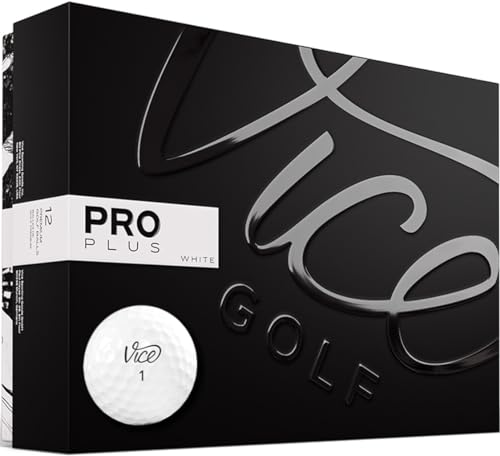
- Vice Pro Plus – Maximum check: The cast urethane is softest and tackiest, and the dual mantle creates higher wedge spin. Expect one-hop-and-stop action on full wedges and the ability to pull back a well-struck 50-yard pitch. Best if you play firm, fast greens and rely on spin to hold them.
- Vice Pro – Balanced check: About 500-700 rpm less than the Pro Plus on a 30-50 yard pitch, but still enough to stop a 7-iron on the green. It offers more forgiveness on slightly thin wedge strikes without the sharp drop-off in spin that ionomer balls have.
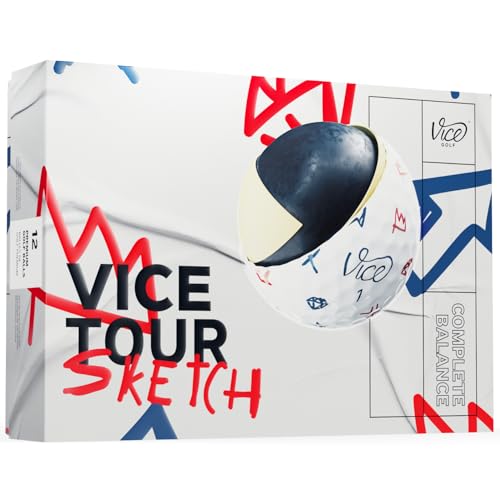
- Vice Tour – Run-out control: The Surlyn blend spins roughly 1,500-2,000 rpm less than the Pro Plus with a sand wedge. You get a predictable, low-hop release rather than bite. Players who chip with a bump-and-run style often prefer this, but you cannot expect tour-level zip on short-sided shots.
Vice golf balls split into three distinct performance tiers: the Vice Pro is the lowest-spinning, lowest-compression Tour ball for moderate swing speeds seeking distance and soft feel, the Vice Pro Plus is the highest-compression, highest-spinning model for faster swings that need wind-piercing flight and maximum wedge bite, and the Vice Tour is the value 3-piece ionomer ball that trades urethane greenside spin for durability and price.
Our top picks

As an Amazon Associate we earn from qualifying purchases at no extra cost to you. Ratings are shown as listed on Amazon.
Vice Golf Balls Lineup at a Glance
Vice keeps its naming simple. All three balls compared here are 2024-2026 generation models with updated alignment lines and color options, but the construction underneath is what changes performance. The Pro and Pro Plus are true Tour-class balls with cast urethane covers made in the same German factory as many premium tour balls. The Tour uses a harder Dupont Surlyn blend to cut costs and improve scuff resistance.
| Spec | Vice Pro Soft* | Vice Pro | Vice Pro Plus | Vice Tour |
|---|---|---|---|---|
| Construction | 3-piece | 3-piece | 4-piece (dual mantle) | 3-piece |
| Cover Material | Cast Urethane | Cast Urethane | Cast Urethane | Dupont Surlyn Blend |
| Compression (approx.) | 60 | 77-83 | 90-96 | 90-95 |
| Dimple Count | 318 | 336 | 336 | 336 |
| Dimple Design | Large, shallow | Medium depth | Medium depth, high coverage | Medium depth |
| Driver Spin | Very Low | Low | Low-Mid | Mid |
| Wedge Spin (30-yard pitch) | ~5,800 rpm | ~6,500 rpm | ~7,200 rpm | ~5,200 rpm |
| Feel Off Putter | Very Soft | Soft | Soft-Firm | Firm |
| Target Swing Speed | 75-95 mph | 85-100 mph | 95-115+ mph | 85-105 mph |
*Included for context because many buyers cross-shop the Pro Soft with the Pro. All compression and spin figures are manufacturer-stated ranges and independent launch-monitor averages; actual numbers vary by launch conditions and temperature.
Distance: Which Vice Ball Goes Farthest?
No Vice ball is built purely for straight-line distance like a 2-piece range ball. All three prioritize a balance, but how they reduce driver spin differs.
Vice Pro Plus: Best for High Swing Speed Distance
The 4-piece Pro Plus uses an extra high-energy mantle layer to keep driver spin down while retaining ball speed at 105+ mph. Its higher compression core needs speed to fully activate. For players above 100 mph with the driver, it typically produces the flattest trajectory and the most rollout in the Vice lineup, often 3-6 yards longer than the Pro in robot testing at high speeds. Below 95 mph, that advantage disappears and it can feel hard and lose a few yards.
Vice Pro: Best for Average Swing Speed Distance
The 3-piece Pro has a lower compression core and a slightly softer mantle. It compresses more easily, so at 85-98 mph driver speed it generates higher launch with similar low spin. That combination keeps carry up without requiring tour-level speed. Most mid-handicap players will see equal or longer total distance with the Pro versus the Pro Plus.
Vice Tour: Surprisingly Long, With a Trade-Off
The Tour is not a distance compromise. Its large, highly resilient core and Surlyn cover are designed for low driver spin and high velocity. It is often within 2-4 yards of the Pro off the tee for swings under 105 mph. The distance loss versus urethane shows up not off the tee, but on approach shots where the harder cover cannot create enough spin to stop quickly, leading to longer rollout.
Spin and Control: The Real Difference Is Inside 100 Yards
Off the driver, all three are low-spin. Inside 100 yards, the separation is dramatic.
- Vice Pro Plus – Maximum check: The cast urethane is softest and tackiest, and the dual mantle creates higher wedge spin. Expect one-hop-and-stop action on full wedges and the ability to pull back a well-struck 50-yard pitch. Best if you play firm, fast greens and rely on spin to hold them.
- Vice Pro – Balanced check: About 500-700 rpm less than the Pro Plus on a 30-50 yard pitch, but still enough to stop a 7-iron on the green. It offers more forgiveness on slightly thin wedge strikes without the sharp drop-off in spin that ionomer balls have.
- Vice Tour – Run-out control: The Surlyn blend spins roughly 1,500-2,000 rpm less than the Pro Plus with a sand wedge. You get a predictable, low-hop release rather than bite. Players who chip with a bump-and-run style often prefer this, but you cannot expect tour-level zip on short-sided shots.
If greenside spin is your priority, urethane is non-negotiable. Choose between Pro and Pro Plus based on speed; do not choose Tour expecting it to spin like a urethane ball.
Feel and Flight: Compression Matters More Than Marketing
Compression does not equal quality, it equals fit. A ball that is too firm for your speed will feel clicky off the putter and lose energy. A ball that is too soft for your speed will feel mushy and balloon in wind.
- Below 90 mph driver speed: Vice Pro Soft or Pro will feel responsive and compress fully. Pro Plus will feel hard and may launch lower than optimal.
- 90-100 mph: Vice Pro is the sweet spot. It still feels soft off the putter but does not deform excessively at impact.
- 100 mph and above: Vice Pro Plus maintains stability, resists ballooning in headwinds, and keeps iron dispersion tighter. Vice Tour also works here for distance, but with firmer feel and louder impact sound.
Decision Matrix: Which Vice Ball for Your Situation?
| Your Situation | Best Match | Why |
|---|---|---|
| Budget-conscious, lose 4+ balls per round, 12-20 handicap | Vice Tour | Lowest price per dozen, most durable cover, distance off tee nearly matches urethane |
| Mid-handicap, 85-98 mph driver speed, want soft feel + stopping power | Vice Pro | Low compression activates easily, urethane spin holds greens without demanding high speed |
| Low handicap, 100+ mph, play in wind or firm greens | Vice Pro Plus | 4-piece keeps driver spin low while delivering highest wedge spin and penetrating flight |
| Slower swing, prioritize putting feel and forgiveness | Vice Pro (or Pro Soft) | Very soft feel reduces harsh vibration, higher launch helps carry |
| Value over spin, play parkland courses with soft greens | Vice Tour | You don’t need maximum check when greens are receptive; save money and gain durability |
Value and Cost Per Round Calculation
Vice sells direct-to-consumer, so pricing is typically structured as a bulk discount rather than a single-dozen retail price. In 2026 the general market range is approximately $24-$30 per dozen for Tour when buying 5 dozen, and $32-$42 per dozen for Pro and Pro Plus on multi-dozen bundles. Single dozen purchases run about $5-$8 higher.
Cost per use changes quickly with loss rate:
- Scenario A – You lose 6 balls per round (18 holes): At $28/dozen for Tour, that’s $14 per round. At $38/dozen for Pro Plus, that’s $19 per round. Over 30 rounds a year, the difference is $150. Tour makes sense.
- Scenario B – You lose 1-2 balls per round: Tour is $3.50-$4.66 per round vs. Pro at $4.75-$6.33. The premium for urethane spin is only $1-$2 per round – a small price for holding 3-4 more greens per round.
- Break-even tip: If you finish most rounds with the same ball, buy the best urethane ball you can compress. If you regularly go through a sleeve or more, start with Tour and upgrade only when your loss rate drops.
Beyond price, Vice offers free color customization and an enlarged alignment stamp on all models, which saves on custom marking fees other brands charge.
Durability and Ownership Realities
Urethane vs. Surlyn is the durability story.
- What wears first: Cast urethane (Pro / Pro Plus) scuffs and shaves on wedge grooves, cart paths, and trees. A single thin wedge from a bunker can leave a visible nick. Surlyn (Tour) resists cuts and cart-path scuffs far better, often lasting 2-3 rounds without visible damage if you don’t lose it.
- Cleaning: The 336-dimple pattern on Pro models packs with mud faster than the Tour’s slightly shallower pattern. Clean with warm water and a soft brush; never use abrasive cleaners that dull the urethane.
- Common mistakes: Playing a scuffed urethane ball costs more strokes than switching to a fresh cheaper ball. If the cover has a cut you can feel with a fingernail, retire it to practice. Also, storing balls in a hot car trunk over summer permanently degrades compression and ball speed.
- When to switch: If you notice wedge shots releasing 5-10 feet farther than usual with the same swing, your urethane cover is likely worn smooth, not your technique.
Final Pick by Player Type
Choose Vice Pro if you are the typical 10-20 handicap adult male or female player swinging 85-99 mph. It delivers 95% of the Pro Plus spin with easier compression, a softer sound, and slightly better performance in cool weather.
Choose Vice Pro Plus if you consistently carry driver 260+ yards, play competitive events, and need a ball that will not climb in wind and will stop a 50-yard wedge on the second bounce.
Choose Vice Tour if you want the Vice flight and alignment features at the lowest cost, prioritize durability, or you are building consistency and would rather spend the savings on lessons or green fees than on lost urethane balls.
All three are USGA conforming and available in white, lime, and drip color patterns with the same core construction. If you are between Pro and Pro Plus, buy one dozen of each in the same color and play them alternate holes for nine holes – the right ball will be obvious by the 6th green.
Frequently Asked Questions
Are Vice Pro and Pro Plus legal for tournaments?
Yes. All current Vice Pro, Pro Plus, Pro Soft and Tour models are on the USGA Conforming Ball List. The only non-conforming Vice ball is the Vice Drive, which is not reviewed here.
Do Vice balls perform like Titleist Pro V1 and Pro V1x?
They are designed to compete in the same Tour category. In general, Vice Pro aligns closest to Pro V1 (softer, mid spin) and Vice Pro Plus aligns closest to Pro V1x (firmer, higher flight, more wedge spin), but dimple design, cover formulation and compression are not identical so trajectory and feel will differ slightly.
How long do Vice golf balls last?
Unlost and properly stored, a Surlyn-covered Vice Tour can remain playable for multiple rounds. A urethane Vice Pro or Pro Plus should be inspected every few holes and replaced when the cover is cut or the clear coat is visibly worn, typically after one round of wedge-heavy play for low handicappers.