Key takeaways
- Urethane: Softer, thinner cover found on tour-level balls like Titleist Pro V1, Callaway Chrome Tour, and TaylorMade TP5. It creates high friction on wedge grooves, producing 25-40% more greenside spin than Surlyn. It also scuffs and cuts more easily and costs more to produce. General market range: $45-$55 per dozen.
- Surlyn/Ionomer: Harder, more durable cover used on distance and value balls like Titleist Velocity, Callaway Supersoft, and Srixon Soft Feel. It reduces wedge spin and driver spin, which helps slower swingers keep the ball straighter and get more roll. It resists scuffs and cart-path cuts far better. General market range: $22-$35 per dozen.
The best golf balls in 2026 for most golfers are the Titleist Pro V1 for balanced distance and greenside spin, the TaylorMade TP5 for lower driver spin with high wedge control, and the Srixon Q-Star Tour as the best value urethane option, with the right pick depending on your swing speed, cover preference, and whether you need distance or stopping power.
Our top picks


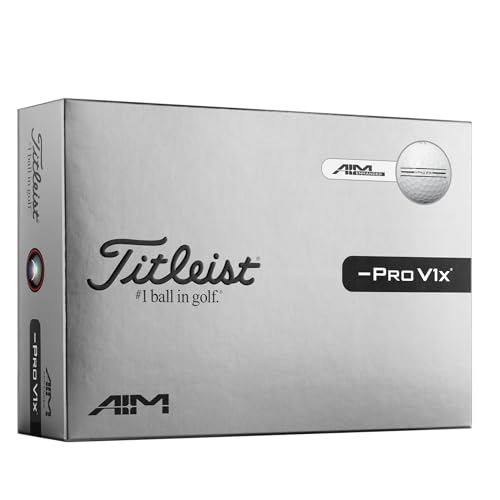
As an Amazon Associate we earn from qualifying purchases at no extra cost to you. Ratings are shown as listed on Amazon.
Urethane vs. Surlyn and 2-Piece vs. 3-Piece: What Actually Changes Performance
Cover material and core construction determine how a ball flies, spins, and feels more than brand marketing does. Understanding these two variables lets you eliminate half the market before you buy.
Cover Material: Urethane vs. Surlyn (Ionomer)
- Urethane: Softer, thinner cover found on tour-level balls like Titleist Pro V1, Callaway Chrome Tour, and TaylorMade TP5. It creates high friction on wedge grooves, producing 25-40% more greenside spin than Surlyn. It also scuffs and cuts more easily and costs more to produce. General market range: $45-$55 per dozen.
- Surlyn/Ionomer: Harder, more durable cover used on distance and value balls like Titleist Velocity, Callaway Supersoft, and Srixon Soft Feel. It reduces wedge spin and driver spin, which helps slower swingers keep the ball straighter and get more roll. It resists scuffs and cart-path cuts far better. General market range: $22-$35 per dozen.
Construction: 2-Piece vs. 3-Piece vs. 4/5-Piece
- 2-Piece: Large core + Surlyn or thin urethane cover. Designed for low spin off the driver and maximum energy transfer. Best for swing speeds under 95 mph and high handicaps who need distance and straight flight. Feel is firmer off the putter.
- 3-Piece: Core + mantle layer + urethane cover. The mantle layer lets engineers separate driver spin from wedge spin. You get lower spin off the tee for distance but higher spin with wedges for control. This is the standard for mid-to-low handicaps.
- 4/5-Piece: Core + dual mantles + cover (e.g., TaylorMade TP5, Bridgestone Tour B X). Extra layers fine-tune spin at different swing speeds and create a steeper descent angle on irons. Benefits are most noticeable for swing speeds above 105 mph who can compress all layers.
Compression is not a quality rating. A 70-compression ball like Callaway Supersoft is not worse than a 90-compression Pro V1, it simply requires less force to deform. If your driver swing speed is under 90 mph, a low-compression ball will typically launch higher and lose less ball speed on off-center hits.
Best Golf Balls 2026 Compared: Specs and Performance Data
The numbers below are aggregated from manufacturer specifications and independent robot and launch monitor testing at controlled swing speeds (85 mph, 100 mph driver, 50-yard wedge). They illustrate relative differences, not guarantees for every swing.
| Model | Cover | Construction | Compression | Driver Spin @100mph (rpm) | 7-Iron Spin (rpm) | 50-Yd Wedge Spin (rpm) | Best For |
|---|---|---|---|---|---|---|---|
| Titleist Pro V1 | Urethane | 3-Piece | 87 | 2,650 | 6,900 | 8,800 | All-around control, mid-low handicap |
| Titleist Pro V1x | Urethane | 4-Piece | 97 | 2,820 | 7,350 | 9,050 | High flight, high iron spin |
| TaylorMade TP5 | Urethane | 5-Piece | 85 | 2,480 | 7,100 | 9,200 | Low driver spin, max wedge spin |
| TaylorMade TP5x | Urethane | 5-Piece | 97 | 2,550 | 7,400 | 8,950 | Faster swing speeds, distance + spin |
| Callaway Chrome Tour | Urethane | 4-Piece | 88 | 2,600 | 7,000 | 8,900 | Soft feel with tour spin |
| Bridgestone Tour B XS | Urethane | 3-Piece | 85 | 2,530 | 6,850 | 8,950 | Low spin driver, soft wedge feel |
| Srixon Z-Star | Urethane | 3-Piece | 88 | 2,620 | 7,050 | 8,700 | Value urethane, wind performance |
| Srixon Q-Star Tour | Urethane | 3-Piece | 72 | 2,450 | 6,600 | 8,200 | Slower swings needing urethane spin |
| Callaway Supersoft | Ionomer (Surlyn blend) | 2-Piece | 38 | 2,380 | 5,900 | 5,800 | Max distance, straight flight |
| Titleist Velocity | Ionomer | 2-Piece | 65 | 2,400 | 6,000 | 5,650 | Budget distance, durability |
Takeaway: The gap in driver distance between a top urethane and a Surlyn distance ball at 100 mph is often only 4-7 yards, while the gap in wedge spin is 2,500-3,500 rpm. You choose based on where you need help – off the tee or around the green.
Decision Matrix: Match the Ball to Your Swing Speed and Handicap
Use swing speed first, then short-game needs.
| Your Situation | Recommended Type | Specific Models to Consider | Why It Fits |
|---|---|---|---|
| Swing speed under 85 mph, handicap 18+ | Low-compression 2-piece Surlyn or low-compression urethane | Callaway Supersoft, Srixon Soft Feel, Srixon Q-Star Tour | Maximizes launch and carry, reduces slice spin, maintains ball speed on mishits |
| Swing speed 85-95 mph, handicap 10-20 | Mid-compression 3-piece urethane | Srixon Q-Star Tour, Callaway Chrome Soft, Titleist Pro V1 | Balances straighter driver flight with enough wedge spin to hold greens |
| Swing speed 95-105 mph, handicap 5-15 | Standard 3/4-piece urethane | Titleist Pro V1, Bridgestone Tour B XS, Srixon Z-Star | Full separation of low driver spin and high wedge spin, better wind control |
| Swing speed over 105 mph, handicap under 8 | High-compression 4/5-piece urethane | Titleist Pro V1x, TaylorMade TP5x, Bridgestone Tour B X | Prevents ballooning, high iron spin for stopping power, stable at high ball speeds |
| Budget priority, lose 4+ balls per round | 2-piece Surlyn distance ball | Titleist Velocity, Callaway Supersoft, Wilson Duo Soft | Low cost per ball and scuff resistance outweigh spin benefits |
| Prioritize feel and short game over 5 yards of distance | Soft urethane 3-piece | Callaway Chrome Tour, TaylorMade TP5, Wilson Staff Model | High friction cover gives one-hop-and-stop control on pitches and chips |
Cost Per Round: A Worked Calculation
Price per dozen is misleading if you lose balls or wear covers. Calculate true cost per 18 holes:
Formula: (Price per Dozen / 12) x Balls Used or Lost Per Round = Cost Per Round
- Player A – High-loss golfer: Uses a premium urethane ball at $50/dozen ($4.17 per ball) and loses 5 balls per round. Cost = $4.17 x 5 = $20.85 per round. Over 30 rounds a season: $625.50 in balls alone.
- Player B – Same golfer switches to Surlyn distance ball at $28/dozen ($2.33 per ball): Cost = $2.33 x 5 = $11.65 per round. Seasonal cost: $349.50. Savings of $276 per season, with more durability between scuffs.
- Player C – Low-loss golfer: Uses a premium urethane at $4.17 per ball and loses 1 ball every two rounds (0.5 per round) but retires a ball after it gets wedge-groove cuts. Cost = $4.17 x 0.5 = $2.09 per round. Seasonal cost: $62.70. For this player, urethane spin is cheap per shot.
If you lose more than 3 balls per round, moving to a Surlyn or lower-priced urethane like Srixon Q-Star Tour (typically $35-$40 per dozen) will save more strokes through confidence than any spin gain will deliver.
Durability and Ownership Realities
What wears first is not the core, it is the cover and the paint. Urethane covers micro-cut from every full wedge shot. After 1-2 rounds of heavy short-game practice, a urethane ball will show visible groove lines and a duller finish. That roughness actually increases wedge spin slightly for a short period, then reduces it as the cover tears. Surlyn covers can last 4-6 rounds of play before scuffing, but once the clear coat chips, they lose aerodynamic consistency.
Common mistakes that shorten ball life:
- Using a wedge with rusted or sharpened grooves on range balls, then switching to your gamer ball – debris embedded in the groove acts like sandpaper.
- Cleaning balls with abrasive pads or magic erasers, which strip the clear-coat dimple edge and alter flight.
- Storing balls in a garage or car trunk over 100°F or below freezing. Urethane and mantle layers delaminate faster with heat cycling. Store at room temperature in the box.
- Playing a ball with a deep cart-path gash. A cut deeper than 1mm changes spin by 300-500 rpm and creates an unstable flight.
Maintenance is simple: wash with warm soapy water and a soft microfiber towel after each round, check the cover under bright light for cuts, and rotate balls – mark three balls and alternate every few holes during practice rounds to spread wear. Replace any ball with a visible seam crack, exposed mantle, or permanent discoloration from water exposure.
How to Choose in Two Steps Without Overthinking
1. Get your driver swing speed. Most launch monitors at a golf shop will give it in 5 swings. If you are under 90 mph, start with low-compression options (under 75 compression). If you are over 95 mph, you can compress any tour ball.
2. Test greenside, not just distance. Hit 10-yard chips and 50-yard pitches with a Surlyn ball and a urethane ball on the same green. If the urethane ball stops 4-6 feet quicker and that saves you one chip per nine holes, that is worth more than 6 yards off the tee. If you cannot see a difference, choose the cheaper, straighter ball.
FAQ
Do I need a different ball in winter or at altitude?
Cold air and cold balls both reduce compression and carry. In temperatures below 50°F, a low-compression ball will lose 2-4 mph ball speed less than a high-compression tour ball. At altitude above 3,000 feet, all balls fly farther with less spin, so a higher-spinning urethane model like Pro V1x or TP5x helps hold greens.
Are yellow or matte golf balls different in performance?
The color coating adds no measurable distance difference in 2026 models from Titleist, Callaway, and Srixon. Visibility is the only variable. Yellow urethane balls use the same cover formulation as white, but the pigmented clear coat can show wedge scuffs more visibly.
How long do golf balls last if unused?
Unopened and stored at room temperature, modern multi-layer balls retain original performance for 3-5 years. After 5-7 years, the core gradually hardens and compression rises by 3-5 points, which can reduce ball speed for slower swingers by 1-2 mph.