
Key takeaways
- Best starting point for lessons: a recreational four-wheel skate with 80 mm wheels, a hard-wearing composite frame, a supportive soft boot, and a removable heel brake.
- Best for regular fitness sessions: an 80–100 mm fitness skate such as the Rollerblade Macroblade 80, K2 Alexis 80, or a similar model with an aluminum frame and breathable liner.
- Best for mixed city routes: an urban skate with 80–90 mm wheels, a short aluminum frame, replaceable parts, and a cuff that supports controlled stops and turns. The Rollerblade RB Cruiser and FR Skates FRX 80 are examples of this category.
- Best for speed-focused fitness: a three-wheel skate using 100–110 mm wheels, but only after you are comfortable braking, turning, and recovering from rough pavement.
Best Inline Skates for Beginners, Fitness, and City Riding
The best inline skates depend on where you will use them: beginners usually need an 80–90 mm wheel, a stable composite frame, firm ankle support, and a reliable heel brake; fitness riders benefit from lighter boots and 90–110 mm wheels; city riders need maneuverability, durable frames, and wheels that can handle imperfect pavement.
Quick picks by riding situation
- Best starting point for lessons: a recreational four-wheel skate with 80 mm wheels, a hard-wearing composite frame, a supportive soft boot, and a removable heel brake.
- Best for regular fitness sessions: an 80–100 mm fitness skate such as the Rollerblade Macroblade 80, K2 Alexis 80, or a similar model with an aluminum frame and breathable liner.
- Best for mixed city routes: an urban skate with 80–90 mm wheels, a short aluminum frame, replaceable parts, and a cuff that supports controlled stops and turns. The Rollerblade RB Cruiser and FR Skates FRX 80 are examples of this category.
- Best for speed-focused fitness: a three-wheel skate using 100–110 mm wheels, but only after you are comfortable braking, turning, and recovering from rough pavement.
What to compare before buying
Wheel size and hardness
Wheel diameter changes both speed and control. Smaller 76–80 mm wheels accelerate easily, lower the center of gravity, and make balance practice less intimidating. They are a strong choice for first lessons and compact city paths. Wheels from 84–90 mm roll more efficiently and still feel manageable for most recreational skaters.
Our top picks
 METROLLER Adult Inline Skates for Men Women
- ENTRY LEVEL INLINE SKATES Created for adults and…
- RECREATIONAL SKATES Fully wrapped with Honeycomb mesh
- COMFORTABLE & ADJUSTABLE Inline skates offer the range…
 PAPAISON Adjustable Inline Skates for Kids and
- (Please must confirm the size before placing the…
- Our inline skates for kids come with four…
- Frame of our inline skate is made from…
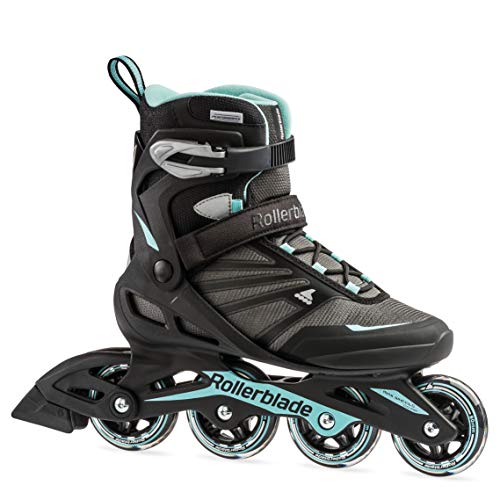 Rollerblade Zetrablade Women's Adult Fitness Inline Skate
- Entry-level balanced skate for women with a comfortable…
- Durable shell makes learning skate easier
- Padded liner and secure closure system ensure snug…
| Product | Key specs | |
|---|---|---|
| METROLLER Adult Inline Skates for Men Women | ENTRY LEVEL INLINE SKATES Created for adults and… RECREATIONAL SKATES Fully wrapped with Honeycomb mesh COMFORTABLE & ADJUSTABLE Inline skates offer the range… | Check price |
| PAPAISON Adjustable Inline Skates for Kids and | (Please must confirm the size before placing the… Our inline skates for kids come with four… Frame of our inline skate is made from… | Check price |
| Rollerblade Zetrablade Women's Adult Fitness Inline Skate | Entry-level balanced skate for women with a comfortable… Durable shell makes learning skate easier Padded liner and secure closure system ensure snug… | Check price |
 2PM SPORTS Adjustable Inline Skates for Men 2PM SPORTS Adjustable Inline Skates for Men | 4 Sizes Adjustable Inline Skates: Kids can ride… 8 Wheels Illuminating Inline Skates: Gain confidence in… High-end Features Roller: Enjoy a smooth, quiet and… | Check price |
As an Amazon Associate we earn from qualifying purchases at no extra cost to you.
Wheels of 100–110 mm maintain speed over longer distances and roll across small cracks more smoothly, but they raise the skater higher and make quick corrections less forgiving. Three-wheel frames also tend to feel more demanding during starts and stops.
Wheel hardness is usually shown as a number followed by “A.” Around 80A is a useful compromise for outdoor recreation: enough grip for ordinary asphalt while still providing reasonable durability. Harder wheels around 84A–88A can roll quickly on smooth paths but may feel harsh or slippery on dusty, rough, or damp surfaces. Softer wheels wear sooner and should not be used on wet pavement.
Frame material and length
Composite frames are commonly found on entry-level recreational skates. They reduce cost and absorb some vibration, but they are generally heavier and less precise than aluminum frames. Aluminum frames transfer power more directly and usually last longer under frequent use, although they can transmit more road vibration.
Frame length matters as much as material. A frame around 243–255 mm is maneuverable for learning and city riding. Longer frames, often about 270–300 mm on fitness or speed-oriented skates, improve straight-line stability but require more space to turn. A compact urban frame is easier to control around pedestrians, corners, and narrow cycle paths.
Boot support and closure
A soft fitness boot prioritizes ventilation and comfort. It is suitable for relaxed sessions, provided the heel stays firmly seated. An urban hard-shell boot gives more lateral support and protects the foot from impacts, but it can require a longer break-in period.
Look for three useful closure points: a lower buckle or lace system over the foot, a 45-degree strap that holds the heel down, and an upper cuff buckle for ankle support. Laces alone can work, but they must be tightened consistently. Excessively rigid support is not automatically better; the boot should let you flex forward without your ankle collapsing inward or your toes being forced against the front.
Brake setup
A heel brake is one of the most valuable beginner features. It allows a controlled stop without requiring advanced hockey stops or sharp turns. Check whether the brake is installed on one skate, supplied separately, or compatible only with a particular frame position. Some urban skates omit a brake to keep the frame compact, so confirm that before buying.
Braking technique depends on equipment. Keep the braking skate slightly ahead, bend both knees, lift the toes of the braking skate, and apply gradual pressure. A brake pad is a consumable: replace it when the wear indicator is reached or when the pad becomes too short to contact the ground safely.
Head-to-head comparison of common skate types
| Skate type | Typical setup | Best use | Main advantage | Main compromise |
|---|---|---|---|---|
| Entry recreational | 4 x 76–80 mm, 78A–82A wheels; composite frame | Lessons and occasional rides | Stable, affordable, easy to control | Slower and heavier on long routes |
| Fitness | 4 x 80–100 mm, 80A–85A wheels; aluminum frame | Weekly exercise and paved trails | Efficient rolling with good comfort | Less nimble in tight city spaces |
| Urban hard-shell | 4 x 80–90 mm, 80A–88A wheels; aluminum or reinforced frame | Commuting and mixed pavement | Durability and responsive handling | Less ventilation and more break-in time |
| Three-wheel fitness | 3 x 100–110 mm, 82A–88A wheels; aluminum frame | Long, smooth fitness routes | Speed and ability to roll over small surface changes | Higher stance and more demanding braking |
Matching a skate to your experience
For a complete beginner
Choose four wheels between 76 and 80 mm, a moderate wheel hardness near 80A, and a removable heel brake. A supportive soft boot or forgiving hard shell is preferable to an ultra-light speed boot. Your first priority is learning a controlled stance, forward stride, turning, and stopping—not reaching the highest speed.
Expect a reasonable recreational setup to cost roughly $80–$180, while better-supported fitness and urban models commonly fall around $150–$300. Very low-cost skates may save money initially but can have non-replaceable wheels, weak buckles, or liners that compress quickly.
For fitness sessions
If you plan to skate once or twice a week for 30–60 minutes, an 80–90 mm four-wheel fitness skate is usually the most versatile choice. A 90–100 mm setup makes more sense when your routes are smooth, longer, and relatively straight. Prioritize a ventilated liner, a frame that holds its alignment, and wheels and bearings that can be replaced individually.
For example, a $220 pair used twice weekly for one year provides about 104 sessions, or approximately $2.12 per session before replacement parts. That calculation makes durability more important than a small difference in the initial price.
For city riding
Urban routes reward control rather than maximum wheel size. Choose a short frame, a sturdy cuff, and wheels around 80–90 mm. An urban hard-shell design is useful when you expect frequent stops, curb transitions, or occasional contact with rough surfaces. Models such as the Rollerblade RB Cruiser and FR Skates FRX 80 represent this general format, although exact configurations can vary by size and market.
Do not treat skates as a substitute for walking over stairs, broken pavement, or crowded crossings. Plan routes with smooth surfaces, check local rules, and use a helmet plus wrist, knee, and elbow protection while developing skills.
Getting the fit right
Measure both feet at the end of the day while wearing the socks you will skate in. Stand on paper, mark the heel and longest toe, and measure in millimeters. Use the manufacturer’s internal-length chart rather than converting automatically from your everyday shoe size.
- Your toes may lightly touch the liner while standing upright, but they should move slightly when your knees are bent.
- Your heel should not lift noticeably when you flex forward or pull upward with the cuff.
- The widest part of your foot should not be compressed by the shell or buckle.
- Do not size up substantially to create “comfort”; excess space causes foot movement and blisters.
Wear the skates indoors for 10–15 minutes before an outdoor session. Small pressure points can sometimes be solved by changing sock thickness or adjusting the closure sequence. Persistent numbness, sharp pain, or pressure should not be ignored; stop using the skates and seek advice from a qualified footwear or medical professional if needed.
Maintenance that protects your purchase
Wheels and brake pads usually wear first. Rotate the wheels when their edges become visibly uneven, typically after several outdoor sessions depending on body weight, surface, braking technique, and wheel compound. Replace wheels when they are substantially smaller than their original diameter or have deep flat spots. Replace bearings when cleaning no longer restores smooth rotation or when they feel gritty.
After wet or dusty rides, remove surface dirt with a dry cloth and let liners air-dry outside the shell. Do not store damp skates in a closed bag, and do not use high heat to dry foam liners. Keep bearings away from water, inspect buckles and cuff bolts, and tighten hardware carefully without stripping the threads.
A common mistake is choosing the largest wheels available before learning to stop. Another is tightening the upper buckle so aggressively that ankle movement becomes restricted while the heel still shifts. The best inline skates are the pair whose wheel size, support, brake arrangement, and fit match the routes you can control safely and consistently.
Bottom line
Start with 76–80 mm wheels and a heel brake for lessons, move to 80–100 mm aluminum-frame fitness skates for regular exercise, and choose a durable 80–90 mm urban hard shell for mixed city routes. Fit and braking confidence matter more than a larger wheel, a lighter specification, or a higher advertised speed.







