
Key takeaways
- Built to Endure: Crafted with precision and durability…
- Unmatched Value: Say goodbye to exorbitant price tags…
- Optimal Functionality & Comfort: Unlike flimsy alternatives that…
The best karate gis depend on whether you need a light, easy-care uniform for frequent practice, a durable middleweight gi for everyday training, or a stiff competition cut that meets your organization’s rules.
Our top picks
 Premium Karate Uniform
- Built to Endure: Crafted with precision and durability…
- Unmatched Value: Say goodbye to exorbitant price tags…
- Optimal Functionality & Comfort: Unlike flimsy alternatives that…
 ProForce 6oz Student Karate Gi / Uniform
- 6 ounce lightweight material
- 55 percent cotton and 45 percent polyester permanent…
- Elastic drawstring pants for an excellent fit every…
 Hawk Sports Karate Uniform
- Slip into Comfort
- Fluid Motion
- Built to Conquer
| Product | Key specs | |
|---|---|---|
| Premium Karate Uniform | Built to Endure: Crafted with precision and durability… Unmatched Value: Say goodbye to exorbitant price tags… Optimal Functionality & Comfort: Unlike flimsy alternatives that… | Check price |
| ProForce 6oz Student Karate Gi / Uniform | 6 ounce lightweight material 55 percent cotton and 45 percent polyester permanent… Elastic drawstring pants for an excellent fit every… | Check price |
| Hawk Sports Karate Uniform | Slip into Comfort Fluid Motion Built to Conquer | Check price |
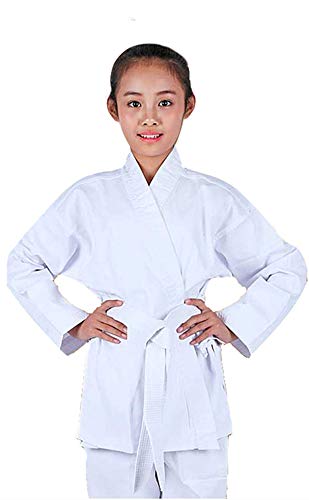 NAMAZU Karate Uniform for Kids and Adult NAMAZU Karate Uniform for Kids and Adult | ★ DESIGNED FOR MARTIAL ARTS The karate uniform… ★ HIGH QUALITY MATERIAL Karate gi are made… ★ METICULOUS SEWING Traditional Martial Arts uniform are… | Check price |
As an Amazon Associate we earn from qualifying purchases at no extra cost to you.
Quick picks by situation
| Situation | Best gi type | Typical fabric weight | Why it fits | Belt included? |
|---|---|---|---|---|
| Beginner training 1–2 times weekly | Lightweight cotton or cotton-polyester student gi | 6–9 oz (170–255 g/m²) | Affordable, comfortable, and dries relatively quickly | Sometimes; check the package |
| Regular dojo training 3–5 times weekly | Middleweight traditional-cut gi | 9–12 oz (255–340 g/m²) | Better resistance to repeated washing and gripping | Usually no |
| Advanced kata practice | Heavyweight brushed-cotton kata gi | 12–16 oz (340–455 g/m²) | Structured cut and louder fabric movement emphasize technique | Usually no |
| Kumite competition | Light or medium competition-cut gi | 7–10 oz (200–285 g/m²) | Allows movement and is less burdensome during a long event | No |
| WKF-style competition | Gi carrying the required approval or conformity marking | Varies by model | Designed around competition specifications, but tournament rules still control | No |
What separates the best karate gis
Fabric weight: comfort versus structure
Lightweight gis are often the most practical choice for beginners. They feel less restrictive, cost less, and require less drying time after class. The trade-off is that thin fabric can show wear sooner at the knees, cuffs, and underarms, especially when the wearer trains on abrasive flooring or washes the gi several times each week.
Middleweight fabric is the most versatile choice for most practitioners. It provides enough structure for kihon and kata without becoming excessively hot during kumite drills. If you attend three or more classes each week and want one dependable uniform, this is usually the safest balance.
Heavyweight gis are associated with kata because the denser fabric creates a sharper snap during fast techniques. They also feel more substantial during gripping and can last well when properly cared for. However, they are hotter, slower to dry, and less forgiving if the cut is too tight. A heavy gi is not automatically better for sparring or for a new student.
Weave and fabric blend
A plain-weave or single-weave gi is generally lighter and smoother. It is comfortable for general classes and often dries faster. A pearl weave or other textured weave can add breathability and visual structure without reaching the weight of a very dense traditional canvas.
Double-weave and canvas-like fabrics are thicker and more resistant to pulling, but they can feel stiff at first. They also hold more water in the wash. Cotton gives a traditional feel and absorbs sweat well; cotton-polyester blends usually shrink less and dry faster, although some practitioners prefer the hand and sound of pure cotton.
Brand labels are not perfectly consistent: one company’s “lightweight” may feel like another company’s mediumweight. Treat the listed fabric weight, cut measurements, and wash instructions as more useful than the marketing name.
Head-to-head: common gi choices
| Gi category | Typical construction | Strengths | Limitations | Best use |
|---|---|---|---|---|
| Student uniform | 6–9 oz cotton-polyester or light cotton | Low cost, comfortable, faster drying | Less durable; may look soft after repeated washing | Beginners and casual training |
| Traditional middleweight | 9–12 oz cotton, often reinforced at stress points | Balanced durability, comfort, and appearance | Can shrink noticeably if washed hot | Most regular dojo training |
| Heavy kata gi | 12–16 oz cotton, stiff or brushed weave | Strong structure and pronounced movement sound | Hot, bulky, and slow to dry | Kata-focused practice and events where permitted |
| Competition kumite gi | Light-to-medium fabric with competition-oriented cut | Mobility and reduced heat | Less dramatic appearance; rules may specify details | Kumite and tournament use |
Competition rules matter more than brand
Before buying a competition gi, check the rules for the exact organization and event. World Karate Federation-style events can specify jacket length, sleeve and trouser dimensions, color, approved equipment, and identification marks. National federations, school leagues, and independent tournaments may apply different requirements.
Brands such as Arawaza, Adidas, Hayashi, Mizuno, Shureido, and Tokaido sell karate uniforms in training and competition-oriented ranges, but a reputable brand name does not guarantee that every model is legal for every event. Look for the event’s required approval or conformity marking when applicable, and confirm whether patches, embroidery, sponsor marks, and manufacturer logos are restricted.
Do not choose a very heavy kata gi for a kumite tournament simply because it appears more durable. The additional heat and weight may work against movement. Conversely, a very light student gi may lack the cut, finish, or required markings expected in a formal competition.
Sizing, shrinkage, and fit
Karate gi sizing is commonly based on height, but body proportions vary considerably. Measure height, chest, waist, sleeve reach, and inside leg before ordering. When between sizes, the correct choice depends on the fabric and the dojo’s preferences: preshrunk cotton may allow a closer selection, while untreated cotton often needs extra length.
- Jacket: the hem should provide comfortable coverage without restricting the hips. Sleeves should normally finish around the wrist area, subject to your organization’s rules.
- Trousers: allow full knee flexion and kicking movement without the waistband cutting in. The cuffs should not drag on the floor.
- Shoulders and seat: a gi should not pull across the upper back during punches, blocks, or a deep stance.
- Competition fit: prioritize the published tournament measurements rather than an oversized “traditional” appearance.
Pure cotton can shrink approximately 3–8% depending on finishing, washing temperature, and drying method. A 180 cm trouser inseam-equivalent length could therefore lose roughly 5–14 cm under severe shrinkage, although actual results vary by garment and manufacturer. Cotton-polyester blends usually shrink less, but they are not shrink-proof.
For a new cotton gi, follow the label first. If the uniform is intentionally oversized and the manufacturer permits it, a cool wash and air drying offer more control than putting it straight into a hot dryer. Never assume that one hot wash will shrink only the sleeves; jacket and trouser dimensions can change unevenly.
Does a karate gi include a belt?
Many beginner bundles include a white belt, but standalone uniforms from specialist brands generally do not. A supplied belt may be useful for a first class, yet it is rarely a reason to choose one gi over another. Belts are inexpensive compared with a quality uniform, and your instructor may specify the appropriate color, width, or knot style.
Check the product contents for the exact wording “belt included.” A listing that says “complete uniform” may include a belt, while “jacket and pants” does not. Advanced practitioners should expect to buy the belt separately.
Ownership costs and maintenance
The purchase price is only part of the decision. If a lightweight gi costs $40 and lasts 60 classes, its clothing cost is about 67 cents per use. A $120 middleweight gi lasting 240 classes costs 50 cents per use, before laundry. The more expensive uniform can be the better value if its seams and fabric withstand your training schedule.
To extend service life:
- Wash after every sweaty session rather than leaving the damp gi in a closed bag.
- Use the temperature recommended on the care label; high heat accelerates shrinkage and can weaken elastic components.
- Air-dry when possible, especially during the first several washes.
- Inspect knee panels, sleeve cuffs, trouser drawstrings, and underarm seams every few weeks.
- Keep a second gi if you train on consecutive days; rotating uniforms gives each one time to dry and reduces wash stress.
The most common mistake is buying by height alone. The second is selecting a very heavy gi for a hot room or frequent kumite. For most people, a correctly fitted 9–12 oz uniform is the best all-purpose starting point; move lighter for heat and competition mobility, or heavier when kata structure and fabric response are the priority.
Final buying recommendation
Choose a lightweight student gi for occasional training and a middleweight cotton or cotton-blend gi for regular practice. Choose a heavyweight kata model only when you specifically want its structured feel and can manage the heat and drying time. For competition, verify the event rules first, then buy a model whose measurements, color, markings, and approval status match those rules. The best karate gis are not the heaviest or most expensive ones—they are the uniforms whose fabric, cut, shrinkage behavior, and compliance suit the way you actually train.


