Key takeaways
- Best Overall: Wilson NBA Forge Indoor/Outdoor, size 7, a balanced all-surface ball.
- Best Premium Indoor Feel: Molten BG3800, a FIBA-approved composite-leather ball.
- Best for Rec Leagues: Spalding TF-250 Indoor-Outdoor, a composite ball built for mixed surfaces.
- Best Outdoor Ball: Wilson NBA DRV Pro Outdoor, with a rubber Tackskin cover.
- Best Budget Outdoor: Spalding Street Outdoor, a basic rubber ball for blacktop.
- Best Value Composite: AND1 Street Grip Composite, which comes with a pump.
- Best Youth and Community Ball: Baden Contender Indoor-Outdoor, a wide-channel ball for mixed-age groups.
The best basketball ball for most players is the Wilson NBA Forge Indoor/Outdoor in size 7, because it handles both a gym floor and a driveway without forcing a compromise on grip or feel. If you play mostly on an indoor court and want a true game-ball feel, the Molten BG3800 is the runner-up, with its FIBA approval and composite-leather cover. Those two lead a list of seven balls that we compared on cover material, size, intended surface and ownership realities. This guide is research-based: we did not personally use these products, and every spec comes from manufacturer pages and retail listings that we cross-checked.
When people search for the best basketball ball, they are really asking three questions at once: which cover suits my court, which size fits my age, and how much should I spend. A rubber ball survives asphalt but feels slick on hardwood in some conditions; a composite ball feels better in the hand but wears faster outdoors; a premium indoor ball can be ruined by a few weeks on blacktop. The sections below answer those questions pick by pick, then step through a buying guide with concrete size and pressure thresholds.
Our top picks


As an Amazon Associate we earn from qualifying purchases at no extra cost to you.
Top Picks at a Glance
- Best Overall: Wilson NBA Forge Indoor/Outdoor, size 7, a balanced all-surface ball.
- Best Premium Indoor Feel: Molten BG3800, a FIBA-approved composite-leather ball.
- Best for Rec Leagues: Spalding TF-250 Indoor-Outdoor, a composite ball built for mixed surfaces.
- Best Outdoor Ball: Wilson NBA DRV Pro Outdoor, with a rubber Tackskin cover.
- Best Budget Outdoor: Spalding Street Outdoor, a basic rubber ball for blacktop.
- Best Value Composite: AND1 Street Grip Composite, which comes with a pump.
- Best Youth and Community Ball: Baden Contender Indoor-Outdoor, a wide-channel ball for mixed-age groups.
Comparison Table: Basketballs Side by Side
| Ball | Best for | Key specs | Watch for | Price tier |
|---|---|---|---|---|
| Wilson NBA Forge Indoor/Outdoor | All-surface play | Size 7 (29.5 in), Pure Feel cover, NBA Pro seams | Several Forge versions use different covers | Mid-range |
| Molten BG3800 | Indoor courts, teams | Size 7, composite leather, FIBA approved, butyl bladder | Retailers disagree on outdoor suitability | Mid-range |
| Spalding TF-250 | Rec leagues, camps | Size 7 (29.5 in), composite cover, butyl bladder | Composite cover wears faster outdoors | Mid-range |
| Wilson NBA DRV Pro Outdoor | Blacktop and concrete | Rubber Tackskin cover, butyl core, NBA Pro seams | Air retention reports vary | Budget |
| Spalding Street Outdoor | Cheap outdoor ball | Size 7 (29.5 in), rubber, outdoor use | Basic feel; wears on rough courts | Budget |
| AND1 Street Grip | Composite on a budget | Size 7, composite leather, pump included | Streetball grip; less refined than game balls | Budget |
| Baden Contender | Mixed-age groups | Indoor-outdoor, wide channel, youth and adult sizes | Specific cover material not listed | Mid-range |
1. Wilson NBA Forge Indoor/Outdoor: Best Overall
- Size: 7 (29.5 inches); sizes 5 and 6 are also made.
- Cover: Pure Feel cover on the standard Forge; higher versions use composite or Real Grip coatings.
- Construction: NBA Pro seams with a re-engineered channel design and an inflation retention lining.
- Use: marketed for indoor and outdoor play.
- Weight and recommended pressure: not listed on the pages we found; check the ball and Wilson’s guidance.
Best for: players who use one ball on a school gym in winter and a park court in summer. Skip if: you only play on polished hardwood and want a purist game ball.
The reason this ball wins is that it avoids the usual trade-off. Rubber balls are rugged but can feel hard and slick, while premium composite balls feel lovely but are costly to scuff. The Forge sits between them, with a cover that Wilson describes as giving a pro feel and a seam and channel layout designed to be familiar to players who have handled NBA-style balls. Because the same name covers several versions (standard, Plus, Pro), read the product title carefully so you know which cover you are buying.
In practice, this is the ball we would hand to a mixed group of players. It is easy to inflate to a sensible pressure, it shares the seam pattern of better balls, and you do not need to worry about it as much when it rolls onto a patch of rough concrete. The main limit is that the standard version is not the grippiest option when hands are sweaty, so if you shoot a lot in hot weather keep a towel nearby.
Pros: flexible indoor and outdoor use; familiar seam pattern; sizes for all ages; trusted brand. Cons: multiple Forge variants cause confusion; weight and pressure not listed on retail pages.
2. Molten BG3800: Best Premium Indoor Feel
- Size: 7 for adults and boys 14 and up; sizes 5 and 6 exist in the same series.
- Cover: composite leather with a 12-panel design.
- Approval: FIBA approved.
- Bladder: butyl, with a nylon-wound construction.
- Weight: roughly 590 to 650 grams depending on the listing.
Best for: indoor leagues, school teams and serious practice. Skip if: most of your play is on rough outdoor courts.
Molten is one of the standard names in international basketball, and the BG3800 is its accessible composite-leather model. The cover has a leather-like texture that sticks to the fingertips on clean courts, and the 12-panel design is distinct from the 8-panel pattern most American-brand balls use. If you coach or play in a league that follows FIBA rules, this is the ball that matches what you will meet in competition.
Retailers disagree on outdoor suitability. Most list it as indoor/outdoor, but at least one retailer recommends indoor use only, which is the safer reading. Composite covers do tolerate outdoor play, but they wear faster on abrasive concrete, and a ball you paid more for should not be treated as a blacktop ball. Treat it as the nice ball you carry in a bag and keep off rough surfaces.
Pros: FIBA approval; composite leather feel; butyl bladder; wide size range. Cons: best kept indoors; origin and weight details vary across listings.
3. Spalding TF-250 Indoor-Outdoor: Best for Rec Leagues
- Size: 7 (29.5 inches), with size 6 (28.5) and size 5 (27.5) available.
- Cover: all-surface composite leather.
- Seams: Shooter’s Seam design for visual feedback on rotation.
- Bladder: butyl rubber for air retention.
- Pressure: recommended around 8 PSI, shipped inflated.
Best for: rec leagues, summer camps and school PE programs. Skip if: your main surface is rough asphalt.
The TF-250 is designed for mixed environments, so a coach with one set of balls and a gym that doubles as a playground will appreciate it. A composite cover gives a better touch than rubber for a similar investment, and the Shooter’s Seam is a visual aid more than a performance claim: it helps beginners see backspin.
Spalding’s own care notes point out that rubber is advisable for outdoor play, which tells you the cover will wear faster outside. A reasonable rule is to rotate: keep the TF-250 for indoor sessions and covered courts, and bring a rubber ball for rainy or rough surfaces. Retail pages also disagree on the size and weight of the youth variants, so confirm the size before buying a set.
Pros: composite cover; shipped game-ready; wide size range; useful for programs. Cons: wears faster outdoors; retail size details can be inconsistent.
4. Wilson NBA DRV Pro Outdoor: Best Outdoor Ball
- Cover: rubber Tackskin with a cushion layer for grip.
- Core: butyl, with an inflation retention lining.
- Seams: NBA Pro seams with a new channel construction.
- Sizes: 7 (29.5 in), plus 6 and 5 versions.
- Eco variant: a DRV Pro Eco uses at least 30 percent recycled rubber.
Best for: players who live on blacktop and want a better-feeling rubber ball. Skip if: you want a leather-like indoor touch.
The DRV Pro is the upgrade for people who find plain rubber balls too hard. The Tackskin layer is intended to improve grip across weather, and independent reviewers describe it as slightly grippier than other rubber outdoor balls, while noting that it does not match composite leather. That is exactly the right expectation: you pay a modest amount for a cover that holds up on rough concrete while feeling better than a basic rubber ball.
Air retention is the one area with mixed reports, with some shoppers saying it holds pressure inconsistently. A simple routine solves most of that: check the pressure weekly, keep a needle and pump in your bag, and avoid leaving the ball in a hot car. The ball is also available in smaller sizes, which makes it one of the easier ways to buy a matching set for a family.
Pros: durable rubber cover; improved grip; NBA Pro seams; multiple sizes. Cons: air retention reports vary; not a game-ball feel.
5. Spalding Street Outdoor: Best Budget Outdoor Ball
- Size: 29.5 inches (official size 7).
- Cover: rubber, built for outdoor courts.
- Use: outdoor; listings do not claim indoor play.
- Seams and channels: not listed in the detail we found.
- Pump: not listed as included.
Best for: casual pickup games, backyard hoops and replacing a lost ball. Skip if: you want improved grip or a softer feel.
Not every basketball needs to be special. If the ball spends its life in a driveway, gets thrown in a trunk and sometimes ends up in the neighbor’s yard, a basic rubber ball is the sensible purchase. Rubber covers shrug off asphalt, rain and dirt, and the cost of replacement is low enough that you do not have to baby it.
What you give up is touch. A basic rubber ball is firmer and can feel slick when your hands are damp, so it is the ball for pickup games rather than for developing shooting form. Pair it with a pump and a needle, because rubber balls lose pressure gradually and a flat ball bounces poorly no matter how good the cover is.
Pros: low cost; rugged cover; official size; easy to replace. Cons: basic feel; limited grip; details like seam depth not listed.
6. AND1 Street Grip Composite: Best Value Composite
- Size: official size 7 (29.5 inches).
- Cover: premium composite leather per the listing.
- Included: a pump.
- Use: streetball, indoor and outdoor.
- Weight and channel depth: not listed.
Best for: players who want composite feel and a pump in one purchase. Skip if: you need a league-approved ball.
AND1 built its name on streetball, and this ball leans into that with a grippy composite cover aimed at people who play mostly outdoors but want something nicer than rubber. The included pump is a practical bonus because many people buy a ball and then have no way to inflate it properly.
It is not a league ball, and listings do not claim any approvals. Treat it as a good practice and pickup ball that offers a better first touch than a plain rubber one. As with every composite cover, it will wear faster on rough concrete, so keep it for smoother courts and covered spaces where possible.
Pros: composite cover at a low cost; pump included; official size. Cons: no league approval; wears faster on rough courts.
7. Baden Contender Indoor-Outdoor: Best Youth and Community Ball
- Use: indoor and outdoor; listed for youth and adults.
- Design: wide channels for easier gripping.
- Sizes: multiple sizes in the line; check the listing for the one you want.
- Cover material: not listed in the detail we found.
- Look: natural orange.
Best for: youth programs, community centers and families with different ages. Skip if: you need a specific cover material or league approval.
Baden is a long-established name in team ball sports, and the Contender is aimed at the mass of players who do not need professional features. Wide channels make the ball easier to grip for smaller hands, which is helpful for a mixed group where some players are still developing finger strength.
Because the cover material is not clearly listed, we recommend reading the current product description before buying a set. Treat it as a dependable community ball rather than a specialist one. For serious indoor competition, choose the Molten or a Wilson Evolution; for general play, this fits.
Pros: wide channels; works for youth and adults; indoor and outdoor; trusted brand. Cons: cover material not listed; fewer performance details than rivals.
Also Consider
- Wilson Evolution Indoor Game Basketball (size 6): the classic indoor school game ball in an intermediate size, premium in cost; choose it for indoor-only girls’ and middle-school programs.
- Wilson NBA DRV Series (size 5): a low-cost outdoor ball in youth size 27.5 inches; a good gift for younger kids.
- Champion Sports Rubber Junior Basketball: a heavy-duty rubber ball in a junior size for school yards and PE classes.
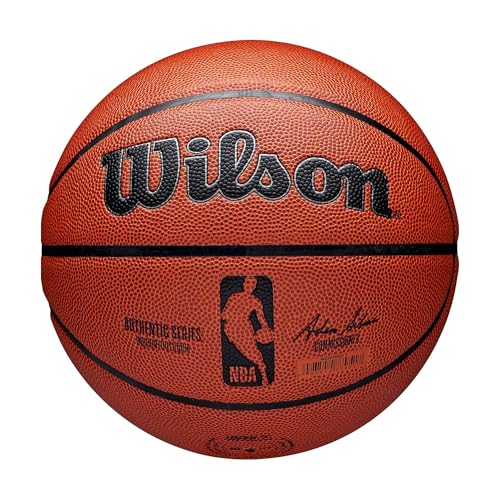
- Wilson NBA Authentic Indoor/Outdoor: a step-up Wilson option for players who want an NBA-branded ball for both surfaces.
How We Chose
This guide is research-based, and we did not personally use these balls. We began with basketballs currently listed and sold, then compared manufacturer pages, retailer listings and independent reviews such as published rubber-versus-composite comparisons. We included two Wilson and two Spalding balls at most, one each from Molten, AND1 and Baden, and we looked for variety across cover type, size and intended surface.
Where listings disagreed on a detail, we reported the disagreement or marked the spec “not listed”. Price is shown by tier only (budget, mid-range, premium) because retail prices change often. We also left out novelty balls, foam balls and mini hoops, since the search intent is for a standard basketball for real play.
Buying Guide: How to Choose a Basketball
Size by age
Size 7 (29.5 inches) is the official size for men and for high school and older players. Size 6 (28.5 inches) is standard for women and for many players in the 12 to 14 age range. Size 5 (27.5 inches) fits roughly ages 9 to 11. Younger children often start with smaller mini balls. When in doubt, a player who has trouble holding the ball with one hand in a comfortable shooting position should size down.
Cover: rubber, composite or leather
Rubber is the best outdoor choice because it handles abrasion, moisture and temperature swings. Composite leather feels softer, grips better with clean hands and suits indoor or covered use. Full leather is for indoor competition only and is the most expensive. Mixed-use balls are labeled indoor/outdoor, but the cover still determines how long they last on concrete.
Surface and where you play
If more than half your play is on asphalt or concrete, buy a rubber or rubber-cover ball first. If your main court is a gym or you rotate between gyms, a composite ball is worth the extra cost. If you play on both, the practical answer is two balls: a composite for the gym and a rubber for the park. That doubles the lifespan of each.
Channels, seams and grip
Deeper channels give fingertips something to hold, which helps beginners and players with small hands. Shallower channels produce a smoother feel for experienced shooters. Pebbling quality matters more than marketing words, so when the listing does not describe the cover in detail, read independent reviews.
Inflation and care
Most balls recommend about 7.5 to 8.5 PSI, and many print the range near the valve. Check pressure weekly; a ball that is too hard bounces unpredictably and one that is too soft kills the dribble. Use a wet-needle method when inflating, wipe the cover after playing and avoid leaving balls in a hot car or on cold concrete for long periods.
Common Mistakes When Buying a Basketball
- Buying an expensive composite ball and using it on rough asphalt.
- Choosing the wrong size for a growing player and building bad shooting habits.
- Assuming “indoor/outdoor” means equally good on both surfaces.
- Skipping the pump: a ball without a needle and pump will lose pressure and feel dead.
- Ignoring variant names such as Plus, Pro and Eco, which change the cover.
Quick Decision Matrix: Match the Ball to Your Situation
| Your situation | Choose | Why |
|---|---|---|
| Driveway or park, played several times a week | Wilson NBA DRV Pro Outdoor | Rubber Tackskin cover shrugs off asphalt |
| School gym and weekend park | Wilson NBA Forge Indoor/Outdoor | One ball that handles both surfaces |
| Indoor league or team practice | Molten BG3800 | FIBA-approved composite leather |
| Coaching a rec program or camp | Spalding TF-250 | Composite cover made for mixed surfaces |
| Replacing a lost ball cheaply | Spalding Street Outdoor | Basic rubber, low cost, official size |
| First composite ball with a pump | AND1 Street Grip | Composite cover and pump in one purchase |
| Mixed ages in one family or center | Baden Contender | Wide channels, youth and adult sizes |
A useful way to use this table is to think about the worst surface the ball will regularly meet. If that surface is rough concrete, pick from the rubber rows no matter how nice a composite ball feels in the store. If the worst surface is a clean gym floor, you can afford to chase touch. Players who tend to lose balls, lend them to friends or leave them in the yard should always lean toward the budget rows, because the cheapest ball that fits the court is almost always the right buy when the ball will be mistreated.
A second rule of thumb concerns growth. Youth players move up a size every couple of years, so a set of expensive balls for a ten-year-old is rarely a good use of money. Buy a mid-range ball in the correct size now, plan to replace it, and save the premium purchase for the year the player moves to the official size 7.
Frequently Asked Questions
What is the best basketball ball for outdoor courts?
A rubber-cover ball such as the Wilson NBA DRV Pro Outdoor is the best choice for outdoor courts because rubber resists abrasion on asphalt and concrete. Composite balls feel nicer but wear faster outside.
What is the best basketball ball for indoor use?
The Molten BG3800 is our indoor pick because its composite-leather cover and FIBA approval make it close to a competition ball. Full leather balls such as the Wilson Evolution are another option.
What size basketball should I buy?
Size 7 (29.5 inches) is for adult men and high school players, size 6 (28.5 inches) for women and many ages 12 to 14, and size 5 (27.5 inches) for roughly ages 9 to 11.
Can I use an indoor/outdoor basketball on both surfaces?
Yes, but the cover wears faster outdoors than indoors. Rotating between a composite ball for gyms and a rubber ball for parks gives the longest life.
How much air should a basketball have?
Most manufacturers recommend about 7.5 to 8.5 PSI; for example, Spalding lists about 8 PSI for the TF-250. Check the range printed near the valve on your ball.
How do I break in a new basketball?
Play and dribble with it on a suitable surface and keep it properly inflated. Composite and leather covers soften slightly with use, while rubber balls stay fairly constant.
Is a more expensive basketball worth it?
It is worth it if you play indoors regularly and care about feel and consistency. For outdoor casual play, a budget rubber ball is usually the better value.
Which One Should You Buy?
Choose the Wilson NBA Forge Indoor/Outdoor if you want one ball for everything. Pick the Molten BG3800 for indoor play, the Spalding TF-250 for rec leagues and camps, and the Wilson NBA DRV Pro Outdoor if your court is blacktop. The Spalding Street Outdoor is the simple, low-cost replacement ball, the AND1 Street Grip gives you a composite cover plus a pump for a modest outlay, and the Baden Contender suits mixed-age groups. Confirm the size and variant on the product page before ordering.
Sources
- Wilson Sporting Goods product pages for NBA Forge and NBA DRV Pro
- Spalding product pages for React TF-250
- Molten product pages for the BG3800 series
- Hoopsbeast independent basketball review of the Wilson DRV Pro
- Retailer listings for AND1 and Baden basketballs
Last updated: October 2026