Our Top Picks
 FORLIM Shoe & Boot Dryer for Work Boots11.5*7.2*3.611.57 x 7.2 x 3.66 inches2.27 poundsCheck on Amazon
 PEET Original Portable Electric Boot & Shoe Dryer2.5 lbs9.5 x 9.5 x 22 inches2.7 PoundsCheck on Amazon
The best dehumidifier for a sneaker collection is usually not a room dehumidifier at all: it is silica desiccant in the storage case, a gentle dryer for pairs you have just worn, and a hygrometer that keeps the display near 40 to 50 percent humidity. The eight listings below look like one category but are really three jobs: drying worn pairs, absorbing moisture in storage, and controlling odor. The three electric units are the dryers for worn pairs, with the PEET Original as the premium overnight option; for a stored collection, the silica packet set is the closest thing to a dehumidifier on the list.
That distinction matters because the damage happens in two different ways. A pair that gets worn and put straight back in a closed box can hold damp for days. A pair in a sealed display case in a humid room slowly takes on moisture from the air. A dryer helps the first problem, a desiccant helps the second, and a deodorizer solves neither, whatever its name suggests.
Below you will find the sort table, a plain explanation of what moisture does to glue and midsoles, the eight products in three groups, a worked sizing example for a 20-pair collection, and a monthly checklist.
Sorting the eight by what they really are

Arm & Hammer In-Shoe Odor Control Pouches, Moisture Absorbing, 4 Count | Shoe deodorizer inserts for odor and moisture control in sneakers, work boots, gym bags and everyday footwear


As an Amazon Associate we earn from qualifying purchases. Product prices and availability are accurate as of the date/time indicated.
FORLIM Shoe & Boot Dryer for Work Boots, Forced Air, 2-Hour Timer, Black | Telescopic Ports Reach Toe Boxes; 180° Rack Fits Sneakers, Gloves, Ski Gear, Cleats, Workers, Families, Hunters, Rain, Snow


As an Amazon Associate we earn from qualifying purchases. Product prices and availability are accurate as of the date/time indicated.

Activated Charcoal Odor Absorber, 6P Shoe Odor Eliminator for Strong Odor | Nature Bamboo Charcoal Air Purifying Bags for Shoe, Home, Car, Closet, Pet, Sneaker Deodorizer, Smoke Deodorizer Eliminator


As an Amazon Associate we earn from qualifying purchases. Product prices and availability are accurate as of the date/time indicated.

Boot Dryer for Work Boots, Electric Portable Shoe Dryer with Timer for Sneaker Socks Gloves Drying, Boot Warmer Extendable for Rainy Seasons Winter Travel


As an Amazon Associate we earn from qualifying purchases. Product prices and availability are accurate as of the date/time indicated.
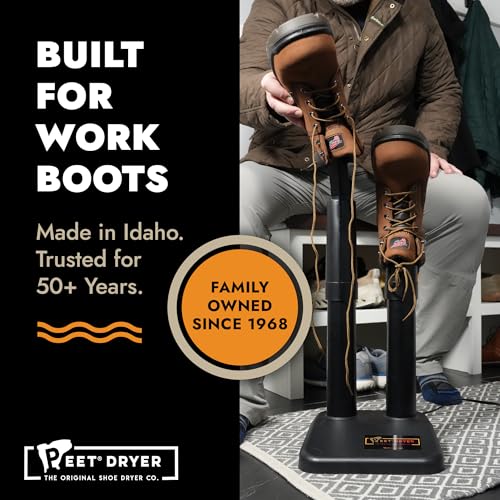
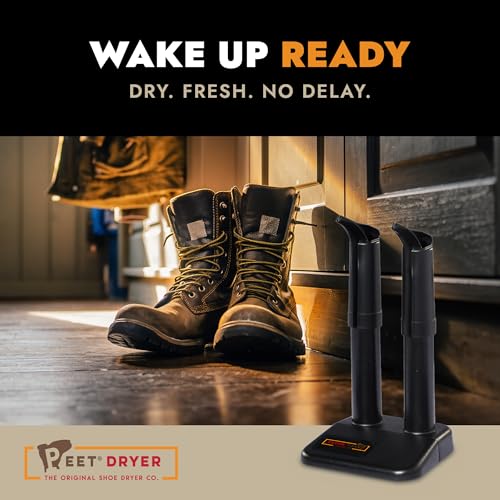
PEET Original Portable Electric Boot & Shoe Dryer, Silent & Always-On | Dries Boots, Shoes & Sneakers Overnight, Safe on All Materials, For Work, Hiking & Hunting Gear, Made in USA, 25-Yr Warranty




As an Amazon Associate we earn from qualifying purchases. Product prices and availability are accurate as of the date/time indicated.

Silica Gel Packets, 50PCS 5 Gram Premium Transparent Desiccant Packs for Storage, Moisture Absorbers for Control Absorbing, Desiccant Dehumidifiers Bags for Electronics, Clothes Shoes, Jewelry, Spices


As an Amazon Associate we earn from qualifying purchases. Product prices and availability are accurate as of the date/time indicated.

Nonscents Shoe Deodorizer - Odor Eliminator - Air Freshener - 2 Pack | 4 count, Smell Absorber, Scent Remover for Shoes, Gym Bags, Soccer Cleats, Closets, Pet Area - Reusable


As an Amazon Associate we earn from qualifying purchases. Product prices and availability are accurate as of the date/time indicated.

Boot Bananas Original Shoe Deodorizer - Odor Eliminator for Shoes and Boots | Natural, reusable hoe deodorizers that eliminates odors, absorb moisture and keep sneakers and boots fresh for 6-12 months


As an Amazon Associate we earn from qualifying purchases. Product prices and availability are accurate as of the date/time indicated.
Price tiers are relative bands inside this list, based on the price field in each listing. Check the product page for current pricing.
| Model | Key spec (from the title) | Price tier | Best for |
|---|---|---|---|
| FORLIM Shoe & Boot Dryer | Forced air, 2-hour timer, telescopic ports, 180-degree rack | Mid-range | Drying worn pairs on a timer |
| LLWAN Boot Dryer | Electric portable dryer with timer, extendable, boot warmer | Budget | Occasional drying on a budget |
| PEET Original | Portable electric dryer, silent, always-on, 25-year warranty | Premium | Overnight drying of daily-wear pairs |
| SmaringWing Silica Gel | 50 packets, 5 grams each, transparent | Budget | Display cases and storage boxes |
| Arm & Hammer In-Shoe Pouches | 4 count, moisture absorbing, odor control | Budget | Inside worn shoes and gym bags |
| Boot Bananas | Natural, reusable, odor and moisture claims | Mid-range | Reusable inserts for worn pairs |
| Innmily Charcoal Bags | Activated bamboo charcoal, 6 pack, odor absorber | Budget | Odor in closets and shoe boxes |
| NonScents Deodorizer | 2 pack (4 count), reusable, odor eliminator | Mid-range | Odor in shoes and gym bags |
If a listing had to be sorted honestly into a single column, it would look like this: three dryers, one real desiccant, two moisture-absorbing inserts, and two odor products. Nothing here replaces a hygrometer, which is the part most collectors skip.
What damp does to glue and midsoles
Most sneakers are assembled from several materials held together by adhesive: leather or textile uppers, foam or rubber midsoles, rubber outsoles, and a cemented or stitched joint between them. Each reacts to moisture differently.
Adhesives. Many shoe cements are polymers that soften or lose grip when they are repeatedly wetted, warmed and dried. A pair that spends months in a humid closet may show sole edges lifting at the toe or heel first, because that is where flex stress is highest.
Midsoles. Some polyurethane (PU) midsoles are known to degrade over the years through a chemical reaction with water vapor, a process commonly called hydrolysis. The result is foam that turns crumbly, sticky or powdery, usually while the shoes sit unworn. This is a general property of the material, not a statement about any specific brand, and it is the reason collectors care about storage humidity even for pairs they never wear.
Heat. Dryers and heated inserts add a second risk. Warm air can speed up drying, but excessive warmth can soften adhesive and warp foam. Anything labeled a boot warmer deserves a close read of the temperature information, especially for vintage pairs.
Mold and odor. Damp leather and suede can grow mold, and damp insoles hold odor. That is the one area where the odor products on this list can legitimately help, as a supporting layer after the pair is dry.
A rough number for context: feet are often said to release around half a pint of perspiration a day, and while socks and insoles absorb most of it, some always ends up in the shoe. That figure varies widely and is a commonly cited estimate rather than something measured for this article.
Group 1: dryers for pairs you have just worn
Dryers target the shoe that is damp right now. They help most with daily-wear pairs, rain exposure and gym use, and least with deadstock sitting in a box.
FORLIM Shoe and Boot Dryer
Start with what the title says. The FORLIM is a shoe and boot dryer for work boots, using forced air with a 2-hour timer. It has telescopic ports that reach into toe boxes and a 180-degree rack said to fit sneakers, gloves, ski gear and cleats. That combination points to a stand that holds pairs in place while air is pushed into them.
The title does not say whether the air is heated and does not give a temperature. For sneakers that matters, so confirm on the product page. If the air is warm, a 2-hour limit is a feature, since it stops the unit from running unattended all night against glue. If it is unheated, the cycle is gentler and slower, closer to a fan than a heater.
Telescopic ports are the interesting design choice. They aim airflow at the toe box, where sneakers hold the most moisture, rather than just warming the shoe from outside. That helps with high-top canvas pairs and thick insoles. The rack is described as 180 degrees, which suggests you can angle pairs for airflow; ask whether low-profile sneakers sit securely on it.
For a planning estimate, assume a dryer in this class draws about 15 watts: a 2-hour cycle every day would use roughly 0.9 kWh a month, about 14 cents at an assumed 15 cents per kWh. The actual draw is not in the title.
Pros
- 2-hour timer is named in the title
- Telescopic ports aim air at toe boxes
- Rack is advertised for sneakers, gloves and cleats
Cons
- Title does not state whether the air is heated or how hot
- Marketed first for work boots, so fit on low sneakers is worth checking
- Two hours may be short for soaked pairs
Who it’s for: collectors who wear a few pairs a week and want a timer-limited dryer on the closet shelf.
LLWAN Electric Portable Boot and Shoe Dryer
The LLWAN listing is the lowest-priced of the three dryers. Its title reads: electric portable shoe dryer with timer for sneakers, socks and gloves, boot warmer, extendable, for rainy seasons and winter travel. Two words stand out for a sneaker owner: “warmer” and “extendable.”
“Boot warmer” implies heat. That is great for a soaked work boot and a worry for a cemented sneaker. The title does not say how warm it gets or whether the timer duration is adjustable, so find the temperature and the timer settings on the page before you put a favorite pair on it. Until you know, treat it like a hair dryer on low: short sessions, not close to the shoe, and never on vintage foam.
“Extendable” suggests the arms or tubes adjust to different shoe sizes. Sneakers are lower and wider than boots, so check whether the arms bend enough to sit comfortably in a low-top rather than propping it up at an angle that stresses the heel counter.
“Portable” and “travel” make it a candidate for a gym bag or a hotel room, where a damp pair is a problem and a closet rack is not available. In that role it earns its keep. As a collection tool, it is better suited to beaters than to grails, the pairs you wear hard rather than the ones you protect.
Illustrative running cost: assuming 20 watts for 2 hours a day, about 1.2 kWh a month, or roughly 18 cents. It is an assumption; the title does not list wattage.
Pros
- Lowest cost among the three dryers
- Timer and portability named in the title
- Also mentions socks and gloves for versatility
Cons
- “Warmer” raises heat concerns for glue and foam
- No temperature or timer range in the title
- Better for everyday pairs than for collectibles
Who it’s for: shoppers who want an inexpensive, travel-friendly dryer for beaters and gym pairs.
PEET Original Portable Electric Boot and Shoe Dryer
PEET is the premium option here, and its title makes bigger promises than any other dryer: silent, always-on, dries boots, shoes and sneakers overnight, “safe on all materials,” made in the USA, with a 25-year warranty. Treat “safe on all materials” as the seller’s statement. It describes an intent, not a guarantee for glued-up sneakers of every age.
The always-on concept is different from a timer. It suggests a continuous, low-level source of warmth that dries pairs slowly overnight rather than a short blast. The title does not give a temperature, so ask whether it stays at a gentle level and whether the instructions advise a maximum time. Slow, low-heat drying is generally friendlier to adhesives than a hot burst, though that is a general principle and not something this listing proves.
The 25-year warranty is stated in the title and is the most distinctive trust signal on the page. Read the terms to see what it covers.
Because the unit is built around tubes that go into the shoes, it works best when each shoe gets its own tube and the shoes sit securely. If you rotate a handful of daily pairs, one unit is enough; if you wear a lot of pairs in a single week, the always-on approach lets you set it up in the evening and forget about it.
Illustrative cost: assuming 10 watts running around the clock, about 7.2 kWh a month, or roughly a dollar. We do not know the real draw, so confirm it.
Pros
- Silent, always-on design named in the title
- 25-year warranty stated in the title
- Describes use on shoes and sneakers overnight
Cons
- Highest price of the dryers, in the Premium tier
- “Safe on all materials” is a claim, with no temperature given
- Marketed toward work, hiking and hunting gear
Who it’s for: collectors who rotate wear pairs daily and want a quiet, set-and-forget overnight dryer.
Group 2: moisture absorbers for storage and for inside shoes
These are the closest items to a true dehumidifier in this list. They work passively by pulling vapor out of a small, enclosed volume.
SmaringWing Silica Gel Packets, 50 Pieces of 5 Grams
This is the one listing that behaves like a small dehumidifier. The title describes 50 transparent desiccant packs of 5 grams each, sold as moisture absorbers for electronics, clothes, shoes, jewelry and spices. The math is easy: 50 times 5 grams is 250 grams of desiccant in total.
To make that useful, tie it to a space. A glass cabinet of 3 by 1.5 by 6.5 feet holds about 29 cubic feet. At roughly 68 degrees Fahrenheit, going from 60 percent humidity to 40 percent means removing around 3 grams of water from that volume of still air. Even a conservative planning figure of 10 percent water uptake by weight gives 250 grams of silica about 25 grams of capacity, several times more than the air needs. The remainder is headroom for door openings and for damp shoes. These are our estimates from standard air-moisture figures, not something the listing states.
The title does not mention a color-change indicator, a reactivation method, or a safe-handling guide. Look for those on the page. Keep packets away from children and pets, do not open them, and do not rely on the “spices” mention in the title as a food-safety statement.
Spread them out, one or two per pair on a shelf or in a box, and write the date on the lid so you know when to replace them. Packets that sit next to a door seal or a vent will fill faster than those in the middle of the shelf, so check the corners first when you inspect the case.
Pros
- Real desiccant, 250 grams in total
- Small packets slip into boxes and corners
- Budget tier, lowest price on the page
Cons
- No indicator or reactivation method stated in the title
- Passive and slow compared with an appliance
- Not a substitute for a hygrometer
Who it’s for: collectors with display cases or stacked boxes who want a cheap first line of defense against humidity.
Arm and Hammer In-Shoe Odor Control Pouches
These pouches go inside the shoe, which is the opposite of how the silica packets are used. The title describes a 4-count pack of moisture-absorbing pouches, shoe deodorizer inserts for odor and moisture control in sneakers, work boots, gym bags and everyday footwear.
Because they sit in the toe box, they work on the damp that actually builds up there after a wear: insole sweat and the humid pocket around the forefoot. Four pouches serve two pairs at a time. The title does not state how long a pouch lasts or whether it can be recharged, so look for a replacement interval on the listing.
For a collection, the use case is narrow but real: put a pouch in each shoe when you take a worn pair off, leave it overnight or until the next wear, and remove it before storage if you are worried about contact with light-colored linings. Do not seal them into the same case as deadstock without reading what the pouch is made of.
The title says moisture absorbing and odor control but does not say how much moisture a pouch holds. Treat it as a light-duty absorber, not a case-level dehumidifier. If a pair goes from a rainy commute to a shelf, the pouch is the quick fix and the dryer is the real one; the two work together.
It is in the Budget tier, which makes it a low-risk add-on for a gym bag or a pair that tends to smell after a long day.
Pros
- Designed to go inside sneakers and bags
- Moisture and odor named in the title
- Budget tier
Cons
- Capacity and lifespan are not in the title
- Too small to protect a whole case
- Four pouches only cover two pairs at once
Who it’s for: wearers who want a quick overnight absorber for gym pairs and daily rotation.
Boot Bananas Original Shoe Deodorizer
Boot Bananas describes itself as a natural, reusable shoe deodorizer that eliminates odors, absorbs moisture and keeps sneakers and boots fresh for 6 to 12 months. That duration is a seller claim; real life depends on how often the pair is worn and how damp it gets.
What sets it apart in this lineup is the combination of a reusable design and a stated moisture function. The title does not say what the fill is, so ask. A natural material in a fabric shell can behave very differently from silica or from charcoal, and some natural fills hold scent. Also check how it is meant to be refreshed: air out, sun, or replace.
The shape matters for sneakers. An insert designed around boots can be bulky in a low-top. Look at the dimensions and photos for the toe box, and consider whether it holds the shoe’s shape or distorts it.
For a collector, the practical idea is rotation: slide the inserts into a pair you have just worn, let them work while the pair rests, and swap them to the next pair. A reusable item avoids buying a pack of single-use pouches for each shoe.
It sits in the Mid-range tier, above the single-use items, which is fair for something with a reuse claim, though only the listing can tell you how reuse actually works. If you own many pairs, the cost per pair of coverage is worth working out before you commit.
Pros
- Reusable design stated in the title
- Names both odor and moisture
- Marketed for sneakers as well as boots
Cons
- The 6 to 12 month duration is a seller claim
- Fill material and refresh method are not in the title
- Boot-shaped inserts may be bulky in low-tops
Who it’s for: collectors who prefer a reusable insert they can move between pairs.
Group 3: odor products that are not moisture control
These two listings are honest about their job in the title: odor. They are included because shoppers searching for a sneaker dehumidifier land on them. They can sit alongside a desiccant, but they cannot replace one.
Innmily Activated Charcoal Odor Absorber, 6 Pack
Be direct about what this is: a 6-pack of bamboo charcoal bags sold as an odor absorber and air purifier for shoes, home, car, closet, pets and smoke smells. The title makes no moisture or humidity claim. Activated charcoal is chosen for adsorbing odor molecules; whether it also lowers humidity in a way that matters for glue and midsoles is not something the listing says, so we do not count it as dehumidifying.
Where it helps: a shoe box that smells musty, a closet that holds the faint odor of old foam, a gym bag. Where it does not: a display case in a humid room. The right way to use it in a collection is as a supporting layer, together with silica packets that deal with moisture, so the pair is both dry and not smelling of the closet.
Six bags across a collection of 20 pairs means roughly one bag per three or four pairs. Hang one in the closet and drop the others into the boxes of pairs that tend to smell.
Check the page for the refresh method; charcoal bags are often reactivated by sunlight, but the title does not say that.
The Budget tier makes it harmless to try. Just don’t expect it to fix a humidity reading. If the closet smells musty even after the shoes are dry, look for the source, such as a damp wall or a laundry basket, because charcoal only masks a symptom of that problem, it does not solve it.
Pros
- Six bags for several shoe boxes or closets
- Budget tier
- Useful beyond shoes, in cars and closets
Cons
- No moisture claim in the title
- Does nothing for glue or midsole protection on its own
- Refresh method not stated in the title
Who it’s for: collectors who need to deal with closet or shoe-box odor and already have a moisture plan.
NonScents Shoe Deodorizer, Two Pack
The NonScents listing is a shoe deodorizer, odor eliminator and air freshener, sold as a 2-pack of 4 pieces in total, described as a smell absorber and scent remover for shoes, gym bags, soccer cleats, closets and pet areas, and reusable. The title lists no moisture or dehumidifier function, so it belongs in the odor group.
One word is worth a pause: “air freshener.” Some products in that category add fragrance rather than only absorbing smell. The title does not say which this is, so check whether it is scented before putting it in a case with light suede or leather, where scent transfer is unwelcome.
The reusable claim and the multi-piece count make it more of a household item than a collector’s tool. If you have a gym bag, cleats and a pair of daily trainers, it fits. For a display case of limited editions, the safer bet is the silica packets and a hygrometer.
Count the pieces against your pairs. Four pieces serve two pairs, one in each shoe, or four pairs if you split them between two shoes, which is thinner coverage.
As with the charcoal bags, the right framing is a supporting layer for worn pairs, not moisture protection. It lands in the Mid-range tier in this list, which is a lot for something that does not address humidity. If scent is what you need, compare it against the cheaper charcoal bags above before ordering, since the jobs overlap, and keep the second pair of pieces as a spare for the gym bag.
Pros
- Reusable claim in the title
- Covers shoes, bags and closets
- Four pieces per order
Cons
- No moisture function in the title
- “Air freshener” wording hints at scent, so check before using near suede
- Mid-range price for an odor-only product
Who it’s for: anyone whose main problem is gym-bag or cleat smell rather than storage humidity.
A 20-pair sizing example and a monthly checklist
Suppose you own 20 pairs. Five are in the weekly wear rotation, the other 15 sit in boxes on a closet shelf and in a glass cabinet. Here is a plan built from the products above.
| Zone | Assumption | Tool |
|---|---|---|
| Wear rotation, 5 pairs | Each pair rests at least 24 hours between wears | One dryer (FORLIM, LLWAN or PEET) plus insert pouches |
| Glass cabinet, about 29 cubic feet, 8 pairs | Door opened a few times a week | Silica packets, 1 or 2 per pair, plus a hygrometer |
| Closet shelf boxes, 7 pairs | Boxes closed most of the time | One or two silica packets per box |
| Odor-prone pairs | Gym or cleats | Charcoal bags or a reusable deodorizer as a second layer |
Packet count: 8 pairs in the cabinet at 2 packets each is 16, and 7 boxes at 2 each is 14, so about 30 packets in the first pass. The 50-packet set covers that with 20 packets to spare for the shoe boxes you add later. At 5 grams each, the cabinet’s 16 packets hold 80 grams of desiccant, which on our 10 percent planning assumption is 8 grams of water capacity against about 3 grams of excess in the air itself. Leaks and damp shoes are what use up the rest, which is why you watch the hygrometer.
Monthly checklist:
- Read the hygrometer in the cabinet and the closet. Aim for roughly 40 to 50 percent.
- If a reading stays above 50 percent for a week, add packets or replace the old ones.
- Open each box, look at sole edges and midsoles for stickiness, powder or lifting glue.
- Run the dryer on worn pairs, with short cycles, and let each rest a day before it goes back in a box.
- Swap deodorizers or inserts between pairs.
The same rhythm works for other collectibles. Our guide to trading card storage boxes covers a similar humidity-and-airflow problem for paper and cardboard.
Where a real room dehumidifier fits
Every item on this page is small. If your hygrometer sits above 60 percent in the room for weeks, the cheaper fix is lowering the humidity of the room, not stuffing more packets into boxes. A room dehumidifier removes moisture from a whole space, and its tank or drain removes the water entirely, which silica cannot do at scale. None of the eight listings is one, and we do not pretend otherwise. If you reach that point, size the appliance to the room, keep the door of the closet slightly open for airflow, and keep desiccant in the display cases as a backup.
How we picked these
The Editorial team compiled this page from published specifications, manufacturer documentation and buyer reviews. We read each listing’s title and product description, noted what the seller actually claimed, and sorted the eight into jobs: drying, moisture absorbing and odor. The aim was to separate real moisture control from products that only share the shoe-care aisle.
Nobody on the team used or measured these units. Everything stated about a product comes from its title; anything else is marked as a seller claim, a planning estimate or a “check the listing” item. We do not publish star ratings or review counts, since they change constantly.
Our filters were simple. Does the title say it manages moisture, or only odor? Does the dryer say how it heats? Is the product sized for a sneaker rather than only a boot? And is the cost in line with what the listing claims to do? Where the answer was missing, we said so.
Which setup for which collector
If you own a handful of daily pairs, start with the PEET Original for overnight drying, or the FORLIM if you want a timer-limited cycle. For a display of boxed pairs, buy the SmaringWing silica set and a hygrometer first; it is the only listing here that acts like a dehumidifier. Add Arm and Hammer pouches or Boot Bananas inserts for worn pairs, and keep the Innmily or NonScents products for odor, if you need them. Always check heat details on any dryer before it touches a pair you care about.
Frequently asked questions
Do I need a real room dehumidifier for my sneaker collection?
Often not. If your closet or display case sits between roughly 40 and 50 percent relative humidity, desiccant packs and a hygrometer are usually enough. A room dehumidifier makes sense when the whole room reads above 60 percent for weeks, such as in a damp basement. None of the eight products on this page is a room dehumidifier, so measure first with a cheap hygrometer, then decide whether a bigger appliance is worth the electricity and floor space.
Can a shoe dryer damage sneakers?
It can if the heat is too high or the cycle too long. Warmth can soften the adhesives that bond soles and may warp foam or synthetic uppers. Two of the dryers here mention timers or warming, and one mentions all-material safety, but those are listing statements, so check the temperature details on the product page. Use short cycles, keep pairs from touching the heat source, and skip dryers entirely for fragile vintage pairs.
How many silica gel packets does a display case need?
The listing does not give a per-cubic-foot figure, so start with a handful per shelf and let a hygrometer guide you. As an estimate, the 50-packet, 5-gram set holds 250 grams of desiccant in total; a small glass cabinet of about 29 cubic feet has only a few grams of excess moisture in its air, so capacity matters mostly for leaks and damp shoes. Add packs if humidity climbs above 50 percent.
Do charcoal bags and shoe deodorizers absorb moisture?
Go by what each title claims. The Arm and Hammer pouches and Boot Bananas titles mention moisture, while the Innmily charcoal bags and NonScents titles talk about odor, smell and freshening only. Odor control and humidity control are different jobs. If your goal is protecting glue and midsoles from damp storage, use a real desiccant and a hygrometer, and treat odor products as a separate layer for worn pairs.
What humidity level is safe for storing sneakers?
A common target for leather, foam and adhesives is about 40 to 50 percent relative humidity. Above roughly 60 percent, mold on suede and leather becomes more likely and glue can weaken over time; far below 30 percent, leather may dry and crack. These are general collector guidelines, not brand specifications, and your climate, closet ventilation and shoe materials all matter. A hygrometer in the case tells you more than any rule of thumb.