Key takeaways
- Play competitive indoor games, in a league, school or club setting.
- Want maximum grip and consistent bounce on hardwood.
For most players, the Spalding TF-1000 is the pick for indoor-only competitive play, the TF-500 is the best all-surface choice if you play both indoors and outdoors, the TF-250 is the entry-level indoor/outdoor ball for tighter budgets, and the rubber Street line is the durable option for asphalt and concrete. Choosing the right size (29.5, 28.5 or 27.5 inches) matters just as much as choosing the model.
Our top picks


As an Amazon Associate we earn from qualifying purchases at no extra cost to you.
How the Spalding Lineup Is Organized
Spalding sorts its basketballs by where they are meant to be played. The brand’s site groups them into indoor game balls, indoor/outdoor balls and outdoor balls. The TF performance series covers the composite leather balls (TF-1000, TF-500 and TF-250), while the Street and Street Phantom balls use a rubber cover for outdoor courts. Spalding also sells Never Flat balls designed to hold their shape, and Rookie Gear balls for young children. The brand supplied official NBA balls until 2021, which is one reason the TF line carries a strong reputation.
The cover is the most important difference. Composite leather (including microfiber composite) grips better and feels better in the hand, but it wears faster on rough concrete. Rubber is tougher on asphalt but has a harder, less tacky feel.
Spalding Basketball Models Compared
| Model | Best for | Key stated traits | Notable limits |
|---|---|---|---|
| TF-1000 (Legacy / Precision) | Indoor competitive play, school and league games | Microfiber composite cover that wicks away sweat; deep channels; balanced bladder for air retention; the brand also lists Legacy versions for NAIA and NJCAA play | Spalding recommends it for indoor hardwood; premium tier; outdoor use wears the cover |
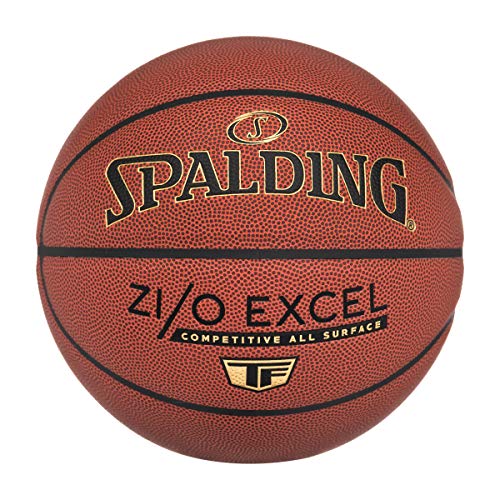
| TF-500 (listed by the brand as the Excel TF500, alongside the Zi/O TF) | Players who move between indoor gyms and outdoor courts | Composite leather cover; indoor/outdoor; deep channels; soft feel | Less durable outdoors than a rubber ball per reviewers |
| TF-250 (React) | Entry-level indoor/outdoor use on a budget | Microfiber composite cover; emphasizes grip; budget tier | Needs a short break-in; cover is lower quality than the TF-500 per one comparison |
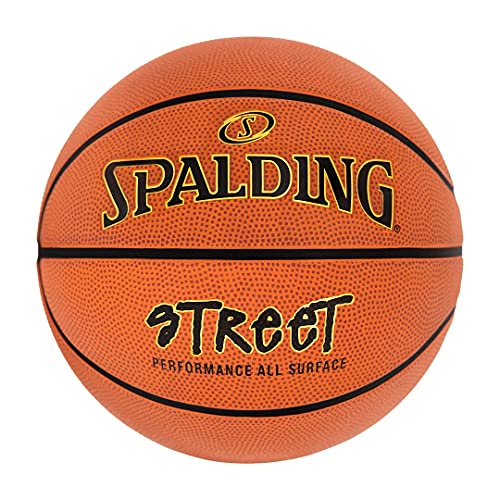
| Street / Street Phantom | Outdoor asphalt and concrete | Rubber cover; outdoor; budget-friendly and durable; official, intermediate and youth sizes | Harder, less tacky feel; not intended for indoor games |
| Never Flat | Casual players who dislike re-inflating | Designed to retain air; indoor and outdoor versions are sold | Check the product page for the cover type of the specific version |
| Rookie Gear | Children about 9 and under | Lighter than standard youth balls (about 25% lighter per a retailer listing); indoor and outdoor; youth sizing, typically the 27.5-inch size 5 | Youth-focused; not for older players |
| TF Model M (Official Leather) | Indoor purists who want genuine leather | Full-grain Horween leather; grip said to soften with use | Indoor only; premium tier; needs break-in |
Model names change by retailer (Legacy and Precision are both TF-1000 variants on the brand’s site), so confirm the size and cover on the specific product page before buying. The brand’s own product page was not fully readable during research, so details above are drawn from independent buying guides and retailer descriptions.
Indoor vs Outdoor Covers
A composite leather cover like the TF-1000’s is built for clean hardwood. It grips well, absorbs sweat and feels consistent, but concrete will scuff and smooth it quickly. Spalding advises keeping the TF-1000 for indoor play. The TF-500 and TF-250 are labeled indoor/outdoor, with the TF-500 generally regarded as the more durable of the two because of its stronger composite cover. Rubber Street balls are best on asphalt: they shrug off abrasion, though the surface can feel slick or hard compared with composite.
If you play on both surfaces regularly, many players keep two balls: an indoor composite and an outdoor rubber. That extends the life of the better ball.
Size Guide: 5, 6 and 7
| Size | Circumference | Typical use |
|---|---|---|
| Size 7 (official) | 29.5 inches | Men’s leagues and players about 13 and up; the brand lists roughly 20 to 22 ounces |
| Size 6 (intermediate) | 28.5 inches | Women’s leagues and players about 9 to 12; the brand lists roughly 18 to 20 ounces |
| Size 5 (youth) | 27.5 inches | Players about 9 and under; the brand lists roughly 16 to 18 ounces |
Age cutoffs vary slightly by retailer, so treat these as guidelines. One guide places size 7 at ages 12 and up, while others say 13 and up. The rubber Street line comes in all three sizes, and the TF-1000 is sold in 29.5 and 28.5-inch versions.
Who Should Buy and Who Should Skip
TF-1000: buy if you
- Play competitive indoor games, in a league, school or club setting.
- Want maximum grip and consistent bounce on hardwood.
TF-500: buy if you
- Play in a gym one day and a park the next.
- Want better feel than an entry ball without paying for the TF-1000.
TF-250: buy if you
- Are buying a first ball or a gift, or for a youth who is still growing.
Street / Street Phantom: buy if you
- Play almost entirely on outdoor concrete or asphalt and want a ball you do not have to baby.
Skip the TF-1000 if you
- Mostly play outdoors. The cover will wear far faster than a rubber ball.
How Spalding Compares With Other Brands
Wilson. Wilson became the NBA’s official ball supplier in the 2021-22 season, and its Evolution is widely used in high school gyms, which makes it the closest indoor rival to the TF-1000. Wilson’s NCAA and outdoor lines compete with the TF-500 and Street.
Nike. Nike’s basketball lines compete in the performance and outdoor categories, with similar composite versus rubber trade-offs.
Molten. Molten is a common choice in international and women’s play and competes with the TF-1000 for indoor game use.
Buyers usually decide by cover type, size and where the ball will be used, since the main brands offer comparable options at similar tiers.
Care and Common Issues
- Inflation. Check pressure regularly with a gauge and a needle, and follow the psi range printed on the ball. Over-inflating can damage the bladder.
- Surface wear. Keep composite balls off rough concrete to extend their life.
- Cleaning. Wipe with a damp cloth and avoid harsh chemicals; dry before storage.
- Break-in. The TF-250 needs a short break-in, and leather balls like the Model M soften with use.
- Storage. Avoid leaving balls in a hot car or in freezing temperatures, which can change pressure and degrade the cover.
Decision Table
| Pick this | If you |
|---|---|
| TF-1000 | Play indoor competitive games and want premium grip. |
| TF-500 | Need one ball for gyms and outdoor courts. |
| TF-250 | Want an affordable entry indoor/outdoor ball. |
| Street / Street Phantom | Play almost entirely on asphalt or concrete. |
| Never Flat | Hate re-inflating and want low maintenance. |
| Rookie Gear | Are buying for a child about 9 or under. |
Grip, Channels and Bladder: What the Specs Mean
Several terms appear across Spalding listings. Deep channels are the grooves between the raised pebbles on the surface; they are meant to give fingertips more control when shooting and dribbling. The bladder is the inner air chamber, and the brand describes the TF-1000 as having a balanced bladder and a rubber bladder designed for air retention, so the ball bounces consistently from game to game. Spalding also highlights its shooter’s seam on the TF line, a seam design intended to help with accuracy. These features are shared in broad terms across the TF family, with the TF-1000 positioned as the most refined version.
Break-in is also worth understanding. Composite covers are usually playable out of the box but feel better after a few sessions as the surface loses its factory slickness. Full-grain leather such as the Model M takes longer, and reviewers describe the grip as improving with use. Players who want a ball that feels ready immediately generally lean toward composite models.
Buying Tips Before You Choose
- Check the size printed on the ball and the listing, because the same model name can appear in 29.5 and 28.5-inch versions.
- Confirm whether the listing says indoor, outdoor or indoor/outdoor, since retailers sometimes group different versions together.
- If the ball is for school or league play, check the governing body’s current ball rules rather than relying on a listing.
- For a growing child, buying the size for their current age is better than buying a larger ball to grow into, because an oversized ball encourages poor shooting form.
Frequently Asked Questions
Is the Spalding TF-1000 good for outdoor play?
Spalding recommends it for indoor hardwood. It can be used outdoors occasionally, but concrete wears composite covers quickly, so a TF-500 or rubber Street ball is a better outdoor choice.
What is the difference between the TF-500 and TF-250?
The TF-500 has a stronger composite cover and a softer feel, which makes it more durable across surfaces. The TF-250 costs less and suits entry-level players, though one source notes it needs a short break-in.
What size basketball should I buy?
Size 7 (29.5 inches) is the official men’s size for players about 12 or 13 and up. Size 6 (28.5 inches) is used by younger players and in women’s play, and size 5 (27.5 inches) suits young children.
Are Spalding basketballs approved for school games?
Approvals vary by model and year, and the brand’s listings reviewed did not confirm NFHS approval for specific TF-1000 versions (it does list Legacy versions for NAIA and NJCAA play). Check your league’s current ball requirements and the markings printed on the specific ball.
What does the Never Flat line mean?
Never Flat balls are built to hold air longer so you spend less time re-inflating. Versions differ in cover material and intended surface, so read the product details.
How do I make my basketball last longer?
Match the ball to the surface, keep it properly inflated, clean it with a damp cloth and avoid extreme temperatures. Using a separate rubber ball for rough outdoor courts is the simplest way to protect a composite ball.