
Key takeaways
- Regularly hit greens in regulation and want wedge shots to check up.
- Play with a swing speed around 90 mph or faster.
- Can tolerate losing a ball now and then without a sharp budget impact.
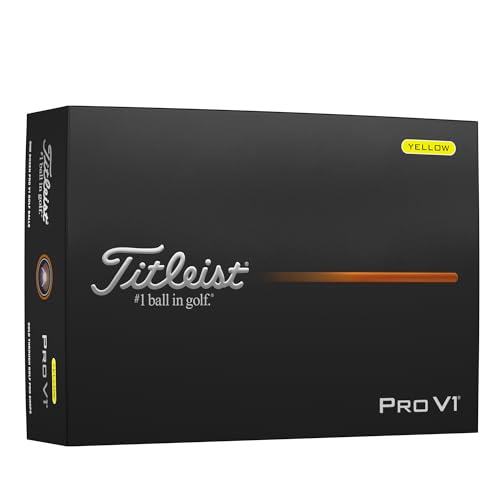
For most golfers who swing between roughly 90 and 105 mph and want tour-level greenside spin, the Titleist Pro V1 is the default pick; the Pro V1x suits faster swings that want a higher flight and a firmer feel, the AVX suits players who want a softer, lower-flying urethane ball, the Tour Soft suits those who want a soft ionomer ball at a mid-range tier, and the Velocity suits anyone who values distance and durability over wedge spin. The lineup splits cleanly into two families, and picking the family first makes the rest of the decision simple.
Our top picks


As an Amazon Associate we earn from qualifying purchases at no extra cost to you.
How the Titleist Lineup Is Organized
Titleist sells its current balls in two groups. The premium group uses a cast urethane cover and includes the Pro V1, Pro V1x (with its Left Dash variant) and AVX. Urethane is thin and grippy, which is why these balls produce the most spin on wedge shots and chips. The value group uses ionomer covers and includes the Tour Soft, Velocity and TruFeel. Ionomer is harder and more resilient, so these balls trade some greenside bite for durability, straighter flight and a lower cost.
Reviewers describe the premium balls as having very low long-game spin and high short-game spin, which is the profile most low and mid handicappers want. The value balls generally spin less around the green, a trade many higher-handicap golfers do not notice because they are not yet scoring with a spinning wedge.
Titleist Golf Ball Models Compared
| Model | Best for | Key stated traits | Notable limits |
|---|---|---|---|
| Pro V1 | All-around players, 90-105 mph swings | Urethane cover; mid flight, very low long-game spin, high greenside spin, soft feel | Premium tier; may feel too soft or too low-flying for some fast swingers |
| Pro V1x | Faster swings, players who want a higher flight | Urethane cover; higher flight, more iron and wedge spin, firmer feel than Pro V1 | Firmer feel; premium tier; the higher flight can balloon in wind |
| Pro V1x Left Dash | Fast swingers who over-spin the Pro V1x and want a high flight with much lower long-game spin | Redesigned for 2026 with a faster dual core per Titleist; firmer feel; Titleist says it fits only a small share of golfers | Niche; independent testing found lower wedge spin than Pro V1 and Pro V1x |
| AVX | Players who want a very soft feel and a lower flight | Urethane cover; lowest-spinning urethane ball Titleist makes according to one review; softer and thicker cover on the updated version | Lower flight may reduce carry for slower swings |
| Tour Soft | Golfers who want soft feel and decent control at a mid-range tier | Ionomer cover; mid flight, soft feel | Less greenside spin than the urethane balls |
| Velocity | Distance seekers and those who lose many balls | Ionomer cover; high flight, low long-game spin, durable | Least short-game spin of the group; firmer feel |
| TruFeel | Slower swings and anyone prioritizing a very soft feel at a budget tier | Ultra-soft feel, lowest compression of the lineup | Not built for spin control; best for casual rounds |
Compression figures differ slightly between sources, so treat them as approximate. One buyer’s guide lists TruFeel near 70, AVX near 81, Pro V1 near 92 and Pro V1x near 102. Other sources report different numbers, with the Pro V1 anywhere from the high 80s to about 98 and the Pro V1x from the mid 90s to about 108, depending on the gauge used. All the sources agree on the order from softest to firmest among the premium balls: AVX, Pro V1, Pro V1x.
Pro V1 vs Pro V1x
These two are the core of the brand. The Pro V1 is the balanced choice: mid trajectory, soft feel, strong greenside control. The Pro V1x flies higher, feels firmer and tends to spin more on iron and wedge shots, so it stops quickly on firm greens. Today’s Golfer describes the Pro V1x as a four-piece construction. Reviewers generally steer faster swing speeds and players who already hit the ball low toward the Pro V1x, and steer everyone else toward the Pro V1.
If you cannot decide, consider your typical iron flight. A player who already launches the ball high and fights ballooning in the wind will usually find the Pro V1 easier to control. A player who hits low, running iron shots and wants more stopping power may find the Pro V1x helpful.
AVX: The Soft, Low-Flight Urethane Option
The AVX sits in the premium group but behaves differently from the Pro V1 family. Reviewers describe it as the softest-feeling and lowest-flying of the urethane balls, which suits golfers who hit the ball too high or play often in wind. Independent Golf Reviews points to a newer urethane cover that is softer and thicker over a faster core, and one guide reports more spin around the greens in the 2026 version. It is priced in the same premium urethane tier as the Pro V1 family.
The limit is carry. Slower swing speeds that already struggle to launch the ball may lose distance with a low-flying ball, so the AVX is best matched with moderate to fast swings that want a penetrating flight.
Tour Soft, Velocity and TruFeel: The Value Group
The Tour Soft, which retailer coverage says was redesigned for 2026, is the bridge between the groups: a soft ionomer ball with mid flight that gives up some wedge spin but keeps costs lower. It is a sensible choice for mid handicappers who have not yet built consistent short-game contact. The Velocity is built for distance and durability, with a high flight and low long-game spin. Robot-style comparisons generally find the Velocity competitive with the premium balls off the tee, which is why it is often called a good distance ball. The TruFeel is the softest and most affordable, aimed at slower swing speeds and golfers who simply want a pleasant feel.
Ball speeds in robot tests tend to be close across the lineup, which suggests the real differences are in spin, launch and feel rather than raw speed.
Who Should Buy and Who Should Skip
Buy a Pro V1 or Pro V1x if you
- Regularly hit greens in regulation and want wedge shots to check up.
- Play with a swing speed around 90 mph or faster.
- Can tolerate losing a ball now and then without a sharp budget impact.
Buy an AVX if you
- Want the softest premium feel and a flatter trajectory.
- Play in windy or links-style conditions.
Buy a Tour Soft, Velocity or TruFeel if you
- Lose several balls per round or play a lot of rounds.
- Do not yet use wedge spin to score.
- Have a moderate or slower swing speed and want help with launch.
Skip the premium group if you
- Are still working on consistent contact. Cast urethane covers scuff more readily than ionomer, and the benefit of extra spin is wasted on mishits.
How Titleist Compares With Other Brands
Callaway. The Chrome Tour and Chrome Soft play in the same space as the Pro V1 and AVX. Callaway’s Chrome Soft is generally lower in compression and feels softer, while the Chrome Tour is positioned as a multi-layer tour ball for similar swing speeds. Callaway’s value balls such as the Supersoft and ERC Soft compete with the Tour Soft and TruFeel.
TaylorMade. The TP5 and TP5x are the usual cross-shop for the Pro V1 and Pro V1x, with similar tiering by flight and feel. Which one is better depends on personal preference; reviewers regularly find them close in performance.
Srixon and Bridgestone. Srixon’s Z-Star line and Bridgestone’s Tour B balls are often cited by independent testers as strong alternatives, with Bridgestone known for fitting-based recommendations. Compared with Titleist, these brands usually have a smaller retail presence but comparable tour-level performance.
The simplest way to compare is to match the same category: urethane tour ball against urethane tour ball, and ionomer value ball against ionomer value ball. Comparing a Velocity with a Pro V1 is not a like-for-like contest.
Fit, Compatibility and Alignment Options
Ball choice is about swing speed, launch and short-game needs rather than sizing. All Titleist balls are the standard tour size, so there is no sizing concern. Titleist also offers AIM alignment marking designs on its balls (reported to cover every current model, with AIM360 wrap-around markings on some), which can help with putting alignment. Many fitters suggest a ball fitting on a launch monitor, because small differences in spin and launch can change the best fit for your driver and irons.
Care and Common Issues
- Cover scuffing. Urethane covers show scuffs from cart paths, trees and sand more readily than ionomer. Replace a ball when the cover is cut or visibly damaged.
- Cold weather. Soft balls compress more easily in cold air, but all balls lose some distance in cold temperatures. Store balls at room temperature before play.
- Used and recycled balls. Lake balls and refurbished balls can differ in performance from new ones. If you buy used, look for the cleanest grade available.
- Rule of thumb for rotation. Do not switch models mid-round, because small differences in spin and feel can affect distance control.
Decision Table
| Pick this | If you |
|---|---|
| Pro V1 | Want the balanced premium all-rounder with soft feel and strong greenside spin. |
| Pro V1x | Swing fast and want a higher flight with a firmer feel. |
| AVX | Prefer a very soft feel and a lower, wind-resistant flight. |
| Tour Soft | Want soft feel and good control at a mid-range tier. |
| Velocity | Want maximum distance and durability and care less about wedge spin. |
| TruFeel | Swing slower and want the softest, most affordable option. |
Frequently Asked Questions
What is the difference between the Pro V1 and Pro V1x?
The Pro V1 has a mid trajectory and a softer feel, while the Pro V1x flies higher, feels firmer and tends to spin more on iron and wedge shots. Reviewers generally match the Pro V1x to faster swing speeds and the Pro V1 to a wider range of players.
Is the Titleist Velocity a good ball for beginners?
Many reviewers consider it a sensible choice for beginners and high handicappers because it is durable, flies high and offers a lower cost per ball. It gives up wedge spin, but beginners rarely benefit from that spin yet.
Are Tour Soft balls worth buying over Pro V1?
If your short game does not use heavy spin, the Tour Soft delivers a soft feel at a lower tier. Golfers who play frequently or lose balls often usually find the cost difference meaningful. The Pro V1 is the better choice if you want maximum greenside control.
Which Titleist ball is best for slow swing speeds?
The TruFeel, with its very low compression, and the Tour Soft are the usual suggestions for slower swings. The Velocity can also help with carry because of its high flight.
Does the AVX spin less than the Pro V1?
Reviews describe the AVX as the lowest-spinning urethane ball in the lineup in the long game and as having a lower flight. Short-game spin is still strong thanks to the urethane cover, and one guide says the updated version adds more spin around the greens.
Should I get fitted before choosing a Titleist ball?
A fitting is a reliable way to compare launch, spin and flight with your own swing. Without one, testing two or three finalists on the course, checking driver flight, iron trajectory and wedge performance, is a practical alternative.







