
For most riders, a scissor-style lift stand is the best all-round dirt bike stand for chain, suspension and wheel work, a basic rear paddock stand suits quick chain maintenance and storage on a small budget, and a front stand or wheel chock completes the setup for trailer transport and tire changes. The right pick depends on the bike, the garage and the work you do most often. The notes below rely on maker descriptions and what reviewers commonly report, not personal use.
Our top picks



As an Amazon Associate we earn from qualifying purchases at no extra cost to you.
At a Glance
| Stand type | Best for | Typical makers | Limits |
|---|---|---|---|
| Scissor / hydraulic lift stand | Full maintenance at a comfortable working height | Pit Bull, Matrix Concepts, Motion Pro, Tusk | Bulky to store and transport; check weight rating |
| Fixed-height box or dirt bike stand | Quick, simple maintenance and storage | Pit Posse, Tusk, BikeMaster | Fixed height, less comfortable for long jobs |
| Rear paddock / swingarm stand | Chain cleaning, rear wheel removal | Motion Pro, Pit Bull, BikeMaster | Needs a stable surface; check swingarm fit |
| Front stand (triple clamp lift) | Front wheel and fork work | Pit Bull, Matrix Concepts | Works only on bikes with suitable clearance |
| Wheel chock | Trailer and truck bed transport, holding bike upright | Pit Bull, Condor, Tusk | Not a work stand |
Model names change often, so look for the type and rated capacity rather than a single product name, and always read the maker’s fit guide for your bike.
Types of Dirt Bike Stands Explained
Scissor and hydraulic lifts
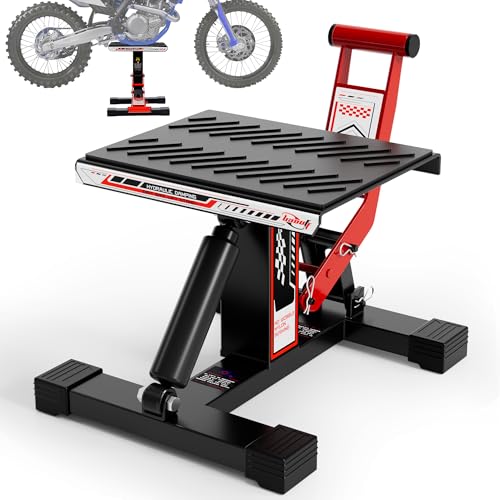
These raise the whole bike off the ground to a comfortable working height. A wide base and secure platform keep the bike stable. Reviewers generally point to a hydraulic or ratcheting lift as easier on the back than a fixed stand. The tradeoff is size. Most fold flat, but they still take more space than a basic stand.
Fixed stands
Box stands or simple tubular stands lift the bike to a fixed height. They are light, cheap relative to lifts and easy to store. They work well for chain adjustments, lubrication and washing, but long jobs at a low height are tough on the knees and back.
Rear and front stands
A rear stand lifts only the back of the bike and is common for chain work and rear wheel removal. A front stand supports the triple clamp or frame to lift the front end for fork seal and wheel tasks. Using both together can hold the bike steady for a full tire change. Neither is a substitute for a full lift if you need the bike stable at working height.
Wheel chocks
A chock holds the front wheel upright in a truck bed or trailer. It does not lift the bike. It is worth owning if you haul regularly, but pair it with proper tie-downs and ratchet straps. Follow the maker’s guidance for strap points.
What to Check Before Buying
- Weight capacity: Makers list a maximum load. Add your bike’s dry weight to fluids and any accessories, and leave a safety margin.
- Frame and swingarm fit: Frames differ. Some bikes have skid plates, exhaust pipes or linkage that interfere with a stand’s lift points. Use the maker’s fit guide or a shop for confirmation.
- Platform size and traction: A larger platform and a grippy surface add stability. Rubber pads or tie-down points help keep the bike secure.
- Working height: If you work for long stretches, a higher stand reduces strain.
- Storage footprint: Check folded dimensions and weight if your garage is tight.
- Locking mechanism: A lift should have a secure lock at height. Never work under a bike resting only on a hydraulic cylinder.
Budget Tiers
- Budget: Basic fixed stands and rear paddock stands cover chain work and storage. They lack height adjustment and can be limited in stability.
- Mid-range: Scissor lifts from makers such as Tusk and BikeMaster provide height adjustment at a moderate price point and suit most home garages.
- Premium: Makers like Pit Bull, Matrix Concepts and Motion Pro offer sturdier builds, bigger platforms and more accessories. Riders who work on bikes frequently often find them worth the step up.
Safety Notes
A bike falling off a stand can cause serious injury and damage. Use the stand on a flat, solid floor. Strap the bike down when the maker allows it, and use a second stand or tie-downs for tasks that shift weight. Do not exceed rated capacity. Keep hands and feet away from pinch points on scissor lifts, and follow the lock procedure every time. If you are unsure about a task, consult the bike’s service manual or a qualified mechanic.
Pick X If…
| Pick this | If you… |
|---|---|
| Scissor lift (Pit Bull, Matrix Concepts) | do regular maintenance and want a comfortable working height |
| Basic fixed stand (Pit Posse, Tusk) | want a simple, compact stand for chain care and storage |
| Rear paddock stand (Motion Pro) | mostly maintain the chain and rear wheel |
| Front stand | do fork seals, front tire changes or want to level the bike |
| Wheel chock | haul the bike in a truck or trailer and want it held upright |
Alternatives
- Folding motorcycle lift tables: Large lift tables serve multiple bikes and offer more working room, at greater size and cost.
- Bike jack or crate stand: A sturdy wooden crate or a DIY stand can work for simple tasks, but a manufactured stand has tested load ratings and lock mechanisms.
- Race stands: Pit stands built for race paddocks are portable and light but may sacrifice working height.
Care and Storage
Wipe off mud and grit, since dirt can bind moving parts. Lubricate pivot points on scissor lifts per the maker’s instructions. Inspect welds, hydraulic seals and pads before each use. Store the stand folded, off the damp floor, to limit rust. Replace any worn pad or damaged component rather than improvising a repair.
Matching a Stand to the Job
Think about the tasks you perform most. Chain cleaning, lubrication and rear tire changes call for a rear lift, while fork service, front wheel removal and carburetor work call for a full lift that holds the whole bike at a steady height. Riders who race or travel to tracks need a stand that is light and folds small, while garage mechanics benefit from a stable lift with a larger platform.
Bike weight and style
Lightweight motocross bikes put few demands on a stand, whereas dual-sport and adventure machines are heavier and need a higher rating and wider platform. Two-stroke and four-stroke bikes also differ in layout, particularly around the exhaust. Compare the lift points on your frame with the stand’s pad shapes to avoid pressing on plastics, brake lines or the exhaust.
Working surface
Concrete is ideal. Soft ground such as gravel or grass can allow a stand to sink or tilt, so use a plywood board or mat beneath it for track-side work. Wheel chocks and straps add a second layer of safety on uneven surfaces. Keep the work area clear of children and pets while the bike is raised.
Track-side and paddock use
At the track, a light, compact stand that can be carried in a truck bed beats a bulky lift. Many riders keep a small rear stand in the van for quick chain and tire checks, and a full lift at home for deeper service. Remember that warm exhausts and hot engines need time to cool before you handle them, and keep fuel away from ignition sources whenever you work on the bike.
Final Buying Checklist
- Confirm the stand’s rated capacity against your bike’s wet weight with a margin.
- Compare lift points with your frame, skid plate and exhaust layout.
- Decide whether you need a rear stand, a full lift or both.
- Measure the folded size against your garage or truck storage.
- Read the lock procedure and practice it with the bike secured before starting any real job.
- Plan for a flat, solid surface and a mat or board if you work outdoors.
Taking a few minutes with this list prevents the most common regrets, such as a stand that is too small for an adventure bike or a lift that cannot be stored where you planned. Reading owner reports for your specific bike model is also useful, since riders often share which stand fits which frame without modification.
Frequently Asked Questions
Do I need a stand if I only do basic chain maintenance?
A rear paddock stand is usually enough for chain cleaning and lubing. It lifts the back wheel so it can spin. A full lift is nicer for longer jobs but is not required for this task.
How do I know a stand fits my bike?
Use the maker’s fit guide and compare your bike’s frame, skid plate and swingarm. Many makers publish lists of compatible models. A local shop can confirm fit before you buy.
Are hydraulic lifts safe to work under?
Treat a lift as a work-height support, not a place to crawl under. Use the built-in lock and follow the maker’s instructions. For jobs requiring you to go beneath the bike, add proper jack stands or blocks.
Can I transport my bike on a stand?
Stands are meant for the garage, not travel. Use a wheel chock with ratchet straps in a truck or trailer. Follow the maker’s strap guidance and check tie-downs during long drives.
What weight rating should I choose?
Choose a stand rated comfortably above your bike’s wet weight. Leave extra room for gear, tools and the force of torquing bolts. If you may own a heavier bike in future, a higher rating gives more flexibility.
Is a front stand necessary?
Not for every rider. It helps with fork, front wheel and brake work and can help keep the bike stable during rear tasks. Many riders manage with a rear stand and a wheel chock.





