
Key takeaways
- Wear a properly fitted helmet that meets local standards.
- Learn how your bike’s assist modes and brakes behave before riding in traffic.
- Use lights and reflective gear for night riding.
- Keep tires inflated to the range printed on the sidewall.
- Have a dealer inspect brakes, chain and battery connections regularly.
- Do not modify the controller to bypass speed limits; this may be illegal and may void warranties.
- If you have mobility or health concerns, speak to your doctor about riding.
For most riders, a mid-drive electric hybrid from a major maker, such as the Specialized Turbo Vado, Trek Verve+ or Giant Explore E+, is the best all-round choice for commuting and mixed pavement, while budget-minded riders may consider direct-brand models such as Aventon or Rad Power Bikes. Pick on motor type, battery size, frame style, local e-bike class rules and, above all, whether a dealer can service the bike near you.
Our top picks


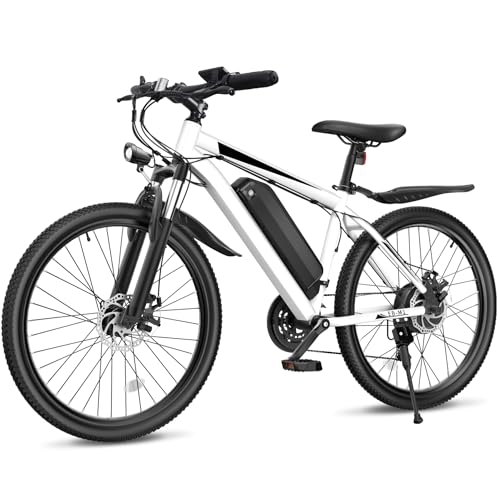

As an Amazon Associate we earn from qualifying purchases at no extra cost to you.
Electric Hybrid Bikes at a Glance
| Model line | Type | Best for | What the maker lists | Limits |
|---|---|---|---|---|
| Specialized Turbo Vado / Vado SL | Mid-drive (Vado) or lightweight assist (Vado SL) | Commuters and fitness riders | Integrated battery, app connectivity on some, several frame styles | Premium tier on higher models |
| Trek Verve+ and FX+ | Hybrid and fitness e-bike | Casual riders and commuters | Integrated battery, step-through frames on some Verve+ | Models vary in motor and range |
| Giant Explore E+ / Roam E+ | Touring and commuting hybrid | Longer rides, light loads | Rack and fender-ready on many versions, mid-drive motor | Heavier |
| Cannondale Adventure Neo | Comfort hybrid | Mixed-surface commuting | Integrated battery, comfort-focused geometry | Mid-to-premium tier |
| Aventon Pace and Level | Direct-to-rider hybrid | Budget-conscious commuters | Hub motor, throttle options on some | No local dealer in most areas |
| Rad Power Bikes RadCity | Utility commuter | Cargo and city riding | Hub motor, racks and accessories | Heavy |
Model names are examples of established families. Makers update specifications often, so confirm the current version on the maker’s page.
What Makes a Good Electric Hybrid Bike
Motor type
Mid-drive motors sit at the crank and feel natural, with good balance and strong hill performance. Hub motors are in the rear or front wheel; they are common at lower tiers and are generally simpler and cheaper. Reviewers commonly describe mid-drives as more refined on hills and hub drives as a good value for flat commutes.
E-bike class
In the United States, Class 1 e-bikes assist up to 20 mph with pedaling only, Class 2 add a throttle, and Class 3 assist up to 28 mph. Local rules vary on where each class can ride, including bike paths and trails. Check your city and state rules.
Battery and range
Battery capacity is measured in watt-hours. A larger battery supports more range, though real-world distance depends on assist level, terrain, rider weight, temperature and tires. Makers publish range estimates that depend on testing conditions, so treat them as a rough comparison. An integrated battery looks cleaner, while a removable one is easier to charge indoors.
Use only the charger supplied or approved by the maker. Do not charge a damaged battery, and do not leave a bike charging unattended overnight if the manual advises against it. Fire risk from damaged lithium batteries is real, so follow the manual and local guidance.
Frame size and style
Step-through frames are easier to mount and suit riders with limited mobility. High-step frames are slightly stiffer. Many makers offer several sizes, and some offer small and extra-large options. Test-ride before buying when possible, or follow the maker’s sizing chart closely.
Brakes, tires and accessories
Hydraulic disc brakes are common and recommended for the heavier weight of e-bikes. Puncture-resistant tires reduce flats. Built-in lights, fenders and a rear rack matter for commuters. Check the rack’s weight rating before loading the bike.
Weight
Electric hybrids are heavier than regular bikes. Light assist models such as the Vado SL reduce that weight but offer less motor power and a smaller battery. If you carry the bike upstairs, weight matters.
Budget, Mid-Range and Premium Tiers
| Tier | Typical offering | Best for | Trade-off |
|---|---|---|---|
| Budget | Hub motor, mechanical or hydraulic brakes, simple display | Flat commutes and occasional use | Heavier, less refined, support is often online |
| Mid-range | Mid-drive or quality hub, hydraulic discs, integrated battery | Daily commuters | Fewer premium touches |
| Premium | Lighter frame, strong mid-drive, app and smart features, better components | Enthusiasts and long-distance commuters | High cost and complex electronics |
Pick X If You…
| Pick this | If you… |
|---|---|
| Specialized Turbo Vado | want a well-supported, polished commuter |
| Specialized Vado SL | want a lighter bike with subtle assist |
| Trek Verve+ | want an easy-to-ride comfort hybrid with a step-through option |
| Giant Explore E+ | want to commute or tour with racks and fenders |
| Cannondale Adventure Neo | want comfort on mixed surfaces |
| Aventon Level or Pace | want a lower-cost entry and can service the bike yourself or via a mobile shop |
| Rad Power Bikes RadCity | need a sturdy utility commuter |
Fit, Safety and Care
- Wear a properly fitted helmet that meets local standards.
- Learn how your bike’s assist modes and brakes behave before riding in traffic.
- Use lights and reflective gear for night riding.
- Keep tires inflated to the range printed on the sidewall.
- Have a dealer inspect brakes, chain and battery connections regularly.
- Do not modify the controller to bypass speed limits; this may be illegal and may void warranties.
- If you have mobility or health concerns, speak to your doctor about riding.
Alternatives
- Electric city or folding bikes: good for small apartments and mixed transit.
- Conventional hybrids: lighter and cheaper for riders who do not need assistance.
- Conversion kits: add a motor to an existing bike, though quality and safety vary.
- E-gravel or e-mountain bikes: better for off-road riding.
Matching a Bike to Your Riding
Daily commuting
Commuters benefit from integrated lights, fenders, a rack and puncture-resistant tires. A battery that can be removed for charging at a desk is a practical feature. For commutes of moderate distance, a mid-sized battery is generally enough, while longer routes or hills call for a larger one. A reliable local dealer is valuable for quick repairs.
Recreation and fitness
Riders who want exercise with a boost on hills may prefer lighter-assist models, which feel closer to a regular bike. Reviewers describe the lightest bikes as more natural but with a more modest range. A comfortable saddle, ergonomic grips and a suspension fork on some models make long rides easier.
Carrying loads
If you carry groceries or a child seat, check the rack rating, the maximum total weight listed by the maker and the available attachment points. Some e-hybrids are not rated for child seats, so read the manual and follow the maker’s guidance. For heavy loads, a dedicated cargo e-bike may be a better fit.
Buying Direct or From a Dealer
Direct-to-rider brands often sell at lower prices, but assembly, adjustment and repairs can fall to you or to a third-party mobile mechanic. Dealer brands such as Specialized, Trek, Giant and Cannondale provide test rides, professional setup and warranty handling in person. For many riders, the support is worth the higher price, particularly for the electronics and brakes on a heavier bike.
Ownership Basics
- Expect to replace tires, brake pads and the chain more often than on a regular bike because of the extra weight and torque.
- Keep software and firmware updated if the maker provides updates.
- Store the bike indoors if you can, and avoid leaving the battery in freezing or very hot conditions.
- Record the serial number and use a lock rated for e-bikes.
Sizing and Test Rides
Makers publish height ranges for each frame size, but reach, saddle height and handlebar position change how a bike feels. Stand over the top tube or step-through frame with both feet flat, and confirm that you can reach the brake levers without stretching. A short test ride on a hill shows how the motor delivers power, how the brakes feel with the extra weight and whether the display is easy to read. If you are between sizes, ask a dealer to adjust the stem and seatpost before deciding. Riders with shorter legs or limited mobility often prefer a low step-through frame, while taller riders may need the largest size a maker offers.
Frequently Asked Questions
What is an electric hybrid bike?
It is a bike that blends road-bike speed with mountain-bike comfort, plus an electric motor that assists as you pedal. It suits commuting, errands and paths. Many have racks, fenders and lights built in.
Mid-drive or hub motor?
A mid-drive motor gives more natural handling and strong hill climbing. A hub motor is simpler and often cheaper. Hilly areas favor mid-drive, while flat areas suit hub drive.
How far will an e-bike go on a charge?
Distance varies with battery size, assist level, terrain, rider weight and weather. Makers list estimates, but real-world range is usually lower in hilly or cold conditions.
Do I need a license or insurance?
Rules depend on location and class. Many places treat Class 1 to 3 e-bikes as bicycles, but speed and age restrictions apply. Check local law.
Is a throttle necessary?
No. Many hybrids offer pedal assist only. A throttle helps with starts and riders who tire easily, but it is not allowed on some paths.
How should I charge and store the battery?
Use the maker’s charger, charge in a dry place away from flammable items, and store the battery at moderate temperatures. Stop using a battery that is damaged or smells unusual and contact the maker.




