Key takeaways
- Light output: makers list output in lumens or LED counts. Treat these numbers as marketing indicators and compare beam shape and mounting height, which decide how useful the light is on a real path.
- Beam pattern: a focused beam reaches farther, while a wide beam helps on narrow paths. Combination lights are common.
- Brake and turn signals: necessary for any street use and a good safety add-on for busy communities.
- Water resistance: look for stated ingress ratings and sealed housings, because carts live outdoors and are often washed.
- Hardware: stainless or coated brackets resist corrosion better than bare steel.
- Warranty and support: brand-specific makers often offer fitment help by cart model, which matters if you are unsure which harness you need.
The best golf cart light kit for most owners is a complete plug-and-play LED set with headlights, tail lights, brake lights and turn signals designed for the cart’s voltage, while owners who only drive on the course after dusk can get by with a simpler headlight and tail light kit, and anyone planning street use must pick a kit that meets the local rules for low-speed vehicles. Because fit depends on the cart brand, roof style and battery voltage, matching those three details matters more than chasing the brightest listing.
Our top picks



As an Amazon Associate we earn from qualifying purchases at no extra cost to you.
Golf Cart Light Kits at a Glance
| Kit type | Best for | Typical contents | Limits |
|---|---|---|---|
| Madjax-style brand-specific light kits | Owners of Club Car, EZGO or Yamaha carts who want a clean factory-style fit | Headlights, tail lights, often a harness and brackets for a named cart family | Fit is tied to specific models and years; mid-range to premium tier |
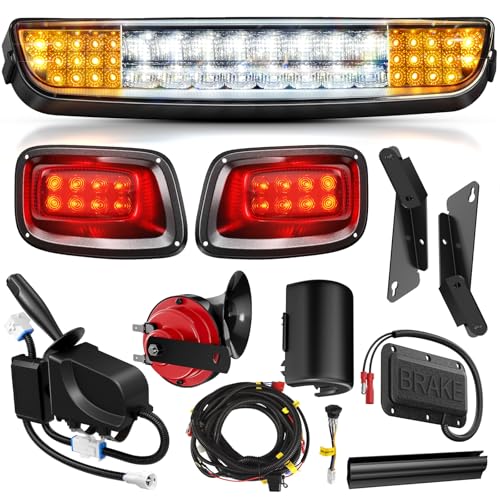
| Universal 12V-48V LED kit (for example 10L0L-style kits) | Budget buyers with a wide range of carts | Front and rear lights, turn signals, wiring, voltage reducer when the maker lists one | Wiring is more work; mounting may need drilling |
| Street-legal conversion kit | Low-speed vehicle use on public roads where allowed | Headlights, tail lights, brake lights, turn signals, reflectors, mirrors, horn, seat belts depending on the kit | Local rules differ; the cart itself must meet requirements |
| Light bar or roof-mounted LED bar | Extra forward light on trails, farms or neighborhoods | One or more LED bars, switch, harness | Often not a replacement for required headlights or signals |
| Under-glow and accent kits | Style and visibility around a parked or slow-moving cart | LED strips, controller, wiring | Decorative only; local rules on colors may apply |
| Stick-on or battery-powered lights | Temporary night use without wiring | Lights with their own battery cells or rechargeable packs | Lower output and less durable than wired sets |
What to Match Before Buying
Cart brand, model and year
Club Car, EZGO, Yamaha and other makers each use different front-cowl shapes, roof posts and wiring layouts. Brand-specific kits such as those sold by Madjax and similar accessory makers are made to bolt into those shapes, which saves drilling and cutting. Universal kits cost less, but you may need to fabricate brackets and tap into the cart’s wiring yourself.
Battery voltage
Many electric carts run on 36V or 48V battery packs, and many LED lights are rated for 12V. Kits made for these carts usually include a voltage reducer or are rated for a wide input range, such as 12V to 48V or higher. Read the maker’s stated input range and confirm it covers your pack. A mismatch can burn out lights or cause damage, and an electrician or a cart dealer can help if you are unsure. Gas carts typically use a 12V system, so the reducer is not needed.
Wiring and switches
Plug-and-play harnesses cut installation time and reduce wiring mistakes. Look for a harness that includes a fuse or protection and clear labeling for the headlight switch, brake switch and turn signal switch. Disconnect the battery before working, route wires away from moving parts and sharp edges, and use proper connectors and weather sealing.
Features That Separate Kits
- Light output: makers list output in lumens or LED counts. Treat these numbers as marketing indicators and compare beam shape and mounting height, which decide how useful the light is on a real path.
- Beam pattern: a focused beam reaches farther, while a wide beam helps on narrow paths. Combination lights are common.
- Brake and turn signals: necessary for any street use and a good safety add-on for busy communities.
- Water resistance: look for stated ingress ratings and sealed housings, because carts live outdoors and are often washed.
- Hardware: stainless or coated brackets resist corrosion better than bare steel.
- Warranty and support: brand-specific makers often offer fitment help by cart model, which matters if you are unsure which harness you need.
Top Picks by Need
Best for a clean factory-style fit: brand-specific kits from Madjax and similar makers
Accessory makers that design light kits around a specific cart family generally offer brackets, harnesses and instructions matched to that cart. Reviewers and owners often value the straightforward fit and less drilling. The trade-offs are higher cost and the need to confirm the exact model year in the product listing. A kit for one year of a Club Car or EZGO may not fit another.
Best for budget and variety: universal LED kits
Universal kits from brands such as 10L0L are a typical budget choice. They commonly include front and rear LED lights, sometimes turn signals, plus wire and a switch, and many state a wide voltage range. The downside is variability. Brackets may need adjusting, the harness may require splicing, and instructions can be brief. They suit owners comfortable with basic wiring and a few tools.
Best for road use: complete street-legal packages
In the United States, federal rules for low-speed vehicles call for specific equipment such as headlamps, stop lamps, tail lamps, turn signals, reflectors, mirrors, a parking brake and seat belts, and states and towns add their own rules. A golf cart is not automatically a low-speed vehicle; the vehicle usually must also meet speed and labeling requirements. A lighting kit by itself does not make a cart road legal, so check with your state motor vehicle agency and local authorities before driving on public streets.
Best for extra visibility: LED light bars and roof-mounted lights
LED bars give a strong forward beam and can complement standard headlights on farms, hunting land or dark private roads. Owners should avoid using bright forward lights toward oncoming traffic, and many places restrict their use on public roads. Roof-mounted bars also need secure mounting to the roof posts.
Best for style: accent and under-glow lighting
Under-glow strips and accent lights improve visibility to others and add personality. They do not replace functional headlights or brake lights. Some jurisdictions restrict certain colors, especially red or blue facing forward, so read local rules first.
Budget Tiers
- Budget: universal LED sets and basic bar lights. Expect more installation effort and less detailed instructions.
- Mid-range: brand-specific headlight and tail light kits with harnesses, or fuller universal kits with turn signals.
- Premium: complete road-ready packages with mirrors, signals, horn and mounting hardware, or high-output OEM-style assemblies.
Installation and Safety Notes
- Disconnect the main battery lead before any wiring work, and use insulated tools.
- Use a fuse or breaker as the kit instructs, and never bypass protection that the maker includes.
- Test every function, including brake and turn signals, before driving after dark.
- Re-check connections after the first few rides, since vibration can loosen them.
- Rinse the cart gently; avoid pressure washing directly into light housings and connectors.
- If you are unsure about wiring on a high-voltage pack, hire a qualified electrician or the cart dealer.
Pick X If… Decision Table
| Pick this | If you… |
|---|---|
| Brand-specific kit | want a tidy fit for a known cart model and year |
| Universal LED kit | want the lowest cost and can handle wiring |
| Street-legal package | plan public-road use where local law allows it |
| Light bar | need extra forward light on private land |
| Accent kit | care about style and side visibility |
| Rechargeable stick-on lights | need occasional night lighting with no wiring |
Alternatives to Consider
- Factory or dealer-installed light packages: available from many cart dealers, with warranty coverage and matched wiring.
- Reflective tape and clip-on lights: a low-cost way to improve visibility for short evening rides on private roads.
- Replacing only the bulbs: if your cart already has lights, upgrading to LED bulbs that match the existing housings can be simpler than a full kit.
Frequently Asked Questions
Will a light kit make my golf cart street legal?
No. Lights are only one requirement. Road use usually depends on state and local rules, the cart’s top speed and labeling, and extra equipment such as mirrors and seat belts. Contact your motor vehicle agency before driving on public roads.
Do I need a voltage reducer for an electric cart?
Many LED lights are rated for 12V, while electric carts commonly use 36V or 48V packs. Some kits include a reducer or accept a wide input range. Read the maker’s listed voltage range and match it to your pack before connecting anything.
Are universal kits compatible with every cart?
They are designed to work with many carts electrically, but mounting is not universal. You may need to adapt brackets or drill holes. Brand-specific kits reduce that work, provided the model year matches.
How bright should golf cart headlights be?
Brightness listings vary and are not standardized, so pay attention to beam pattern and mounting height as well as stated lumens. A moderate, well-aimed beam is more useful than a very bright, poorly aimed light, and glare for others should be avoided.
Can I install a light kit myself?
Many owners do, using the supplied harness and instructions. Disconnect the battery first and follow the maker’s guidance. If the wiring looks unfamiliar or the pack voltage is high, hire a qualified electrician or a cart service shop.
How do I keep golf cart lights from failing early?
Choose sealed housings with a stated water resistance rating, use weatherproof connectors, keep connections tight and avoid pressure washing into the fixtures. Periodic inspection of the harness for rubbing or corrosion prevents most failures.