
Key takeaways
- Budget: Hanging racks such as Hollywood Racks models suit occasional riders on a tight budget with standard-frame bikes.
- Mid-range: Platform racks like the Saris Superclamp EX and Kuat Piston Pro X give better stability and easier loading without the highest cost.
- Premium: Thule T2 Pro XTR, Kuat NV 2.0, Yakima OnRamp and 1UP USA offer refined mechanisms, higher capacities and extra features for frequent riders.
For most drivers carrying two to four adult bikes, a platform-style hitch rack such as the Thule T2 Pro XTR, Kuat NV 2.0 or Yakima OnRamp is the easiest to load and the kindest to bike frames, while hanging-style racks suit tighter budgets and swing-away or tilt features suit anyone who needs regular trunk access. The notes below come from maker descriptions and what reviewers commonly report, not personal use.
Our top picks



As an Amazon Associate we earn from qualifying purchases at no extra cost to you.
At a Glance
| Rack | Type | Best for | Stated points | Limits |
|---|---|---|---|---|
| Thule T2 Pro XTR | Platform, tilt | Frequent riders, mixed bike types | Maker lists 2-bike capacity with an add-on option for more, and 1.25 and 2 inch hitch fit | Premium tier; heavy to lift |
| Kuat NV 2.0 | Platform, tilt | Riders who want a refined, integrated design | Maker lists an integrated repair stand and add-on bike capacity in some versions | Premium tier; check hitch fit |
| Kuat Piston Pro X | Platform, tilt | Riders who want a lower-cost platform option | Maker lists a platform design with fewer premium features | Fewer extras |
| Yakima OnRamp | Platform, tilt | Electric bike and heavy bike owners | Maker lists a built-in ramp and a high per-bike weight rating | Heavy rack |
| Saris Superclamp EX | Platform, tilt | Mid-range buyers wanting 2 to 4 bikes | Maker lists tilt-away access and wheel-based support | Not as light as hanging racks |
| Hollywood Racks Destination | Hanging | Budget buyers with standard frames | Maker lists a hanging design with a folding option | Bikes may sway; frame contact |
| 1UP USA Super Duty | Platform, modular | Riders who want a durable, stackable system | Maker lists modular add-ons for extra bikes | Premium tier |
Capacities, versions and hitch compatibility vary between model years. Confirm current specs on each maker’s page.
Platform vs Hanging Racks
Platform racks
Platform racks support bikes by the wheels, with an arm that locks over the front wheel or frame. They tend to be easier to load, work with different frame shapes and avoid frame contact. They are heavier and more expensive. Reviewers often recommend platform racks for e-bikes, fat bikes, carbon frames and bikes with step-through frames.
Hanging racks
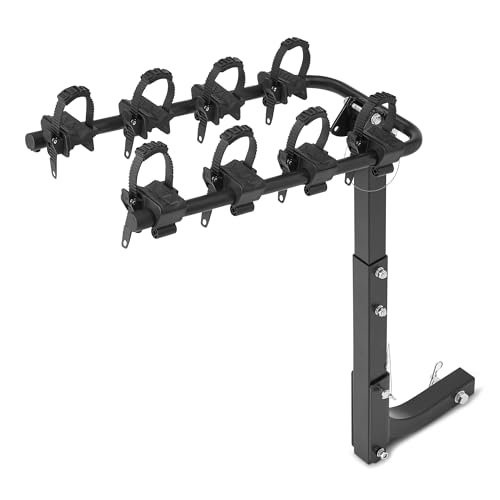
Hanging racks suspend the bike by its top tube from arms. They are lighter and cheaper, and fold for storage. Drawbacks include bikes touching each other, sway during travel and trouble with bikes lacking a straight top tube. Frame protection matters here, especially with carbon. Many bike makers advise against clamping carbon frames, so read the bike’s manual.
Hitch Size and Vehicle Fit
Hitch receivers are commonly 1.25 inch or 2 inch. Many racks work with both via an adapter or come in separate versions, and some require one size. Check the rack’s listed hitch size and your vehicle’s receiver class. Also confirm your vehicle’s tongue weight limit, which sets how much the hitch can carry, and the rack’s weight and bike capacity. Racks can extend the vehicle’s length, so consider parking and clearances.
A rack may cover the license plate or rear lights. Local rules differ about displaying a plate, so follow local law, and consider a plate relocation accessory if the maker offers one. Some racks tilt or swing away to allow trunk or tailgate access, which is worth it if you open the rear often.
Bike Compatibility
Look at the per-bike weight rating if you ride e-bikes, which can be much heavier than standard bikes. Some platform racks list a higher rating for each tray than others. Wheelbase, tire width and wheel size also matter: fat bike tires need wider trays, and long-wheelbase bikes may need an extender. Check that the front-wheel arm fits your fender and tire design.
Security and Loading
Many racks include a hitch lock and cable lock or offer them as accessories. They help deter casual theft but are not a substitute for a good bike lock when parked. Load the heaviest bike closest to the vehicle where the maker advises it, and fasten all straps. After driving a short distance, stop and recheck tightness. Remove bikes or tilt the rack when needed for rear access, and follow the maker’s instructions for hitch stabilizers to reduce wobble.
Budget Tiers
- Budget: Hanging racks such as Hollywood Racks models suit occasional riders on a tight budget with standard-frame bikes.
- Mid-range: Platform racks like the Saris Superclamp EX and Kuat Piston Pro X give better stability and easier loading without the highest cost.
- Premium: Thule T2 Pro XTR, Kuat NV 2.0, Yakima OnRamp and 1UP USA offer refined mechanisms, higher capacities and extra features for frequent riders.
Pick X If…
| Pick this | If you… |
|---|---|
| Thule T2 Pro XTR | want a widely reviewed, easy-to-use platform rack |
| Kuat NV 2.0 | like integrated features such as a built-in repair stand |
| Yakima OnRamp | carry electric or heavy bikes |
| Saris Superclamp EX | want a mid-range platform with solid capacity |
| Hollywood Racks Destination | want a budget hanging rack for standard frames |
| 1UP USA Super Duty | want a modular, long-lasting system |
Alternatives
- Roof racks: Keep the rear free and lower the effort of hitch installation, but require lifting bikes overhead and can raise fuel use and height clearance concerns.
- Trunk-mounted racks: Cheaper and removable, but can contact the vehicle surface and suit fewer bikes.
- Truck bed pads or tailgate pads: Handy for pickup owners with a few bikes.
- Spare tire racks: Suited to certain SUVs and Jeeps.
Care and Safety
Inspect the rack for cracks, loose bolts and worn straps before long trips. Rinse off salt and grit, lubricate moving parts as the maker instructs, and store the rack indoors when it is not in use. Do not exceed the rack’s or hitch’s weight rating, and follow your vehicle’s manual on towing capacity and tongue weight. If you are unsure of installation, ask a shop or hitch installer.
Installation and Everyday Use
Most hitch racks slide into the receiver and are held by a locking pin, knob or cam. Many makers include an anti-wobble system that tightens the connection and reduces rattling. A rack that sits snug is quieter and safer. Use a torque wrench or the supplied tool where the manual calls for it, and keep the hitch pin or bolt in good condition.
Loading order and strap use
Load the heaviest bike first, closest to the vehicle where the maker advises, then add lighter bikes. Alternate bikes front-to-back to avoid handlebar and pedal contact, and use any supplied spacers or padding. Secure the wheels and frame with the included straps or arms and tuck loose straps away so they do not flap.
Driving with a loaded rack
A loaded rack changes the vehicle’s length, weight distribution and rear visibility. Allow extra room when parking and backing up, and be careful on steep driveways where the rack can scrape. Recheck the rack’s fit after a few miles, since vibration can loosen connections. When not carrying bikes, remove the rack or fold it, and follow local rules about rear lights and plates.
Backup cameras and sensors
A loaded rack can block a rear camera or set off parking sensors. Some drivers disable sensors while the rack is on, following the vehicle manual, and rely on mirrors and a spotter. Think about how you will see behind you before you head out.
Final Buying Checklist
- Confirm your receiver size and the rack’s compatible hitch sizes.
- Check your vehicle’s tongue weight rating against the rack plus loaded bikes.
- Match the per-bike weight rating to your heaviest bike, especially e-bikes.
- Confirm tire width, wheelbase and frame shape compatibility.
- Decide whether you need tilt or swing-away access to the rear.
- Plan for a lock, plate and light visibility, and local legal requirements.
Working through these points before ordering avoids the most frequent returns: racks that do not fit the receiver, trays too narrow for wide tires, or capacity too low for an e-bike. If you are unsure, a hitch installer or a well-informed bike shop can confirm the setup before you buy.
Frequently Asked Questions
Do I need a 2 inch or 1.25 inch hitch?
That depends on your vehicle’s receiver. Many racks fit both sizes, but some fit only one. Check the maker’s compatibility page and your vehicle’s hitch class before buying.
Are platform racks better than hanging racks?
Platform racks are easier to load and gentler on frames. Hanging racks are lighter and cheaper but can cause sway and contact between bikes. Choose by bike type and budget.
Can I carry e-bikes on a hitch rack?
Some racks list a higher per-bike weight rating suitable for e-bikes, and a few include ramps. Check the weight rating per tray and the total rack capacity. Removing the battery before loading is often advised.
Will the rack block my trunk or tailgate?
Many racks tilt or swing away to allow access, although the details depend on the model. If you open the rear often, look for a rack with a tilt or swing feature.
Do I need a hitch lock?
A hitch lock and cable lock deter casual theft and keep the rack from loosening. They aren’t a substitute for locking the bike when you park somewhere unattended. Many makers include locks or sell them separately.
Can I install a hitch rack myself?
Hitch racks usually slide into the receiver and secure with a pin or knob. That is simple for many people, but if your vehicle lacks a hitch, have a professional install one. Follow the maker’s instructions and your vehicle’s towing guidelines.





