
Key takeaways
- Budget tier: Inno, Swagman and similar. Suitable for occasional trips and lighter bikes, but check ease of use and long-term durability.
- Mid-range tier: Thule ProRide, Yakima HighRoad and FrontLoader. Reliable and widely supported, with a broad range of fit kits and replacement parts.
- Premium tier: high-end fork mounts and lockable systems, usually sold by specialist makers. Suited to riders who travel often with expensive bikes.
For most drivers who carry bikes on the roof, an upright fork-mount or frame-mount rack from Thule (ProRide) or Yakima (HighRoad) is the safest all-round choice, provided the vehicle already has crossbars and the garage clearance allows it; choose a wheel-on tray style if you do not want to remove front wheels, and a lower-cost option from brands like Inno or Swagman if you ride occasionally. Roof racks keep the rear of the car free and keep bikes away from exhaust and rear lights, but they add height, wind noise and a risk of driving into a low entrance. This guide compares the main styles and explains the fit checks that matter before you buy.
Our top picks
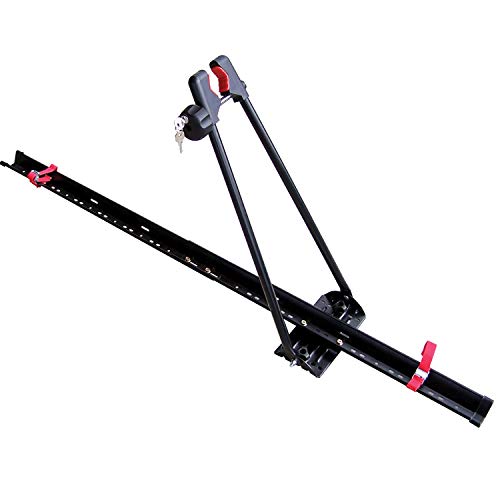


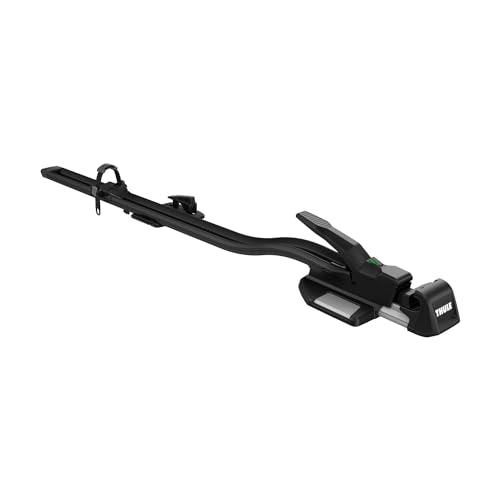
As an Amazon Associate we earn from qualifying purchases at no extra cost to you.
At a Glance
| Style / example | Best for | Stated traits | Limits |
|---|---|---|---|
| Thule ProRide | Road, mountain and hybrid bikes with a standard fork | Upright mount with arm that clamps the down tube, lockable options, fits many crossbar shapes | Not for some carbon frames or unusual tube shapes; check the maker notes |
| Thule UpRide | Riders who prefer a wheel-mounted option | Holds bikes by the wheels so the frame is not clamped | Needs enough wheel and tyre clearance; check bike size |
| Yakima HighRoad | Fork-mounted upright carrying with a wheel tray | Wheel tray with front-wheel clamp, works with many bike types | Tyre width range and wheel size limits apply |
| Yakima FrontLoader | Easy loading with wheel trays | Wheel trays and clamp arm, wide tyre support | Needs a rear wheel tray and secure strapping |
| Fork-mount rack (SeaSucker, Thule, others) | Racers and travellers | Attaches the fork directly; very stable and quiet | Requires removing the front wheel; storage space needed |
| Inno and Swagman roof racks | Occasional use on a budget | Simpler arm or tray styles | Finish and accessory range vary |
Types of Roof Bike Racks
Upright frame or down-tube clamp
These racks hold the bike upright with an arm that clamps around the frame. They are quick to use and keep both wheels on the bike. The drawback is that the arm touches the frame, so you need a compatible tube shape. Reviewers warn that carbon frames and oversize or oddly shaped tubes may need an adapter or a different rack, and the rack maker lists compatible shapes.
Wheel-mounted trays
The bike sits in wheel trays and a clamp grips the front wheel, so there is no pressure on the frame. This style works with a wide range of frames, including carbon, step-through and fat-tyre bikes if the tray supports the tyre width. Check wheelbase and tyre limits listed by the maker.
Fork-mount racks
These require removing the front wheel and clamping the fork. They are stable and low profile and popular with racers. The wheel must be stored inside the car, and your bike needs a fork type that matches the mount, such as quick release or thru-axle adapters.
Hanging or rear-wheel strap systems
Less common, these hold the bike by its frame and strap the wheel. They suit simple use cases, but fit and security vary.
Fit and Compatibility Checks
Crossbars first
A roof bike rack mounts to crossbars, not directly to the roof. You need factory or aftermarket bars that are rated for the load and match the shape: square, round, aero or T-slot. Check the vehicle manual for roof load limits, which include the weight of the bars, the racks and the bikes. If your vehicle has flush rails or fixed points, check which towers or fit kits are available.
Bike compatibility
Look at the bike weight limit, wheel size, tyre width and frame shape. E-bikes can be heavy and often exceed the weight limit of roof racks, so a hitch rack is usually safer. Step-through frames and some full-suspension designs can need a wheel-mounted rack or a frame adapter.
Vehicle height and clearance
Adding bikes can lift your height by well over a metre. Drivers have damaged bikes and cars by entering garages and drive-throughs. Many riders put a note on the dashboard or a sticker near the mirror as a reminder. Know your total height and measure low points on your common routes.
Number of bikes
Most crossbars can carry two to four bikes, depending on width and roof capacity. Leave enough space between bikes to avoid handlebar or pedal contact. Spread bikes evenly across the bars.
Locking and security
Some racks include keyed locks for the clamp and the rack-to-bar connection. Others sell lock cores as an option. Locks deter casual theft but do not stop determined thieves, so use a good bike lock for stops.
Driving With Bikes on the Roof
Drive more slowly and avoid sudden braking or sharp turns. Wind noise rises and fuel use increases. Check the clamps and straps at the first stop, since vibrations can loosen them. In heavy rain or when the car goes through an automatic car wash, remove the rack or bikes. Follow the manual from the rack maker for torque specifications and maintenance. Remove the rack when it is not in use for extended periods, since it reduces fuel economy and adds noise.
Budget Tiers
- Budget tier: Inno, Swagman and similar. Suitable for occasional trips and lighter bikes, but check ease of use and long-term durability.
- Mid-range tier: Thule ProRide, Yakima HighRoad and FrontLoader. Reliable and widely supported, with a broad range of fit kits and replacement parts.
- Premium tier: high-end fork mounts and lockable systems, usually sold by specialist makers. Suited to riders who travel often with expensive bikes.
Pick X If… Decision Table
| If you… | Pick |
|---|---|
| Carry standard road or mountain bikes often | Thule ProRide or Yakima HighRoad |
| Own a carbon frame or odd tube shapes | Wheel-mounted tray style such as UpRide or FrontLoader |
| Ride competitively and travel | Fork-mount rack |
| Ride rarely and want a low-cost option | Inno or Swagman roof rack |
| Own a heavy e-bike | Hitch or tray rack rated for the weight |
| Need quick loading | Upright frame-clamp or wheel tray style |
Care and Maintenance
Rinse the rack after salty or muddy trips, and wipe the clamp pads to keep them grippy. Lubricate moving parts lightly as the maker suggests and avoid oil on pads. Check bolts and straps regularly, and replace worn rubber or webbing. Store the rack indoors in the off season to extend life.
Alternatives
- Hitch-mounted racks: easier to load, better for heavy e-bikes, and no roof height issues, but need a hitch.
- Trunk or hatch racks: low cost and portable, but can mark paint and are less secure.
- Interior mounts: a fork-mount block or bike stand in the cargo area keeps bikes inside, safe and quiet.
- Bike carrier trailers: carry several bikes without roof loads.
Loading Tips and Common Mistakes
Load the heaviest bike first and place it nearest the side where you can reach it comfortably. Alternate the direction of bikes if the rack allows it, so handlebars and pedals do not clash. Secure the front wheel first, then the frame arm or rear tray, then pull on the bike to confirm it does not move. Many roof rack accidents come from forgetting the bikes are up there, so a keychain reminder or a note on the dash helps. Do not leave straps flapping, because loose ends can scratch paint or whip at speed. If your bike has a dropper seat post, lower it, and remove loose items such as lights, bags and water bottles that could fly off.
Reviewers also advise checking the roof load rating on the vehicle, not just on the rack. If the combined weight of bars, racks and bikes exceeds the figure in the manual, choose a lighter setup or a hitch rack. Re-tighten crossbar mounts after the first few trips.
Ease of loading
Lifting a bike overhead is the main downside of any roof system. Taller vehicles such as SUVs and vans make this harder, and some riders use a small step stool or choose a hitch rack instead. Wheel-tray designs with a low loading height and a clear process tend to be easier for people who are shorter or loading alone. If you have shoulder or back problems, consult a clinician and consider a lower-loading option.
Frequently Asked Questions
Do I need crossbars for a roof bike rack?
Yes, in almost all cases. Bike racks attach to crossbars, which may be factory-fitted or sold separately. Check that the bars match your vehicle roof type and their load rating.
Can roof racks carry carbon bikes safely?
Many riders prefer wheel-mounted or fork-mount racks for carbon frames because they avoid clamping the tubes. If you use an upright clamp rack, read the bike and rack maker guidance.
Can I carry an e-bike on the roof?
Most e-bikes exceed the weight limits and are hard to lift overhead. A hitch rack with a rated weight capacity is usually the safer choice.
How much do roof racks affect fuel economy?
Racks and bikes add wind drag, which raises fuel use, especially at highway speeds. Remove the rack when not in use to reduce drag and noise.
Is it safe to go through a car wash with the rack?
No. Remove bikes and, in most cases, the rack, before entering an automatic wash. Check the maker advice for the car and the rack.
How do I avoid hitting low ceilings?
Measure your total height with the bikes and note it near the driver’s seat. Use a reminder, and take extra care at garages, drive-throughs and overhead barriers.





