
For most home practice, a mid-range mat with a dense turf top and a shock-absorbing base, in a size of roughly 4 by 5 feet or larger, is the safest choice. Budget rubber-backed mats suit chipping and light driving practice, while premium multi-layer mats suit golfers who hit many full irons each week. The right pick depends on where you will use it, how often you swing, and whether the mat will be paired with a net or a launch monitor.
Our top picks
 Bearwill Golf Mat 31mm
- Commercial-Grade Golf Mat: Constructed with 16mm high-density synthetic…
- High-Grade 15MM EVA Material: Crafted with high-quality EVA…
- 16MM High-Tenacity Turf: Engineered with 16mm high-density artificial…
 COSPOPTIC Golf Hitting Mat with Swing Path
- Visually Track and Correct Your Swing Path Instantly
- Extra Replaceable Surface for Long-Lasting Practice
- Heavy-Duty Rubber Base Stays Firmly in Place
| Product | Key specs | |
|---|---|---|
| Bearwill Golf Mat 31mm | Commercial-Grade Golf Mat: Constructed with 16mm high-density synthetic… High-Grade 15MM EVA Material: Crafted with high-quality EVA… 16MM High-Tenacity Turf: Engineered with 16mm high-density artificial… | Check price |
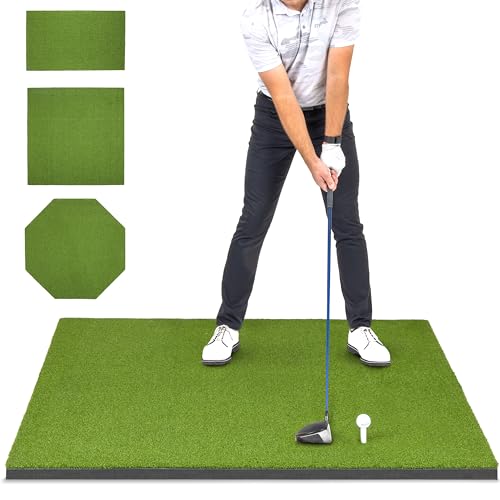 GoSports Golf Hitting Mat | Check price | |
| COSPOPTIC Golf Hitting Mat with Swing Path | Visually Track and Correct Your Swing Path Instantly Extra Replaceable Surface for Long-Lasting Practice Heavy-Duty Rubber Base Stays Firmly in Place | Check price |
 Fanshaw Premium Dual Golf Mat 5x4FT 40mm | 【True Tee Insertion for Real Course Feel】 Experience… 【Premium 5x4FT Dual-Turf Practice Station】 Master every aspect… 【Superior Shock Absorption & Anti-Slip Base】 Swing with… | Check price |
As an Amazon Associate we earn from qualifying purchases at no extra cost to you.
At a Glance: Hitting Mat Types and Brands
| Mat type / example line | Best for | Typical stated features | Limits |
|---|---|---|---|
| Country Club Elite (CCE) turf mats | Serious home practice, full swings | Maker describes multi-layer turf with a cushioned base; several sizes | Heavier, larger footprint |
| Fiberbuilt | Heavy-use ranges, instructors | Maker lists commercial-grade construction with a sectional hitting surface | Premium tier, bulky |
| Real Feel Golf Mats | Golfers wanting a firmer fairway feel | Maker describes dense, short-pile turf over a cushion | Large sizes need floor space |
| Rukket hitting mats | Backyard and garage setups | Maker pairs turf mats with nets and tee options | Lighter bases may slide on slick floors |
| GoSports and similar budget mats | Beginners, chipping, short sessions | Thin turf over a foam or rubber layer | Less shock absorption on full swings |
| Putting and chipping mats | Short game only | Roll-friendly surface, smaller footprint | Not meant for full irons or drivers |
What Matters When Choosing a Golf Hitting Mat
Turf surface and club interaction
The top layer decides how the club glides. Reviewers consistently note that very thick, springy turf can let a club bounce off the surface and hide fat shots, while short dense turf gives more honest feedback. If you want a mat that tells you when you hit behind the ball, look for a firmer, tighter surface. If you are a beginner who wants forgiveness, a slightly softer turf is acceptable but may mask swing flaws.
Base and shock absorption
Repeated impacts on hard concrete can jar wrists and elbows. Makers of better mats describe layered foam or rubber bases designed to absorb that shock. If you have a history of joint pain, talk with a doctor or a golf professional about practice volume, and do not treat a mat as a substitute for medical advice. A thicker base also tends to keep the mat from sliding during aggressive swings.
Size and stance area
A mat that is too small forces you to move the ball position after every few swings. Many golfers prefer a surface large enough to hold both feet and the ball in one piece. Smaller mats, about 3 by 3 feet or less, work for chipping and wedge practice but can feel cramped with a driver. Measure the garage, basement, or backyard spot first, including the swing clearance behind you.
Tee options and driver use
Some mats are built to hold a regular wooden or plastic tee in a dedicated hole or rubber insert. Others rely on a rubber tee that is part of the surface. If you plan to hit drivers off a tee, check that the mat supports it. Using a ball directly off turf with a driver is possible, but many golfers prefer a tee for consistent results.
Indoor and outdoor use
Outdoor mats need drainage and UV-resistant turf. Indoor mats need a base that will not mark floors. A thin pad under the mat can protect a garage or basement floor, but a pad that is too soft can change the feel of the strike. Always follow the maker’s care guidance and clear the area of people and pets before swinging.
Comparing Budget Tiers
| Tier | What you usually get | Trade-off |
|---|---|---|
| Budget | Thin turf, foam or rubber backing, smaller size, often a built-in rubber tee | Wears faster, less shock absorption, may slide |
| Mid-range | Denser turf, thicker cushioned base, larger hitting area, replaceable tee inserts on some models | Heavier and bulkier to store |
| Premium | Commercial-grade multi-layer turf, strong edge binding, large sizes, longer lifespan | Takes real floor space, costs more up front |
Top Picks by Need
Best for dedicated home practice: Country Club Elite
Country Club Elite mats are a frequent name in practice-mat roundups. The maker describes layered turf over a cushioning base, and sizes range from compact to large. Reviewers often mention that the surface is dense enough to give feedback on contact. The trade-off is weight and size, so it suits a permanent garage or basement spot better than a mat you move every session.
Best for heavy use: Fiberbuilt
Fiberbuilt is associated with commercial driving ranges and teaching studios. The maker lists a rugged construction meant for repeated impacts, and some products use sectional surfaces so a worn area can be shifted or replaced. For a single household, it is a premium investment, but it makes sense for golfers who hit hundreds of balls a week.
Best for a firmer fairway feel: Real Feel Golf Mats
Real Feel is another long-standing mat maker. The brand describes short, dense turf with a cushion underneath, aiming to mimic a tight fairway lie. Golfers who want to practice ball-first contact tend to prefer this kind of surface over a plush one.
Best for backyard setups: Rukket
Rukket sells mats alongside nets and training accessories, which makes it convenient if you are building a complete backyard station. The lighter mats are easy to carry out and store, but anchor them on slick surfaces so they do not slide.
Best for beginners and chipping: budget turf mats
Brands such as GoSports offer entry-level mats with a foam or rubber layer. They are fine for wedge work and low-intensity practice. Expect the turf to flatten and wear faster with frequent full swings.
Pick X If… Decision Table
| Pick this if you… | Choose |
|---|---|
| Hit full irons and driver several times a week | Mid-range or premium multi-layer mat, large size |
| Practice mostly chips and pitches | Small budget or short-game mat |
| Want a mat you can move and store easily | Lighter budget or mid-range mat with a carry handle or fold design |
| Use a launch monitor or net indoors | Mat with a firm base and tee insert, plus floor protection underneath |
| Share the mat with a left-handed player | Larger mat with a centered tee position |
| Are worried about wrist or elbow strain | Cushioned premium mat, shorter sessions, and a conversation with a health professional |
Fit, Setup, and Safety Notes
- Allow clear space behind and above the swing. Ceilings in garages are often lower than expected.
- Use a net rated for the speed of your shots, and keep people and pets out of the swing zone.
- Place the mat on a flat, stable surface. An uneven floor changes the lie and can strain the body.
- Rotate the ball position across the mat to spread wear and extend its life.
- Brush off sand, dirt, and debris after outdoor use. Follow the maker’s care instructions for storage.
- Wear shoes with grip. Slippery soles on turf can lead to falls.
Alternatives to a Full Hitting Mat
- Portable fold-up mats: a good compromise for apartment dwellers or travelers, with less cushioning than larger models.
- Driving range sessions: no purchase and real grass, but ongoing visit costs and a travel requirement.
- Simulator or launch monitor setups: pair a mat with a monitor and screen if you want data, though it needs more room and budget.
- Chipping nets with a small turf square: a very small footprint for short-game practice only.
Care and Longevity
Turf fibers flatten over time, and mats wear fastest at the point where the club contacts the surface. Rotating the ball location, using the tee insert where available, and storing the mat flat or rolled according to the maker’s guidance helps it last longer. Outdoor mats can fade under strong sun, so a cover or storage in shade extends the surface life. If the base becomes brittle or the edges begin to separate, replace the mat rather than risk an uneven strike.
Frequently Asked Questions
What size golf hitting mat should I buy?
For full swings, many golfers prefer a mat roughly 4 by 5 feet or larger, which gives room for both feet and the ball. Smaller mats are fine for chipping and wedges. Measure your space and swing clearance before ordering.
Can I hit a driver off a hitting mat?
Yes, if the mat supports a tee or has a surface designed for it. Some mats include a tee insert, while others expect a rubber tee. Read the maker’s guidance to confirm driver use is intended.
Will a mat damage my garage or basement floor?
Most mats with rubber or foam backing are designed not to mark floors, but dirt trapped underneath can scuff finishes. Clean the floor and the mat base regularly. A separate floor pad can help protect delicate surfaces.
Are cheap hitting mats worth buying?
For beginners and short-game work, a budget mat is a reasonable starting point. They usually wear faster and offer less shock absorption on full swings. Golfers who practice often tend to outgrow them.
Can a hitting mat cause joint pain?
Hitting off a firm, poorly cushioned surface can feel harsh on wrists and elbows. Cushioned mats reduce that jolt, but they do not remove all strain. If you feel pain while practicing, stop and consult a doctor or a qualified golf instructor.
How long does a golf hitting mat last?
Lifespan depends on the build quality and how many balls you hit. Premium mats are designed for heavy use over several seasons, while budget mats may show wear sooner. Rotating ball position and following care instructions helps extend the life of any mat.





