
Key takeaways
- Check boot length and width before buying, especially for larger sizes.
- If you fly, check airline carry-on and checked-bag limits for dimensions and weight.
- Pack clean and dry items in one compartment and wet items in another.
- Do not store damp boots for days in a sealed bag.
- Carry heavy loads with both straps on a backpack-style bag to reduce back strain.
For most skiers, a dedicated boot bag with a padded compartment, a separate helmet or gear pocket and backpack straps, such as the Dakine Boot Pack or Thule RoundTrip Boot Backpack, handles resort days and flights alike; simple duffel-style boot bags suit local ski trips and budget buyers, while larger roller-style gear bags suit frequent flyers.
Our top picks

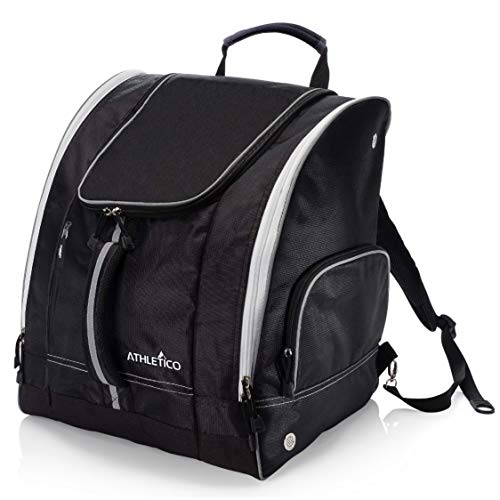

As an Amazon Associate we earn from qualifying purchases at no extra cost to you.
Ski Boot Bags at a Glance
| Bag line | Best for | Key features (as makers describe) | Limits |
|---|---|---|---|
| Dakine Boot Pack | Resort skiers who carry boots and a helmet | Boot compartment, helmet pocket, backpack straps | Not designed for large amounts of clothing |
| Dakine Boot Locker | Boots plus extra gear | Larger clamshell design with room for helmet and clothing | Bulky to carry |
| Thule RoundTrip Boot Backpack | Travel and frequent flyers | Boot compartments, structured design, backpack carry | Higher cost tier |
| Osprey Transporter Boot Bag | Durable, travel-focused carry | Padded compartments and tough materials | Larger and heavier |
| Athalon boot bags | Value pick | Simple designs with boot compartments and pockets | Fewer organization options |
| Rossignol / Salomon boot bags | Brand-matched gear | Boot-focused design, often with helmet storage | Features vary by season |
Model names vary by season. Confirm the current spec and capacity on the maker’s page.
Why a Dedicated Boot Bag Matters
Ski boots are heavy, hard and often wet. A bag built for them keeps liners dry, separates damp items from clean ones and makes it easier to carry boots without damaging them. Features such as ventilated panels, separate compartments and padded bases help protect gear and make carrying more comfortable on the walk from car to lift.
What to Look For
Capacity and boot size fit
Makers list the boot sizes their bags fit. Check your boot shell length and any extra-large or wide-last boots against the stated capacity. Women’s, men’s and youth sizes vary.
Compartments
A dedicated helmet pocket, a goggle pocket and a compartment for liners or base layers keep items separate. Some bags include a waterproof boot compartment to keep moisture away from clothes.
Carry options
Backpack straps are useful when walking through parking lots or crowds. Padded handles and shoulder straps spread weight. Roller bags handle longer airport trips but are harder in snow.
Materials and durability
Look for abrasion-resistant fabrics, reinforced bases and strong zippers. Water-resistant coatings help with snow and slush. Reviewers often note that sturdier materials add weight.
Ventilation and drying
Mesh panels or vents let boots air out. Always remove liners and dry boots after use to prevent odor and damage; storing wet boots in a closed bag for long periods can lead to smells and mildew.
Budget Tiers
| Tier | Typical features | Trade-offs |
|---|---|---|
| Budget | Simple duffel style, basic boot compartment | Less padding, fewer pockets |
| Mid-range | Dakine and similar brands with helmet pockets and straps | Medium durability, limited clothing space |
| Premium | Thule, Osprey and similar with structured design and tough materials | Higher cost, extra weight |
Fit and Use Notes
- Check boot length and width before buying, especially for larger sizes.
- If you fly, check airline carry-on and checked-bag limits for dimensions and weight.
- Pack clean and dry items in one compartment and wet items in another.
- Do not store damp boots for days in a sealed bag.
- Carry heavy loads with both straps on a backpack-style bag to reduce back strain.
Pick X If You…
| If you… | Pick |
|---|---|
| Ski locally and carry boots plus a helmet | Dakine Boot Pack |
| Want extra room for gear | Dakine Boot Locker |
| Fly often with ski gear | Thule RoundTrip or Osprey Transporter |
| Want a budget option | Athalon boot bag |
| Prefer brand-matched gear | Rossignol or Salomon boot bag |
Alternatives
- Standard duffel bags if you only need a way to carry boots and a few items.
- Ski backpacks if you carry boots rarely and want everyday versatility.
- Roller gear bags for trips with multiple pieces of equipment.
Frequently Asked Questions
Do I need a dedicated ski boot bag?
Not required, but it makes carrying and drying boots easier and protects other gear from moisture and sharp buckles.
Will my boots fit?
Check the maker’s stated boot size range and compare it to your shell length. Large or wide boots may need a bigger bag.
Can I bring a boot bag on a plane?
Often yes, but rules vary by airline. Check carry-on and checked-bag limits before travel.
How do I keep boots from smelling?
Remove liners and dry both liners and shells after every use. Use ventilated storage and avoid sealing damp items in a closed bag.
Do I need a helmet pocket?
It is convenient if you carry a helmet regularly. It keeps the helmet from scratching other items and protects it from crushing.
Backpack or duffel style?
Backpack style is more comfortable for longer walks. Duffel style can be simpler and cheaper. Pick based on how far you carry your boots.





