Key takeaways
- For maximum fletching clearance and broad tuning potential, start with a compatible drop-away and plan for careful setup. For secure arrow containment and low-complexity operation, choose a Whisker Biscuit-style rest and treat its bristles as a replaceable wear part. If you want containment without a…
Best Arrow Rests for Accuracy and Reliable Tuning
The best arrow rests depend on your bow and priorities: choose a quality drop-away for the most clearance and tuning flexibility, a Whisker Biscuit for simple, secure containment, or a full-containment launcher rest when you want a balance of support and an unobstructed arrow path.
Those categories overlap: a Whisker Biscuit is itself a full-containment rest, while “full containment” can also describe rests with a launcher and capture cage. Compare the actual design—not just the label—and confirm compatibility with your bow before buying.
Our top picks


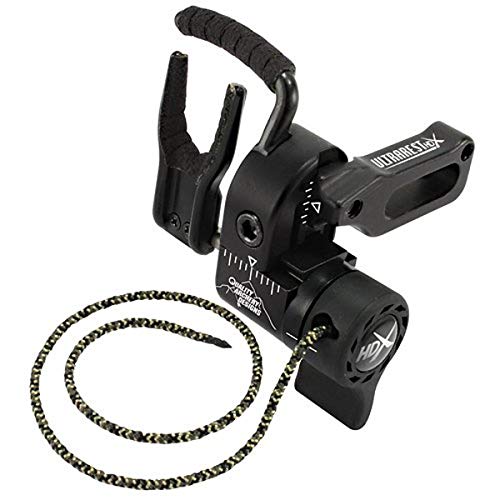
As an Amazon Associate we earn from qualifying purchases at no extra cost to you. Ratings are shown as listed on Amazon.
At a glance: which rest suits your situation?
| Rest type | Typical weight | Containment | Clearance and tuning | Best fit |
|---|---|---|---|---|
| Cable-driven drop-away | About 3–5 oz | Usually low to moderate before the shot; varies by model | Launcher drops after release; broad tuning potential | Hunters and target archers prioritizing clearance |
| Whisker Biscuit-style | About 2–4 oz | High; bristles surround the shaft | Simple setup, but the shaft stays in contact with bristles | Newer archers, mobile hunters, and rugged setups |
| Full-containment launcher | About 3–6 oz | High when loaded, typically through a cage or capture arm | Launcher supports the shaft; clearance depends on its design | Archers who want capture without a bristle ring |
These are approximate category-level ranges, not specifications for every product. Exact weight, mounting pattern, adjustment range, and compatibility vary. Check the maker’s current manual and product specifications before ordering.
Drop-away vs. containment: the important trade-offs
Drop-away rests: clearance and adjustability
A drop-away launcher supports the arrow during the draw and then moves out of its path as the bow fires. Cable-driven models use the bow’s cable movement; limb-driven models use a cord attached to a limb. Either style can reduce contact between the rest and fletching, which makes drop-aways a strong choice when clearance and fine tuning are priorities.
The trade-off is setup. The cord, timing, launcher position, and nock travel all need to work together. A poorly timed rest may drop too early or too late. Cable-driven models also need to match the bow’s cable layout and manufacturer guidance; not every design is suitable for every bow. If you change strings or cables, have the rest timing rechecked.
Whisker Biscuit rests: secure, simple support
A Whisker Biscuit-style rest holds the shaft in a ring of bristles, so the arrow remains captured when the bow is tilted or carried. That makes it appealing for walk-and-stalk hunting, treestand use, and beginners who would rather not manage a loose arrow on the rest.
Because the shaft and fletching pass through bristles, contact is part of the design. Correct sizing and alignment matter: a ring that is too tight, damaged, or poorly centered can add friction or disturb the arrow. Use fletching and arrow combinations the manufacturer recommends, and inspect the bristles for wear instead of assuming the rest will stay in tune indefinitely.
Full-containment launcher rests: a middle ground
These rests use a launcher to support the arrow and a cage, arm, or similar feature to keep it captured before the shot. They can offer more secure arrow handling than an open launcher while avoiding the continuous bristle contact of a Biscuit. Their performance depends heavily on the specific capture design: check whether containment can be adjusted or temporarily opened, and whether the launcher clears your fletching.
Choose by bow, experience, and use
| Your situation | Best starting point | Why—and what to verify |
|---|---|---|
| First compound bow; straightforward setup matters | Whisker Biscuit-style | High containment and uncomplicated operation; confirm the rest fits your arrow diameter and fletching. |
| Compound bow; tuning and fletching clearance are top priorities | Drop-away | Launcher moves out of the arrow’s path; verify cable or limb compatibility and follow timing instructions. |
| Hunting in rough terrain; arrow must stay captured | Whisker Biscuit or capture-style launcher | Both can secure a nocked arrow; weigh bristle contact against the complexity of a moving launcher. |
| Recurve or traditional bow | Purpose-built stick-on or shelf rest | Many compound-bow rests are not suitable. Check the bow maker’s recommendations and rest mounting style. |
| Frequent shooting or travel | Durable model with replaceable wear parts | Prioritize available replacement bristles, launcher components, and clear service instructions. |
Bow compatibility is more than whether a rest can be bolted on. Check mounting-hole pattern, handedness, arrow diameter, fletching clearance, cable or limb configuration, and whether the bow’s manufacturer permits the chosen attachment. A local archery pro shop can help verify fit, especially when setting up a drop-away.
Setup checks that prevent avoidable tuning problems
-
Start with the bow’s specifications. Identify the model, handedness, rest-mounting pattern, and recommended rest style. This avoids buying a rest that cannot be mounted or timed correctly.
-
Use the rest maker’s reference position. Set the launcher height and center-shot position using the product instructions and bow manufacturer’s guidance. A common starting reference on many compound bows is an arrow level through the Berger hole, but it is not universal; don’t treat it as a substitute for model-specific setup.
-
Check clearance before paper or broadhead tuning. Apply a small amount of foot powder or another suitable transfer medium to the fletching and nearby surfaces, then shoot safely into an appropriate target. Contact marks can reveal interference that is hard to see while the bow is at rest.
-
Confirm drop-away timing. Follow the rest maker’s timing procedure and check that the launcher supports the arrow through the required part of the shot cycle before dropping. Recheck after string or cable work.
-
Fine-tune with consistent arrows. Use arrows with matching spine, length, point weight, and fletching. If results are inconsistent, check the archer’s form and bow setup as well as the rest; moving the rest is not a cure for every tuning issue.
What wears first—and how to extend service life
On a Whisker Biscuit, bristles are the usual wear item. Repeated shooting, dirt, moisture, and fletching contact can flatten or damage them. Replace worn inserts when the arrow no longer sits securely or the bristles no longer guide it consistently. Keep the ring free of grit, but avoid harsh solvents or oils unless the manufacturer says they are safe.
On a drop-away, inspect the cord, knots, launcher, and moving joints. Fraying, loose attachment points, sluggish movement, or changed timing deserve attention. A full-containment launcher may also have wear at its launcher surface or capture components. After a wet or dusty outing, let parts dry and remove debris; don’t force a sticky mechanism or adjust timing by guesswork.
Any rest can be knocked out of position during transport. Before shooting, check that mounting screws are secure, the arrow is supported consistently, and no part contacts the fletching. Use the torque guidance in the manual rather than overtightening, which can damage threads or bow accessories.
Bottom line
For maximum fletching clearance and broad tuning potential, start with a compatible drop-away and plan for careful setup. For secure arrow containment and low-complexity operation, choose a Whisker Biscuit-style rest and treat its bristles as a replaceable wear part. If you want containment without a bristle ring, compare full-containment launcher designs closely—especially how the cage works and whether the launcher clears your arrows.
Prices vary by construction and features, but basic rests commonly fall around $30–$70, while more adjustable or specialized models often run about $70–$150 or more. Budget for installation or tuning help if needed; correct setup matters more than choosing the most elaborate rest.