
Key takeaways
- Under 100 square feet: consider a tabletop or compact 4-foot model.
- Typical living room or basement: a 5 to 7 foot table can fit.
- Dedicated game room: 7.5 to 8 feet or larger provides the most authentic feel.
For most families, a full-size air hockey table of about 7 to 8 feet with a strong blower and sturdy legs is the best long-term choice, while a 4 to 5 foot model or a tabletop unit fits smaller rooms and younger children, and a commercial-style table suits dedicated game rooms and serious players. This guide explains how to match table size, airflow, electronics and build quality to your space and budget tier, using what makers state in their listings.
Our top picks
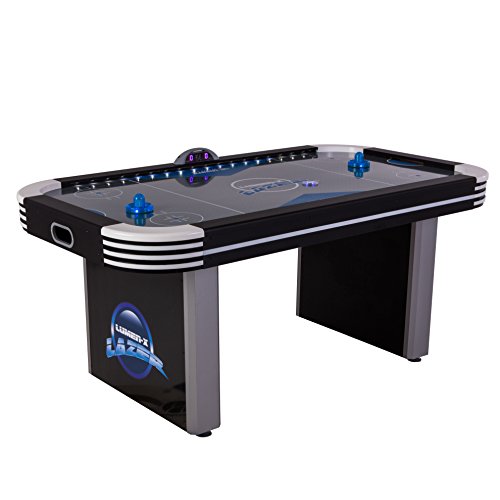
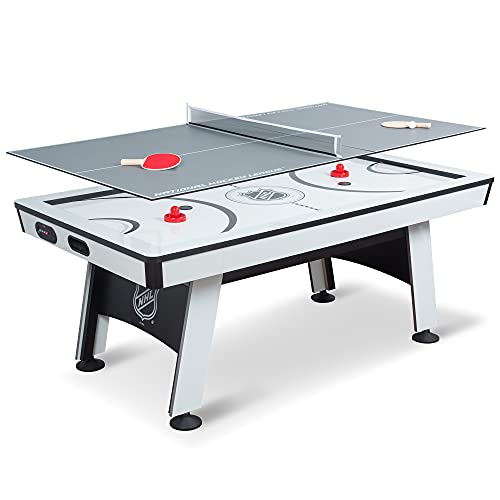
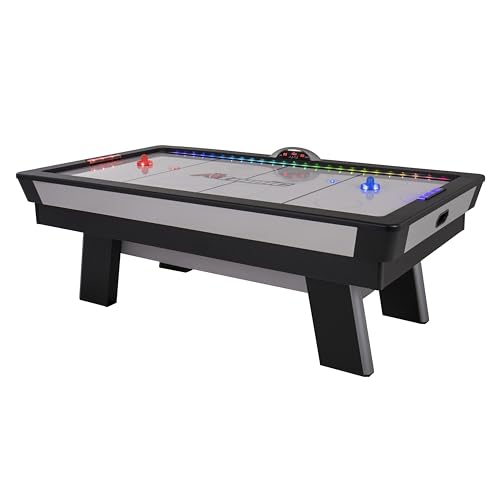

As an Amazon Associate we earn from qualifying purchases at no extra cost to you.
At a Glance: Table Categories
| Category | Typical makers | Best for | Limits |
|---|---|---|---|
| Tabletop (about 3 to 4 feet) | Hathaway, ESPN, Sportcraft, Triumph | Young children, apartments, travel | Small playing surface; needs a stable tabletop |
| Compact freestanding (4 to 5 feet) | Hathaway, Triumph, MD Sports, Sportcraft | Kids and casual family play, tight spaces | Lighter blowers, shorter play |
| Full-size home (6.5 to 8 feet) | Hathaway, Carmelli, Atomic, Triumph, Dynamo | Families, teens, regular play | Needs a large room and heavier lifting |
| Commercial or tournament style (8 feet and larger) | Dynamo, Atomic, Valley-Dynamo | Serious players, game rooms, clubs | Premium cost, bulky, and heavy |
| Multi-game tables (air hockey plus pool, table tennis and more) | Hathaway, MD Sports, Sportcraft | Mixed-use rec rooms | Compromises on each individual game |
Specific model names change often, so use the makers’ own listings to confirm current dimensions, motor ratings and warranty. The comparison above is organized by category rather than by model number.
Table Size and Room Needs
Plan room dimensions before choosing a table. A standard 7-foot table is usually about 3.5 to 4 feet wide, but players also need space around it. A common recommendation from makers and retailers is to leave around 3 to 4 feet clear on each side so you can move and swing comfortably. For a 7 to 8 foot table, that means a room of at least 13 to 15 feet in length.
- Under 100 square feet: consider a tabletop or compact 4-foot model.
- Typical living room or basement: a 5 to 7 foot table can fit.
- Dedicated game room: 7.5 to 8 feet or larger provides the most authentic feel.
Also check doorways and stairs for delivery. Full-size tables can weigh well over 100 pounds in the box, and many ship in multiple cartons.
Airflow, Blowers and Surface
The blower is the heart of the table. It pushes air through small holes in the playing surface, letting the puck glide. Makers describe blower strength in watts, volts or amps, although the numbers are not always comparable between brands. Key points reviewers and makers mention:
- Stronger blowers: keep the puck gliding across the whole surface, especially on larger tables.
- Dual blowers or multiple fans: found on some larger models for more even airflow.
- Hole pattern: evenly spaced holes across the surface reduce dead spots.
- Surface material: a smooth, laminated surface lets the puck glide better. Lower-cost tables can show surface wear or warping with time.
Plug the blower into a standard household outlet as directed by the manual, do not run it in damp places, and follow the maker’s guidance on extension cords. If the cord, plug or blower housing becomes damaged, stop use and contact the maker or a qualified electrician.
Build Quality and Legs
Look at the table’s frame, rails, and leg style. Heavier tables with thicker rails typically bounce pucks more consistently, and wider leg bases reduce rocking during fast play. Leg levelers help on uneven floors. Cheap tables sometimes use thin legs that wobble under hard play, so check what the maker lists for leg material and weight rating.
For rails, a rigid, well-finished edge helps the puck rebound cleanly. Some tables add rail padding or covers. Look at whether the playing surface is one-piece or joined; seams can cause bumps if poorly aligned.
Scoring and Electronics
Many mid-range and premium tables include an electronic scoring unit that counts goals, sometimes with sound effects, a built-in timer, or game modes. It is a convenience, not a requirement. Check whether the unit uses batteries or a power adapter, and whether scoring sensors sit behind the goal slot. Basic manual scorers work fine for casual play and have fewer parts to fail.
Accessories in the Box
Most tables ship with two strikers (mallets) and two pucks, and some add extras. Replacement strikers and pucks are easy to find if they crack or go missing. Check that included accessories are the right size for the table, since larger tables use larger, heavier pieces. For more serious play, many players upgrade to higher-grade strikers and pucks.
Budget Tiers
Budget
Tabletop and small freestanding tables offer a fun, easy entry for kids. Expect lighter frames, smaller blowers and basic scoring. They work well in short sessions and small spaces, but may not hold up to hard daily play.
Mid-range
Full-size home tables from brands like Hathaway, Carmelli and Triumph sit here. Look for sturdier legs, stronger blowers, and electronic scoring. These suit families who play regularly.
Premium
Commercial-style tables from makers such as Dynamo and Atomic are built for heavy use, with thicker playing surfaces, heavy-duty blowers and tournament-style dimensions. They are best for dedicated game rooms or serious players.
Assembly, Safety and Care
- Assembly: most tables need two adults and a few hours. Follow the manual, tighten all bolts, and re-check them after the first few sessions.
- Leveling: use the leg levelers and a level tool. An unlevel table makes the puck drift.
- Cleaning: wipe the surface regularly with a dry or slightly damp soft cloth, as the maker directs. Avoid harsh cleaners that could clog air holes or damage the finish. Some players use a maker-approved surface lubricant or spray.
- Children: supervise young players around moving parts, cords and puck play, and keep cords out of walkways.
- Storage: keep the table in a dry space away from direct sunlight and extreme temperature changes.
Pick X If… Decision Table
| Pick this if you… | Choose |
|---|---|
| Have a small space or young children | A tabletop or 4 to 5 foot compact table |
| Want regular family play | A 6.5 to 8 foot home table with a strong blower |
| Want a realistic arcade feel | A larger commercial-style table |
| Have limited floor space but want variety | A multi-game table, accepting trade-offs |
| Want low-maintenance scoring | Manual scoring or a simple electronic unit |
| Play competitively | Premium surface, heavy blower and tournament-grade strikers and pucks |
Alternatives
- Table tennis or foosball tables: similar social appeal, with different skills involved.
- Arcade-style cabinets: suit buyers wanting a coin-op look, though they need more space and power.
- Combination game tables: include air hockey plus other games, a good option for shared spaces.
Frequently Asked Questions
What size air hockey table should I buy?
For a family room or basement, a 6.5 to 8 foot table is a popular choice. Smaller homes work better with a 4 to 5 foot or tabletop model. Always measure your room and leave several feet of clearance on each side.
How important is the blower?
Very important, because it controls how smoothly the puck glides. A weak blower leads to slow, sticky play on larger tables. Compare listed motor specs from the maker, and read reviews for comments on airflow across the entire surface.
Why is my puck not gliding well?
Common reasons include a dirty playing surface, clogged air holes, an unlevel table or a weak blower. Wipe the surface with a soft cloth, check the legs and levelers, and make sure the fan is running at full strength. If the issue persists, contact the maker.
Are electronic scoring tables worth it?
They are convenient and fun, especially for kids, but not essential. Manual scoring tables can be more reliable over time. Choose based on how much you value automatic score tracking and extra sounds.
Can I put an air hockey table in a garage or outdoors?
Makers generally design tables for indoor use. Humidity and temperature swings can warp the surface and damage electronics. If you use a garage, keep it dry and follow the maker’s guidance on storage.
How do I maintain an air hockey table?
Wipe the playing surface, keep air holes clear, level the table, and check bolts periodically. Store pucks and strikers away from moisture. Follow the manual for any recommended surface treatments.





