Key takeaways
- Best baseball gloves for youth players: Rawlings Players Series T-ball to 11.5 inch and Select Pro Lite, with sizing, hand throw and fit tips.
The Rawlings Select Pro Lite is the best youth baseball glove in this group for a player who is past the tee-ball stage and playing real games, because it is a pro-pattern glove scaled down for young hands. Younger beginners are better served by the Rawlings Players Series gloves that follow, which are lighter, softer and easier to close. A youth glove is simply a glove sized and shaped for a child, usually between nine and twelve and a quarter inches in length, with a smaller hand opening than an adult model.
Quick List
- Rawlings Players Series 9-inch T-Ball Glove (right hand throw) – best for the youngest first-time players
- Rawlings Players Series 11.5-inch Youth Glove – best for a growing player who wants a longer infield-style pocket
- Rawlings Select Pro Lite Youth Glove – best for older youth players moving to a leather, game-ready pattern
- Rawlings Players Series 10-inch Basket Web Glove – best for a player who wants an open web and a mid-size glove
- Rawlings Players Series 10-inch Black and Red Glove – best for a mid-size beginner glove in a bold color scheme
- Rawlings Players Series 9-inch T-Ball Glove (left hand throw) – best for left-handed throwers just starting out
Which One Is Right for You?
| If you… | Choose |
|---|---|
| are buying for a player in the 8-to-12 range who plays real games | Rawlings Select Pro Lite Youth Glove |
| have a first-time player in tee-ball and throw right-handed | Rawlings Players Series 9-inch (right hand throw) |
| have a left-handed thrower starting out | Rawlings Players Series 9-inch (left hand throw) |
| want a mid-size glove with an open basket web for easier seeing of the ball | Rawlings Players Series 10-inch Basket Web |
| want a mid-size glove with a classic black and red look | Rawlings Players Series 10-inch Black and Red |
| are buying for a taller beginner who already has a good grip | Rawlings Players Series 11.5-inch |
Three questions narrow the choice quickly. Which hand does your child throw with, since a right-hand-throw glove goes on the left hand. How old and how experienced is the player, since the smaller Players Series gloves are aimed at beginners. And how serious is the schedule, since a leather glove such as the Select Pro Lite makes more sense when a player is catching every week. Always confirm the size and color on the product page, because several listings offer multiple options.
All 6 Picks in Detail
1. Rawlings Players Series 9-inch T-Ball Glove (Right Hand Throw) – Best for the Youngest Beginners
As an Amazon Associate we earn from qualifying purchases at no extra cost to you.

This nine-inch Players Series glove is Rawlings’ entry-level option for the youngest players. The listing identifies it as a T-ball and youth glove for right-hand throwers, with a baseball theme. At nine inches it is small enough for a young child to open and close, which is more important than any feature when a player is learning to catch.
It suits children just starting tee-ball, as well as parents who want a first glove that will not overwhelm small hands. Rawlings markets the Players Series for first-time players, and the lightweight, soft design is meant to make closing the glove easier.
At this stage, the goal is fun and confidence, not technique. A small glove lets a child squeeze it shut around a soft ball, which builds the habit of watching the ball into the pocket. Parents can help by playing short games of catch from a few feet away, rolling grounders and praising every catch. Plan on this glove lasting a season or two before the player is ready for something longer.
- Nine-inch glove sized for T-ball
- Right hand throw, which means the glove goes on the left hand
- Players Series entry-level construction
- Listing mentions a baseball theme; confirm whether a ball is included
- Rawlings describes the Players Series as soft and easy to close
Pros
- Small and light for beginners
- Easy to break in
- Good starting point for T-ball
Cons
- Outgrown quickly as the player gets older
- Not intended for serious game play
The left-hand-throw version of this same glove is the nearest alternative for left-handed throwers, and the ten-inch glove is the step up once a player outgrows nine inches.
2. Rawlings Players Series 11.5-inch Youth Glove – Best for a Longer Pocket

The 11.5-inch Players Series glove is the longest glove in the Players range here, in a camel and black color scheme. For many players, 11.5 inches is a typical infield length in youth baseball, so this glove suits a child who is moving beyond T-ball and wants more reach. Rawlings’ own product pages recommend the Players Series for younger players, so confirm the age range on the product page before you buy.
It suits a child with larger hands who is ready for a full-size youth fit but still needs the softer, easier-closing feel of an entry-level glove. A glove that is too big can make catching harder, so measure your child’s hand and compare with the sizing guidance below.
Because this is the longest Players Series glove in the list, it is the one most affected by hand size. A good check is to have your child put the glove on and try to pinch the thumb and pinky together; if they can do it without strain, the size is workable. If they struggle, drop to a ten-inch glove and revisit in a year.
- 11.5-inch youth glove, right hand throw
- Camel and black color scheme
- Players Series entry-level construction
- Rawlings lists a youth taper fit on related Players Series pages; confirm on the listing
- Recommended age range: confirm on listing
Pros
- More reach than the smaller Players Series gloves
- Traditional camel and black look
- Room to grow
Cons
- May feel large to a very young child
- Entry-level materials rather than premium leather
Next to the Select Pro Lite, this glove is the simpler and softer option, while the Select Pro Lite is built to hold up to more frequent play.
3. Rawlings Select Pro Lite Youth Baseball Glove – Best for Game-Ready Play

The Select Pro Lite line is Rawlings’ step-up glove for youth players. The listing describes youth-fit gloves in multiple sizes and colors, and Rawlings positions them as lighter versions of pro-pattern gloves, with a youth taper fit that gives a slightly smaller hand opening for control. Related Rawlings pages describe a lightweight, soft leather shell and cushioned finger liners.
This is the glove to consider for a player who is catching regularly in games and practice, usually in the older end of the youth range. Because the listing offers multiple sizes and colors, the exact pattern and length must be selected on the product page, and the size you choose should match the player’s position and age.
Plan the purchase around position. An infielder generally wants a shorter glove so the ball comes out quickly, while an outfielder usually wants a longer glove for reach. Since the listing offers several options, read the size line carefully and compare it with the sizing section below. Expect to spend a few weeks of regular catch to get the pocket shaped the way the player likes.
- Youth Select Pro Lite glove with multiple size and color options
- Leather construction on the Select Pro Lite line, per Rawlings pages
- Youth taper fit for a smaller hand opening
- Right or left hand throw: confirm the selected option on listing
- Pattern and length depend on the size you choose
Pros
- Pro-style pattern in youth sizing
- Better suited to frequent game play
- Choice of sizes and colors
Cons
- Needs more break-in time than a soft entry-level glove
- Selecting the wrong size is easy with multiple options
Compared with the Players Series 11.5-inch glove, the Select Pro Lite is the better fit for a player who needs durability, while the Players Series is easier for a beginner.
4. Rawlings Players Series 10-inch Basket Web Glove – Best for an Open Web

This ten-inch Players Series glove is a middle step between the nine-inch T-ball size and the 11.5-inch glove. The listing describes a basket web in navy and a space-themed color scheme, for right-hand throwers. A basket web uses a lattice of laces in the top of the pocket, which gives an open look that many young players find easier to track the ball through.
It suits a child who has outgrown a nine-inch glove but is still learning to catch and throw. The ten-inch length gives enough pocket to field grounders without being unwieldy.
The basket web look is a good teaching tool for new players because they can often see the ball arriving through the lacing. Encourage the player to watch the ball into the pocket and to use the throwing hand to cover the catch. If your child plays on a team that requires a particular color, check the listing’s color name before ordering.
- Ten-inch youth glove, right hand throw
- Basket web design per the listing
- Navy color scheme
- Players Series entry-level construction
- Rawlings lists an age group for ten-inch Players Series gloves of around six and under on related pages; confirm on listing
Pros
- Open web helps the player see the ball
- A comfortable middle size
- Soft and easy to close
Cons
- Not intended for older players
- Open webs can let small balls pass through if the lacing is loose
The nearest alternative is the other ten-inch glove, which differs mostly in color and web style, so choose on look and on the web you prefer.
5. Rawlings Players Series 10-inch Black and Red Glove – Best for a Bold Color Scheme

This second ten-inch Players Series glove is listed in black and red for right-hand throwers. Its size and series match the basket web version, so the main difference is the color and, potentially, the web design. For many young players, choosing a glove in a favorite color helps them want to practice, which matters more than the stitching.
It suits children in the same stage as the other ten-inch glove, and it suits families buying for several siblings who want to tell their gloves apart.
Choosing between the two ten-inch gloves is mostly a style call. Because they share a series and size, either will feel familiar to a child who already owns a Players Series glove. If you are buying for siblings or teammates, different colors make it easy to tell the gloves apart in a dugout bag, which saves arguments and lost equipment.
- Ten-inch youth glove, right hand throw
- Black and red color scheme
- Players Series entry-level construction
- Web style: confirm on listing
- Designed for young beginners per Rawlings’ positioning of the series
Pros
- Easy-to-identify color scheme
- A familiar mid-size length
- Beginner-friendly softness
Cons
- Nearly the same as the other ten-inch glove apart from color
- Will be outgrown as the player advances
If the player cares about web design, compare it with the basket web glove; otherwise, pick the color you like better.
6. Rawlings Players Series 9-inch T-Ball Glove (Left Hand Throw) – Best for Left-Handed Beginners
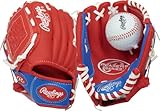
This nine-inch Players Series glove is made for left-hand throwers, which means it goes on the right hand. The listing pairs it with a ball in a red and blue color scheme. For left-handed children, finding a left-hand-throw glove in a small size can be harder than for right-handers, so this listing fills a real gap.
It suits a young left-hander starting tee-ball who needs a glove that fits the correct hand. Using a right-hand-throw glove on the wrong hand makes catching and throwing awkward and can discourage a new player.
When shopping for a left-handed child, always double-check the hand orientation in the listing title, because left-hand-throw gloves can sit next to right-hand versions in search results. Once the glove arrives, have the child put it on and make a catching motion to confirm that the thumb sits where it should. If the orientation is wrong, return it quickly instead of letting a new player struggle.
- Nine-inch glove, left hand throw
- Red and blue color scheme with a ball per the listing
- Players Series entry-level construction
- T-ball and youth sizing
- Confirm whether the included ball is a soft-core practice ball on the listing
Pros
- Correct hand orientation for lefties
- Small and light
- Includes a ball per the listing
Cons
- Outgrown quickly
- Limited to the nine-inch size
It is the mirror of the first pick, so the right-handed version is the nearest alternative if the player throws right-handed.
Specs Compared
| Glove | Series | Size | Hand throw | Colors | Web or notes |
|---|---|---|---|---|---|
| Players Series 9-inch T-Ball | Players | 9 in | Right | Baseball theme | Confirm on listing |
| Players Series 11.5-inch Youth | Players | 11.5 in | Right | Camel and black | Confirm on listing |
| Select Pro Lite Youth | Select Pro Lite | Multiple, confirm on listing | Confirm on listing | Multiple | Youth taper fit, leather line |
| Players Series 10-inch Basket Web | Players | 10 in | Right | Navy and space theme | Basket web |
| Players Series 10-inch Black and Red | Players | 10 in | Right | Black and red | Confirm on listing |
| Players Series 9-inch T-Ball (left hand) | Players | 9 in | Left | Red and blue | Includes ball per listing |
How We Chose These
This guide is built from research, not from our own use. We started with the youth glove listings in the current catalog and read each listing name along with Rawlings’ own product pages for the Players Series and Select Pro Lite lines. We sorted the picks by size, hand throw and construction level, then noted what each listing says about colors, webs and extras. Where Rawlings pages gave age guidance, we reported it as the maker’s recommendation and told you to confirm it. We favored clear sizing information and a logical step from beginner gloves to a game-ready glove. Anything the listing does not state is marked as something to confirm.
What to Look For
Size by age and position
Glove size is measured in inches from the base of the palm to the tip of the index finger. Youth players commonly move through nine-inch T-ball gloves, then roughly ten to eleven and a half inches for infield play, and eleven and a half to twelve and a quarter inches for outfield. Rawlings’ general youth sizing guidance lists infield gloves from about 10.25 to 11.5 inches and outfield gloves from about 11.5 to 12.25 inches for players aged seven to twelve. Too big a glove is harder to close; too small limits reach.
Hand throw and which hand to wear it on
Right hand throw means the player throws with the right hand and wears the glove on the left. Left hand throw is the opposite. Ordering the wrong orientation is the most common sizing mistake, so double-check it on the product page, particularly on listings with multiple options. If a child is still deciding which hand is dominant, have them throw a ball a few times before buying.
Material, break-in and fit
Beginner gloves such as the Players Series use softer, lighter materials that are easier for small hands to close right away. Leather gloves like the Select Pro Lite need more break-in, usually a few weeks of play catch, but they hold their shape longer. Youth taper fits narrow the hand opening and finger stalls so smaller hands are not swimming in the glove. Check that your child’s fingers reach the tips of the finger stalls and that the glove closes without the player squeezing hard.
Web styles. The web is the lacing between the thumb and index finger. Open webs, such as basket webs, let a player see through the pocket and are popular with infielders. Closed webs hide the ball and are common with pitchers who want to hide a grip. For young beginners, the web matters less than size and softness, so pick the style that looks comfortable to the child.
A simple sizing example
Say your eight-year-old plays second base and has medium-size hands. A glove around ten and a half to eleven and a half inches is a sensible starting range, and a youth taper fit will help control. If the same child is six and just starting tee-ball, a nine-inch or ten-inch glove is easier to manage. Use that as a rule of thumb, then confirm with the specific listing, since sizes and colors vary by option.
Position and how it changes the choice. Infielders field short hops and need to transfer the ball fast, so shorter gloves in the ten-to-eleven-and-a-half-inch range are common. Outfielders track fly balls and benefit from longer gloves. Pitchers often prefer a closed web to hide the grip. Catchers and first basemen use specialized mitts, which are not covered here. For a child who has not settled on a position, a middle-size glove is the safest choice because it works in most spots.
Care and storage. Keep the glove dry and avoid leaving it in a hot car, which can warp the shape. Store it with a ball in the pocket to keep the shape. Do not soak the glove in water or use harsh cleaners. A damp cloth and a small amount of glove conditioner, applied sparingly according to the maker’s instructions, is enough for most youth gloves.
Questions
What size baseball glove does my child need?
Nine inches is typical for T-ball, and about ten to eleven and a half inches suits most youth infielders. Outfielders often use eleven and a half to twelve and a quarter inches. Check the maker’s sizing chart and the player’s hand size.
How do I know which hand throw to buy?
A right-hand thrower wears the glove on the left hand, so choose right hand throw. A left-hand thrower wears it on the right hand, so choose left hand throw.
How do I break in a youth glove?
Play catch regularly, flex the glove, and store it closed with a ball in the pocket. Avoid heavy oiling or microwaving, which can damage materials.
Is a leather glove worth it for a young beginner?
Not necessarily. A soft entry-level glove is easier to close and may help a beginner enjoy the game, while leather becomes more useful as play becomes more frequent.
When should my child move up in glove size?
When the fingers reach the end of the finger stalls, the player has trouble closing the glove, or the glove feels too small for the position, it is time to size up. Most players change gloves every year or two as they grow.
Can a glove be used for both baseball and softball?
Some youth gloves are labeled for both, but softballs are larger, so check the pocket and the recommended use. The T-ball size listed here is marketed for baseball and softball by some retailers.
Update History
- October 20, 2026 – Initial publication; product set drawn from current catalog listings.
- Check the product page for current specifications and availability before buying.
Sources
- Rawlings product pages for the Players Series and Select Pro Lite youth gloves
- Rawlings youth sizing guidance for infield and outfield glove lengths
- Retailer listing titles and specification fields