
Key takeaways
- Rider height and weight: follow the maker’s listed ranges. Many bikes list user heights from roughly the low five-foot range to six and a half feet, but figures vary.
- Adjustability: look for a four-way adjustable seat (up, down, forward, back) and handlebars that move vertically and horizontally.
- Footprint: measure the space, including room to get on and off. Most bikes are about four feet long.
- Weight and stability: heavier flywheels give a smoother ride but make the bike harder to move; transport wheels help.
- Noise: belt drive and magnetic resistance are the quietest combination.
- Floor protection: a mat protects floors and reduces vibration.
The best indoor cycling bike for most people is a connected model with a magnetic resistance system and a screen, such as the Peloton Bike, while riders who want a quiet, studio-style bike without a subscription should look at the Schwinn IC4 or the Keiser M3i, and budget buyers can pick a basic belt-drive spin bike from brands like Sunny Health & Fitness. The choice comes down to whether you want classes and a screen, how much space and noise your home allows, and how many people of different heights will ride.
Our top picks


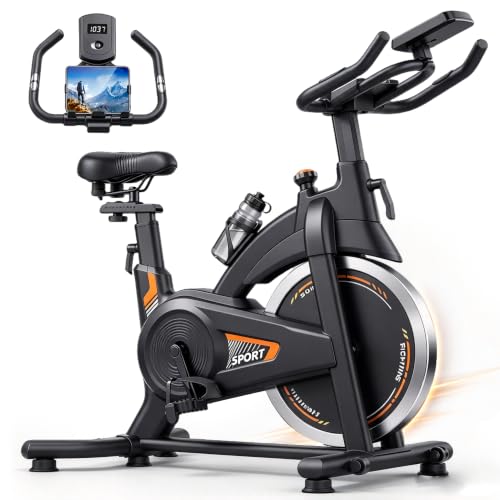
As an Amazon Associate we earn from qualifying purchases at no extra cost to you.
Indoor Cycling Bikes at a Glance
| Model or type | Best for | Key stated features | Limits |
|---|---|---|---|
| Peloton Bike line | Class-driven riders who want a polished screen experience | Built-in touchscreen, magnetic resistance, live and on-demand classes through a Peloton membership | Full features need a subscription; premium tier |
| Schwinn IC4 | Riders who want a studio-style bike with app flexibility | Magnetic resistance, belt drive, dual-sided pedals, Bluetooth for third-party apps, per the maker | No built-in screen; bring your own tablet |
| Keiser M3i | Serious riders who want accurate power and a quiet ride | Magnetic resistance, belt drive, Bluetooth, power shown on the console per the maker | Premium tier; no large screen |
| Stages SC3 and similar | Riders who value power data and durable build | Studio-style bike with onboard power measurement, per the maker | Premium tier; minimal console |
| Bowflex and Echelon connected bikes | Mid-range buyers who want classes | Magnetic resistance, optional screens or tablet holders, subscription classes in their apps | Class content and screen quality vary |
| Sunny Health & Fitness belt-drive bikes | Budget buyers and occasional riders | Friction or magnetic resistance, belt or chain drive, manual controls | Fewer adjustments, less data |
Key Differences Between Bikes
Resistance type
Magnetic resistance is quiet, needs little maintenance and is common on mid-range and premium bikes. Friction pad resistance, often found on low-cost bikes, is simpler but wears and can be noisier. Some bikes have a manual knob while others adjust resistance electronically from a console or app.
Drive system
A belt drive is quiet and cleaner than a chain, which helps in apartments. Chain drives are common on budget bikes and are fine with regular lubrication but louder.
Screen or no screen
Connected bikes like the Peloton Bike include a screen and class library. Bikes like the Schwinn IC4 and the Keiser M3i rely on your own tablet or phone, which gives you more freedom in apps but adds a small setup step. If you ride for entertainment and motivation from instructors, a built-in screen is convenient; if you prefer to choose your content, a screenless bike lowers cost and avoids a locked ecosystem.
Pedals and shoes
Many studio-style bikes use SPD-compatible clip-in pedals on one side and toe cages on the other, as with the dual-sided pedals that Schwinn lists for the IC4. Peloton bikes typically use a different cleat system, so confirm shoe compatibility before buying.
Top Picks by Need
Peloton Bike line: best for guided classes
Peloton’s bike combines a large screen, a magnetic resistance system and a large catalog of live and on-demand classes. Reviewers consistently describe the experience as polished. The trade-offs are the ongoing membership needed for the full class experience, the cost tier and the cleat system. If you want to ride with instructors several times a week, it remains a common recommendation among outlets that cover connected fitness.
Schwinn IC4: best for flexibility
The IC4 is a studio-style bike that connects over Bluetooth to third-party apps, including Peloton’s app-based membership option and other cycling apps, according to the maker. It offers a comfortable, adjustable fit and dual-sided pedals. It does not have a built-in screen, so a tablet holder is how most riders follow classes. It sits in the mid-range tier and suits households that want to choose their own apps.
Keiser M3i: best for quiet and accurate training
The M3i is a long-running favorite in studios and among serious riders. Keiser describes a magnetic resistance system with a belt drive and a console that shows power, and Bluetooth lets it talk with apps. It is a premium bike, focused on ride quality and data rather than a screen. It suits riders who care about precise output and a smooth, quiet ride.
Stages and other studio-grade bikes: best for durability
Stages bikes like the SC3 are built for studio use and measure power on the bike, according to the maker. They cost more than home-oriented bikes but are built to take heavy use. They are a good fit for owners who ride daily or want a bike designed to last.
Bowflex and Echelon: mid-range connected options
These brands offer connected bikes with class libraries, sometimes with optional screens. Reviewers generally rate them as good value, though instructor quality, class variety and hardware feel vary between models. Always confirm what is included and what needs a subscription.
Sunny Health & Fitness: best for budget and light use
Basic belt-drive bikes from Sunny provide a straightforward spin experience without a screen. They often have manual resistance and fewer adjustments. They suit casual riders who want a solid, quiet-enough workout without apps or classes.
Fit and Size Notes
- Rider height and weight: follow the maker’s listed ranges. Many bikes list user heights from roughly the low five-foot range to six and a half feet, but figures vary.
- Adjustability: look for a four-way adjustable seat (up, down, forward, back) and handlebars that move vertically and horizontally.
- Footprint: measure the space, including room to get on and off. Most bikes are about four feet long.
- Weight and stability: heavier flywheels give a smoother ride but make the bike harder to move; transport wheels help.
- Noise: belt drive and magnetic resistance are the quietest combination.
- Floor protection: a mat protects floors and reduces vibration.
Budget Tiers
- Budget: basic belt or chain-drive bikes with manual resistance and no screen.
- Mid-range: studio-style bikes like the Schwinn IC4, or connected bikes from Bowflex and Echelon.
- Premium: Peloton, Keiser, Stages and similar bikes with accurate data, durable frames or full integrated experiences.
Pick X If… Decision Table
| Pick this | If you… |
|---|---|
| Peloton Bike | want live and on-demand classes on a built-in screen |
| Schwinn IC4 | want a quality bike and the freedom to use any app |
| Keiser M3i | care about quiet, accurate power data |
| Stages SC3 | want a long-lasting, studio-grade bike |
| Bowflex or Echelon | want connected classes at a mid-range cost |
| Sunny belt-drive bike | want an affordable, simple workout |
Alternatives to Consider
- Smart trainer with your own road bike: a good option if you already own a quality bike and ride outdoors.
- Recumbent or upright exercise bikes: more comfortable for riders with back or joint concerns; ask a physician or physical therapist about the best fit.
- Gym memberships or studio classes: a way to try indoor cycling before committing space and money to a home bike.
Safety and Care
- Assemble the bike on a level floor and tighten all hardware as the manual says.
- Do not exceed the stated user weight limit.
- Check that seat and handlebar locking pins are secure before every ride.
- Wipe the bike after sweaty sessions and follow the maker’s cleaning instructions.
- If you have health concerns, are returning from injury or are new to exercise, talk to a doctor before starting an intense program.
Setting Up a Comfortable Position
Set the seat height so your knee has a slight bend at the bottom of the pedal stroke, then adjust the seat forward or back so your knee sits roughly above the pedal axle. Raise the handlebars for a more upright, comfortable position and lower them for a more aggressive one. A bike shop or the maker’s manual can help with the first fit.
Frequently Asked Questions
Do I need a subscription to use an indoor cycling bike?
Not always. Peloton and similar connected bikes need a membership for the full class experience. Studio-style bikes like the Schwinn IC4 and the Keiser M3i can be used with free apps, your own music or paid apps of your choice.
What is the quietest type of indoor bike?
Bikes with magnetic resistance and belt drives are usually the quietest. The Keiser M3i and Schwinn IC4 use that design, according to their makers. Noise also depends on your pedaling, floor and surrounding space.
Can I use regular cycling shoes?
It depends on the bike. Many studio-style bikes accept SPD cleats on one side and have toe cages on the other. Peloton bikes use a different cleat type, so read the pedal specifications before buying shoes.
Are indoor cycling bikes good for beginners?
Yes. They offer a controlled, low-impact environment and adjustable resistance. Start with moderate sessions, set up the seat and bars properly, and increase intensity gradually. Anyone with a health condition should speak with a doctor first.
How much space do I need?
Most bikes occupy a footprint of roughly four feet by two feet, plus room around them to get on and off. Check the maker’s listed dimensions and leave space for ventilation and a fan.
Is a connected bike worth it over a basic bike?
If you stay motivated by instructors, leaderboards and structured programs, a connected bike can help you ride regularly. If you prefer your own playlist or apps, a simpler bike saves money and avoids ongoing fees.





