
Key takeaways
- Match the boot. A boot that fits the base without major overhang gives better control and avoids toe drag.
- Check the screws. Tighten mounting screws at the start of each season and periodically during use. Loose screws can allow bindings to shift on the board.
- Set stance with care. Stance width, angles and setback should match your riding style and board. A shop technician can help if you are new to setup.
- Inspect straps and ratchets. Cracked plastic or worn teeth can fail on the hill. Replace damaged parts with maker-approved ones.
- Tune for kids. Growing riders need regular size checks, and youth bindings are made with lower flex for small frames.
- Dry and store properly. Wipe off moisture at season’s end and store out of direct sun to protect plastics.
For most riders, an all-mountain strap binding with a medium flex, such as the Union Force, Burton Cartel X or Flux DS, is the right buy, while park riders lean toward softer, more forgiving options like the Union Contact Pro or Bent Metal Joint, hard-charging freeriders pick stiffer high-backs, and anyone who values quick entry looks at step-in systems such as Burton Step On or the Flow-style rear-entry bindings. Binding models change often, so confirm the current version with the maker and treat anything older as previous generation.
Our top picks


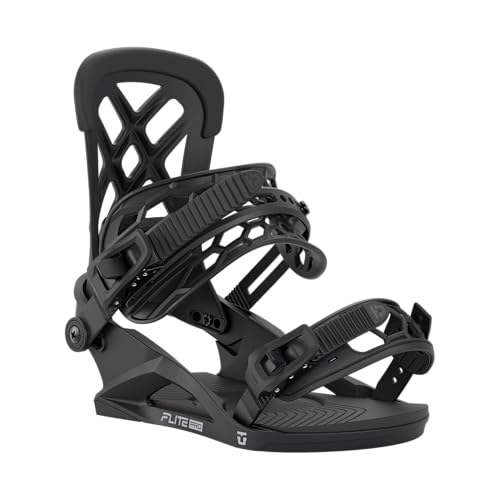
As an Amazon Associate we earn from qualifying purchases at no extra cost to you.
At a Glance: Binding Types
| Binding | Best for | Character reviewers describe | Limits |
|---|---|---|---|
| Union Force | All-mountain riders who like a responsive feel | Mid-stiff flex, adjustable and durable | Not the softest for park play |
| Union Contact Pro | Park and freestyle riders | Softer, cushioned footbed, board feel | Less drive for aggressive carving |
| Burton Cartel X | All-mountain riders who want fast strap-in | Hybrid system using a mix of strap and fast-entry design | Only works with compatible boots |
| Burton Step On | Riders who want no-strap entry | Boot-binding system with a quick clip-in | Needs specific Step On boots |
| Flux DS | Riders wanting durable, adjustable strap bindings | Reliable all-round feel, well regarded by reviewers | Fewer shop displays than big brands |
| Bent Metal Joint | Budget-minded freestyle riders | Light, forgiving flex | Less support for big landings |
| Nitro Team | Freeride, mixed terrain | Stiffer response, aluminium base reported | Heavier feel than some rivals |
What to Look For in Snowboard Bindings
Flex
Flex describes how much the high-back and base bend under pressure. Makers rate flex on scales such as 1 to 10 or soft, medium and stiff. Softer flex is forgiving for tricks, jumps and slow speeds. Stiffer flex transmits energy quickly to the board for high-speed carving and steep terrain. A medium flex is the most versatile compromise and is where most first-time buyers should start.
Binding system: strap, rear-entry or step-in
Traditional strap bindings use ankle and toe straps and work with almost any snowboard boot, so they have the widest compatibility. Rear-entry systems let you slide the foot in with the high-back folded down. Step-in systems, such as Burton Step On, use a clip on the boot and binding. They are quick, but you must use the maker’s matching boots, and the system limits boot choice. Think about how often you sit down at lift lines and flat areas, because that is where quick-entry systems save time and effort.
Size and boot fit
Bindings are sized by boot size. Makers publish charts that match boot size to small, medium and large. The boot should sit well in the base without overhanging excessively at toe or heel. Overhang can cause toe drag, where the boot touches snow during turns. If you are between sizes, check the maker’s chart and consider the boot’s width, not just its length.
Mounting pattern and board compatibility
Most boards use 4×4 or 2×4 hole patterns, and many bindings include discs for each. Burton boards often use the Channel system, which requires a compatible binding or discs. Check your board’s pattern before buying. If you are unsure about mounting, a shop technician can set the stance, and incorrect mounting can reduce control or risk damage to the board.
Highbacks, straps and baseplates
Highback shape affects response. Taller, stiffer backs give more control on edges. Shorter, softer ones allow more movement. Straps with cushioned padding and a firm buckle make riding more comfortable. Baseplates made of reinforced nylon or composite are typical, while some freeride bindings add aluminium for rigidity.
Top Picks by Rider
Union Force: the all-mountain benchmark
The Union Force is a long-standing all-mountain binding that reviewers and snowboard publications commonly mention. The maker positions it as a responsive, adjustable binding with a medium-stiff feel. It suits riders who spend time on groomers, in trees and occasional park laps, and want a binding that does everything reasonably well.
Union Contact Pro: the freestyle option
The Contact Pro is aimed at park and freestyle riders. Reviewers describe a cushioned, board-feel footbed and a flex that favors playful riding. It is less aggressive for high-speed carving. If you mainly ride jumps, boxes and rails, it is a strong candidate.
Burton Cartel X: speedy entry with strap support
The Cartel X is built around a hybrid strap-and-fast-entry setup. The maker says it is designed to get riders strapped in quickly. It is a long-time favorite among riders who want a stiffer, more precise ride but find standard straps tedious. As with all Burton systems, check the specifics on compatibility with your boots and board.
Burton Step On: for convenience
Step On is Burton’s step-in system. You clip a matching boot into the binding without straps. Reviewers praise its convenience and note that it requires Step On boots and a specific binding, so switching from a strap setup means replacing both. It is useful for riders who want fast starts, kids’ setups, or those with back or mobility concerns that make bending to strap in uncomfortable.
Flux DS: reliable and customizable
Flux is a smaller brand that reviewers often praise for solid build quality. The DS is described as a versatile all-mountain binding with plenty of adjustment, which suits riders who want to fine-tune strap and high-back positions.
Bent Metal Joint and similar: value and forgiving feel
Bent Metal sells bindings that reviewers describe as light and playful, often in the lower-to-mid price tier. They suit newer or freestyle riders on a budget who do not need a stiff response. Heavy riders or those tackling big drops may want something with more support.
Nitro Team: a freeride-leaning pick
Nitro’s Team binding has a loyal following for its stiffer response. The maker offers it for riders who want more drive for varied terrain, though it may feel less forgiving in the park.
Budget Tiers
| Tier | What you get | Trade-offs |
|---|---|---|
| Budget | Entry-level strap bindings from Bent Metal, Rome, Nitro or older models of premium brands | More basic padding, fewer adjustments, more plastic |
| Mid-range | Union Force, Flux DS, Burton Cartel X (varies by season) | Strong balance of weight, durability and features |
| Premium | Top-line freeride and step-in systems | Higher cost; may require matching boots |
Fit, Setup and Safety Notes
- Match the boot. A boot that fits the base without major overhang gives better control and avoids toe drag.
- Check the screws. Tighten mounting screws at the start of each season and periodically during use. Loose screws can allow bindings to shift on the board.
- Set stance with care. Stance width, angles and setback should match your riding style and board. A shop technician can help if you are new to setup.
- Inspect straps and ratchets. Cracked plastic or worn teeth can fail on the hill. Replace damaged parts with maker-approved ones.
- Tune for kids. Growing riders need regular size checks, and youth bindings are made with lower flex for small frames.
- Dry and store properly. Wipe off moisture at season’s end and store out of direct sun to protect plastics.
Snowboarding carries a risk of injury. Wear a helmet, consider wrist guards, and follow resort rules. Bindings are not releasable like ski bindings, so ride within your ability.
Pick X If… Decision Table
| Pick this | If you… |
|---|---|
| Union Force | ride the whole mountain and want a responsive, durable binding |
| Union Contact Pro | focus on park and freestyle |
| Burton Cartel X | want fast entry with a strap-style response |
| Burton Step On | value convenience and will buy matching boots |
| Flux DS | like adjustability and a trusted all-round build |
| Bent Metal Joint | want a forgiving, budget-friendly setup |
| Nitro Team | want a stiffer ride for freeride terrain |
Alternatives Worth a Look
- Rome bindings: available in several flex ranges, popular with freestyle riders.
- Salomon bindings: lines such as the Hologram and Rhythm are positioned by the maker for all-mountain and park use.
- Ride bindings: typically offered in value and mid-range tiers with a range of flex options.
- Splitboard bindings: backcountry riders use dedicated splitboard bindings from makers such as Spark R&D or Karakoram, and backcountry travel needs avalanche training and safety gear.
Frequently Asked Questions
What flex of snowboard binding should I choose?
Medium flex suits most riders because it balances response and forgiveness. Choose softer for park and slow-speed play, and stiffer for fast carving and steep terrain. Your boot flex and board flex should be similar so the setup feels consistent.
Are step-in snowboard bindings worth it?
They can be if you value speed and comfort, since there are no straps to fasten. The trade-off is that you need compatible boots and may have fewer binding options. Many reviewers say the systems have improved, but riders who want maximum adjustability still prefer straps.
Will any binding fit any snowboard?
Most bindings fit boards with 4×4 or 2×4 hole patterns. Burton Channel boards need compatible hardware, and some bindings include channel discs. Check your board’s manual and the binding’s compatibility list before buying.
How do I choose the right size?
Use the maker’s chart, which lists boot sizes for each binding size. The boot should sit snugly with minimal overhang. If you are between sizes, consider the boot’s shape and width, and try the combination in person when possible.
How long do snowboard bindings last?
With regular care, many bindings last several seasons, though heavy use, impacts and sun exposure shorten their life. Look for cracked plastic, worn ratchets and frayed straps. Replace worn parts through the maker rather than improvising.
Do I need different bindings for park and powder?
Not necessarily, but softer bindings feel better in the park and stiffer ones help at speed. A medium all-mountain binding can cover both with some compromise. Powder-specific riders often move the stance back and use stiffer high-backs for control.





