
Key takeaways
- Use the maker’s chart, which typically lists rider weight and height ranges.
- Match binding size to boots, and confirm that the binding mounting pattern fits the board.
- Adjust stance width and angles per the maker’s recommendations as a starting point.
- Wax the base regularly, and keep edges clean and rust-free.
- Store in a cool, dry place, ideally with the base waxed.
- Wear a helmet and wrist guards if you are learning, and follow local mountain rules.
- Take a lesson if you are new, as instructors can help you choose a board and set it up.
The best women’s snowboard depends on your ability and terrain: a soft, forgiving all-mountain board such as the Burton Feelgood or Rossignol Juliette-type suits progressing riders, a directional freeride board such as the Jones Twin Sister or Salomon Lotus-type suits those who ride varied terrain, and a lively twin like the Capita Birds of a Feather suits park-leaning, playful riders. Pick board length by height, weight, and boot size, then choose camber profile and flex to match how you ride.
Our top picks
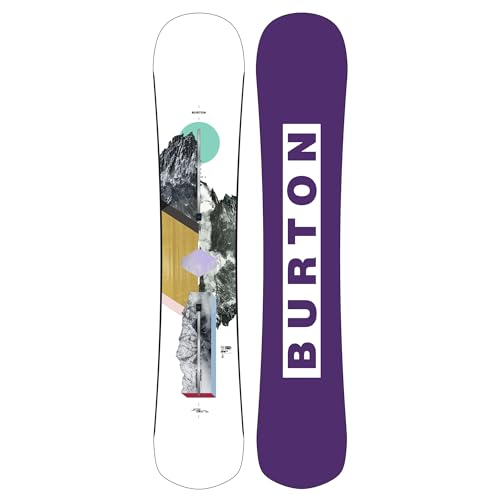


As an Amazon Associate we earn from qualifying purchases at no extra cost to you.
At a Glance: Popular Women’s Boards
| Board family | Best for | Maker-described features | Limits |
|---|---|---|---|
| Burton Feelgood | Intermediate to advanced all-mountain | Maker describes a camber-forward profile with a medium flex for edge hold and pop | Less forgiving than rocker boards |
| Rossignol Juliette | Beginners and progressing riders | Maker describes a soft, forgiving design aimed at easy turning | Less stable at speed |
| Jones Twin Sister | Freeride and all-mountain | Maker describes a directional-leaning twin with a camber-rocker mix | Heavier feel for some riders |
| Capita Birds of a Feather | Park and all-mountain playful riding | Maker describes a twin with flex built for versatility | Less float in deep powder |
| Salomon Lotus / Rumble Fish | Beginner to intermediate, all-mountain | Maker describes forgiving flex and easy turn initiation | Not built for extreme speed |
| Lib Tech Dynamiss / Cortado | Technical riders, variable snow | Maker describes specialized contour and construction for hold and float | Premium tier, more unique feel |
| GNU Gloss / Ladies Choice | Playful and versatile riding | Maker describes edge technology and mid-flex design | Demands correct sizing |
Boards are updated or renamed regularly. When a specific season graphic is gone, a previous-generation version is often close in construction and a good way to save money.
What to Look for in a Women’s Snowboard
Length and width
Makers publish size charts based on rider weight and height. A board that is too long is harder to turn, while one that is too short can feel unstable at speed. Boot size matters as well. If your boots overhang the edges, ask about wide models to avoid toe or heel drag.
Camber profile
Camber boards arch under the feet and give strong edge hold and pop. Rocker boards curve upward at the tips, making them forgiving and easier to turn. Hybrid profiles combine both. Beginners often prefer rocker or a rocker-camber mix, while advanced riders often choose camber for precision.
Flex
Softer boards are easier to press and forgiving at low speeds. Stiffer boards are more stable at speed and better for aggressive riding. Women’s boards are often built with a lighter flex pattern to suit lighter average weights, according to many makers, but flex varies widely by model.
Shape: twin versus directional
Twin boards ride the same in both directions and suit park and switch riding. Directional boards have a longer nose and shorter tail for powder and all-mountain performance. Directional-twin shapes blend both.
Width and waist
Waist width should match boot size to reduce drag. Smaller feet usually suit narrower waists, which allow quicker edge-to-edge transitions. Larger feet may need a mid-wide or wide board.
Construction and materials
Wood cores, fiberglass layers, and base materials affect weight, durability, and glide. Sintered bases generally hold wax better than extruded ones, though they cost more. Reviewers often note that mid-range boards offer a good balance for most riders.
Budget Tiers
| Tier | What you typically get | Trade-off |
|---|---|---|
| Budget | Forgiving shapes, basic construction, extruded base | Heavier, less lively, shorter lifespan |
| Mid-range | Better cores, sintered bases on some models, refined flex | May lack top-end materials |
| Premium | Lightweight cores, advanced edges, specialized shapes | Cost and specificity; can be unforgiving |
Picks by Rider Type
Best for progressing riders: Rossignol Juliette and Salomon Lotus
These boards are widely described as forgiving. Makers highlight easy turn initiation and a soft flex, which suits beginners and low-intermediate riders learning to link turns.
Best all-mountain camber: Burton Feelgood
The Feelgood is one of the best-known women’s all-mountain boards. Reviewers often cite its edge hold and stability. It suits riders ready to move beyond a purely forgiving board.
Best for varied terrain: Jones Twin Sister
Jones designs this board for a mix of conditions. The maker describes a combination of camber and rocker that lets riders handle groomers, trees, and soft snow.
Best for park and playful riding: Capita Birds of a Feather
A twin shape and flexible character make this board a popular choice for riders who want to play on the whole mountain. It is less specialized for deep powder.
Best for technical riders: Lib Tech and GNU
Lib Tech and GNU use unique contouring and edge technologies. Reviewers often describe them as lively boards that reward good technique. They may feel unusual to newer riders.
Pick X If… Decision Table
| Pick this if you… | Choose |
|---|---|
| Are new or returning after a break | Soft flex, rocker or hybrid, shorter length |
| Ride groomers fast and want edge hold | Camber, medium-stiff flex |
| Like park and switch riding | True twin with soft to medium flex |
| Ride powder often | Directional shape with a longer nose |
| Have bigger boots for your height | Mid-wide or wide waist |
| Want one board for everything | Directional twin with a hybrid profile |
Sizing, Setup, and Care Notes
- Use the maker’s chart, which typically lists rider weight and height ranges.
- Match binding size to boots, and confirm that the binding mounting pattern fits the board.
- Adjust stance width and angles per the maker’s recommendations as a starting point.
- Wax the base regularly, and keep edges clean and rust-free.
- Store in a cool, dry place, ideally with the base waxed.
- Wear a helmet and wrist guards if you are learning, and follow local mountain rules.
- Take a lesson if you are new, as instructors can help you choose a board and set it up.
Alternatives
- Unisex boards: some riders prefer a unisex or men’s board with a narrower waist for the same ride.
- Rental or demo boards: a good way to compare camber profiles before buying.
- Used boards: a good budget path if you inspect the base and edges for damage.
- Split boards: for backcountry riders who skin uphill; a different category with its own considerations.
Choosing by Ability and Terrain
New riders spend much of their time on green and blue runs, learning to link turns and control speed. A shorter, softer board makes these first days easier, because it requires less force to flex and pivot. As skills improve, many riders move to a slightly longer, stiffer board that holds an edge on firm snow and remains stable at higher speeds.
Terrain matters as well. If the local mountain has a lot of icy groomers, a camber-dominant board with good edge hold may be more satisfying. If most days include soft or variable snow, a board with a rocker nose and some taper can feel more floaty and forgiving. Park riders look for a true twin shape with a soft to medium flex so that they can take off and land switch with equal confidence.
Bindings and boots
The board is only part of the setup. Bindings should match the board’s mounting pattern and your boot size, and flex should match the board: a soft board pairs well with a soft binding, while a stiff board pairs with a stiffer one. Boots should fit snugly, with no heel lift, since a loose boot reduces control more than any board difference.
Buying tips
Shop end-of-season sales for previous-generation graphics, rent or demo if you are unsure about camber profile, and ask a shop technician to mount the bindings and set stance. A lesson on your first few days can prevent bad habits and help you judge what you want in a board.
Frequently Asked Questions
Do I need a women’s-specific snowboard?
Not necessarily, but women’s boards are typically built with narrower waists and lighter flex to suit smaller feet and lighter weights. Some riders do well on unisex boards. Choose based on fit and flex, not label alone.
What size snowboard should I get?
Follow the maker’s size chart, which uses weight and height. As a rough guide, many boards fall between the chin and nose when stood on end. Boot size may require a wider board.
Is camber or rocker better for beginners?
Rocker and hybrid profiles are often described as more forgiving for beginners. Camber offers stronger edge hold and pop for advanced riders. Many beginners progress well on hybrids.
How often should I wax my board?
Waxing frequency depends on how often you ride and the snow conditions. Many riders wax every handful of days. A dry-looking base is a sign it needs wax.
Can I buy last season’s board?
Yes. Previous-generation boards are often similar in construction to the latest ones and can cost less. Check that the profile and size still suit you.
Do I need special bindings for a women’s board?
Most bindings fit any board with a compatible mounting pattern. Women’s bindings are often sized for smaller boots and softer flex. Match them to your boots and riding style.





