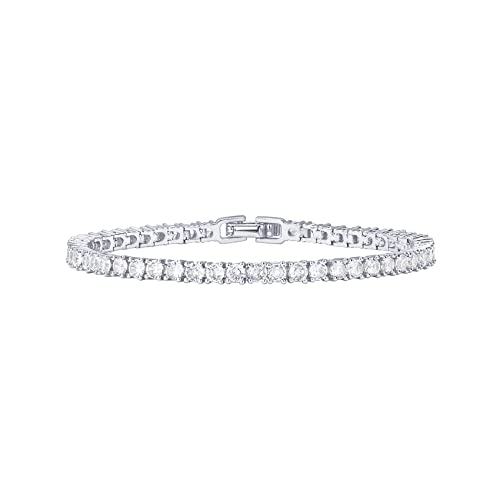
For most buyers, a classic four-prong tennis bracelet in 14-karat gold set with lab-grown or natural diamonds of roughly one to three total carats is the most versatile choice, while a sterling silver bracelet with cubic zirconia or moissanite suits those who want the look at a modest budget. This guide covers metals, stone types, settings, sizing and care, so you can match a bracelet to the wearer, the occasion and your budget tier.
Our top picks


As an Amazon Associate we earn from qualifying purchases at no extra cost to you.
At a Glance: Main Types of Tennis Bracelets
| Type | Best for | Key features | Limits |
|---|---|---|---|
| Natural diamond, 14k or 18k gold (Blue Nile, Brilliant Earth and independent jewelers) | Milestone gifts, heirlooms | Makers list total carat weight, color and clarity grades, and metal purity | Highest cost; quality varies widely by grade |
| Lab-grown diamond, 14k gold | Buyers who want diamond brilliance with larger stones for the budget | Chemically the same as mined diamond according to major gemological bodies; usually graded | Resale value tends to be lower than for natural stones |
| Moissanite, silver or gold | Sparkle-focused, durable daily wear | Hard gemstone, often more brilliant than diamond in appearance | Different optical look; some find it flashier |
| Sterling silver with cubic zirconia (Swarovski Matrix, Pandora, Mejuri-style fashion lines) | Budget gifts, occasional wear | Light, affordable and available in many lengths | Can tarnish; stones may cloud over time |
| Gold vermeil or plated fashion bracelets | Trend pieces | Gold look at lower cost | Plating may wear with daily use |
The brands named are examples of makers in each segment. Collections rotate, so compare current specifications on the maker pages for the bracelet you actually plan to buy.
Choosing the Metal
- 14k gold: contains 58.3 percent gold and is a popular balance of durability, color and cost. It is generally more resistant to scratches than higher purities.
- 18k gold: contains 75 percent gold with a richer color, though it is softer and usually costs more.
- White gold: typically plated with rhodium for a bright finish, which can wear and may need re-plating over time.
- Platinum: dense, durable and naturally white, at premium cost.
- Sterling silver: 92.5 percent silver, light and affordable, but prone to tarnish if not cleaned and stored properly.
If you or the recipient has sensitive skin, look at the maker’s listing for nickel content, and consider consulting a dermatologist if reactions occur with a particular alloy.
Stone Choices Explained
Natural Diamond
Natural diamonds are graded on cut, color, clarity and carat weight. For a tennis bracelet, individual stones are small, so uniformity of color and sparkle across the whole line matters more than the grade of any single stone. Many jewelers list average color and clarity ranges for the bracelet as a whole, such as G to H color and VS to SI clarity. Treat these as maker-provided ranges.
Lab-Grown Diamond
Lab-grown diamonds are real diamonds grown in controlled conditions. Gem labs identify them as diamond, and they are usually labeled lab-grown in grading reports. Buyers generally find that a given budget buys a larger total carat weight than with natural stones. Ask whether the bracelet includes a grading report and what the return policy covers.
Moissanite
Moissanite is a different gemstone with high hardness and strong fire. Some people love the extra colorful flash; others prefer the quieter look of a diamond. Good for daily wear, but compare how the stones look in different lighting before committing.
Cubic Zirconia and Lab-Created Alternatives
Cubic zirconia offers a low-cost sparkle and suits fashion wear. It is softer than diamond and moissanite, so it can scratch and lose clarity with heavy use. Swarovski crystal bracelets, including the Matrix tennis bracelet line, sit in the same fashion-jewelry space.
Setting Styles and Security
- Four-prong setting: exposes more of each stone and maximizes light. It is the classic look, though prongs can snag on knitwear.
- Bezel setting: surrounds each stone with metal. It is lower profile and snag-resistant, a good choice for active wearers.
- Illusion or flexible settings: make stones appear larger. Details vary by maker.
- Box clasp with safety latch: look for a secure clasp with a figure-eight safety catch. Tennis bracelets are often lost because the clasp opens.
Have a jeweler inspect prongs and clasps once a year, especially for bracelets worn often. Loose stones are far easier to fix early.
Size and Fit
Most women’s bracelets run from about 6.5 to 7.5 inches, with 7 inches a common standard. To size, measure the wrist with a flexible tape or a strip of paper and add roughly a quarter to a half inch for comfort, as many jewelers advise. A tennis bracelet is meant to sit slightly loose so it moves without spinning excessively. Too tight a bracelet can pinch; too loose can slide over the hand and be lost.
For men’s bracelets, makers offer longer lengths and wider stone sizes. For gifts, consider a bracelet with an adjustable extender or confirm that the retailer offers exchanges for sizing.
Carat Weight and What It Means
Total carat weight (TCW) is the combined weight of all stones. A one-carat bracelet has small stones, while a five-carat bracelet has noticeably larger ones. Stone size matters for appearance, but cut quality affects sparkle just as much. Compare the number of stones and listed TCW to get the average size, and look for evenly matched stones with consistent color.
Budget Tiers
Budget
Sterling silver with cubic zirconia or moissanite offers the classic appearance at a modest cost. It is a good fit for occasional wear and gifts where sentimental value matters more than materials. Expect to clean and polish it regularly.
Mid-range
Lab-grown diamond bracelets in 14k gold, and smaller-carat natural diamond bracelets, usually fall in this tier. This tier suits daily wearers who want real gold and graded stones.
Premium
Higher-carat natural diamond pieces, platinum, or designer-brand bracelets sit here. These make sense for milestone gifts where grading reports and resale potential matter.
Care and Safety
- Remove the bracelet before swimming, showering, exercising, or using cleaning products. Chlorine and some chemicals can damage metal and settings.
- Clean gently with warm water, mild soap and a soft brush, then dry with a lint-free cloth. Avoid ultrasonic cleaners unless your jeweler says they are suitable for the setting.
- Store separately in a soft pouch to prevent scratches.
- Have your jeweler check prongs and clasps regularly.
Pick X If… Decision Table
| Pick this if you… | Choose |
|---|---|
| Want a lasting milestone gift | Natural diamond in 14k or 18k gold with a grading report |
| Want more sparkle for the money | Lab-grown diamond in 14k gold |
| Want daily wear and bold fire | Moissanite in silver or gold |
| Are buying for a young person or for fun | Sterling silver with cubic zirconia |
| Have an active lifestyle | A bezel setting with a secure clasp |
| Are unsure of wrist size | A bracelet with an extender or a retailer that allows resizing |
Alternatives
- Diamond line bracelets with fewer, larger stones: a more modern, minimalist look.
- Colored gemstone tennis bracelets: sapphire, emerald or ruby options for a distinct style, though gemstones may need more careful wear.
- Bangles and cuffs: sturdier and less likely to catch on clothing.
Frequently Asked Questions
What carat weight is best for a tennis bracelet?
One to three total carats is a popular range because it adds visible sparkle without looking oversized. Larger weights mean larger stones and a more statement-making piece. Cut quality and uniformity matter as much as carat weight.
Are lab-grown diamond tennis bracelets real diamonds?
Gemological organizations describe lab-grown diamonds as having the same chemical composition and crystal structure as mined diamonds. They are typically identified as lab-grown in grading reports. Resale value is often lower than for natural stones, so consider how you plan to use the piece.
How should a tennis bracelet fit?
It should be snug enough not to slip over the hand but loose enough to move slightly. Many jewelers suggest adding a quarter to a half inch to your wrist measurement. Try a fit that you can slide one finger under.
Can I wear a tennis bracelet every day?
Many people do, especially with 14k gold and bezel settings. Remove it before activities that expose it to impact, chemicals or water. Regular inspections of the clasp and prongs help prevent loss.
How do I clean a tennis bracelet at home?
Soak briefly in warm water with mild dish soap, brush gently with a soft toothbrush, rinse and dry with a soft cloth. Skip harsh chemicals and abrasive cleaners. If the bracelet has colored stones or special finishes, follow the maker’s instructions.
What is the difference between a tennis bracelet and a line bracelet?
The terms are often used interchangeably. A tennis bracelet typically has a continuous line of small, similar-sized stones in a flexible chain. A “line bracelet” may include a wider range of stone shapes and settings.