
Key takeaways
- Budget: Adidas, Nike and similar sports brands offer simple duffels with a main compartment and a few pockets. They suit casual users.
- Mid-range: Under Armour and Nike’s higher-spec lines often add shoe pockets, wet pockets and better straps. Many reviewers point to this tier as the best balance.
- Premium: Patagonia, Osprey and similar makers focus on durable fabrics, repairability and warranties. They suit people who want a bag that also serves for travel.
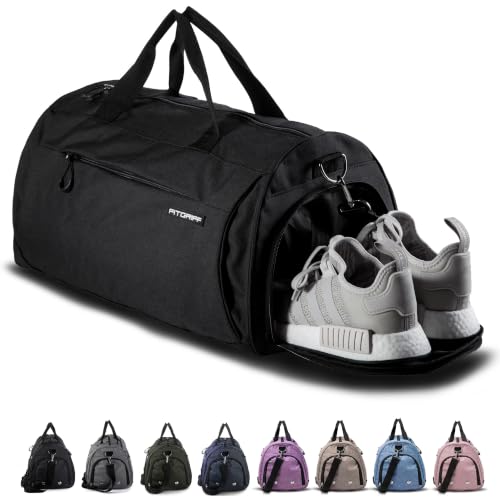
The best gym bag for most men is a mid-size duffel in the 35 to 50 liter range with a separate shoe compartment and a wet pocket, while commuters who carry a laptop will do better with a gym backpack and travelers or trainers who haul more gear will want a larger duffel. The picks below are well-known families from established makers, and the notes rely on maker descriptions and what reviewers commonly report, not personal use.
Our top picks


As an Amazon Associate we earn from qualifying purchases at no extra cost to you.
At a Glance
| Bag | Best for | Stated features | Limits |
|---|---|---|---|
| Nike Brasilia duffel | Everyday gym use | Maker lists multiple sizes, a main compartment and exterior pockets | Simple organization; no dedicated laptop sleeve |
| Under Armour Undeniable duffel | Training and team sport | Maker lists water-resistant material and a ventilated side pocket in several versions | Features differ by generation and size |
| Adidas Defender duffel | Budget-minded gym-goers | Maker lists durable base material and compartments | Basic padding |
| Patagonia Black Hole duffel | Gym plus travel use | Maker lists weather-resistant fabric and several volume options | Few internal dividers; simple layout |
| Osprey Transporter | Rugged, carry-everything use | Maker lists durable construction and backpack-style straps in some models | Heavier and bulkier |
| Nike or Under Armour gym backpacks | Commuters bringing a laptop | Makers list laptop sleeves and shoe or wet pockets in various models | Smaller capacity than duffels |
Specific versions rotate each season. Compare current volume and compartment listings on the maker’s page.
What to Look For in a Men’s Gym Bag
Size and capacity
A typical gym session needs shoes, a change of clothes, a towel, a water bottle and toiletries. A 30 to 40 liter bag handles this. Add a training belt, lifting straps, a protein shaker or a second outfit and you move toward 45 to 60 liters. Oversized bags tempt you to overpack and become heavy to carry. Choose the smallest bag that holds your regular kit.
Compartments
A ventilated shoe compartment keeps odor away from clean clothes. A wet or waterproof pocket handles towels and swimwear. Smaller zip pockets keep keys, wallet and earbuds from rattling at the bottom of the bag. A separate laptop sleeve matters mainly for gym backpacks.
Materials and construction
Polyester and nylon are the most common fabrics. Water-resistant coatings help in the rain and against sweat. Check seams, zippers and the reinforced base, since these wear out first. Padded straps and a shoulder pad make heavy loads more comfortable. Makers describe fabrics differently, so rely on product details rather than marketing terms.
Carry style
Duffels offer a wide opening for easy packing. Backpacks spread weight across both shoulders, better for commuting by bike or public transit. Some duffels convert to backpack carry with stowable straps, which suits people who switch between modes.
Ventilation and odor
Mesh panels and vented pockets allow damp items to air out. Remove damp clothes after training and dry the bag regularly. Some makers add antimicrobial treatments, but regular airing and washing is still the main solution.
Budget Tiers
- Budget: Adidas, Nike and similar sports brands offer simple duffels with a main compartment and a few pockets. They suit casual users.
- Mid-range: Under Armour and Nike’s higher-spec lines often add shoe pockets, wet pockets and better straps. Many reviewers point to this tier as the best balance.
- Premium: Patagonia, Osprey and similar makers focus on durable fabrics, repairability and warranties. They suit people who want a bag that also serves for travel.
Fit and Carry Notes
Look at the bag’s dimensions against airline carry-on limits if you will use it for travel, since limits differ between airlines. A bag that fits your gym locker is also important; some lockers are narrow. Fill the bag as you would on a normal day before adjusting the straps. A wide, padded shoulder strap reduces pressure. For heavy loads, a backpack or a duffel with backpack straps is gentler on the shoulders and back.
Care
Unpack the bag after each session. Air out damp items, and wipe the inside with a mild cleaner if it gets sweaty. Follow the care label: many bags can be spot-cleaned or hand-washed, while machine washing may harm coatings or padding. Let the bag dry fully before closing it to prevent odor and mildew. Clean shoes before packing them into a shoe compartment.
Pick X If…
| Pick this | If you… |
|---|---|
| Nike Brasilia duffel | want a simple, widely available all-rounder |
| Under Armour Undeniable | want a training bag with a ventilated shoe pocket |
| Adidas Defender | want a no-frills bag on a tight budget |
| Patagonia Black Hole | also travel with the bag and want rugged fabric |
| Osprey Transporter | haul heavy loads and prefer tough construction |
| A gym backpack | commute and need a laptop sleeve |
Alternatives
- Sling or small crossbody bag: Fine for a minimal kit such as a towel and phone, if you keep shoes in a locker.
- Barrel or tube duffel: A compact format popular with swimmers and lifters who carry a smaller kit.
- Travel duffel or weekender: Roomier and better looking for trips, though often heavier and lacking gym-specific pockets.
Choosing by Routine
Your routine should guide the choice. A lifter carrying a belt, wrist wraps, chalk and a change of clothes benefits from a roomy duffel with a sturdy base. A runner or class-goer who carries only shoes and a towel does well with a small barrel bag or compact backpack. People who go straight from work to the gym want a backpack with a laptop sleeve and a shoe compartment so that work and workout gear stay separate.
Swimming and sauna extras
If the gym includes a pool or sauna, a wet pocket becomes essential. Look for a lined, wipeable pocket that is large enough for a towel and swimsuit. Some bags include a separate bottle holder to avoid leaks in the main compartment. Keep toiletries in a separate waterproof pouch for easy cleanup.
Locker and security considerations
Many gym lockers are small, and an oversized duffel may not fit. Measure the locker if possible. Zippers with lock-through pulls allow a small padlock, which helps deter casual theft. Avoid leaving valuables in the bag in unattended areas.
Packing tips
Pack shoes at the bottom or in their own compartment, rolled clothes in the middle and toiletries in a side pocket. Keep a small spare kit with deodorant, a hair tie or comb and a spare pair of socks so you are never caught short. A mesh laundry bag for dirty clothes keeps odors contained until you can wash them.
Final Buying Checklist
- Pick a volume that matches your typical kit, not your longest trip.
- Look for a separate shoe space and a wet pocket if you shower or swim.
- Choose padded straps if the bag will weigh a lot or you carry it far.
- Inspect zippers, stitching and the base, which tend to fail first.
- Read the care label so you know whether the bag can be washed.
- Confirm the bag fits your locker and, if you fly with it, the airline’s carry-on limits.
A short list like this keeps the decision grounded in how you actually train. Most buyers end up happier with a modest, well-organized bag than with a huge one they overfill. If you are torn between two models, compare the interior layout photos and dimensions the makers publish, and pick the one whose pockets match your habits.
Frequently Asked Questions
What size gym bag should I buy?
Most men are fine with 35 to 50 liters. Use the lower end for a single outfit and shoes, and the upper end if you carry lifting gear or a second outfit. A bag that is too big gets heavy and awkward.
Duffel or backpack for the gym?
A duffel opens wide and packs easily, which suits driving to the gym. A backpack carries better on foot, bike or transit. If you switch between the two, choose a duffel with stowable backpack straps.
How do I stop my gym bag from smelling?
Empty it after every session and air out damp items. Use a ventilated or separate shoe compartment, and wash or wipe the bag regularly according to its care label. Allow it to dry fully before closing.
Is a waterproof bag necessary?
Not usually. Water-resistant fabric helps against rain and sweat, but a fully waterproof bag is typically more than a gym needs. A dedicated wet pocket for damp items is more practical.
Can I use a gym bag as a carry-on?
Some can, if the dimensions fit the airline’s rules. Airline limits vary, so compare the bag’s listed measurements with the carrier’s current guidance before flying.
How long should a gym bag last?
That depends on use and construction. Reviewers often note that zippers and straps fail first, so check these when buying. Brands with repair or warranty programs can extend the bag’s life.





