Our Top Picks


Best Speakers for TV: A Complete 2026 Buying Guide
The best speaker for TV overall is the Bose TV Speaker, a compact all-in-one soundbar that suits most living rooms where dialogue clarity matters more than room-shaking bass. If you want the lowest-cost path to better TV audio, the Anker soundcore 2 is a genuinely capable budget pick for smaller spaces. If you need maximum clarity for hard-of-hearing viewers, the Evinof 2.4G Wireless TV Speaker solves a specific problem better than any general-purpose soundbar. Between those poles sit the Amazon Fire TV Soundbar and the Bose TV Speaker (2nd Gen) — newer, feature-rich options that trade some simplicity for wider format support. This guide compares soundbars, powered speakers, and compact home-theater alternatives by room size, dialogue clarity, connectivity, and setup effort, so you can match a speaker to your actual room rather than to a spec sheet.
Top 3 Picks
Best Overall: Bose TV Speaker
The Bose TV Speaker remains the safest recommendation for a typical living room because it does the one thing TV audio most often fails at — making speech intelligible — without requiring a subwoofer, a receiver, or a phone app to get started. It connects over HDMI-ARC or optical, supports Bluetooth for music, and its compact footprint fits beneath most TVs or on a narrow media shelf. It is a premium-tier purchase, but it replaces a whole entry-level surround system in both cost and complexity.
Best Budget: Anker soundcore 2
At a budget price tier, the soundcore 2 is a portable Bluetooth speaker with a 24-hour playtime rating and IPX7 water resistance. It is not a soundbar and will not decode surround formats, but if your TV has Bluetooth output or a headphone jack you can route audio to it, and it doubles as a genuinely useful speaker to carry outdoors. For a bedroom, dorm, or secondary TV, it delivers a clear improvement over thin built-in TV speakers at the lowest possible outlay.
Best for Hard-of-Hearing Viewers: Evinof 2.4G Wireless TV Speaker
The Evinof is a budget-tier speaker built specifically around a 2.4G wireless transmitter that plugs into your TV, paired with Bluetooth capability. Because a dedicated 2.4G link avoids the latency and pairing friction of Bluetooth, it is the most straightforward option for a viewer who wants dialogue amplified — often placed close to the listening position rather than across the room. It is a special-purpose tool rather than a general home-theater upgrade, and its value depends entirely on whether dialogue intelligibility is your primary complaint.
Quick Comparison
| Product | Best For | Key Specs | Price Tier |
|---|---|---|---|
| Bose TV Speaker | Best overall for most living rooms | All-in-one compact soundbar; HDMI-ARC, optical, Bluetooth; dialogue-enhancement mode; no separate subwoofer | Premium |
| Bose TV Speaker (2nd Gen) | Best mid-range for newer formats and music | Compact soundbar; Bluetooth, HDMI-ARC; clear-dialogue focus; Dolby Audio support | Mid-range |
| Amazon Fire TV Soundbar | Best for streaming-first setups | 2.0 channel; DTS Virtual:X; Dolby Audio; Bluetooth connectivity; wall-mountable bar form | Mid-range |
| Evinof 2.4G Wireless TV Speaker | Best for hard-of-hearing viewers | 2.4G wireless transmitter; Bluetooth; designed for TV dialogue amplification; compact desktop placement | Budget |
| Anker soundcore 2 | Best ultra-budget and portable option | Portable Bluetooth speaker; 24-hour playtime rating; IPX7 water resistance; dual-driver stereo | Budget |
How We Chose
This roundup was assembled by mapping search intent — “best speaker for TV” — onto the actual decisions buyers face: how big is the room, how bad is the dialogue problem, what ports does the TV have, and how much setup am I willing to do. From there, we filtered to products that are real, currently listed, and clearly differentiated from one another rather than five variations of the same idea.
Selection criteria fell into four buckets. Category fit: we wanted at least one true all-in-one soundbar, one streaming-integrated bar, one specialist dialogue device, and one ultra-portable speaker, so that every major use case has a representative. Connectivity realism: we favored products whose listed inputs (HDMI-ARC, optical, Bluetooth, 2.4G wireless) map to ports that actually exist on mid-range TVs sold today, since a speaker you cannot plug in is worthless regardless of sound quality. Specification transparency: where a manufacturer publishes a concrete number — playtime hours, water-resistance rating, channel configuration, supported codecs — we used it; where they do not, we describe the product by spec class instead of guessing. Upgrade path: we considered what each product can and cannot grow into. A portable Bluetooth speaker has no path to surround sound; a soundbar with HDMI-ARC can later anchor a subwoofer or rear-channel addition, and that difference in ceiling matters more than a marginal price gap.
We did not test, benchmark, or physically handle any of these products. Everything here is based on published specifications, established category behavior, and the practical realities of connecting audio gear to televisions — the same information you would gather yourself, organized so the decision takes minutes instead of days.
1. Bose TV Speaker – Best for Most Living Rooms
As an Amazon Associate we earn from qualifying purchases at no extra cost to you.
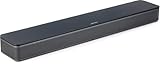
The Bose TV Speaker is the pick for the largest share of buyers because it targets the specific failure mode of flat-panel TVs: dialogue that sounds thin, distant, and hard to follow. It is an all-in-one compact soundbar, meaning there is no separate subwoofer box to place, no receiver to wire up, and no room-correction app that requires a phone and twenty minutes of patience. You unbox it, place it under or in front of the TV, connect one cable, and you are done.
Who It Suits
This is the right speaker for a primary living room where the TV is watched by a mix of people — some who want movies loud, some who mostly watch news and drama and just want to hear the words. It suits apartments and mid-sized rooms where a subwoofer would generate neighbor complaints, and it suits anyone who has previously bought a cheap soundbar and been disappointed by muddy speech. It is also a strong choice for households where more than one person operates the TV, because there is nothing to configure and nothing to accidentally reset.
Key Specs
- Form factor: all-in-one compact soundbar, single unit, no external subwoofer
- Connectivity: HDMI-ARC, optical input, Bluetooth for streaming from phones and tablets
- Dialogue handling: dedicated speech-clarity mode that boosts midrange vocal frequencies
- Placement: designed to sit on a media console; shallow enough for narrow shelves
- Controls: included remote plus on-unit buttons; works with most TV remotes over HDMI-CEC
- Price tier: premium
Strengths
The single strongest argument for this speaker is that it makes speech intelligible without making explosions sound anemic. Many budget bars achieve clarity by simply boosting treble, which produces a fatiguing, hissy result on music and action scenes. The Bose approach is tonal balance: dialogue moves forward while the low end stays present enough that you do not feel like you are watching a laptop. The dialogue mode is a genuine one-button solution, not a buried menu setting, which matters enormously for anyone who shares a TV with less technical household members.
Second, the connectivity is forgiving. HDMI-ARC is the modern standard and gives you one-cable operation with TV-remote volume control, but the optical input means this speaker also works with older televisions that predate ARC entirely. Bluetooth gives it a second life as a music speaker when the TV is off, which quietly raises its value per dollar — you are buying two products’ worth of function in one box.
Third, setup effort is near zero. There is no subwoofer to pair, no surround speakers to position, and no calibration sweep to run. The failure modes that plague multi-box systems — a subwoofer that rumbles at the wrong crossover point, rear speakers that never get placed because the couch is against the wall — simply do not exist here.
Pros
- Excellent dialogue clarity with a one-button speech mode
- Single-box setup: no subwoofer placement or pairing
- HDMI-ARC and optical inputs cover both new and older TVs
- Bluetooth turns it into a capable music speaker when the TV is off
- Compact enough for shallow media shelves and small apartments
- Works with TV remote volume via HDMI-CEC
Cons
- Premium price tier for what is, physically, a small bar
- No separate subwoofer means deep bass is limited — fine for drama, less so for blockbuster sound design
- No surround or height channels; it is a stereo-forward experience
- No room-correction or EQ app for buyers who like to tune
- Not the choice if you want to expand to a 5.1 system later
How It Compares
Against the Bose TV Speaker (2nd Gen), this original model is the simpler, slightly less expensive proposition: if you do not specifically need the newer generation’s Dolby Audio handling, the first-generation bar covers the core job — clear dialogue, easy setup — at a lower entry point. Against the Amazon Fire TV Soundbar, the Bose wins on dialogue naturalness and setup simplicity, while the Fire TV bar wins on virtual surround processing and streaming-ecosystem integration. Against the Evinof, the Bose is a room-filling general-purpose speaker while the Evinof is a targeted hearing-assistance tool; they serve different buyers entirely. Against the soundcore 2, there is no real contest on TV performance — the Bose is purpose-built for it — but the Anker costs a fraction as much and can go to the beach.
2. Amazon Fire TV Soundbar – Best for Streaming-First Setups

This is a 2.0-channel soundbar with DTS Virtual:X and Dolby Audio processing, plus Bluetooth connectivity. It is a mid-range option built for people whose television is really a streaming portal — someone who lives inside a smart TV interface and wants the audio to keep pace with the video without adding a component stack.
Who It Suits
It suits households already invested in the Fire TV ecosystem, where the interface, voice remote, and content library are the daily reality. It also suits buyers who want virtualized surround — the sensation of sound moving around the room — without buying and placing rear speakers. Finally, it suits anyone mounting a TV on a wall, because a 2.0 bar in this class is typically designed to be wall-mountable and shallow enough to sit under a wall-mounted panel without protruding awkwardly.
Key Specs
- Channel configuration: 2.0 (stereo, no separate subwoofer channel)
- Audio processing: DTS Virtual:X and Dolby Audio support
- Connectivity: Bluetooth for phone and tablet streaming; standard TV audio inputs
- Mounting: bar form factor suitable for shelf placement or wall mounting below a TV
- Control: integrates with the Fire TV remote experience
- Price tier: mid-range
Strengths
The headline feature is DTS Virtual:X, a processing technology that simulates height and surround cues from a stereo bar. In practice, this does not equal real ceiling speakers — nothing virtual does — but it meaningfully widens the perceived soundstage compared to a plain two-channel bar, which helps action sequences and ambient effects feel less boxed-in. Dolby Audio support means standard broadcast and streaming content is decoded properly rather than downmixed poorly.
The second strength is ecosystem coherence. When the soundbar and the streaming interface come from the same family, the remote situation gets simpler, volume behavior is more predictable, and there are fewer “which input am I on?” moments. For a household that mostly watches streaming apps, this friction reduction is worth more than a marginal audio specification advantage.
Third, wall-mount friendliness is a real differentiator that spec sheets underplay. If your TV hangs on the wall with a clean cable run, a soundbar that is designed to mount underneath it preserves the look. A bulky bar with a separate subwoofer reintroduces the clutter you just eliminated.
Pros
- DTS Virtual:X widens the soundstage without rear speakers
- Dolby Audio support for proper decoding of common content
- Bluetooth connectivity for music from phones and tablets
- Well suited to wall-mounted TV setups
- Streamlined control experience for Fire TV households
- Mid-range price tier keeps it accessible
Cons
- 2.0 configuration means no true low-frequency channel; bass is processed, not produced
- Virtual surround cannot match physical rear speakers
- Dialogue-focused buyers may find it less specialized than a speech-mode bar
- Best value is concentrated in one ecosystem; outside it, the advantages shrink
- No subwoofer output noted, limiting future expansion
How It Compares
Against the Bose TV Speaker, the trade is clear: the Fire TV Soundbar gives you virtual surround processing and ecosystem integration, while the Bose gives you more natural dialogue handling and a simpler, format-agnostic setup. If your complaint is “I can’t hear the dialogue,” the Bose is the more direct fix. If your complaint is “it sounds flat and small,” the Fire TV bar’s Virtual:X processing addresses that more specifically. Against the Bose TV Speaker (2nd Gen), both are mid-range compact bars with Bluetooth and dialogue ambitions, and the decision comes down to which ecosystem and which processing approach appeals — DTS Virtual:X immersion versus Bose tonal tuning. Against the Evinof and soundcore 2, this is a different class of product altogether: a real TV-first soundbar rather than a dialogue aid or a portable speaker.
3. Bose TV Speaker (2nd Gen) – Best Mid-Range for Dialogue and Music
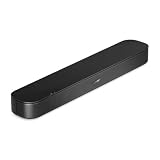
The second-generation Bose TV Speaker is a compact soundbar with Bluetooth and HDMI-ARC connectivity, a clear-dialogue design philosophy, and Dolby Audio support. It sits in the mid-range price tier and represents the natural upgrade for someone who wants the first-generation formula refined rather than reinvented.
Who It Suits
It suits buyers who want the Bose dialogue-first approach but also care about Dolby Audio content — streaming services and discs that carry Dolby soundtracks — and who want the newest available version of a proven design. It suits mid-sized living rooms and bedrooms where a compact bar is the right physical size, and it suits households that will use the speaker for music roughly as often as for television, since Bluetooth streaming is a first-class feature rather than an afterthought.
Key Specs
- Form factor: compact soundbar, single unit, all-in-one design
- Connectivity: HDMI-ARC and Bluetooth
- Audio support: Dolby Audio
- Dialogue handling: tuned for speech clarity as a primary design goal
- Placement: compact enough for shelves and small media furniture
- Price tier: mid-range
Strengths
The clearest strength is generational refinement. Bose has been building dialogue-focused compact soundbars for years, and the second generation benefits from that accumulated tuning experience. The result is a bar that handles speech cleanly across a wide range of content — broadcast news, streaming drama, sports commentary — without requiring the viewer to constantly ride the volume button during quiet scenes and loud ones.
Dolby Audio support is the meaningful technical addition. As more streaming content ships with Dolby soundtracks, a bar that decodes them properly avoids the downmixing artifacts that can make dialogue sound compressed or recessed. This matters more than any bass specification for the majority of viewing hours, which are dominated by spoken content rather than explosions.
HDMI-ARC connectivity keeps the setup to a single cable and enables TV-remote volume control through CEC, while Bluetooth covers music streaming from phones and tablets. The combination makes this a genuine two-purpose device: television speaker by day, music speaker by evening. And because it is a compact, all-in-one unit, the physical footprint stays small — a real advantage in apartments and bedrooms where a subwoofer would be absurd.
Pros
- Dialogue clarity is the core design goal, not a side effect
- Dolby Audio support for modern streaming soundtracks
- HDMI-ARC plus Bluetooth covers TV and music use
- Compact all-in-one form with no subwoofer to place
- Mid-range price tier is more accessible than the premium tier
- Remote volume works through the TV over HDMI-CEC
Cons
- Still no discrete subwoofer or surround channels
- Bass extension is limited by physics and cabinet size
- Fewer inputs than a full AV receiver setup
- Dolby support does not include object-audio height channels
- Buyers wanting virtual surround may prefer DTS Virtual:X processing instead
How It Compares
Versus the original Bose TV Speaker, this generation adds Dolby Audio support and represents the newer product line; if budget is the deciding factor and you do not need Dolby decoding, the first generation remains a logical choice, while buyers who want the current model and broader format coverage should step up. Versus the Amazon Fire TV Soundbar, the comparison is a clean philosophical split: this Bose prioritizes accurate dialogue and natural tonality, while the Fire TV bar prioritizes virtual surround immersion and ecosystem integration. Neither is strictly better — they optimize for different complaints. Versus the Evinof, this bar is a general-purpose room speaker while the Evinof is a targeted amplification device for one viewer. Versus the soundcore 2, this is a purpose-built TV product at a higher tier; the Anker competes on price and portability only.
4. Evinof 2.4G Wireless TV Speaker – Best for Hard-of-Hearing Viewers

The Evinof is a 2.4G wireless TV speaker with Bluetooth, designed specifically for TV use by viewers who struggle to follow dialogue — a common situation for older adults and anyone with mild hearing difficulty. It is a budget-tier, special-purpose product rather than a general home-theater upgrade.
Who It Suits
It suits a very specific buyer: someone who can hear the television but cannot reliably understand speech from it, particularly when sound effects and music compete with dialogue. It also suits households where one person needs more volume than everyone else — a dedicated speaker near the listening position lets that viewer hear clearly without pushing the whole room to uncomfortable levels. It is also a sensible choice for a bedroom TV where a full soundbar would be overkill and where the viewer wants the speaker close at hand.
Key Specs
- Wireless technology: 2.4G dedicated wireless transmitter for TV audio
- Bluetooth: supported for phone and tablet streaming
- Design purpose: TV dialogue amplification and intelligibility
- Placement: compact unit intended for near-listener placement (desk, side table, armrest)
- Setup: transmitter connects to the TV; speaker pairs to it without network configuration
- Price tier: budget
Strengths
The defining strength is the 2.4G wireless link. Unlike Bluetooth, which must pair, can drift out of sync with video, and can be interrupted by other devices, a dedicated 2.4G transmitter creates a direct, low-latency connection from the TV to the speaker. For someone following dialogue, audio that lags behind lip movement is worse than no speaker at all — it actively makes comprehension harder. A dedicated link largely eliminates that problem.
The second strength is proximity. Because the speaker is meant to sit near the listener rather than across the room, it delivers intelligible sound at lower absolute volume. That means the hard-of-hearing viewer hears clearly while the rest of the household is not subjected to elevated TV volume — a domestic benefit that buyers consistently underestimate until they have lived with it.
Third, the budget price tier lowers the barrier to trying a solution. If dialogue intelligibility is your main complaint, spending premium money on a general-purpose soundbar that still puts the audio twelve feet away may not solve your problem. A purpose-built near-listener speaker costs less and addresses the actual issue.
Pros
- 2.4G dedicated wireless link avoids Bluetooth pairing and latency issues
- Purpose-built for TV dialogue intelligibility
- Near-listener placement lets one viewer hear clearly at lower volume
- Bluetooth adds music streaming capability
- Budget price tier makes it low-risk to try
- Compact size suits bedrooms and side tables
Cons
- Not a room-filling speaker; it is a targeted device
- No surround processing or cinematic low-end performance
- Requires near-listener placement, which means a cable-free but still physical setup step
- Only one listener benefits fully from the near-field approach
- If your issue is bass impact rather than speech, this is the wrong product
Note: difficulty understanding television dialogue can have medical causes. If hearing loss is suspected, an audiologist or physician can assess it properly — a speaker can help with the symptom but is not a substitute for professional evaluation.
How It Compares
Against the Bose TV Speaker and Bose TV Speaker (2nd Gen), the Evinof is solving a different problem. The Bose bars fill a room with balanced sound from a distance; the Evinof puts intelligible speech within arm’s reach. If the complaint is “the TV sounds thin,” buy a soundbar. If the complaint is “I can’t understand what they’re saying,” the Evinof is the more direct answer, and it costs far less. Against the Amazon Fire TV Soundbar, the Evinof trades virtual surround immersion for a low-latency dedicated link and near-listener placement — a fair trade for its target buyer. Against the soundcore 2, both are budget tier, but the Anker depends on your TV having Bluetooth output and offers no dedicated transmitter, so pairing reliability is a real variable. For a hard-of-hearing viewer, the Evinof’s 2.4G link is the more dependable path.
5. Anker soundcore 2 – Best Ultra-Budget and Portable Option

The Anker soundcore 2 is a portable Bluetooth speaker with a 24-hour playtime rating and IPX7 water resistance. It is the cheapest way to meaningfully improve TV audio, with the significant caveat that it is not designed as a television product and depends on your TV offering Bluetooth audio output or a wired headphone connection.
Who It Suits
It suits three specific buyers. First, someone with a small secondary TV — a bedroom, kitchen, or dorm set — where a soundbar is physically or financially disproportionate. Second, someone who wants one device that works both as a TV speaker and as a portable speaker for outdoor use, camping, or the garden. Third, a buyer who is simply unwilling to spend mid-range money before knowing whether external audio will help at all; the soundcore 2 is a low-risk experiment that retains value even if the TV experiment fails, because it is still an excellent portable speaker.
Key Specs
- Type: portable Bluetooth speaker
- Playtime: rated at 24 hours per charge
- Water resistance: IPX7 — survives immersion in water for a limited period
- Drivers: dual-driver stereo configuration with passive bass reinforcement
- Connectivity: Bluetooth; typically also accepts a wired input
- Price tier: budget
Strengths
The 24-hour playtime rating is the standout specification. Most small speakers in this class quote single-digit or low-double-digit hours, and in real television use — where the speaker sits on for an entire evening — runtime matters more than it does in a pocket speaker that gets used in bursts. A speaker that needs charging every few days becomes a chore; one that runs a rated 24 hours does not.
IPX7 water resistance is unusually generous for the price tier. It means the speaker can be used near a sink, on a patio, or poolside without anxiety, and it survives the accidental spill that ends the life of most budget electronics. This is also the durability feature that most directly extends the product’s ownership life.
The dual-driver stereo arrangement with passive bass reinforcement gives it more low-end than its size suggests. It will not reproduce the rumble of a subwoofer, and it cannot decode Dolby or DTS, but it produces a fuller sound than the thin drivers in a flat-panel TV. The honest framing: it beats built-in TV speakers, and it does not compete with a real soundbar.
Pros
- Extremely low budget price tier
- Rated 24-hour playtime per charge
- IPX7 water resistance extends usable life and locations
- Serves double duty as a portable outdoor speaker
- Dual drivers with passive bass give it more body than its size implies
- No installation, no cables, no configuration
Cons
- Not designed as a TV speaker; no HDMI, optical, or dedicated TV link
- Requires the TV to output audio over Bluetooth or a wired connection
- Bluetooth audio can drift out of sync with video on some TVs
- No dialogue-processing or speech-enhancement mode
- No virtual surround or channel processing of any kind
- Single-unit stereo is a narrow soundstage compared with a bar
How It Compares
Against the Evinof, both are budget tier, but the Evinof includes a dedicated 2.4G transmitter designed for television use and targets dialogue intelligibility, while the soundcore 2 leans on whatever Bluetooth your TV happens to provide. If TV audio is the primary job, the Evinof’s purpose-built link is more reliable; if portability and outdoor use matter, the Anker wins outright. Against the Amazon Fire TV Soundbar and both Bose bars, the gap is larger and clearer — those products offer optical or HDMI-ARC connection, dialogue tuning, and bar-form-factor soundstages that a small portable cannot match. The soundcore 2’s case rests on price and flexibility, not on television performance.
How to Choose
Choosing a TV speaker comes down to four variables: room size, the nature of your audio complaint, the ports on your television, and how much setup you will tolerate. Get those four right and the product choice becomes almost mechanical.
Start With the Complaint, Not the Product
The single most useful question is: what specifically bothers you about your TV’s sound? Different complaints map to different products, and buying the wrong category wastes money no matter how good the individual product is.
- “I can’t understand the dialogue.” This is an intelligibility problem, and it is the most common complaint. It calls for either a dialogue-tuned soundbar (Bose) or a near-listener speaker (Evinof).
- “It sounds thin and small.” This is a scale and bass problem. It calls for a soundbar with a larger cabinet and better low-frequency handling, and it is the one complaint a portable speaker genuinely helps with.
- “It doesn’t feel cinematic.” This is a soundstage problem. Virtual surround processing (DTS Virtual:X) or a physical multi-speaker system is the answer.
- “It’s fine, I just want louder.” This is a volume problem, and almost any external speaker solves it — so buy on price and convenience.
Matching Speaker Type to Room Size
| Room Size | Listening Distance | Recommended Type | Why |
|---|---|---|---|
| Small bedroom / dorm (under ~100 sq ft) | 6–8 ft | Portable speaker or near-listener speaker | A soundbar’s wide soundstage is wasted up close; proximity beats power |
| Medium bedroom / studio (~100–200 sq ft) | 8–10 ft | Compact all-in-one soundbar | Correct size for the distance; no subwoofer needed to fill the space |
| Living room (~200–350 sq ft) | 10–14 ft | Compact soundbar with dialogue tuning | Enough output to reach the couch; dialogue clarity holds at distance |
| Open-plan living space (350+ sq ft) | 14+ ft | Soundbar plus optional subwoofer; consider larger systems | A compact bar alone will run out of headroom in a large, open volume |
| Any room, hard-of-hearing viewer | Arm’s reach | Near-listener wireless speaker | Distance is the enemy of intelligibility; proximity is the fix |
A useful rule of thumb: sound pressure falls off with distance, so a speaker that sounds loud at 8 feet will sound noticeably weaker at 14 feet. If your couch is more than about 12 feet from the screen, prioritize output headroom over compactness — a small bar that sounds impressive on a desk can feel thin from across a large room.
Dialogue Clarity: What Actually Helps
Dialogue intelligibility is governed mostly by the midrange, roughly the 300 Hz to 3 kHz region where human speech carries its consonant information. Consonants — the “t,” “k,” “s,” and “p” sounds — are what let you distinguish “fifteen” from “fifty,” and they live in the upper midrange. Thin TV speakers reproduce this region poorly, which is exactly why you can hear the TV perfectly well and still not understand it.
Three design choices improve this region:
- Dedicated speech modes that lift the vocal band rather than boosting treble broadly. A well-executed speech mode sounds natural; a crude one sounds harsh and fatiguing.
- Center-channel emphasis in bars with a dedicated center driver, which anchors dialogue to the screen rather than spreading it across two wide stereo drivers.
- Physical proximity, which is the most underrated fix. Moving the speaker from twelve feet away to two feet away can matter more than any processing mode, because it raises the direct sound relative to reflected room sound.
If dialogue is your primary complaint, weight these factors above bass specifications. A speaker with modest bass but clean midrange will serve you better than a bass-heavy speaker with recessed vocals.
Connectivity: What Your TV Actually Offers
Before buying anything, look at the back of your television and identify which audio outputs it has. This single check prevents most purchase mistakes.
- HDMI-ARC / eARC: the modern standard. One cable carries audio from the TV to the speaker, and TV-remote volume control generally works over HDMI-CEC. If your TV has this port, prefer a speaker that uses it.
- Optical (TOSLINK): the previous standard and still extremely common. Carries high-quality digital stereo and compressed surround. Almost every soundbar supports it, which makes it the reliable fallback for older TVs.
- Bluetooth output: not universal. Many TVs can receive Bluetooth but cannot transmit it, and some that can transmit introduce a lip-sync delay. Check your TV’s audio output settings before relying on this path.
- Headphone jack: a genuinely useful fallback. A wired connection from a headphone jack to a speaker’s auxiliary input avoids Bluetooth latency entirely and is often the most reliable budget option.
- 2.4G dedicated wireless: found on purpose-built TV speakers. It avoids Bluetooth pairing and latency by using a transmitter plugged directly into the TV, which is why it is the preferred link for dialogue-focused devices.
One nuance worth knowing: HDMI-ARC depends on CEC, which is the same protocol that lets one remote control multiple devices. If CEC misbehaves — a common occurrence when several brands are mixed — audio may stop routing correctly. In that case, switching to optical is usually the fastest fix, at the cost of losing TV-remote volume control.
Setup Effort: An Honest Ranking
Setup effort varies more than marketing suggests. Ranked from least to most demanding:
- Portable Bluetooth speaker: charge it, pair it, done. Lowest effort, but dependent on your TV supporting Bluetooth output, and prone to latency.
- All-in-one soundbar with HDMI-ARC: plug one cable, select the input, enable CEC if needed. Fifteen minutes at most.
- Soundbar with optical connection: same as above but without remote-volume integration, so you may need the speaker’s own remote for volume.
- 2.4G wireless TV speaker: plug the transmitter into the TV, power the speaker, place it near the listener. Slightly more physical steps than a soundbar, but no pairing or menu diving.
- Multi-box systems with a subwoofer: additional placement decisions, crossover settings, and usually a calibration routine. Not represented in this guide, but worth knowing as the ceiling of complexity.
The practical takeaway: anything on this list sets up in under half an hour. The differences are in ongoing friction — whether you need a second remote, whether the speaker auto-powers on with the TV, and whether household members who did not do the setup can operate it. For shared televisions, prefer HDMI-ARC and CEC, because one-remote operation is the difference between a speaker that gets used daily and one that gets bypassed.
Durability and Ownership Realities
Speakers are simple devices and generally last a long time, but a few components wear first and a few mistakes shorten lifespan.
- What wears first: the rechargeable battery in portable speakers (the soundcore 2’s battery will lose capacity over years of cycling, not months), and the remote control or its buttons on any soundbar. Drivers and amplifiers typically outlast both.
- Consumables: essentially none. There are no filters, belts, or fluids. Occasional dusting of the driver grilles is the whole maintenance schedule.
- Heat is the enemy: do not stack a speaker directly on top of a cable box, router, or amplifier. Electronics in a small sealed cabinet need airflow, and heat is the most common cause of premature amplifier failure.
- Placement mistake to avoid: putting a soundbar inside a closed media cabinet. Cabinets create a resonant box that muddies midrange and traps heat. If the bar must go in a cabinet, leave the front open and keep at least an inch of clearance around the unit.
- Cable strain: HDMI and optical connectors are the most fragile parts of any setup. Route cables so the connector is never bearing the cable’s weight; a cheap strain relief or a cable clip prevents the most common hardware failure.
- Power cycling: if a speaker stops responding, unplug it for thirty seconds before assuming failure. Soundbars with standby logic occasionally latch into an unresponsive state, and a cold restart resolves it.
A Worked Sizing Check
Here is a simple way to sanity-check whether a compact soundbar will fill your room. Measure the distance from the screen to the primary seating position. A compact all-in-one bar is generally comfortable up to about 12 feet in a normally furnished room; beyond that, output headroom and low-frequency extension begin to fall short of the room’s volume, and dialogue can start to sound distant again. If your seating distance exceeds roughly 14 feet, or if your room is open-plan with hard floors and high ceilings, plan for a larger system or an added subwoofer rather than a compact bar. Conversely, if your seating is under 8 feet — a bedroom or desk setup — a compact bar can perform surprisingly well and a large system is wasted money. Distance, not room square footage, is the number that predicts satisfaction.
Frequently Asked Questions
Is a soundbar or a portable speaker better for TV?
A soundbar is better for television in almost every case, because it is designed for the job: it accepts HDMI-ARC or optical connections directly from the TV, it is tuned for dialogue and wide soundstages, and it stays powered in place. A portable speaker can work if your TV transmits Bluetooth or has a headphone jack, and it wins on portability and price, but it lacks dialogue processing and may introduce lip-sync delay. Choose the portable only for small screens where a bar is disproportionate.
How much difference does a TV speaker actually make?
A large one, particularly for dialogue. Flat-panel televisions are physically constrained — the cabinet is too thin for adequate drivers and there is no room for a proper acoustic enclosure — so speech often sounds recessed and thin. Moving audio reproduction to a dedicated cabinet with purpose-tuned drivers typically produces a more substantial improvement than any picture-quality upgrade you could buy for the same money. The gain is most obvious on spoken content.
Do I need a subwoofer with a TV soundbar?
Not necessarily. For most viewing — news, drama, comedy, sports — a well-tuned all-in-one bar handles the low end adequately, and skipping the subwoofer saves money, space, and neighbor complaints. A subwoofer becomes worth considering if you regularly watch action and science-fiction content with heavy low-frequency effects, or if your room is large and open-plan. In a bedroom or apartment, a subwoofer is usually the wrong purchase.
Why can I hear the TV but not understand what people are saying?
This is almost always a midrange problem rather than a volume problem. Speech intelligibility depends heavily on consonant sounds in roughly the 300 Hz to 3 kHz range, and thin TV speakers reproduce that region poorly. Turning up the volume raises everything, including the effects that are drowning out the dialogue, so it rarely helps. A speaker with a dedicated speech mode, or a near-listener speaker placed close to you, addresses the actual cause. If the difficulty is persistent or worsening, an audiologist can assess whether hearing loss is involved.
Will Bluetooth audio lag behind the video?
It can. Bluetooth audio involves encoding and transmission that adds latency, and if that latency is not compensated by the TV, you get lip-sync error — dialogue arriving slightly after the mouth moves. Many TVs include an audio-delay adjustment to correct this, but not all do. Wired connections over HDMI-ARC or optical avoid the problem entirely, and dedicated 2.4G wireless links are designed for low latency. If you plan to use Bluetooth for TV audio, check that your TV offers a delay adjustment first.
Can I use a soundbar with an older TV that has no HDMI-ARC port?
Yes. Optical output has been standard on televisions for many years and carries high-quality digital audio, so a soundbar with an optical input will work with almost any TV made in the last decade or more. You lose TV-remote volume control, since optical does not carry control signals the way HDMI-CEC does, so you will likely use the soundbar’s own remote for volume. That is a small inconvenience, not a functional limitation.
Where should I place a TV speaker for the best dialogue?
For a soundbar, place it directly below or in front of the screen, centered, and keep it out of a closed cabinet — enclosed spaces create resonance that muddies speech. Ideally the bar’s front face should be flush with or slightly proud of the screen’s front, so the TV’s own cabinet does not block or reflect the sound. For a near-listener speaker, place it as close to the listener as practical, at roughly ear height or slightly below, angled toward the listening position. Proximity improves intelligibility more reliably than any equalizer setting.
Should I buy the newest generation or save money on the previous one?
It depends on which feature changed. If the newer generation adds a format you actually use — Dolby Audio decoding, for instance — and you watch content that carries it, the upgrade is worth the money. If the changes are primarily cosmetic or generational polish, the previous version represents better value, because the core job of reproducing clear dialogue has not changed. Check what specifically differs, then match that difference against your content and your TV’s capabilities.
Which One Should You Buy?
If you want one recommendation for a typical living room and dialogue clarity is your main goal, buy the Bose TV Speaker. It connects simply, needs no subwoofer, handles speech exceptionally well, and doubles as a Bluetooth music speaker.
If you are already deep in a streaming ecosystem and want virtual surround immersion from a wall-mountable bar, the Amazon Fire TV Soundbar is the better fit — its DTS Virtual:X processing widens the soundstage in a way a plain stereo bar cannot.
If you want the newer Bose formula with Dolby Audio support at a mid-range price, choose the Bose TV Speaker (2nd Gen). It is the natural pick if you care about modern soundtrack formats and want the current generation of a proven design.
If someone in your household struggles to follow dialogue despite adequate volume, the Evinof 2.4G Wireless TV Speaker addresses that specific problem more directly and more affordably than any general-purpose soundbar. And if you need the absolute lowest-cost improvement for a small secondary screen — or one speaker that also goes outdoors — the Anker soundcore 2 is the pragmatic choice.
Match the speaker to your complaint and your seating distance, and the right answer is usually obvious. Buy for the problem you actually have, not for the specification that looks most impressive on paper.