
Key takeaways
- 2 x AUX INPUT - Convenient connection to…
- Natural sound reproduction from 13mm silk dome tweeter…
- Adjust volume at your figure tips
The best bookshelf speakers under $500 are the KEF Q150 for balanced near- and mid-field listening, the ELAC Debut 2.0 B6.2 for deeper bass on a budget, the Wharfedale Diamond 12.1 for smooth long-session listening, and the Polk Reserve R200 when you want the most detailed, full-size presentation and can find it within the budget.
“Bookshelf” describes a compact cabinet, not a requirement to place the speaker inside a bookcase. These models perform better on rigid stands or a sturdy shelf with space around the rear port. Your best choice depends less on the biggest frequency-response claim and more on listening distance, amplifier power, bass expectations, and how much room the cabinet occupies.
Our top picks
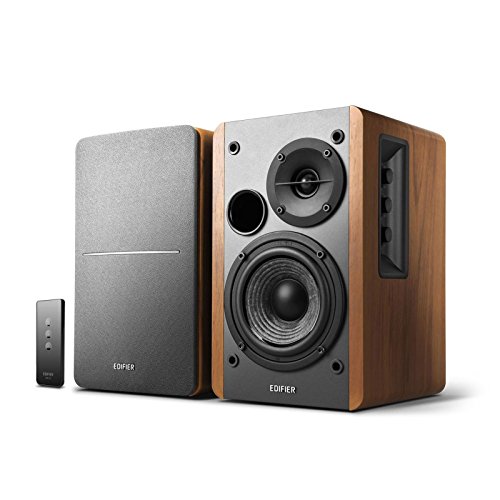 Edifier R1280T Powered Bookshelf Speakers -2.0 Near
- 2 x AUX INPUT - Convenient connection to…
- Natural sound reproduction from 13mm silk dome tweeter…
- Adjust volume at your figure tips
 Sony SS-CS5M2 3-Way 3-Driver Hi-Res Compact Bookshelf
- Bookshelf speakers (pair), compact bookshelf design for small…
- 3-way, 3 driver bookshelf speaker system
- 5.12 in
 Polk Audio T15 100 Watt Home Theater
- EXPERIENCE AMAZING HOME THEATER SOUND WITH RICH, IMMERSIVE…
- Use these wall-mountable bookshelf speakers as front, left-right,…
- Start your home theater journey with these Polk…
As an Amazon Associate we earn from qualifying purchases at no extra cost to you.
Best bookshelf speakers under $500 compared
| Model | Approx. market range in 2026 | Cabinet size (H × W × D) | Weight per speaker | Nominal impedance / sensitivity | Published low-frequency figure | Best fit |
|---|---|---|---|---|---|---|
| KEF Q150 | $350–$500 per pair | 303 × 180 × 278 mm | 7.2 kg | 8 ohms / 86 dB | 51 Hz | Balanced detail, small to medium rooms |
| ELAC Debut 2.0 B6.2 | $300–$450 per pair | 375 × 195 × 268 mm | 7.4 kg | 6 ohms / 87 dB | 44 Hz | Warm sound and stronger bass from a compact budget system |
| Wharfedale Diamond 12.1 | $350–$500 per pair | 312 × 180 × 278 mm | 6.8 kg | 8 ohms / 88 dB | 65 Hz | Relaxed music listening and bright-sounding electronics |
| Q Acoustics 3030i | $350–$500 per pair | 325 × 200 × 329 mm | 5.9 kg | 6 ohms / 88 dB | 46 Hz | Large sound in a modestly priced, deeper cabinet |
| Polk Reserve R200 | $450–$600 per pair when discounted | 342 × 190 × 354 mm | 7.7 kg | 8 ohms / 86 dB | 51 Hz | Detailed, dynamic listening in medium rooms |
Dimensions and response figures are manufacturer specifications and can vary by measurement method. The Polk R200 regularly moves around the upper edge of this budget, so it is a sensible choice only when the pair is available below your actual $500 limit. Speaker prices also vary with finish and promotions.
How the leading choices differ
KEF Q150: the safest all-round balance
The Q150 uses KEF’s coaxial Uni-Q driver, placing the tweeter at the center of the mid-bass driver. That design helps voices, instruments, and effects remain consistent when you move slightly off-axis. It is particularly effective at a desk, in a small living room, or when the two speakers cannot be aimed precisely at the listener.
Its bass is clean rather than room-shaking. The 51 Hz specification is enough for bass guitar, acoustic music, and most television content, but action films and electronic music will benefit from a subwoofer. The Q150 is an easy amplifier partner at moderate volume, although a clean 40–80 watts per channel gives it more composure in a medium room.
ELAC Debut 2.0 B6.2: the budget bass specialist
The B6.2 has the largest front baffle among the compact choices here and reaches lower on paper than the Q150 or Diamond 12.1. That does not make it a substitute for a subwoofer, but it gives kick drums, male vocals, and movie impact more weight before adding one.
Its rear port and relatively deep cabinet need breathing room. Start with the speakers at least 20–30 cm from the wall, then move them farther out if bass becomes thick. A 50–100-watt-per-channel integrated amplifier is a sensible match. Low-powered compact amplifiers can work at a desk, but the B6.2 is less forgiving when asked to play loudly across a large room.
Wharfedale Diamond 12.1: smoothness over maximum extension
The Diamond 12.1 is a strong choice for listeners who find bright speakers tiring. Its presentation emphasizes a cohesive, easygoing midrange rather than aggressive treble detail. That makes it suitable for long sessions, vocal music, jazz, and recordings with sharp upper frequencies.
Its published bass figure is higher than the ELAC’s, so do not choose it expecting the deepest standalone low end. Instead, choose it for tonal balance. A neutral or slightly lively amplifier can complement it well; an overly warm amplifier in a heavily furnished room may make the result sound too restrained.
Q Acoustics 3030i: generous sound from a deeper box
The 3030i is physically deeper than the KEF and Wharfedale, but that extra cabinet volume helps it produce a broad, weighty presentation. It works well for television, pop, rock, and general-purpose family-room listening. Its relatively high sensitivity means it does not demand an expensive amplifier to reach useful volume.
Measure your shelf before buying. A 329 mm cabinet depth plus rear clearance can require more than 400 mm of total shelf depth. If the back of the speaker is almost touching a wall, expect stronger and less controlled bass; the supplied port bungs can help reduce that problem, but they cannot fix an unsuitable location completely.
Polk Reserve R200: the ambitious option
The R200 has a larger, more substantial cabinet and a 6.5-inch mid-bass driver, which can produce greater scale and dynamic authority than many entry-level bookshelf speakers. It is the most compelling pick for a medium room if you value detail, impact, and future expansion with a subwoofer.
It is also the least predictable fit for a strict $500 budget and takes up the most shelf depth. Pair it with an amplifier rated for stable operation with 4–8-ohm speakers and roughly 50 watts per channel or more for comfortable headroom. Avoid placing it in a cramped cubby simply because its name says bookshelf.
Choose by room, distance, and listening habits
| Your situation | Recommended choice | Why |
|---|---|---|
| Desk or listening distance below 1.5 m | KEF Q150 | Coaxial driver maintains a coherent image when the speakers are close together. |
| Small room, no subwoofer, bass is important | ELAC B6.2 or Q Acoustics 3030i | Both offer more low-end weight than the smallest cabinets, with the ELAC sounding fuller and the Q Acoustics sounding spacious. |
| Long daily listening or bright electronics | Wharfedale Diamond 12.1 | Smoother treble reduces the chance of an overly sharp presentation. |
| Medium room, 2–3 m listening distance | Polk R200 or ELAC B6.2 | Larger drivers and cabinets provide better scale; the Polk adds refinement if it fits the budget. |
| Limited amplifier power | Wharfedale Diamond 12.1 or Q Acoustics 3030i | Their higher sensitivity generally requires less amplifier output for the same volume. |
Amplifier pairing: what actually matters
Do not match an amplifier by wattage alone. Check that it is designed for the speaker’s impedance range, has a clean volume control, and offers enough power for your room and listening level. In a near-field setup, 20–40 watts per channel may be plenty. In a living room with peaks around 90 dB at the seat, 50–100 watts per channel provides more useful headroom.
A simple distance rule explains why room size matters. Sound loses roughly 6 dB each time listening distance doubles in free space. If a speaker produces a comfortable 80 dB at 1 m, the same level may require about 86 dB at 2 m before allowing extra headroom for musical peaks. That is why a modest amplifier can sound excellent at a desk yet strain when the same speakers are used across a large room.
Many modern amplifiers include room correction, bass management, Bluetooth, or network streaming. Those features can matter more than a small difference in sensitivity. If you plan to add a subwoofer, choose an amplifier with a subwoofer output or high-pass filtering where possible; removing deep bass from the main speakers gives the amplifier and woofer more working room.
Setup details that protect sound quality
- Use solid support. Put the tweeters near ear height when seated. Stands are preferable, but a rigid shelf can work if it does not vibrate.
- Allow rear clearance. Begin with 20–30 cm from the wall for rear-ported models. Add distance for tighter bass or move them closer for more warmth.
- Form an approximate triangle. If your seat is 2 m away, start with the speakers about 2 m apart. Toe them inward until vocals center without sounding overly narrow.
- Keep them away from corners. Corner placement reinforces bass unevenly and can make one-note low frequencies dominate.
- Use a subwoofer sensibly. Set its crossover around 70–90 Hz as a starting point, then adjust by ear and with room-correction software if available.
Ownership realities under $500
The first components to show wear are usually grille fabric, foam or rubber feet, binding-post caps, and finish surfaces rather than the drivers themselves. Keep drinks away from the cabinet, lift speakers instead of dragging them, and use


