
Key takeaways
- Keep goalie masks, gloves and pads for anyone facing hard shots; follow the age guidance of the equipment maker.
- Pucks and hard balls can hurt. Use soft balls or foam pucks for younger children.
- Play away from traffic and check local rules about games on streets.
- Inspect steel frames for sharp edges or rust and replace damaged parts.
- Anchor lightweight nets in wind so they do not tip onto players.
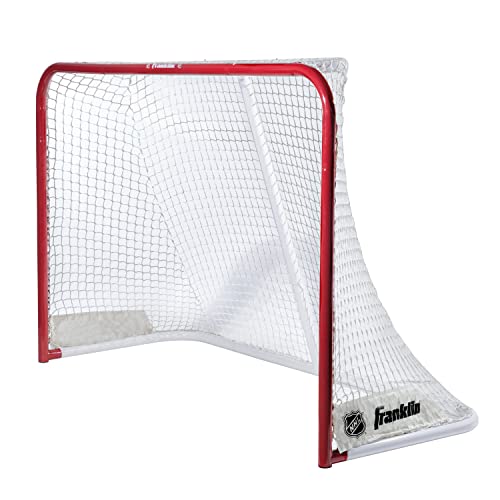
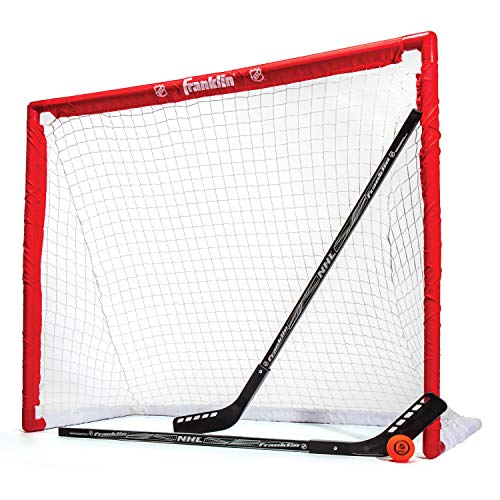
For a driveway, a steel-frame net with a durable mesh, such as the Mylec or Franklin NHL street hockey goals, suits most families, a lightweight folding or pop-up net suits small spaces and young children, and a heavier regulation-style goal suits teenagers and adults who shoot hard. The right pick depends on shooter age, how often you play, and whether the net must be stored after every game.
Our top picks


As an Amazon Associate we earn from qualifying purchases at no extra cost to you.
Driveway Hockey Nets at a Glance
| Net type | Best for | Key traits the makers describe | Limits |
|---|---|---|---|
| Mylec steel goals | Regular play, teens and adults | Steel tubing frames in standard sizes, replaceable mesh, often with a skill-shot target option | Heavier; mesh wears with hard shots |
| Franklin Sports NHL street hockey goals | Families and mixed ages | Steel or lightweight frames in youth and regulation sizes, licensed league styling | Lighter versions can shift when struck |
| Rukket and similar folding nets | Small garages and travel | Fold-flat frames with carry bags; some include targets or sniper panels | Less sturdy under heavy slap shots |
| Pop-up or instant nets | Young children and short sessions | Very light, quick to set up | Blow around in wind; not for hard shots |
| Heavy-duty regulation goals (6 feet by 4 feet) | Serious players and teams | Thicker tubing, full-size opening | Bulky, harder to move or store |
| Weighted or sandbag-stabilised nets | Windy driveways and slopes | Rear bars or sandbag supports to hold the net | Extra accessories are needed |
| Target sheets and shooting tutors (accessories) | Skill practice | Fabric or mesh panels that fit over net openings | Fit depends on net size |
Models and sizes vary by year, so read the maker’s specification page for frame material, dimensions and mesh details.
Size: Match the Net to the Shooter
A full regulation hockey goal is 6 feet wide by 4 feet high, but most driveway play uses smaller nets. Youth and street hockey goals commonly measure around 4 feet by 3 feet, or 54 inches by 44 inches, though sizes differ by maker. For children under about eight years old, a smaller net helps with confidence and reduces the need to run to the garage door for pucks. Teenagers and adults generally want a 6-foot or 72-inch net, since a smaller opening increases frustration and does not mimic real games.
Measure your driveway before buying. A 6-foot net needs space around it for a goalie or shooter and a safe run-off area. A net placed too close to a garage door, window or car will invite damage.
Frame Material and Build
Steel frames are common on better driveway nets because they resist bending from repeated shots and hold position better in wind. Aluminium frames are lighter and rust-free but dent more easily. Plastic or PVC frames suit very young children. Look at tube diameter, joint design and how the frame folds. Rust-resistant coatings help if the net stays outside. Many reviewers point out that cheaper nets can bend at the joints after hard slap shots, so match the net construction to the shot power it will face.
Mesh, Posts and Sound
The net mesh is a wear item. Thicker polyethylene or nylon mesh lasts longer and absorbs hard shots, while thin mesh can tear or let pucks pass through gaps. Street hockey balls and plastic pucks are lighter than ice pucks, but they can still wear mesh over time. Some nets use replaceable mesh panels and spring clips, which makes repairs easier. Metal frames can ring loudly with a ball strike; if noise is a concern for neighbours, consider mesh-padded or foam-wrapped frames and use a ball rather than a puck.
Portability, Storage and Set-Up
If you play daily, a fixed steel goal that stays in place is simplest. If you need to clear the driveway for cars or snow removal, a folding model that collapses flat or a pop-up net is more practical. Check folded dimensions, weight and whether the net needs tools. Ensure the net has stakes, sandbags or weights if used on a slope or in wind. Never leave a net where a vehicle may reverse into it, and keep it clear of public roads.
Safety Notes
- Keep goalie masks, gloves and pads for anyone facing hard shots; follow the age guidance of the equipment maker.
- Pucks and hard balls can hurt. Use soft balls or foam pucks for younger children.
- Play away from traffic and check local rules about games on streets.
- Inspect steel frames for sharp edges or rust and replace damaged parts.
- Anchor lightweight nets in wind so they do not tip onto players.
Budget Tiers
| Tier | What to expect | Typical fit |
|---|---|---|
| Budget | Lightweight frames, thin mesh, fold-flat or pop-up designs | Young children and casual play |
| Mid-range | Steel frames, thicker mesh, youth or regulation sizes | Regular driveway games for families |
| Premium | Heavy-duty tubing, thick mesh, extras like targets or goalie panels | Teens, adults and serious practice |
Pick X If…
| You are | Pick | Reason |
|---|---|---|
| A family with mixed ages | Franklin NHL steel goal | Balance of sturdiness and price |
| Playing regularly with older kids | Mylec steel goal | Durable frame and replaceable mesh |
| Short on storage | Folding net such as Rukket | Folds flat in a carry bag |
| Buying for toddlers or small children | Pop-up net | Light and safe for softer shots |
| Wanting a game-like set-up | Regulation-size goal | Full opening and heavier build |
Alternatives and Add-Ons
- Shooting tarps and rebound targets: add practice value on a garage wall without a full net.
- Synthetic shooting pads: protect the driveway surface and give a smoother puck slide.
- Portable ball and puck bags: useful for storing equipment alongside the net.
Setting Up a Driveway Rink Safely
A good set-up makes the net last longer and the games safer. Place the net so that shots are directed toward an open area, not toward windows, garage doors or parked cars. Many families add a backstop of netting or a tarp behind the goal to catch stray pucks and balls. Mark a boundary on the pavement with chalk or tape so players know where to shoot from and where to stand. Sweep the surface before playing, because gravel and leaves can cause falls, particularly when players wear rollerblades or sneakers.
Surface matters as well. Smooth concrete and sealed asphalt work well with plastic pucks or balls, while rough surfaces wear pucks and slow play. Synthetic ice tiles can be laid in front of the net for better puck glide, but they require a flat surface. Keep a small kit nearby with spare balls, a pump, zip ties and repair tape, since mesh can often be patched temporarily until a replacement arrives.
Care and Winter Storage
- Rinse off salt, grit and sap, then let the frame dry before storing.
- Look over the mesh for broken knots and holes, and replace panels before small tears grow.
- Tighten bolts and clips at the start of each season.
- Store the net flat or folded in a dry place, out of direct sun, to protect the mesh.
- If the net stays out in winter, brush off heavy snow, since the weight can bend the frame.
Frequently Asked Questions
What size hockey net should I buy for a driveway?
Children under about eight usually do well with a smaller net, around 4 feet by 3 feet. Teens and adults often prefer the regulation 6 feet by 4 feet. Measure the driveway first.
Are steel or aluminium nets better?
Steel is sturdier and holds up to hard shots, but it can rust if not coated. Aluminium is lighter and rust-resistant but can dent. Choose by shot power and storage needs.
Can I leave a hockey net outside all year?
Many nets can stay outside, but sun and weather wear mesh and frames over time. Coated steel and UV-resistant mesh last longer. Bring a net inside during storms or snow if you can.
How do I stop my net from blowing over?
Use sandbags on the rear bars, stakes where the surface allows, or a weighted base. Heavier steel nets are more stable than pop-up styles. Never stand behind a net that may tip in wind.
Can I use a real puck on a driveway?
Ice pucks can scuff driveways and damage mesh, so many players use plastic pucks or balls. Follow the maker’s guidance and use appropriate protective gear.
Can I replace the mesh on a hockey net?
Many makers sell replacement mesh in standard sizes, and some nets use clips that make replacement simple. Check that the replacement matches your net’s dimensions.



