
For most backyards, a pop-up or frame-and-panel net in the 7 to 10 foot width range from Rukket, Callaway or Spornia covers full-swing practice at a sensible budget, while players who want a heavier-duty, permanent-feeling setup should look at premium enclosures such as the Net Return Pro Series or a similar tension-frame design. Chipping-only and small-yard players can get by with a compact net and a few practice balls. The deciding factors are yard depth, swing speed, net material and whether you can leave the net set up.
Our top picks
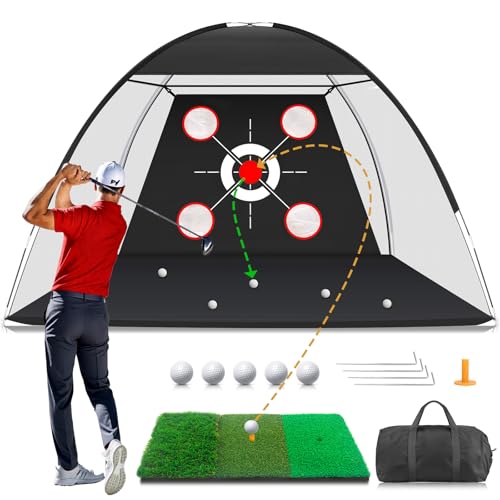
 KLAODOT Golf Net with Practice Mat
- 【Multi-target Golf Practice Net】10 x 7ft golf net…
- 【Strong and Impact-Resistant Materials】Our golf net is made…
- 【Swing Practice Anytime, Anywhere】Our golf practice net allows…
 MFNMFN Golf Net with Practice Mat
- Ideal Backyard Training Gear: This 10x7FT sport target…
- All-in-One Practice Solution: Combining a durable hitting net…
- Sturdy and Reliable Construction: Made with high-quality materials,…
| Product | Key specs | |
|---|---|---|
| KLAODOT Golf Net with Practice Mat | 【Multi-target Golf Practice Net】10 x 7ft golf net… 【Strong and Impact-Resistant Materials】Our golf net is made… 【Swing Practice Anytime, Anywhere】Our golf practice net allows… | Check price |
| MFNMFN Golf Net with Practice Mat | Ideal Backyard Training Gear: This 10x7FT sport target… All-in-One Practice Solution: Combining a durable hitting net… Sturdy and Reliable Construction: Made with high-quality materials,… | Check price |
 Golf Net | Check price | |
 10x7ft Golf Practice Net with Chipping Target | Check price |
As an Amazon Associate we earn from qualifying purchases at no extra cost to you.
Golf Hitting Nets at a Glance
| Net type | Best for | What makers typically state | Limits to know |
|---|---|---|---|
| Rukket Haack / Sports-style frame nets | Casual to regular practice, multi-sport use | Steel or fibreglass frame, multi-layer impact netting | Frames vary in thickness; tighten hardware regularly |
| Callaway driving-range style nets | Brand-conscious buyers wanting a straightforward setup | Frame with netting and carry bag | Collapsible frames can flex in wind |
| Spornia SPZ series | Value-oriented buyers wanting a larger hitting area | Large frame, double-layer netting on some models | Assembly takes time; secure well outdoors |
| Net Return Pro Series | Players who want a ball-return design | Net with a built-in return mechanism, as the maker describes it | Premium tier; heavier and larger |
| Pop-up portable nets | Tight storage, quick setup, chipping and short irons | Folds into a carry case | Less robust against hard drives |
| Enclosure or cage-style nets | Dedicated space or garage conversion | Tall frame, thick side panels | Needs more space and a firm install |
Brand lineups are updated regularly, so confirm current model names and stated dimensions on the maker’s site before ordering.
What to Look For
Size and yard depth
A net needs distance behind the hitter and between the net and any fence, window or wall. As a general safety rule, leave several feet of clear space behind the net and avoid placing it near glass, vehicles or neighbours’ property. Taller players and those who use a driver need a net with enough height and width to catch a miss to either side. Measure your usable area first and compare it with the maker’s stated assembled dimensions.
Net material and layers
Impact netting is usually knotted or woven polyester or nylon. Makers often describe it as double-layer or heavy-duty. Thicker, tighter-woven netting generally lasts longer against repeated driver impacts, and reviewers note that thin netting can develop holes where the same spot is struck repeatedly. A target or impact panel in the middle of the net can extend life.
Frame strength
Steel frames are heavier and more stable but harder to move. Fibreglass poles are lighter and flex under impact, which can reduce rebound but may wear out. Look at frame diameter, joint design, and whether stakes or sandbags are included for outdoor stability.
Ball rebound and safety
Poorly tensioned nets can bounce balls back at the hitter. Hit balls at moderate speed first, make sure the net is taut, and consider using foam or limited-flight balls for short sessions. Never hit when anyone is behind or beside the net, and keep children and pets away from the swing area. If you are using a driver, standing on a mat protects both the lawn and your wrists from hard turf.
Weather and storage
Most nets are not designed to stay out through storms. UV exposure weakens netting over time, so store it in a dry place when not in use. In windy areas, a pop-up net can act like a sail if it is not anchored properly.
Budget Tiers
Entry level
Entry nets are usually pop-up or light frame designs with thinner netting. They suit chipping, short irons and occasional range-style practice in a yard. Expect to replace them sooner if you drive regularly into the same spot.
Mid-range
Mid-range nets typically have a larger hitting area, double-layer netting and sturdier frames. Rukket, Callaway and Spornia models sit here, and reviewers often highlight them as the practical choice for general backyard use.
Premium
Premium setups, including ball-return models and cage-style enclosures, offer better build quality, bigger dimensions and more durable impact panels. They suit regular practisers with a dedicated area. The cost is size, weight and a more involved assembly.
Setup and Care Notes
- Anchor it: Use stakes outdoors and check them often, particularly before windy days.
- Rotate the strike zone: Move your stance slightly or use an impact panel so the same spot is not struck every time.
- Inspect often: Check netting for fraying and frames for bent or loose joints before every session.
- Use a mat: A hitting mat protects the lawn and gives consistent turf feel.
- Follow local rules: Homeowner associations may limit net placement or hours of use.
Pick X If… Decision Table
| If you… | Consider | Why |
|---|---|---|
| Have a small yard and mostly chip | Compact pop-up net | Easy to store, lower-speed impacts |
| Want a general-purpose full-swing net | Rukket, Callaway or Spornia mid-range models | Larger hitting area at a moderate budget tier |
| Practise often and want balls returned | Net Return Pro Series or similar | Ball-return design saves walking |
| Hit drivers hard every session | Heavy-duty frame with an impact panel | More durable against repeated strikes |
| Need to put it away between sessions | Pop-up or collapsible frame | Folds into a carry bag |
Alternatives to Consider
- Hitting bay or garage setup: If you have a garage, a dedicated impact screen and net gives better protection in all weather.
- Short-game practice mats and chipping targets: Cheaper and safer if your main goal is the short game.
- Driving range membership: Costs ongoing money but needs no space, setup or maintenance.
Planning a Backyard Hitting Area
Before choosing a net, walk your yard and picture the ball flight. A miss to the left or right travels further than most people expect, so the net should be wider than the target area and placed with a margin around it. Look for what sits behind and beside the net: fences, sheds, garage doors, windows, parked cars and play areas. Even with a well-built net, a ball that clips the frame can fly off at an odd angle, so hit from a stance that keeps the frame between you and any hazard you cannot move.
Surface matters as well. Practising directly off grass damages the lawn and gives inconsistent lies, while a mat gives repeatability. Place the mat on firm, level ground, and consider stakes or a non-slip base so it stays put. If your yard slopes, level the hitting area or choose a mat large enough to give a flat stance.
Think about the type of practice you plan to do. Short-game and wedge work need little space and low-speed impacts, so a compact net suits it. Full-swing practice with irons calls for a larger net and a tighter frame. Driver practice is the most demanding, because high club speed puts the most stress on netting, so a heavy-duty option with a reinforced centre panel is the more durable choice. Many players start with irons and expand later.
Consider noise and neighbours as well. A ball striking a net makes a thud that can carry, and some homeowner associations or local ordinances restrict this kind of activity. Foam or limited-flight balls reduce both noise and risk, and make evening practice easier. They also let you work on tempo and contact without worrying about rebound.
Lastly, include a simple routine for inspection and storage. Check the netting for holes and the frame joints for looseness before each session, and bring the net in when severe weather is forecast. A few minutes of upkeep extends the life of the net considerably and keeps practice safe, which makes the investment worthwhile over several seasons.
Frequently Asked Questions
How much space do I need for a golf hitting net?
You need enough room for your full swing, the net itself, and a safe margin behind it. Makers publish assembled dimensions, so measure your yard and compare. As a rule of thumb, keep several feet clear behind the net and avoid placing it close to glass, cars or neighbours.
Can I hit a driver into a backyard net?
Many nets are rated for full swings, but not all. Check the maker’s description and use a heavy-duty net with an impact area if you drive regularly. Start at moderate swing speed and make sure the net is taut and anchored.
How long does a hitting net last?
It depends on use, material and weather. Reviewers commonly report that netting wears fastest at the strike point and that UV exposure shortens life. Rotating your hitting spot, storing the net indoors and inspecting for holes helps extend its life.
Do I need a hitting mat as well?
A mat is not required, but it protects the lawn, keeps your lie consistent and reduces joint strain from hitting off hard ground. Pick a mat that fits the space in front of the net and is secured against slipping.
Are golf nets safe for backyard use?
They are safe when used correctly, but misses and rebounds can happen. Keep people and pets away, never hit with anyone beside or behind the net, and avoid placing it near windows. Follow the maker’s assembly and usage instructions, and check local rules or homeowner association guidelines.
Can I leave a golf net outside all year?
Most makers do not design nets to be left out through storms, snow or strong sun. Bring the net inside or cover it when not in use, particularly in harsh weather. Doing so protects the netting and prevents the frame from rusting or bending.



