
Key takeaways
- In-ground hoops are set in a concrete footing; the maker’s manual specifies hole size, depth and concrete amount for each model.
- Call your local utility locator before digging so you do not hit buried lines, and check local rules, permits and neighborhood or homeowner association restrictions.
- Assembly typically needs two or more adults because boards and poles are heavy; use proper lifting and fall protection.
- Allow the concrete to cure for the time the maker lists before putting any load on the system.
- Plan for the future: position the hoop so there is room around the pole and the backboard and so balls do not roll into the street.
- If the ground has poor drainage or frost issues, ask a local contractor about footing depth.
- Some brands sell ground-sleeve systems that make it easier to move or replace the hoop later; check whether yours includes one.
For most families wanting a permanent driveway or backyard hoop, a mid-range in-ground system with a four-inch square or larger steel pole, a 54-inch tempered glass backboard and an adjustable-height mechanism, such as the Goalrilla GS or Spalding in-ground lines, delivers the best balance of rebound feel, durability and flexibility. Budget buyers can look at Lifetime or Silverback-style acrylic or polycarbonate systems, while serious players should consider heavier-gauge poles and 60-inch glass from Goalrilla, Goaliath or Spalding. Installation quality matters as much as the hoop itself.
Our top picks

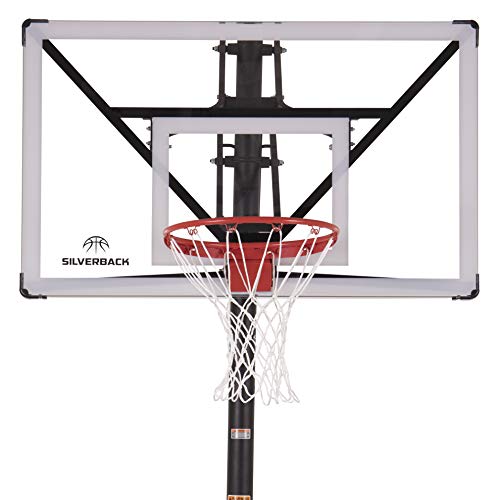


As an Amazon Associate we earn from qualifying purchases at no extra cost to you.
At a Glance: In-Ground Hoop Families
| Family | Best for | Notable traits (as makers describe) | Limits |
|---|---|---|---|
| Goalrilla GS and GLR series | Serious players, long-term installs | Tempered glass backboards, heavy-gauge poles, adjustable height, many sizes | Premium budget; heavy, needs concrete and help to install |
| Spalding in-ground (glass and acrylic lines) | Families wanting a recognized brand | Glass and acrylic options, adjustable heights | Lower tiers use lighter acrylic backboards |
| Goaliath in-ground series | Players who want glass-feel boards at a mid-range tier | Tempered glass or acrylic options, pole styles from several sizes | Pole and rim differences between trims |
| Lifetime in-ground | Budget-conscious families and kids | Polycarbonate or acrylic boards, simple crank adjustment | Less rigid than glass; shorter board sizes |
| Silverback and similar value brands | Casual use, first permanent hoop | Lower-cost steel and acrylic setups | Lighter materials; check warranty and pole gauge |
Names above are brand lines that have been offered in recent years. Specific models and warranties change, so rely on the maker’s current product page.
What Matters Most
Backboard material and size
Tempered glass gives the truest rebound and the most professional look, but it is heavy and more costly. Acrylic is clearer than polycarbonate and cheaper than glass, with a decent feel. Polycarbonate is the most forgiving for rough use and lower budgets, with the softest rebound. Board sizes commonly range from 44 to 60 inches wide; 54 inches is a popular all-round pick, while 60 inches approaches regulation proportions.
Pole size and gauge
A larger, thicker pole resists wobble and sway during dunks and hard use. Makers list pole dimensions and steel gauge, usually from about three inches round to six inches square. Heavier systems typically cost more and need a bigger concrete footing. For adults or teens who play hard, a thick pole is worth the investment.
Rim type
Breakaway rims flex under force and snap back, which reduces stress on the board and pole. Fixed rims are simpler and cheaper but less suitable for dunking. Check the rim’s stated spring type and rating.
Height adjustment
Most in-ground systems let you lower the rim for kids, often to around seven and a half feet, and raise it to the regulation ten feet. Crank, lever and spring-assisted mechanisms vary in smoothness; reviewers often praise spring-assisted designs that are easier to adjust.
Overhang and court clearance
Overhang is the distance from the pole to the front of the backboard. A larger overhang keeps the pole off the playing area and reduces collisions; shorter overhangs are common on lower-cost systems. Compare stated overhang figures, especially if players will drive to the basket.
Padding and safety
Pole padding helps reduce injury risk but does not eliminate it. Consider the surrounding space: keep driveways clear of vehicles and obstacles, and make sure the playing surface is level and well maintained.
Installation and Site Notes
- In-ground hoops are set in a concrete footing; the maker’s manual specifies hole size, depth and concrete amount for each model.
- Call your local utility locator before digging so you do not hit buried lines, and check local rules, permits and neighborhood or homeowner association restrictions.
- Assembly typically needs two or more adults because boards and poles are heavy; use proper lifting and fall protection.
- Allow the concrete to cure for the time the maker lists before putting any load on the system.
- Plan for the future: position the hoop so there is room around the pole and the backboard and so balls do not roll into the street.
- If the ground has poor drainage or frost issues, ask a local contractor about footing depth.
- Some brands sell ground-sleeve systems that make it easier to move or replace the hoop later; check whether yours includes one.
Budget Tiers
Budget
Lifetime, Silverback and entry Spalding lines use polycarbonate or acrylic boards and lighter poles. They suit kids, casual shooting and families trying out a permanent hoop. Expect more backboard flex and a lighter rebound.
Mid-range
Goaliath and mid-tier Spalding or Goalrilla trims offer larger acrylic or glass boards, thicker poles and breakaway rims. This tier is where many reviewers find the best value for teens and adults.
Premium
Goalrilla’s GS and GLR lines and similar top-tier systems use tempered glass, heavy-gauge steel, large overhangs and easy adjustment. They are built for the most demanding use and have longer warranties as listed by makers.
Pick X If… Decision Table
| If you… | Pick | Why |
|---|---|---|
| Have young children who will grow into the hoop | Adjustable-height acrylic or polycarbonate system | Lower rim at first, then raises to regulation |
| Have teens or adults who play hard | Glass or thick acrylic board with a heavy pole and breakaway rim | Stable and accurate rebound |
| Have a small driveway | System with larger overhang and a compact footprint | Keeps the pole out of the playing area |
| Want to try before investing heavily | Budget in-ground or a portable hoop | Lower commitment |
| Plan to dunk | Breakaway rim, heavy pole, glass backboard | Better handles force, per maker ratings |
| Live in a high-wind area | Heavier pole with a deep footing | Stability; follow maker footing guidance |
Care and Maintenance
- Inspect bolts, welds and the pole for rust or movement each season.
- Clean glass with a non-abrasive cleaner; avoid harsh chemicals on acrylic and polycarbonate.
- Replace nets as they wear and keep the rim level and tight.
- Cover or lower the hoop before severe storms if the manual advises it.
- Remove ice and heavy snow from boards carefully.
- Check the padding for cracks and replace it when needed.
Alternatives to Consider
Portable hoop with water or sand base
Portable hoops are simpler, movable and require no digging, which also makes them practical for renters. They are less stable for hard play and may need ballast checks. See the maker’s guidance for the base capacity.
Wall- or roof-mounted hoop
Mounting on a garage or wall saves ground space but needs a structurally sound surface. Consult a professional about load limits before mounting.
Ground-sleeve systems
These let you remove or replace a hoop without breaking the concrete, which is useful if you expect to upgrade later.
Frequently Asked Questions
Is a glass backboard worth it?
For serious players, glass offers the most accurate rebound and durability against weather. For young children or casual play, acrylic or polycarbonate is usually enough. Think about who will use it and for how long.
How big should the backboard be?
Fifty-four inches is a popular size for families because it gives a good rebound surface without the cost and weight of 60-inch boards. Regulation-style play uses larger sizes. Pick the size that fits your players, budget and installation capability.
How deep and wide should the concrete footing be?
It depends on the model and the pole size, so follow the maker’s manual. Footing guidance can differ by region because of frost depth and soil. Ask a local professional if unsure.
Can I install an in-ground hoop myself?
Many people do, usually with several helpers, but it involves digging, concrete work and heavy lifting. If you are uncomfortable with any of these, hire a professional installer. Always call the utility locator before digging.
How often should I check the hoop for wear?
A seasonal check of bolts, welds, rim, net and padding is a sensible routine. Check again after severe weather. Replace damaged parts promptly according to the maker’s instructions.
What is a breakaway rim?
It is a rim with a spring mechanism that flexes downward under load, then returns to position. Makers say this reduces stress on the board and pole. It is a good feature for teens and adults who play aggressively.



