
Key takeaways
- Trip hazards: lifted corners and curling edges can catch toes. Press down, tape, or replace damaged tiles.
- Wet surfaces: rubber tends to be grippy when dry, but moisture can make any floor slippery.
- Subfloor moisture: trapped moisture under tiles can encourage mildew. Address damp slabs before installing.
- Edge transitions: tiles raise the floor height. Check door clearance and consider edge ramps where wheeled gear crosses the edge.
- Heat and fire: follow the maker’s guidance, and keep hot tools and open flames away.
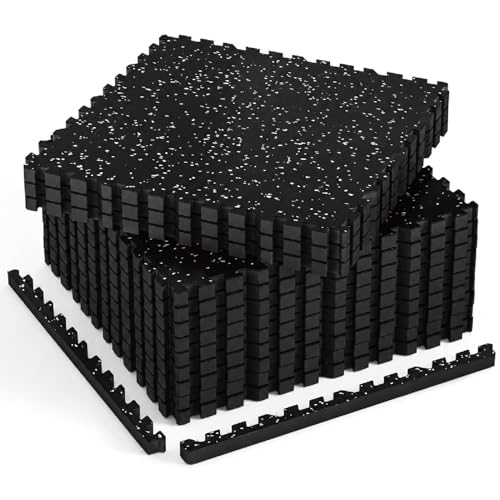
For most home gyms, interlocking rubber tiles around 3/8 inch to 3/4 inch thick are the practical choice when you want to cover a modest area, replace damaged pieces easily, or carry the material through a narrow doorway, while heavy lifters should look at thicker, denser tiles or a platform and cardio-only rooms can use thinner tiles. Tiles trade a few more seams for flexibility, which is why they suit renters, apartments, and rooms of unusual shape. This guide compares tile styles, explains what makers publish, and matches each type to a buyer.
Our top picks


As an Amazon Associate we earn from qualifying purchases at no extra cost to you.
At a Glance: Rubber Tile Types Compared
| Tile type | Typical maker-listed thickness | Best for | Main limits |
|---|---|---|---|
| Interlocking recycled rubber tiles (Rubber-Cal, American Floor Mats, similar makers) | Commonly 3/8 inch to 3/4 inch | Garage gyms, home weight rooms | Seams between tiles; rubber odor when new; tiles can shift under heavy equipment |
| Heavy-duty weightlifting tiles (Greatmats and similar suppliers) | Often 3/4 inch and above | Dumbbell drops, Olympic-style lifting | Heavy per tile; premium to mid-range tier |
| Thin cardio tiles | About 1/4 inch or less | Treadmills, yoga, bodyweight | Not designed for dropped weights |
| Colored-fleck tiles | Commonly 3/8 inch to 1/2 inch | Visible rooms, studios | Costs more than plain black; fleck pattern varies |
| Foam interlocking mats (for example Gorilla-style or ProsourceFit-type foam puzzle mats) | Usually 1/2 inch or so | Stretching, kids’ play, light exercise | Compresses under racks and heavy loads; not for lifting |
How to Read Tile Specifications
Thickness and density
Makers generally position thinner tiles for cardio, mid-thickness tiles for general strength training, and thick tiles for lifting. Density matters as much as thickness: a dense 3/8-inch tile can outperform a softer, thicker one under a rack. Some makers list durometer ratings, but methods vary, so compare numbers only within the same brand’s documentation.
Tile size and coverage
Common tile sizes include 2 feet by 2 feet squares and larger sizes such as 3 feet by 3 feet or 4 feet by 4 feet. Smaller tiles are easier to cut around corners and columns, while larger tiles create fewer seams. Measure your space, divide by the listed tile area, and order extra for cuts and mistakes. Makers often recommend ordering a small surplus.
Interlock styles
Interlocking edges vary. Some tiles use puzzle-style edges, some use pins or dovetail fits, and some are straight-edge tiles intended to butt together. Puzzle-style designs resist sliding, but heavy rolling loads can still pull them apart over time. For heavy equipment, buyers often add double-sided tape at high-stress seams or glue the perimeter, though instructions differ by maker.
Odor and materials
Recycled rubber tiles have a noticeable smell when new. Reviewers commonly suggest airing them out before installation. If you or a family member is sensitive to odors, ask the maker about low-odor or virgin-rubber options, and keep the room ventilated. Seek medical advice if you experience persistent irritation.
Matching Tiles to the Room
Garage gym
Garages benefit from dense 3/8-inch to 3/4-inch tiles. They protect the concrete and make cleanup easier. Because garage floors can be uneven or slope toward a drain, check how the tiles lie flat before locking them in. If your garage sees temperature swings, remember that rubber can expand and contract, so many makers advise leaving a small perimeter gap.
Apartment or upstairs room
If you rent or exercise above another unit, impact noise matters. Thicker, denser rubber reduces noise transmission, though it will not eliminate it. Tiles are easy to lift and remove at lease end. Check your lease before gluing anything down.
Home studio and yoga space
Thin or mid-thickness tiles with a clean fleck look suit visible rooms. Foam interlocking mats are comfortable for floor exercises, though they compress under heavy equipment. If you balance on one foot or do plank work, firmer rubber gives a more stable surface than soft foam.
Under heavy racks and machines
Choose dense tiles and spread the load with rack feet pads or a platform beneath the rack. Equipment makers list weight capacities, and a floor covering should never be treated as a structural support.
Installation and Care
Start with a clean, dry, flat subfloor. Sweep thoroughly, since debris under a tile creates bumps. Lay tiles from one corner, locking edges as you go, and stagger seams in a brick pattern if the maker allows it for added stability. Use a sharp utility knife and straightedge for cuts, making several light passes. Place the cut edge against a wall, where small irregularities are hidden.
Keep the surface clean with a vacuum or soft broom and damp-mop with a mild cleaner. Makers generally advise avoiding petroleum-based solvents and harsh chemicals that can degrade rubber. Allow tiles to dry fully before use. Rotate tiles occasionally if a few receive heavier wear, which is one advantage of tiles over rolls.
Safety and Fit Notes
- Trip hazards: lifted corners and curling edges can catch toes. Press down, tape, or replace damaged tiles.
- Wet surfaces: rubber tends to be grippy when dry, but moisture can make any floor slippery.
- Subfloor moisture: trapped moisture under tiles can encourage mildew. Address damp slabs before installing.
- Edge transitions: tiles raise the floor height. Check door clearance and consider edge ramps where wheeled gear crosses the edge.
- Heat and fire: follow the maker’s guidance, and keep hot tools and open flames away.
Pick X If…
| Pick this if… | Choose |
|---|---|
| You rent or may move soon | Interlocking tiles with no adhesive |
| You drop heavy weights | Thick, dense lifting tiles or a platform |
| You only need cardio or yoga cushioning | Thin rubber or foam tiles |
| You want an attractive finish for a visible room | Colored-fleck rubber tiles |
| Your room has many corners and obstacles | Smaller tiles that are easy to cut |
| You want the fewest seams | Consider rolls instead of tiles |
| You are sensitive to rubber smell | Low-odor products, with the room ventilated |
Budget Tiers
Budget tiles are typically thinner recycled rubber or foam, and they cover cardio and light work. Mid-range rubber tiles from established floor suppliers form the sweet spot for most home gyms. Premium tiles add heavy density, colored EPDM, or commercial-grade specifications. Shipping weight is a major part of the bill, so compare total delivered cost per square foot rather than the headline unit price.
Alternatives
- Rubber rolls: fewer seams and strong coverage for large rooms. See the companion roll guide.
- Horse stall mats: dense and economical, often 3/4 inch thick, but heavy, odorous, and not marketed by the makers specifically for gyms.
- Foam puzzle mats: very light and soft, suitable only for light exercise.
- Turf strips: designed for sled pushes and functional training, usually installed alongside rubber.
Planning Your Layout
Sketch the room and mark where racks, benches, and machines will sit before ordering. Heavy equipment locations tell you where dense tiles matter most, and you can use thinner or cheaper tiles in low-traffic zones such as a stretching corner. Leave clear walking paths, and consider placing a heavier tile zone under the barbell area only. Mixing thicknesses creates height changes, so use edge ramps or border pieces where tiles of different thickness meet to avoid trip points. Allow time for tiles to acclimate to room temperature before cutting, because cold rubber is stiffer and harder to trim. Count the cuts needed around doors, columns, and vents, and order enough spare tiles to cover mistakes, since matching a later batch can be difficult when colors or fleck patterns differ slightly between production runs. Store spare tiles flat and out of direct sun so they are ready if a damaged piece needs replacing.
Frequently Asked Questions
What thickness of rubber tile is best for a home gym?
Many makers position 3/8 inch to 1/2 inch for general strength use and 3/4 inch or more for lifting. Thin tiles around 1/4 inch fit cardio and yoga. Choose based on the heaviest activity in the room.
Do rubber tiles stay in place without glue?
Interlocking designs resist sliding in most situations, but heavy rolling equipment can separate seams. Double-sided tape or adhesive at the perimeter gives extra stability. Follow your maker’s instructions, especially if the floor must be removed later.
Are tiles or rolls better for a garage?
Rolls give fewer seams, while tiles are easier to carry and replace. Tiles also suit uneven shapes or rooms with narrow access. The choice depends on room size and how many people can lift the material.
How do I cut rubber tiles?
Use a sharp utility knife and a straightedge, and make several shallow passes rather than one deep cut. Replace blades often because rubber dulls them quickly. Wear cut-resistant gloves and cut away from your body.
Can I use rubber tiles outdoors?
Some makers sell tiles for outdoor use, but many indoor tiles are not rated for it. Sunlight, rain, and temperature extremes can affect rubber. Read the product description for outdoor suitability.
How do I clean rubber gym tiles?
Sweep or vacuum, then damp-mop with a mild cleaner. Avoid petroleum-based products and harsh solvents. Let the floor dry fully before returning equipment to it.



