Key takeaways
- Do not store wet covers inside a closed bag pocket; mold and odor build quickly.
- Wipe leather with a damp cloth and let it air-dry away from direct heat.
- Brush plush covers with a soft brush to lift grass and sand.
- Replace any cover whose elastic or neck opening has stretched out, since a loose cover protects very little.
The best golf headcovers for most players are a well-made leather or synthetic-leather driver cover from a major brand such as Titleist, Callaway, TaylorMade or Ping, paired with plush fairway-wood covers for the rest of the set. Choose leather for a classic look and long life, a plush knit or fleece cover for the best cushioning, and a novelty animal cover if you simply want something fun and easy to spot in the bag.
Our top picks


As an Amazon Associate we earn from qualifying purchases at no extra cost to you.
Quick Comparison: Headcover Styles at a Glance
| Style | Best for | Typical materials | Protection level | Price range |
|---|---|---|---|---|
| Premium leather (e.g., Titleist leather) | Classic look, long ownership | Two-panel leather, soft lining | High, holds shape | Premium |
| Brand synthetic leather (Callaway, TaylorMade, Ping) | Matching the clubs you bought | PU leather, embroidered logo, lined | High | Mid-range |
| Plush or fleece (e.g., Jones Circa ’71 style) | Cold weather, cushioning | Microfleece outside, sherpa inside | Very high for paint and graphite | Mid-range |
| Novelty animals (e.g., Daphne’s) | Gifts, personality | Stuffed polyester plush | Moderate | Budget to mid-range |
| Value sets (e.g., PRG Americas style) | Covering a full set cheaply | Synthetic leather or knit | Moderate | Budget |
Best Overall: Brand-Matched Synthetic Leather
A driver cover from the same brand as your driver, such as a Callaway premium cover or a TaylorMade or Ping equivalent, is the safest pick. These covers are cut to the actual head shape of current drivers, which matters because modern 460cc heads are larger than many generic covers expect. A cover that is too snug stretches the sock opening; one that is too loose slides off in the bag.
The trade-off is that brand covers often look similar to what everyone else on the course carries, so they are easy to confuse in a group bag pile.
Best Premium: Titleist Leather
Titleist makes headcovers in two-panel leather, available in all-black and all-white, according to the brand’s own product pages. Real leather holds its shape for years, wipes clean and develops a worn-in look. It also costs noticeably more than synthetic alternatives, and untreated leather can stiffen if left wet in a trunk, so dry it out after rainy rounds.
Best for Cushioning: Plush Fleece Covers
Covers with a fleece outside and sherpa lining, such as the Jones Circa ’71 design, give the most padding against knocks from other clubs. They are a smart choice for expensive graphite shafts and painted crowns. The downside is that long fibers collect dirt, grass and damp, so they dry slowly and look scruffy sooner than leather.
Best for Fun and Gifts: Novelty Covers
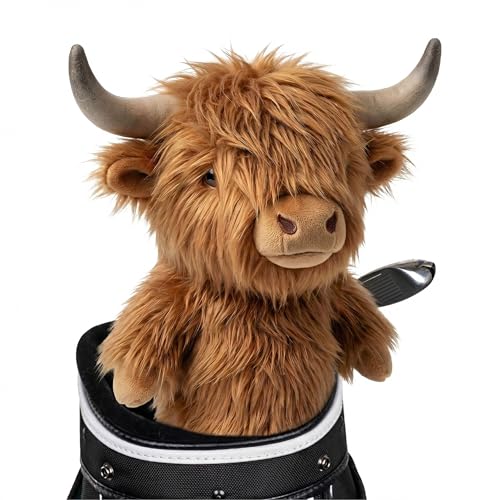
Daphne’s is a long-running name in animal headcovers and is known for a very wide range of designs. Novelty covers make easy gifts and are impossible to misidentify in a crowded cart barn. Check that the neck is long enough for your driver shaft, because some chunky character covers leave several inches of shaft exposed.
Best Value: Multi-Cover Sets
If you carry a driver, a fairway wood or two and a hybrid, buying a coordinated set from a value brand usually costs less than buying premium covers one at a time. Quality varies, so check the stitching around the neck opening, which is where cheap covers fail first.
How to Choose a Headcover
Match the Cover to the Club
Drivers need the largest cover. Fairway woods are smaller, and hybrids smaller again. Many sets include a number tag (1, 3, 5, X). Putter covers are a different category entirely, split into blade and mallet shapes.
Check the Neck Length
A long sock keeps the shaft and ferrule covered and prevents the cover from flopping off. Neck length is the single most useful feature to compare.
Look at the Lining
A soft, brushed lining protects paint. A smooth synthetic lining is easier to wipe but offers a little less cushion.
Think About Weather
If you play in damp conditions, synthetic leather and water-resistant fabric dry faster than plush covers. Cold-weather players usually favor thick knit or fleece.
| Your situation | Best choice | Why |
|---|---|---|
| Carry bag, light setup | Slim synthetic leather | Less bulk in the bag throat |
| Cart bag, expensive driver | Plush fleece or leather | Extra cushioning |
| Buying as a gift | Novelty animal cover | Personality, easy to choose |
| Tight budget, full set | Value multi-pack | Lowest cost per club |
Care and Common Mistakes
- Do not store wet covers inside a closed bag pocket; mold and odor build quickly.
- Wipe leather with a damp cloth and let it air-dry away from direct heat.
- Brush plush covers with a soft brush to lift grass and sand.
- Replace any cover whose elastic or neck opening has stretched out, since a loose cover protects very little.
Worked Example: Covering a Typical Bag
Take a golfer who carries a driver, a 3-wood, a 5-wood, two hybrids and a putter. That is six covers. If the golfer buys one premium leather driver cover and fills the rest with a value set, the premium cover protects the club most likely to be struck by a stray shaft, since drivers have the largest, thinnest-walled heads. The value set then handles the smaller fairway woods and hybrids, where the head is sturdier. This split approach spends money where damage is most costly.
| Club | Cover size needed | Suggested material | Priority |
|---|---|---|---|
| Driver (440-460cc) | Largest, long neck | Leather or plush | High |
| Fairway woods (3 and 5) | Medium | Matching synthetic or knit | Medium |
| Hybrids | Small, rounded | Value set | Lower |
| Putter | Blade or mallet specific | Magnetic or Velcro closure | Medium |
Durability: What Wears First
On nearly every headcover, the neck opening fails first. Repeated pulling over the club head stretches the elastic or knit, and the cover starts to slip off the shaft. Stitching on embroidered logos is the next weak point on cheaper covers, followed by pom-poms and decorative tails on knit styles. Leather covers can crack at the fold if they are never conditioned, while plush covers mat down and hold moisture.
A practical rule is to inspect your covers at the start of each season. If you can pull the cover off with almost no resistance, or if the lining has worn through to the outer shell, it no longer cushions the head and is worth replacing.
Gift Guide: Who Gets What
- New golfer: a simple, neutral driver cover plus a matching fairway cover so the set looks coordinated.
- Low-handicap player: a clean, premium leather cover in a classic color, since that player likely already owns several novelty covers.
- Golfer with a sense of humor: an animal cover from a range such as Daphne’s, which offers a very large number of designs.
- Fan of a team or club: a sport or university-themed cover, as long as the neck length fits a modern driver.
Frequently Asked Questions
Do golf headcovers actually matter?
Yes. They prevent dings and paint chips on the crown and stop club heads from striking each other in the bag. Titanium and composite heads scratch more easily than most players expect.
Are leather headcovers worth the extra cost?
If you plan to keep them for several seasons, yes. Leather holds its shape and wipes clean. For players who change drivers often, a cheaper synthetic cover is more practical.
Do headcovers affect the club’s legality or performance?
No. Headcovers are removed before every shot, so they have no effect on the equipment rules or on swing performance.
How many headcovers do I need?
Most golfers use covers for the driver, one or two fairway woods and any hybrids, plus a putter cover. Irons are usually left uncovered or protected with an iron head cover set only for travel.
Can I wash a headcover?
Plush covers can often be spot-cleaned with mild soap and water. Avoid machine washing leather, and check the care label on any other material first.
More from Amazon
Programs that pair well with the guide above. Offers and eligibility are set by Amazon and may change.
Free shipping on eligible items, Prime Video and more. Eligible new members can start with a free trial.
Start a Prime free trialA Prime membership for ages 18-24 with a trial period. Eligibility is set by Amazon.
See Prime for Young AdultsAudiobooks and podcasts to listen to on the go. Eligible new members can start with a free trial.
Try Audible freeAd-free music streaming. Eligible new subscribers can start with a free trial.
Try Music Unlimited freeAs an Amazon Associate we earn from qualifying purchases.