Key takeaways
- Best everyday balance: A 350–450 GSM pearl-weave gi with a ripstop or cotton-polyester trouser, reinforced knees, and a preshrunk or sanforized label.
- Best for hot gyms and frequent washing: A lightweight 250–350 GSM pearl-weave gi. It dries faster and feels less restrictive, but the fabric and knees may wear sooner.
- Best for heavy training and durability: A 450–550 GSM gold-weave gi with dense stitching and substantial knee reinforcement.
- Best for travel: A 250–350 GSM pearl-weave gi, provided the trousers are not overly thick and the jacket has a compact cut.
- Best competition approach: A plain white, royal-blue, or black gi that follows the specific tournament’s current color, patch, fabric, and sizing rules.
The best BJJ gis for most people are midweight pearl-weave uniforms around 350–450 GSM, while gold-weave gis make more sense when you prioritize structure and durability over quick drying and low weight.
Our top picks

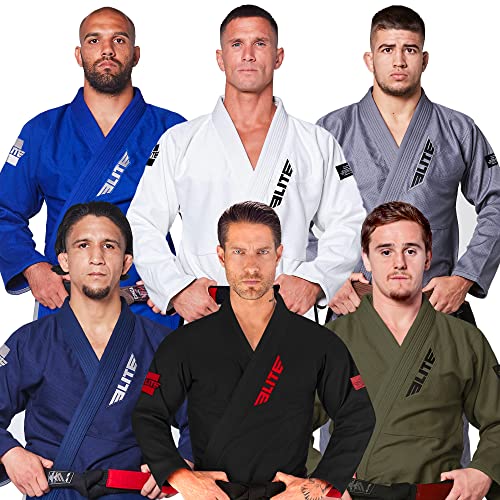
As an Amazon Associate we earn from qualifying purchases at no extra cost to you. Ratings are shown as listed on Amazon.
Quick picks by training situation
- Best everyday balance: A 350–450 GSM pearl-weave gi with a ripstop or cotton-polyester trouser, reinforced knees, and a preshrunk or sanforized label.
- Best for hot gyms and frequent washing: A lightweight 250–350 GSM pearl-weave gi. It dries faster and feels less restrictive, but the fabric and knees may wear sooner.
- Best for heavy training and durability: A 450–550 GSM gold-weave gi with dense stitching and substantial knee reinforcement.
- Best for travel: A 250–350 GSM pearl-weave gi, provided the trousers are not overly thick and the jacket has a compact cut.
- Best competition approach: A plain white, royal-blue, or black gi that follows the specific tournament’s current color, patch, fabric, and sizing rules.
Pearl weave versus gold weave
Weave describes how the cotton yarns are arranged, but it does not determine quality by itself. A well-constructed pearl-weave gi can outlast a poorly stitched gold-weave gi. The useful comparison is the combination of weave, fabric weight, yarn quality, seam construction, and fit.
Pearl-weave gis
Pearl weave is common in everyday training gis because it offers a practical balance of weight, airflow, flexibility, and durability. Its textured surface can feel less bulky than a tightly packed heavy weave, and many pearl-weave jackets soften noticeably after several washes.
The main trade-off is that lightweight pearl weave can become thin at the cuffs, sleeve ends, collar edge, or lower jacket hem. Look for bar-tack reinforcement at stress points, double- or triple-stitched seams, and a properly anchored skirt panel rather than relying on fabric weight alone.
Gold-weave gis
Gold weave is typically denser and more structured. It can resist pulling and abrasion well, making it appealing for hard daily training, frequent gripping exchanges, or athletes who prefer a firm jacket. The extra material also gives the gi a more substantial feel during takedowns and grip fighting.
Gold weave usually costs more in comfort during hot sessions. It holds more water after washing, takes longer to dry, and can feel restrictive if the cut is narrow through the shoulders or upper back. A heavy jacket is not automatically more durable if the collar stitching, sleeve attachment, or trouser gusset is weak.
Comparison of useful specifications
| Gi type | Typical jacket weight | Approximate wash shrinkage | Drying time indoors | Best use | Main compromise |
|---|---|---|---|---|---|
| Light pearl weave | 250–350 GSM | 0–5% if preshrunk; up to 5–8% if not | 8–18 hours | Hot gyms, travel, frequent sessions | Less abrasion margin |
| Midweight pearl weave | 350–450 GSM | 0–5% if preshrunk; up to 5–8% if not | 12–24 hours | Most everyday training | Moderate heat and drying load |
| Heavy pearl weave | 450–550 GSM | 0–5% if preshrunk; up to 5–8% if not | 18–30 hours | Durability with a slightly softer feel | Heavier when wet |
| Gold weave | 450–650 GSM | 0–5% if preshrunk; up to 5–10% if untreated | 24–36 hours | Hard use and structured feel | Heat, weight, and slower drying |
These are practical buying ranges, not guarantees. GSM is fabric mass per square meter and may describe the jacket fabric rather than the complete gi. Trouser material, embroidery, drawstring design, and sizing can change total packed weight considerably.
What to inspect beyond the weave
Stitching and stress points
Inspect the sleeve-to-shoulder junction, armpits, side vents, trouser crotch, and knee panels. Reinforced seams should lie flat without loose thread tails. A row of dense stitching is useful, but extra visible stitching is not proof of strength if it does not anchor the layers together.
For trousers, a gusseted crotch improves mobility and reduces concentrated stress when shooting or sprawling. Double-layer knees should extend high enough to cover the area that contacts the mat; a small knee patch that ends just below the knee can leave the most heavily loaded section unprotected.
Collar construction
A thicker collar resists folding and gripping, but excessive stiffness can rub the neck and make hand fighting uncomfortable. A practical collar has a firm core, even stitching, and a clean transition into the lapel. Check whether the collar is cotton-filled or contains a synthetic core, especially if tournament rules matter to you.
Collar width also affects comfort. A very wide lapel can feel secure but may bunch under the chin, while a narrower one may move more during scrambles. There is no universal winner: choose the construction that matches your neck sensitivity and preferred defensive style.
Mobility and cut
Do not size only by height and body weight. Compare the manufacturer’s chest, waist, sleeve, and trouser measurements. If your chest and waist fall into different size categories, a split-size option or separate jacket and trouser purchase may produce a better fit than accepting a loose jacket or tight trousers.
For a mobility check, put on the gi and raise both arms overhead, squat deeply, step into a long lunge, and rotate your shoulders. The jacket should not pull sharply across the upper back, and the trousers should not strain at the crotch or restrict hip flexion. Sleeves that reach the wrist when standing may ride upward during gripping; a small amount of movement is normal, but excessive bunching is a warning sign.
Decision matrix: which gi fits your routine?
| Your situation | Recommended specification | Why | What to avoid |
|---|---|---|---|
| Beginner training 1–2 times weekly | 350–450 GSM pearl weave | Comfortable, versatile, and less expensive to replace | Very heavy gold weave unless you specifically prefer it |
| Training 4–6 times weekly | Two midweight pearl-weave gis or one pearl and one gold weave | Rotation reduces odor buildup and fabric stress | Using one gi repeatedly without a complete wash |
| Hot or humid training room | 250–350 GSM pearl weave, breathable cotton blend trousers | Lower heat retention and faster drying | 650 GSM jackets that stay damp overnight |
| Frequent hard gripping and takedowns | 450–550 GSM pearl or gold weave, reinforced knees | More abrasion resistance and structure | Ultra-light fabric with minimal seam reinforcement |
| Regular tournaments | Plain compliant color, conservative patches, measured fit | Reduces the chance of inspection problems | Decorative panels, unusual dyes, or unverified collar materials |
Shrinkage, washing, and ownership costs
Unshrunk cotton can change fit substantially. As a worked example, a 76 cm sleeve can lose 3% length after washing: 76 × 0.03 equals 2.28 cm, leaving approximately 73.7 cm. That difference can turn a comfortable sleeve into one that rides noticeably above the wrist. If the label permits it, wash cold and air-dry during the first few cycles. High dryer heat is the fastest way to create avoidable shrinkage.
Wash the gi after every training session, even if it does not smell yet. Turn it inside out, close hook-and-loop fasteners, use a normal detergent dose, and avoid fabric softener, which can reduce absorbency and leave residue in the weave. Never leave a damp gi in a closed bag. If immediate washing is impossible, hang it open until it can be cleaned.
For a simple ownership calculation, assume a $100 gi lasts 100 hard sessions: the clothing cost is $1 per use before detergent and laundry. A second gi costs more initially but can extend the useful life of both by allowing full drying and reducing repeated high-stress washing. For someone training five times per week, owning two gis is usually more practical than buying one heavy gi and wearing it continuously.
Competition legality: do not rely on the product name
A gi marketed as “competition legal” is not a universal guarantee. Rules vary between organizations, divisions, and events, and officials may inspect color, fit, patches, fabric condition, and dimensions. IBJJF-governed events, for example, publish specific requirements that can change, so check the current event handbook before buying or competing.
For the safest competition choice, select a clean white, royal-blue, or black gi from a manufacturer that provides clear specifications. Keep decorative artwork and patches within the permitted areas, remove unauthorized alterations, and avoid relying on a dyed or heavily faded gi. Some events require a gi inspection or offer an official measuring tool; a training gi that fits perfectly can still fail because of color shade, patch placement, or construction details.
Bottom line
Choose a 350–450 GSM pearl-weave gi if you want one dependable uniform for everyday training. Move to 450–650 GSM gold weave when durability and a rigid jacket matter more than heat and drying time. Whichever weave you choose, prioritize accurate measurements, preshrink information, reinforced knees, a gusseted trouser cut, secure collar stitching, and a washing routine that prevents shrinkage and odor. For competition, treat the event’s current rules—not the retailer’s description—as the final authority.