Key takeaways
- Flex: A soft board can be bent into a turn with less leg strength, but an overly soft board may feel unstable on icy or steep runs.
- Effective edge: A longer effective edge improves grip and tracking; a shorter one feels easier to pivot.
- Waist width: Match it to boot size so the board rolls easily without causing toe or heel drag.
- Shape: True twins are balanced in both directions; directional twins favor forward riding and often float better.
- Base material: Extruded bases are slower than sintered bases but are easier to maintain and better suited to occasional riders.
The best beginner snowboards are forgiving, easy to turn, and sized correctly: for most new riders, choose a soft-to-medium-flex directional twin or true twin with a rocker-flat or rocker-camber profile, rather than an aggressive stiff camber board.
Our top picks
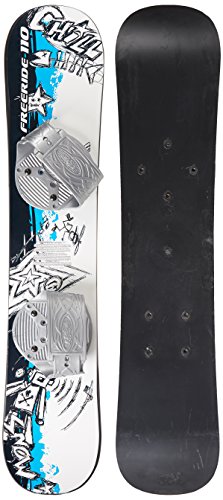


As an Amazon Associate we earn from qualifying purchases at no extra cost to you. Ratings are shown as listed on Amazon.
Quick picks by beginner situation
| Rider or priority | Best type of board | Useful target specification | Why it works |
|---|---|---|---|
| First day or very cautious learner | Soft rocker-flat or flat-to-rocker board | Flex 1–3 out of 10; setback 0–20 mm | Reduces edge catches and requires less force to initiate turns |
| Beginner who wants to progress quickly | Medium-soft directional twin | Flex 3–5 out of 10; hybrid rocker-camber | Forgiving at low speed but more stable as skills improve |
| Rider mainly using groomed runs | True twin or directional twin | Waist width matched to boot; medium effective edge | Predictable turns and easy stance changes |
| Rider expecting powder and mixed terrain | Directional twin with a slightly longer nose | 15–25 mm setback; moderate nose rocker | Improves float without making groomed runs difficult |
| Limited budget or only a few trips per year | Simple soft-flex all-mountain board | Durable extruded base; standard four-by-two inserts | Lower maintenance and broad binding compatibility |
Best beginner snowboards to consider in 2026
Burton Ripcord: the easiest option for cautious learners
The Burton Ripcord is designed around easy turn initiation. Its soft flex, directional shape, and rocker toward the nose make it less demanding than a traditional camber board. The directional shape places a little more length in front of the rider, helping the board feel stable when moving forward.
Choose the Ripcord if your priority is reducing the consequences of small mistakes. It is particularly suitable for slow-to-moderate groomed runs and riders who do not yet want to ride switch. Its main limitation is that the soft flex can feel less precise at high speed, and its directional design is not as natural for repeated switch riding.
K2 First Lite: a forgiving women’s-specific option
The K2 First Lite uses a beginner-friendly construction with a soft flex and a profile intended to make edge changes less intimidating. Its narrower size options can suit riders with smaller boots, while the centered feel makes basic turns and stance adjustments straightforward.
This is a good choice when a standard unisex board feels unnecessarily wide or heavy. Check the manufacturer’s weight range rather than choosing by height alone. A rider near the top of a board’s weight range will usually get more stability and stronger edge control; a rider well below it may find the board harder to flex.
Ride Agenda: a balanced progression board
The Ride Agenda is a true twin all-mountain board with a forgiving flex and a hybrid profile. It is a stronger long-term choice than an extremely soft beginner board because it can remain useful after the rider is linking turns confidently and beginning to explore more of the mountain.
Pick it if you want to learn switch riding, practice basic freestyle skills, or buy one board for several seasons. It may feel slightly less effortless than a full rocker board during the first hour, but the extra stability and edge hold are valuable as speed and terrain variety increase.
Salomon Sight: easy progression with more all-mountain support
The Salomon Sight is aimed at riders who want a forgiving board without giving up too much stability. Its directional-twin layout and hybrid camber profile provide a predictable platform for groomed runs while retaining some rocker to make turn initiation less abrupt.
It suits a beginner who expects to ride regularly and wants a board that will not feel outgrown immediately. Compared with a very soft rocker board, it rewards better posture and pressure control, but it can still be managed by a new rider when correctly sized.
GNU GWO: a forgiving true-twin alternative
The GNU GWO is a true-twin, beginner-oriented board with a soft-to-medium flex and a profile designed to reduce unwanted edge catches. Its twin geometry is useful for riders who want to practice riding switch or learn basic park skills as well as ordinary turns.
Look at this type of board if you value versatility more than maximum powder float. A true twin usually feels balanced in either direction, but it does not give the same natural nose-up assistance as a directional board on deep snow.
Rocker, camber, and flat profiles explained
Rocker
Rocker means the board curves upward toward the contact points. It makes the ends less likely to grab when the rider is not perfectly centered, which is why rocker is popular for first-time snowboarders. The trade-off is less edge hold and stability when riding fast or on hard snow.
Camber
Camber arches upward under the rider’s feet and pushes the board’s contact points into the snow when weighted. It provides strong grip, energy, and stability, but it demands more accurate balance. Full traditional camber is rarely the easiest starting point unless the rider already has substantial board-sport experience.
Hybrid and flat profiles
Hybrid rocker-camber places camber between the bindings and rocker near the nose and tail. It is often the best compromise for progression: enough lift and forgiveness for beginners, with better grip than a fully rockered board. Flat-to-rocker profiles are also approachable, especially for cautious learners who mainly ride at lower speeds.
How to choose the correct size
Use body weight and boot size first, then use height as a secondary check. A beginner board that is too long or too stiff is tiring to turn; one that is too short for the rider’s weight can feel unstable and wash out at speed.
| Approximate rider weight | Typical beginner board length | General use |
|---|---|---|
| 45–59 kg / 99–130 lb | 138–147 cm | Shorter riders or lighter adults |
| 59–73 kg / 130–161 lb | 146–154 cm | Common adult beginner range |
| 73–86 kg / 161–190 lb | 152–160 cm | More stability and float |
| 86–100 kg / 190–220 lb | 157–165 cm | Prioritize the manufacturer’s weight range |
These are starting ranges, not universal rules. If you are between sizes, choose the shorter option for easier turning and the longer option for more stability, speed, and powder performance. Do not select a wide board merely because it looks stable: excessive width makes edge-to-edge transitions slower.
Bindings, boots, and compatibility
Snowboard bindings need to fit both the boot and the board. Most modern boards use a four-by-two insert pattern, while some Burton boards use The Channel system. Burton EST bindings are designed specifically for The Channel, whereas Burton Re:Flex bindings can work with multiple mounting patterns when the correct disc and hardware are supplied.
Check that the binding’s size matches the boot manufacturer’s range. The boot should sit securely in the binding without excessive heel or toe overhang. As a practical guideline, a small amount of overhang is normal, but the boot should not extend so far that it drags during a normal turn. Wide boards are generally intended for larger boots, often around US men’s 10.5 or larger, though the exact threshold depends on the board’s waist width and boot shape.
Use snowboard boots, not winter hiking boots. Snowboard bindings are designed around a stiff, padded boot that transfers movement to the board and holds the heel in place.
What actually affects beginner comfort
- Flex: A soft board can be bent into a turn with less leg strength, but an overly soft board may feel unstable on icy or steep runs.
- Effective edge: A longer effective edge improves grip and tracking; a shorter one feels easier to pivot.
- Waist width: Match it to boot size so the board rolls easily without causing toe or heel drag.
- Shape: True twins are balanced in both directions; directional twins favor forward riding and often float better.
- Base material: Extruded bases are slower than sintered bases but are easier to maintain and better suited to occasional riders.
Ownership costs and common mistakes
A snowboard’s base and edges usually need more attention than its core. Small edge burrs, base scratches, and loose binding hardware are common wear points. Waxing every three to five riding days is a useful general interval, although dry snow, abrasive conditions, and frequent hardpack riding may require more frequent care.
For an occasional rider, a simple maintenance calculation can clarify the choice. Suppose a board costs $350–$550 and is used for 10 days each season over three seasons: that is 30 days of use, or roughly $12–$18 per riding day before equipment maintenance. A board with an easy-care extruded base may cost slightly more over time in performance, but can save effort and service expense for someone who rides only a few days annually.
Avoid tightening binding screws excessively, storing the board wet, or leaving it with sharp metal edges pressed against damp flooring. Dry the board after every session, loosen the bindings slightly for long-term storage, and keep the base away from direct heat. The most common sizing mistake is choosing by height alone; the most common setup mistake is using a stance that is too wide or angles that make the knees uncomfortable.
Bottom line
For the gentlest first experience, choose a soft rocker or rocker-flat board such as the Burton Ripcord. For a board that supports several seasons of learning, consider a medium-soft hybrid directional twin such as the Salomon Sight or Ride Agenda. If riding switch and basic freestyle matter most, a forgiving true twin such as the GNU GWO is the better fit. Whichever model you choose, correct weight range, boot fit, waist width, and binding compatibility will matter more than a small difference in brand specifications.