Key takeaways
- Find the best tackling dummies for youth football: six picks compared by length, weight, cover and handles, plus tips on matching a pad to the holder.
For most youth teams the GoSports 4 ft XL tackling dummy is the simplest pick: a roughly four-foot, foam-filled, handle-equipped pad that one coach or a pair of players can move easily. If you want something even lighter for younger age groups, the Hikeen is the one to look at, while the Fisher Hedgehog is a stationary 60-inch four-way system for older players and programs with a permanent drill area. A tackling dummy is a padded target that lets players practice form, footwork and contact at controlled speed, so weight, length and handle layout matter more than almost anything else.
Quick List
- GoSports 4 ft XL Tackling Dummy – best for a straightforward all-round youth practice pad
- CRAURU 12 x 48 PU Leather Dummy – best for a durable cover with high-density foam and grab handles
- Hikeen Heavy Duty Tackle Dummy – best for lighter weight and easy handling with younger players
- Fisher 60-inch Hedgehog 4-Way – best for a stationary multi-angle system, for older and larger players
- Arrowbash 4 ft Unfilled Dummy – best for coaches who want to choose their own fill and weight
- Yes4All 20 lb Tackling Dummy – best for heavier contact drills and cross-training
Which One Is Right for You?
| If you… | Choose |
|---|---|
| Coach players in a younger age bracket and need something light to carry | Hikeen Heavy Duty Tackle Dummy |
| Want a no-fuss four-foot pad for team practice | GoSports 4 ft XL Tackling Dummy |
| Care most about a tough PU leather cover and handle count | CRAURU 12 x 48 |
| Want to control exactly how heavy the dummy is | Arrowbash 4 ft Unfilled |
| Need heavier resistance for older players or multi-sport drills | Yes4All 20 lb |
| Run a high-school program with a fixed practice area | Fisher 60-inch Hedgehog 4-Way |
The right choice depends mostly on age and weight class, not on brand. A pad that is too heavy changes a player’s form because the ball carrier or holder struggles to present it correctly, and a pad that is too light gives no resistance for older kids. Start with the age group, then pick the length, then compare handles and cover material.
Think about how many players are in the drill at once. A single handheld pad forces a line and a lot of standing around, so teams with large rosters often run two or three dummies in parallel stations, with a parent or assistant coach holding each one. That makes a lighter, easier-to-hold pad such as the Hikeen or the GoSports more practical than a heavy one, because volunteers tire quickly. A stationary system like the Fisher Hedgehog removes the holder altogether, which helps when staff is short but the practice area is fixed.
All 6 Picks in Detail
1. GoSports 4 ft XL Tackling Dummy – Best for an all-round youth practice pad
As an Amazon Associate we earn from qualifying purchases at no extra cost to you.
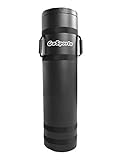
GoSports positions this four-foot, extra-large blocking pad for youth and college football practice. Product pages describe a foam-core construction with a tear-resistant composite leather cover and reinforced handles, and the maker lists the size as roughly four feet tall by one foot wide. The manufacturer’s weight is about twelve pounds, though retail pages vary slightly, so confirm on the listing. It is a good default for a team because it is large enough for realistic contact but light enough for a coach to hold.
- Roughly 4 ft tall by 1 ft wide, “XL” blocking-pad size
- Foam core with a tear-resistant synthetic leather cover
- Reinforced carry handles; the number is described differently by retailers, so confirm on listing
- Weight about twelve pounds per the maker; confirm on listing
- Marketed for football, martial arts and other contact sports
Pros
- Balanced size and weight for most youth practices
- Recognizable brand with a simple design
Cons
- Handle count is described inconsistently in listings
- Not light enough for the smallest age groups
Compared with the Hikeen, the GoSports is a bit heavier and more substantial; compared with the Yes4All, it is lighter and easier for younger players to hold.
2. CRAURU 12 x 48 PU Leather Dummy – Best for a tough cover with handles

The CRAURU is a heavy-duty tackle dummy with a PU leather cover, high-density foam and handles, in a 12 by 48 inch size. That footprint is nearly identical to the GoSports and Hikeen, so it fits the same drills: wrap-up tackles, form tackling, shoulder drives and blocking sleds substitutes when held by a coach. The listing name does not state a weight, so a buyer who carries equipment to and from the field should confirm the weight on the product page before ordering.
- 12 inch by 48 inch body
- PU leather cover over high-density foam
- Handles for holding and moving the dummy
- Weight and handle count not stated in the name; confirm on listing
- Aimed at football tackling and blocking practice
Pros
- Cover material is chosen for durability
- Standard dimensions that fit common drills
Cons
- Less brand information available than the better-known picks
- Weight is not clearly listed
If you want a similar format with a stated light weight, the Hikeen is the closer match; if you want a more established brand, choose the GoSports.
3. Hikeen Heavy Duty Tackle Dummy – Best for lighter weight and younger players

The Hikeen is described as a lightweight tackle dummy meant to withstand years of blocking, tackling and defensive drills, in a 12 by 48 inch size. Retail details list roughly seven pounds, three handles and an extra holding strap, though the exact numbers can vary by listing. That weight makes it a practical choice for youth leagues where the holder is another child or a volunteer parent. Lighter pads also encourage controlled, technique-first drills rather than full-speed collisions.
- 12 inch by 48 inch body
- Lightweight design, about seven pounds per retail details; confirm on listing
- Multiple handles and a holding strap, as described in listings
- Soft, padded foam intended for youth use
- Also marketed for martial arts and basketball defense drills
Pros
- Easy for younger players and volunteer coaches to carry
- Straps and handles give multiple holding positions
Cons
- May feel too light for older, heavier players
- Details vary between listings, so verify before buying
Next to the GoSports, the Hikeen gives up some mass in exchange for maneuverability; the Yes4All sits at the opposite end when resistance matters.
4. Fisher 60-inch Hedgehog 4-Way – Best for a stationary system, runner-up for youth

This is a different kind of equipment from the other five. The Fisher Hedgehog is a stationary four-way tackler: four rocket-shaped foam pads are assembled around a steel frame so a player can attack from several directions without anyone holding a pad. The manufacturer lists a 60-inch height and a weight of about 62 pounds, and retailer copy says that size is aimed at older players, with a shorter 49-inch version existing for smaller athletes. Because the listing here is the 60-inch size, treat it as a runner-up for youth: it suits upper-age youth teams and high school programs with a fixed practice area rather than a young league that carries everything in a duffel.
- 60 inches tall, four-way configuration
- Powder-coated steel frame with dense foam pads, per the manufacturer
- About 62 pounds assembled, per the manufacturer
- Stationary use; not a handheld pad
- Several pad colors exist; confirm on listing
Pros
- No holder needed, so more players can rotate through
- Built for repeated use at a permanent practice site
Cons
- Heavy and bulky compared with every other pick
- The 60-inch size is tall for younger children
If your players are small, choose the GoSports or Hikeen instead and keep the Fisher for an older group or a school program.
5. Arrowbash 4 ft Unfilled Dummy – Best for custom fill and weight

The Arrowbash is sold unfilled, so the cover arrives without foam or stuffing and you decide what goes inside. That is the whole point: a coach can fill it with foam scraps, clothing or other soft material to reach a weight that suits the team. The listing is the orange four-foot version with a handle. The tradeoff is effort and safety: the dummy is only as protective as what you put in it, so use dense, even, non-hard fill and check it for lumps before each practice.
- About 4 ft long, unfilled cover
- Handle for carrying and holding
- Weight depends on your fill; confirm on listing for the empty cover
- Orange colorway shown in the listing
- Cover material described as PU leather in related listings
Pros
- You control the weight and firmness
- Easy to ship, store and refill
Cons
- Requires you to source proper fill and stuff it evenly
- Inconsistent filling can create hard spots
Pick the Arrowbash over the CRAURU only if you want to customize the weight; if you want a ready-to-use pad, the CRAURU or GoSports saves time.
6. Yes4All 20 lb Tackling Dummy – Best for heavier contact drills

The Yes4All model in this listing weighs twenty pounds, according to its name. It is a leather-style, foam-filled dummy pitched for football, basketball defense, grappling and martial arts. Twenty pounds is heavy for a young child to hold but useful for older youth players, high school athletes and multi-sport programs that want resistance. The same series also offers a lighter eleven-pound option, so check the pack before ordering if your players are small.
- Listed at 20 lb in the product name
- Foam fill with a leather-style cover; confirm on listing
- Multiple handles for holding, as described by the seller
- Marketed for football, grappling and striking
- Lighter 11 lb option exists in the line; confirm on listing
Pros
- Extra mass gives more resistance for bigger players
- Useful across several sports
Cons
- Too heavy for most young holders
- Material descriptions differ between listings
Choose the Hikeen instead if the holder is a young child; pick the Yes4All when you want the most resistance of the handheld group.
Specs Compared
| Dummy | Size | Weight | Fill / build | Handles |
|---|---|---|---|---|
| GoSports 4 ft XL | About 4 ft x 1 ft | About 12 lb per maker; confirm on listing | Foam core, composite leather cover | Reinforced; count varies, confirm on listing |
| CRAURU 12 x 48 | 12 x 48 in | Confirm on listing | High-density foam, PU leather | Yes; count confirm on listing |
| Hikeen Heavy Duty | 12 x 48 in | About 7 lb per retail details; confirm on listing | Padded foam | Multiple plus holding strap |
| Fisher 60-inch Hedgehog | 60 in tall, four-way | About 62 lb per maker | Steel frame with dense foam pads | None; stationary |
| Arrowbash 4 ft Unfilled | About 4 ft | Depends on fill | Unfilled cover; you add fill | Handle(s); confirm on listing |
| Yes4All 20 lb | Confirm on listing | 20 lb | Foam fill, leather-style cover | Multiple; confirm on listing |
How We Chose These
This guide is based on desk research, not on field use. We took the six dummies in the current catalog set, read their listing names, manufacturer pages and retailer specification fields, and compared them on the variables that matter to youth coaches: length and diameter, stated or reported weight, how the cover and filling are described, handle layout, and whether the product is a handheld pad or a stationary frame. Where a listing leaves out a dimension or weight we say so and tell you to confirm it. One product, the Fisher Hedgehog, is a different kind of equipment, so it is labeled as a runner-up for older players rather than ranked on equal terms with handheld pads.
What to Look For
Match weight to the age and size of the holder
The holder is the person who stands behind the dummy and takes the hit, and the dummy has to be light enough for that person to control. A rough rule of thumb is that the dummy should weigh no more than about a tenth to an eighth of the holder’s body weight when it is a one-person pad. A 70-pound player can manage a pad in the seven to ten pound range, while a 120-pound player can handle twelve to fifteen pounds. Heavier pads such as the 20-pound Yes4All suit older athletes. If the pad is too heavy, the holder’s posture collapses and the drill teaches bad habits.
Length, width and drill type
A four-foot pad about a foot wide is the common format for youth: it is tall enough to represent a ball carrier’s torso and narrow enough to wrap up. Taller dummies suit full-height drills with older players, and stationary systems like the Hedgehog allow multiple tackling angles at once. Think about the drills you actually run: wrap-up and form tackling, shoulder-drive blocking, strip drills and angle tackling each work better with a different holding position, so look for handles on the sides and ends, not just one.
Cover material and fill
PU or synthetic leather covers are common because they resist abrasion, shed water and wipe clean. Look for double-stitched seams and reinforced handle mountings, since those are the first places a dummy fails. Inside, high-density foam holds its shape longer than loose stuffing, which sags and compacts over a season. Unfilled dummies are only as good as their fill, so use evenly packed, soft, non-abrasive material and rebuild it when it starts to lump.
Handles and portability
Youth programs often store gear in a trunk or shed, so a lighter pad with several handles pays off. Check whether the handles are sewn into the body or sit on webbing straps. Some pads add a holding strap that lets a coach wear the pad on the forearm, freeing the other hand to direct players. If you will be hauling several dummies, weight matters more than you might think.
How to build a drill progression around a dummy
The best use of a tackling dummy is as the first rung in a ladder. Start with players on their knees or in a low athletic stance, practicing hand placement, head position and foot spacing against a stationary pad that the coach holds still. Next, add a walking approach so players learn to shorten their steps and keep their hips under them. Only after the form is consistent should you add speed, and then a moving holder who changes angle slightly on each rep. Every stage uses the same piece of equipment, which is why a pad that is easy to hold for a full practice matters. A heavy dummy that tires the holder after five reps ends the progression early.
Inspect and maintain the pad
Before each practice, run your hands along the seams, handle mounts and corners. Look for split stitching, foam poking through the cover, and any spot where the foam feels hard or hollow. Replace or repair a damaged pad before using it, because a worn cover can expose a seam edge or let foam shift into a lump. Between sessions, brush off grass and mud, wipe the cover, and let it air dry before storing it. If the foam has compressed into a flat, dense slab after a season of heavy use, the pad will not absorb contact the way it did when new.
Think about storage and transport
A four-foot dummy fits across the back seat of most cars but not in a small trunk, so measure before you plan a carpool. Stacking several dummies on their sides saves space, while leaning them against a wall can bend the foam over time. If your team shares a field with other groups, label each pad with the team name and keep a simple checkout list so equipment is not lost.
Safety practices and a worked example
A dummy lowers the risk of drill collisions, but it does not remove it. Keep contact at the speed the coach chooses, teach proper head-up form, and keep other players out of the drill lane. Make sure the drill area is clear of hard objects and has appropriate footing. Follow your league’s contact rules and any guidance published by your governing body.
Worked example: a coach with ten- and eleven-year-olds who average around 85 pounds wants a pad for form tackling. A pad of about 7 to 12 pounds is a good starting range, so the Hikeen or GoSports works. For a 14-year-old group averaging 150 pounds, a 15 to 20 pound pad such as the Yes4All is reasonable, and the Fisher system becomes realistic if the team has a permanent practice site.
Questions
What size tackling dummy is best for youth football?
A pad about four feet long and roughly a foot wide is the most common size for youth. Smaller children may do better with a lighter pad, while older players can use heavier or taller equipment. Check the listing for the exact length and diameter, because some products are shorter or slimmer than the headline suggests, and compare that to the height of your smallest holder so the pad does not drag on the ground.
How heavy should a youth tackling dummy be?
Weight should match the holder, not the tackler. As a rough guide, keep a handheld pad well under the holder’s comfortable lifting weight, often somewhere between seven and twenty pounds depending on age.
Is an unfilled dummy a good idea?
It can be, because you control the weight and firmness. The catch is that you must fill it evenly with soft material and refresh the fill as it compacts, otherwise hard spots can develop. Many coaches pack a layer of soft foam around the outside and keep heavier material toward the center so the surface stays forgiving.
How should I clean and store a tackling dummy?
Wipe synthetic leather covers with a damp cloth and mild soap, let them dry fully, and store them indoors out of direct sun. Avoid leaving them in a hot vehicle, which can soften foam and stress seams.
Can tackling dummies be used for other sports?
Many are marketed for martial arts, basketball defense and lacrosse or hockey contact drills. Check that the handles and cover suit the way you plan to use the pad.
Do I need a stationary system or a handheld pad?
Handheld pads are easier to move and suit teams that train in different places. Stationary systems like the Fisher Hedgehog fit programs with a permanent practice area and older players.
Update History
- October 20, 2026 – Initial publication; product set drawn from current catalog listings.
- Check the product page for current specifications and availability before buying.
Sources
- Manufacturer product and specification pages for GoSports and Fisher Athletic
- Retailer listing titles and specification fields for the six listed dummies
- Sports-equipment retailer pages describing size and weight ranges for youth tackling pads