Key takeaways
- For pain during gripping, lifting, or racquet sports: A counterforce strap or elbow brace is usually the first purchase. It helps reduce strain on the forearm extensor tendon during activity.
- For acute flare-ups after overuse: Cold therapy and brief rest are commonly used for short-term comfort. Look for reusable gel packs or cold compression wraps that stay flexible when frozen.
- For stiff, achy elbows, especially in the morning or after long desk work: Heat wraps or heat pads may provide comfort and help you ease into movement. Moist heat options tend to feel deeper than dry heat at the same temperature.
- For pain relief without taking oral medication: Topical products with menthol, lidocaine, or capsaicin are widely available in roll-on, cream, and patch forms. They do not heal the tendon but may make daily tasks more comfortable.
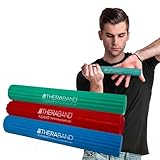
- For long-term recovery: Gradual loading tools like the Theraband FlexBar are often recommended by physical therapists to rebuild forearm strength. These are not pain-relief products, but they address the underlying capacity issue that keeps tennis elbow coming back.
What's inside
- How to Choose Tennis Elbow Treatment Products by Your Situation
- Comparison Table: Common Tennis Elbow Products You Can Buy
- Review: Braces and Straps for Tennis Elbow
- Review: Cold and Heat Therapy
- Review: Topical Products
- Durability and Ownership Realities
- When to See a Doctor or Physical Therapist
- Practical Buying Picks by Situation
Tennis elbow treatment works best as a combination of offloading the irritated tendon with a brace or strap, managing pain with cold, heat, or topical products, and gradually restoring strength — no single product cures it alone, but the right mix for your situation can speed comfort and help you stay active while you recover.
- How to Choose Tennis Elbow Treatment Products by Your Situation
- Comparison Table: Common Tennis Elbow Products You Can Buy
- Review: Braces and Straps for Tennis Elbow
- Review: Cold and Heat Therapy
- Review: Topical Products
- Durability and Ownership Realities
- When to See a Doctor or Physical Therapist
- Practical Buying Picks by Situation
This guide reviews the main categories of over-the-counter options you can buy for lateral epicondylalgia (commonly called tennis elbow), explains when each is useful, and helps you decide what to buy without making medical claims. For persistent pain, worsening symptoms, or uncertainty about the cause, see a clinician or physical therapist for an individual assessment.
As an Amazon Associate we earn from qualifying purchases at no extra cost to you.


How to Choose Tennis Elbow Treatment Products by Your Situation
Buying for tennis elbow is not about finding the “best” product overall. It is about matching the tool to your pain pattern, activity level, and recovery stage:
- For pain during gripping, lifting, or racquet sports: A counterforce strap or elbow brace is usually the first purchase. It helps reduce strain on the forearm extensor tendon during activity.
- For acute flare-ups after overuse: Cold therapy and brief rest are commonly used for short-term comfort. Look for reusable gel packs or cold compression wraps that stay flexible when frozen.
- For stiff, achy elbows, especially in the morning or after long desk work: Heat wraps or heat pads may provide comfort and help you ease into movement. Moist heat options tend to feel deeper than dry heat at the same temperature.
- For pain relief without taking oral medication: Topical products with menthol, lidocaine, or capsaicin are widely available in roll-on, cream, and patch forms. They do not heal the tendon but may make daily tasks more comfortable.
- For long-term recovery: Gradual loading tools like the Theraband FlexBar are often recommended by physical therapists to rebuild forearm strength. These are not pain-relief products, but they address the underlying capacity issue that keeps tennis elbow coming back.
Comparison Table: Common Tennis Elbow Products You Can Buy
The table below summarizes typical specs and ownership details for well-known product types sold in 2026. Use it to compare fit, material, and practical trade-offs beyond marketing claims.
| Product Type & Example | Material / Key Feature | Sizing | Weight / Dimensions | Reusability / Power |
|---|---|---|---|---|
| Counterforce Strap (e.g., Bauerfeind EpiPoint, McDavid 489) | Neoprene or knit with silicone pressure pad | One-size adjustable, fits 8-14 in forearm circumference | 1.5 – 3.5 oz | Hand washable, no consumables, pad may compress after 6-12 months of daily use |
| Compression Elbow Sleeve (e.g., Bauerfeind EpiTrain, McDavid HexPad) | 3D knit with silicone inserts | S – XL based on elbow circumference (typically 5 sizes) | 2 – 4 oz | Machine washable, elastic loses compression after ~12 months with frequent washing |
| Reusable Cold Pack / Cold Compression Wrap | Gel with nylon or neoprene wrap | One-size with elastic straps, pack ~6 x 10 in | 8 – 16 oz per pack | Freeze and reuse 100+ times, stays flexible to about -5°C, no battery needed |
| Electric Heat Pad | Microfiber with auto shut-off controller | 12 x 15 in to 12 x 24 in | 14 – 24 oz, 50-75W, 3-6 heat settings | Corded, 2-hour auto shut-off, cover machine washable |
| Topical Menthol Roll-On (e.g., Biofreeze) | 4% menthol in 3 oz roll-on | N/A | 3 oz / 89 ml, ~500 applications | Single-use per application, no residue, avoid broken skin |
| Topical Lidocaine Patch (e.g., Aspercreme 4% Lidocaine) | 4% lidocaine, odor-free patch 3.9 x 5.5 in | N/A | 5 patches per box | Up to 12 hours per patch, single use, do not use with heat |
| FlexBar for Eccentric Exercise (e.g., TheraBand FlexBar) | Natural rubber, color-coded resistance | 12 in length, 4 resistance levels | 4 – 5.5 oz depending on resistance | No consumables, wipe clean, replace if surface cracks |
Review: Braces and Straps for Tennis Elbow
Braces do not cure tennis elbow, but they are the most practical way to keep working or playing while reducing aggravating load.
Counterforce Straps
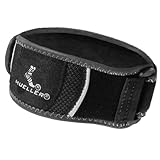
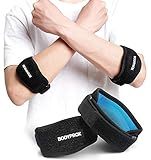
A counterforce strap sits about 1-2 inches below the painful spot on the forearm and uses a small pad to diffuse force away from the tendon attachment. Models like the Bauerfeind EpiPoint include an adjustable dial and anatomical pad, while simpler designs like the McDavid 489 or Mueller Hg80 use a Velcro strap and air or gel cushion. General market range for straps is about $15 to $45. Fit matters more than price: you should be able to slide one finger under the strap, and it should not cause numbness, tingling, or color change in the hand.
Compression Sleeves
Sleeves cover the entire elbow and provide more diffuse compression and warmth. They are less targeted than straps but feel more comfortable for all-day wear or for people who get swelling. The Bauerfeind EpiTrain is a premium knit sleeve with a built-in silicone pad that moves with the joint, typically priced higher than basic sleeves. For sports use, look for sleeves with a non-slip silicone border inside the cuff — this prevents sliding during sweat.
Decision Matrix: Which Brace to Buy
- Budget under $30 and need help only during tennis, golf, or lifting: Choose a basic counterforce strap with Velcro and a gel pad.
- Need all-day comfort for office work or light chores: Choose a knit compression sleeve in your measured size.
- Want precise pressure and long-term durability: Choose an adjustable strap with a dial system like EpiPoint or similar type.
- Skin sensitivity or heat intolerance: Avoid thick neoprene; choose a breathable knit or low-profile strap you can loosen quickly.
Review: Cold and Heat Therapy
Cold and heat are comfort measures. They do not strengthen the tendon, but they make it easier to rest, move, and follow a rehab plan.
Cold: Reusable gel packs with a fabric barrier are typically applied for 10-15 minutes at a time, with at least 45-60 minutes between applications. Cold compression wraps combine a gel pack with an elastic wrap to keep the pack in place without holding it. Look for packs that remain pliable when frozen and include a washable cover to protect skin. Do not apply directly to skin and do not use while sleeping.
Heat: Heat pads and moist-heat wraps are often used before gentle movement or when stiffness is the main complaint. Electric pads offer consistent temperature and auto shut-off (usually 2 hours), while microwaveable packs offer portability but cool within 20-30 minutes. Do not combine topical menthol or capsaicin products with heating pads on the same area, as this increases irritation risk.
Worked Calculation: Cost Per Use
Cost per use helps you compare reusable vs. single-use options. Example with general market ranges in 2026:
- A reusable gel pack costing $18 and used 3 times per week for 6 months = ~78 uses. Cost per use = ~$0.23.
- A box of 5 lidocaine patches costing $12 with one patch per day for 5 days = $2.40 per use.
- A 3 oz menthol roll-on costing $14 with ~500 applications = ~$0.03 per use.
If you need daily comfort for weeks, a reusable strap or pack usually costs less over time than single-use patches, but patches may be more convenient for travel or work.
Review: Topical Products
Topicals are the easiest add-on to a tennis elbow plan because they require no sizing or charging. Common options include:
- Menthol-based (e.g., Biofreeze, IcyHot Original): Creates a cooling sensation that may distract from ache. Typically 4% menthol, available as roll-on, cream, or patch. Roll-ons keep hands clean; creams allow massage over the forearm.
- Lidocaine-based (e.g., Aspercreme 4% Lidocaine Patch): Odor-free and numbs the area locally for up to 12 hours per patch. Useful if you need coverage during a work shift without reapplying. Follow package directions and do not exceed recommended duration.
- Capsaicin-based: Produces warming over time and is better for persistent achiness than for sharp flare-ups. Wash hands thoroughly after use and avoid contact with eyes.
Topicals should not be used on broken or irritated skin, and you should not tightly wrap the area after application unless the product is specifically designed as a patch. If you take other pain medicines or have allergies to adhesives, check with a pharmacist first.
Durability and Ownership Realities
What tends to wear first and how to make products last longer:
- Straps: Velcro weakens and pads flatten. Rinse straps by hand with mild soap and air dry. Replace when you need to overtighten to get the same feel.
- Sleeves: Elastic fibers stretch with heat. Wash in cold water and avoid high-heat dryers. If the sleeve slides down during movement, it has likely lost compression.
- Gel packs: Outer seams split if folded while frozen. Store flat. Discard if gel leaks.
- Heat pads: Controllers fail before the fabric does. Keep cords untwisted and never fold the pad while it is on.
- Topicals: Roll-on balls clog if used over lotion. Apply to clean, dry skin.
Common mistake: wearing a strap too tight all day to “heal faster.” Over-compression does not accelerate recovery and can irritate skin and nerves. Use the brace during aggravating activities and remove it during rest unless your clinician advises otherwise.
When to See a Doctor or Physical Therapist
Self-care strategies are for general information and are not a substitute for professional evaluation. Consider seeking care promptly if you notice:
- Pain that worsens, does not improve after 2-3 weeks of activity modification, or wakes you at night
- Significant swelling, bruising after an injury, numbness, tingling, or loss of grip strength
- Elbow pain after a fall, direct impact, or a popping sensation
- Signs of skin infection or allergic reaction to a brace or topical product
- No improvement despite consistent rest, bracing, and gradual exercise
A clinician can confirm whether the problem is tennis elbow or another condition such as nerve irritation or joint injury, and can tailor a loading program. Physical therapy often includes education on workstation setup, grip technique, and progressive forearm strengthening, which addresses the root cause more than any single product can.
Practical Buying Picks by Situation
Instead of a single winner, here is how most buyers on ussportupdate.com choose in 2026:
- Active player who wants to stay on court: Counterforce strap + reusable cold compression wrap for after play + FlexBar for supervised eccentric work.
- Office worker with mouse and keyboard pain: Light compression sleeve for the day, ergonomic assessment, and topical roll-on for comfort during long typing sessions.
- Travel or on-the-go needs: Roll-on or patch topicals plus a compact strap that fits in a bag.
- Stiffness-first symptoms with little swelling: Electric heat pad with auto shut-off for use before gentle mobility work, paired with a properly fitted sleeve.
Whichever combination you choose, track what helps. Note pain level (0-10), what activity triggered it, how long relief lasted, and any skin irritation. That record is more valuable than any product description when you talk to a professional about next steps.
This article is for general information only and does not provide medical advice. If you have a medical question or concerning symptoms, contact a qualified healthcare professional.