Key takeaways
- Shaking hands, turning a doorknob, or twisting a lid
- Lifting with the palm facing down, such as picking up a coffee mug or grocery bag
- Extended typing, mouse use, or tool use without obvious swelling
What's inside
- How to Recognize Tennis Elbow Symptoms by Location and Pain Pattern
- How Brace Types Match Symptom Severity
- Spec Comparison: Braces That Actually Help in 2026
- Decision Matrix: Match Your Situation to the Right Support
- How to Size and Fit Any Brace Correctly
- Durability and Ownership Realities
- When to Seek Care
- FAQ
Tennis elbow symptoms most commonly show up as aching or burning pain on the outer elbow that worsens with gripping, lifting, or twisting, and the brace that actually helps depends on where your pain is centered, how much grip strength you’ve lost, and whether you need targeted pressure for play or broader compression for all-day relief.
- How to Recognize Tennis Elbow Symptoms by Location and Pain Pattern
- How Brace Types Match Symptom Severity
- Spec Comparison: Braces That Actually Help in 2026
- Decision Matrix: Match Your Situation to the Right Support
- How to Size and Fit Any Brace Correctly
- Durability and Ownership Realities
- When to Seek Care
- FAQ
As an Amazon Associate we earn from qualifying purchases at no extra cost to you.


How to Recognize Tennis Elbow Symptoms by Location and Pain Pattern
Tennis elbow, or lateral epicondylitis, is irritation of the tendons that attach forearm extensor muscles to the bony bump on the outside of the elbow. While the name suggests tennis, it affects anyone with repetitive wrist and arm use. A healthcare professional can confirm the diagnosis and rule out other elbow conditions, but understanding the pattern helps you describe symptoms accurately and choose support wisely.
1. Pain on the Outside of the Elbow
This is the hallmark location. You may feel tenderness if you press about 1-2 cm down from the bony point on the outer elbow. Pain often radiates down the forearm toward the wrist. Key triggers include:
- Shaking hands, turning a doorknob, or twisting a lid
- Lifting with the palm facing down, such as picking up a coffee mug or grocery bag
- Extended typing, mouse use, or tool use without obvious swelling
Pain that is constant at rest, causes significant swelling, numbness, tingling into the fingers, or bruising after an injury is not typical for tennis elbow and should be evaluated promptly.
2. Forearm Tightness and Wrist Weakness
Because the extensor carpi radialis brevis muscle is involved, symptoms often extend beyond the elbow. You may notice forearm muscle tightness, aching after 20-30 minutes of repetitive activity, and pain when you extend the wrist back against resistance. Morning stiffness that eases with gentle movement is common.
3. Grip Strength Changes
Reduced grip strength is a functional sign. Many people first notice it as difficulty holding a racquet, hammer, or pan without pain. A simple self-check to discuss with a clinician: hold a light object like a water bottle with your elbow extended and palm down. If grip feels weak or reproduces outer elbow pain within a few seconds compared to the other arm, it suggests extensor tendon irritation rather than simple muscle soreness. This does not replace clinical testing, but it helps track whether symptoms are improving.
How Brace Types Match Symptom Severity
Braces do not cure the tendon irritation, but they can redistribute load, reduce painful vibration, and remind you to modify activity. The right level of compression and structure depends on your daily demands.
Counterforce Strap (Tennis Elbow Strap)
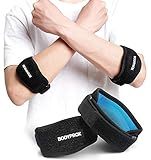
A narrow strap with a padded pressure point that sits about 2-3 cm below the painful spot on the forearm. It creates a new anchor point for the extensor muscles, reducing pull on the irritated tendon insertion. Best for sharp pain during gripping, lifting, or racquet sports. Look for adjustable tension and a non-slip, skin-friendly lining. Too tight can cause tingling or finger swelling.
Compression Sleeve or Epicondylitis Clasp
A breathable knit sleeve that provides graduated, all-around compression from the forearm to just above the elbow. It improves proprioception and provides mild support for dull, aching pain that builds through the workday. Models like the Bauerfeind EpiTrain or similar medical-grade knit sleeves add a silicone insert that massages the area during movement. Better for all-day wear and people sensitive to isolated pressure.
Adjustable Dual-Strap or Stabilizer Brace
Combines a sleeve with one or two adjustable straps for people who need both diffuse compression and targeted counterforce. Useful if you have both outer elbow pain and diffuse forearm fatigue, or if you transition from desk work to exercise in the same day.
Spec Comparison: Braces That Actually Help in 2026
Use this table to match compression style, material, and sizing to your needs. Dimensions are based on manufacturer specifications for current models; always measure your arm and follow the brand’s size chart.
| Brace Type / Example Model | Compression Level | Strap / Material | Sizing Method | Weight (approx.) | Best For |
|---|---|---|---|---|---|
| Bauerfeind EpiPoint (counterforce clasp) | Targeted, adjustable | Viscoelastic pressure pad + adjustable elastic strap, skin-friendly microfiber | One size with adjustable strap, fits forearm circumference 20-32 cm | 55-65 g | Precise pressure during sport and manual work |
| McDavid 489 Elbow Strap | Moderate, targeted | Neoprene + 2.5 cm wide gel pad, hook-and-loop closure | Universal, fits 20-33 cm forearm | 40-50 g | Budget strap for intermittent gripping tasks |
| Bauerfeind EpiTrain Sleeve | Light to moderate, graduated (approx. 18-22 mmHg) | 3D knit fabric with silicone Epi pad, breathable, latex-free | Sizes 0-6 by elbow + forearm circumference (e.g., Size 3 = 25-27 cm elbow) | 85-110 g | All-day diffuse ache, office work, mild swelling |
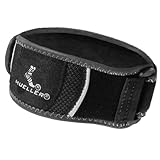
| Mueller Hg80 Elbow Brace | Moderate, adjustable | HydraCinn fabric, antimicrobial, dual adjustable straps | S/M/L by forearm circumference (M = 25-29 cm) | 70-90 g | Switching between desk and lifting/play |
| Generic Neoprene Dual-Strap Sleeve | Moderate to firm | 3mm neoprene, two 3.8 cm nylon straps | S/M/L/XL by bicep-elbow measurement | 95-130 g | Maximum stability, sensitive to heat |
General market range in 2026: simple counterforce straps run $12 to $35, knit medical sleeves $40 to $90, and stabilizer systems $30 to $65. Higher cost usually reflects knit quality, durability of closures, and inclusion of anatomically shaped pads rather than flat foam.
Decision Matrix: Match Your Situation to the Right Support
Choose based on when pain appears and what you need to keep doing. If you have persistent pain, significant weakness, or symptoms lasting more than a few weeks despite rest and activity modification, consult a primary care provider or physical therapist.
| Your Situation | Pain Pattern | Recommended Brace Type | Why It Fits |
|---|---|---|---|
| Desk work + evening tennis or pickleball, 2-3x per week | Sharp outer elbow pain during grip, fades overnight | Counterforce strap (e.g., EpiPoint or McDavid 489 style) | Targeted pressure only during activity, easy to put on/remove |
| Manual job or 6+ hours of typing/mousing | Dull ache building through the day, forearm tightness | Knit compression sleeve with pad | Breathable for long wear, improves circulation and comfort without over-compression |
| Beginner returning to sport after a flare-up | Pain with both gripping and full elbow extension | Dual-strap stabilizer or sleeve + add-on strap | Adjustable support as load increases, can loosen at rest |
| Sensitive skin or heat intolerance | Mild to moderate pain, prefers light feel | Thin knit sleeve, not thick neoprene | More breathable, less sweat buildup, easier to wash |
| Need one option for work and workouts | Variable pain, occasional grip weakness | Adjustable dual-strap | Wear as sleeve at work, tighten strap for lifting/play |
How to Size and Fit Any Brace Correctly
Poor sizing is the most common reason a brace feels useless or causes numbness. Measure instead of guessing by shirt size.
Step 1: Measure your forearm. With your arm relaxed at your side, wrap a soft tape around the thickest part of the forearm, about 2-3 cm below the painful elbow bump. Keep the tape snug but not compressing the muscle. Record in centimeters.
Step 2: Map to the chart and calculate fit margin. For example, if your forearm measures 27.5 cm and a strap lists 20-32 cm range, your fit margin is 32 – 27.5 = 4.5 cm remaining. If you are within 1 cm of the top end, size up to avoid excessive pressure. For knit sleeves, measure both elbow circumference (elbow slightly bent at 30 degrees) and forearm as the brand specifies; if you fall between sizes, choose the larger for all-day wear and the smaller for maximum compression during sport, per the manufacturer’s guidance.
Step 3: Position and tension. For counterforce straps, place the pad over the muscle belly, not directly on the bony bump. You should be able to slide one fingertip under the strap. Fingers should stay warm and pink, with no tingling. For sleeves, the silicone pad or thickest zone should center over the outer forearm extensors. Wear during aggravating tasks, not necessarily 24 hours. Remove for sleep unless a clinician advises otherwise and re-check skin every 2-3 hours.
Durability and Ownership Realities
What wears first is almost never the fabric itself. Hook-and-loop closures lose grip after 4-6 months of daily use if lint builds up, gel pads compress and harden with sweat and sunscreen exposure, and neoprene develops odor if not dried fully. To extend life:
- Wash 2-3 times per week in cold water with mild soap, air dry flat. Avoid hot dryers and fabric softeners, which degrade elastic and adhesive closures.
- Close straps before washing to protect the hooks, and pick lint from the loops with tape weekly.
- Rotate between two supports if you wear one daily, allowing each to dry completely and maintain compression.
- Replace when you notice frayed strap edges, loss of elasticity where the sleeve bags at the elbow, or the pad no longer rebounds after pressing. Most daily-use straps last 6-12 months, knit sleeves 9-18 months with proper care.
Common mistakes include wearing a strap too tight to chase more relief, placing the pad on the painful bone instead of the muscle below it, and relying on the brace while continuing the same repetitive load without breaks, ergonomic adjustments, or gradual strengthening as advised by a professional. A brace works best alongside activity modification, frequent micro-breaks, and forearm flexibility and strengthening exercises recommended by a physical therapist.
When to Seek Care
See a healthcare professional if pain lasts longer than 2-3 weeks despite rest, you cannot grip or carry objects, pain wakes you at night, or you notice swelling, fever, numbness, or a history of direct trauma. This article provides general information only and is not medical advice.
FAQ
How long should I wear a tennis elbow brace each day?
Most people wear a counterforce strap only during aggravating activities like gripping, lifting, or playing sports, and a light compression sleeve for longer periods at work if it remains comfortable. Remove it periodically to check skin, and avoid wearing any brace so tight that it causes numbness or color change in the hand.
Can a brace make tennis elbow worse?
A brace that is too tight, placed directly over the bony bump, or worn continuously without addressing repetitive load can increase irritation or restrict circulation. Proper positioning about 2-3 cm below the outer elbow bump, moderate tension, and combining bracing with activity modification and professional guidance reduces that risk.
Sleeve vs. strap: which is better for daily computer work?
A breathable knit sleeve is usually more comfortable for hours of typing and mousing because it distributes pressure and stays cooler than thick neoprene. A narrow counterforce strap is more effective for short, high-load tasks like lifting or swinging a racquet. Many people keep both and switch by task.