Key takeaways
- New Pro V1 at $54/dozen = $4.50 per ball. If you lose 3 balls per round, that’s $13.50 per round in balls alone.
- Recycled Mint Pro V1 at $36/dozen = $3.00 per ball. Same 3 balls lost = $9.00 per round. You save $4.50 per round, or $90 over 20 rounds.
- Recycled Near Mint Pro V1 at $26/dozen = $2.17 per ball. Same 3 balls lost = $6.51 per round. You save $6.99 per round, or $139.80 over 20 rounds.
- New budget ionomer ball (e.g., Titleist TruFeel, Callaway Supersoft, Srixon Soft Feel) at $22-$28/dozen = $1.83 – $2.33 per ball. At this price, buying used premium balls in Good condition ($1.33-$2.00 per ball) is often cheaper than a new budget ball and gives you urethane performance.
What's inside
- Recycled vs. Refinished vs. Refinished-Repainted: The Difference That Matters
- Used Golf Ball Grades Explained
- How Much Do You Actually Save? Cost Per Ball Calculation
- Decision Matrix: Which Grade Should You Buy?
- How to Spot Repainted and Low-Quality Refinished Balls
- Durability and Ownership Realities
- What to Avoid When Buying Used Golf Balls
- Frequently Asked Questions
Used golf balls are worth buying when you choose the right grade for your skill level and avoid refinished or repainted balls, which are stripped and recoated and lose significant distance and spin compared to standard recycled balls.
- Recycled vs. Refinished vs. Refinished-Repainted: The Difference That Matters
- Used Golf Ball Grades Explained
- How Much Do You Actually Save? Cost Per Ball Calculation
- Decision Matrix: Which Grade Should You Buy?
- How to Spot Repainted and Low-Quality Refinished Balls
- Durability and Ownership Realities
- What to Avoid When Buying Used Golf Balls
- Frequently Asked Questions
As an Amazon Associate we earn from qualifying purchases at no extra cost to you.

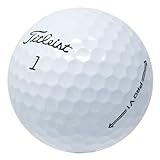


Recycled vs. Refinished vs. Refinished-Repainted: The Difference That Matters
Not all used golf balls are processed the same way, and the terminology determines performance more than the grade does. Understanding these three categories will save you more money and strokes than any grading label.
1. Recycled (Also Called Used or Reclaimed)
This is what you want. Recycled balls are found on courses, lakes, and out-of-bounds areas, then cleaned, sorted, and graded without altering the cover or paint. The original factory finish, dimple edges, and clear coat remain intact. Performance is virtually identical to a new ball of the same model, except for minor cosmetic blemishes if any.
2. Refinished
Refinished balls are also reclaimed, but then sandblasted or chemically stripped and recoated with a new clear coat and paint to look new. The process often fills in dimples slightly, softens dimple edges, and adds a uniform but thicker cover layer. Expect inconsistent flight, 3-7% loss in distance, and significantly reduced greenside spin because the urethane cover – the most expensive part of a premium ball – is effectively gone, replaced by generic paint.
3. Re-painted / Coated Range Balls and Counterfeits
The lowest tier. These are refinished balls with an additional heavy paint layer to hide severe cart path scarring, discoloration, or to add a false logo. Some are also refinished range balls (often with a faded stripe or “PRACTICE” marking buffed off) resold as premium balls. They feel slick, look overly glossy, and often have uneven dimples or logos that smear with acetone.
Used Golf Ball Grades Explained
There is no universal industry standard, but most major sellers in 2026 use a 3- to 5-tier system based on cosmetic condition. Here is how they typically map to each other and what you actually get:
| Grade | Also Called | Cosmetic Condition | Cover & Performance | Typical Cost Per Dozen (2026 Range) |
|---|---|---|---|---|
| Mint / AAAA / 5A | Pearl Grade, Pristine | Looks new to the eye. No scuffs, maybe light player pen marks removed. Retains factory shine. | Unaltered cover, no impact on flight or spin. Indistinguishable from new in play. | $28 – $42 for premium urethane models (e.g., Titleist Pro V1, TaylorMade TP5) |
| Near Mint / AAA / 4A | Excellent | Minor blemishes: light scuffs, slight discoloration. No cuts or deep abrasion. | Unaltered cover. No measurable performance loss for 95% of players. | $22 – $32 for premium models |
| Good / AA / 3A | Standard, Practice Quality | Visible cart-path scuffs, faded paint, small discolorations. No major cuts. | Minor surface scuffs. Possible 1-2% spin variation, no distance loss if not refinished. | $16 – $24 for premium models |
| Below Standard / A / 2A | Value, Hit-Away | Heavy scuffs, yellowing, possible small cuts or cover peeling. | Compromised cover. Inconsistent spin and durability. Good only for water holes or shagging. | $10 – $16 for premium models |
| Refinished (Any Grade) | Re-coated, Refurbished | Looks artificially new, high-gloss, almost too perfect with thick paint filling dimples. | Recoated cover. Loses 5-15 yards with driver and up to 30% wedge spin vs. original. | $14 – $22 for premium models – avoid even at this price |
Key takeaway: A Near Mint recycled ball will always outperform a Mint refinished ball, even though the refinished one looks better. Always confirm the listing says “recycled” or “used – not refinished” before buying.
How Much Do You Actually Save? Cost Per Ball Calculation
New premium urethane balls like the Titleist Pro V1/Pro V1x, Callaway Chrome Tour, TaylorMade TP5/TP5x, and Bridgestone Tour B XS retail for $50-$55 per dozen in 2026. Here is the real value on a per-ball basis when buying recycled:
To calculate your true cost per round, use this formula: (Price Per Dozen / 12) x Average Balls Lost Per Round = Cost of Balls Per Round
- New Pro V1 at $54/dozen = $4.50 per ball. If you lose 3 balls per round, that’s $13.50 per round in balls alone.
- Recycled Mint Pro V1 at $36/dozen = $3.00 per ball. Same 3 balls lost = $9.00 per round. You save $4.50 per round, or $90 over 20 rounds.
- Recycled Near Mint Pro V1 at $26/dozen = $2.17 per ball. Same 3 balls lost = $6.51 per round. You save $6.99 per round, or $139.80 over 20 rounds.
- New budget ionomer ball (e.g., Titleist TruFeel, Callaway Supersoft, Srixon Soft Feel) at $22-$28/dozen = $1.83 – $2.33 per ball. At this price, buying used premium balls in Good condition ($1.33-$2.00 per ball) is often cheaper than a new budget ball and gives you urethane performance.
For high-handicappers losing 4-6 balls per round, the savings compound quickly. For low-handicappers who lose less than one ball per round, the per-round saving is smaller, so the playability and consistency of Mint or Near Mint matters more than the absolute lowest price.
Decision Matrix: Which Grade Should You Buy?
Choose based on your situation, not just your budget:
| Your Situation | Best Choice | Why |
|---|---|---|
| Low handicap (0-8), tournament or handicap posting | Recycled Mint 5A (premium urethane) | Maximum consistency in spin and distance. You need identical performance ball-to-ball for scoring. |
| Mid handicap (9-18), playing weekly | Recycled Near Mint 4A (premium urethane) | Best value sweet spot. Imperceptible performance difference from Mint for most players, 20-30% cheaper. |
| High handicap (18+), losing 3+ balls per round | Recycled Good 3A (premium) or Near Mint mid-tier urethane | Lowest cost per loss without buying refinished junk. You won’t notice light scuffs but you will notice saving $20 per dozen. |
| Beginner, practice, simulator, or water-heavy course | Recycled Good 3A or Value Mix (various models) | Volume over perfection. Avoid refinished – even for practice, bad dimples build bad swing feedback. |
| Want premium performance on a budget ball price | Recycled Near Mint from previous generation (e.g., 2021-2023 Pro V1, 2022 Chrome Soft) | One generation old premium recycled balls in Near Mint often cost $18-$24/dozen and outperform new ionomer balls costing more. |
How to Spot Repainted and Low-Quality Refinished Balls
Sellers don’t always disclose refinishing clearly. Use these checks when your order arrives:
Visual and Touch Inspection
- Overly glossy, plastic-like shine: Factory urethane has a soft satin clear coat. Refinished balls look wet, like nail polish, and feel slightly tacky or overly smooth.
- Dimples look shallow or filled: Run your fingernail across the dimples. Factory edges are sharp and defined. Refinished paint pools in the bottom of dimples and rounds the edges.
- Logo and text quality: Original logos are crisp and slightly raised. Repainted logos are often blurry, thick, or slightly off-center. Dab a cotton swab with a tiny amount of rubbing alcohol on the logo – factory ink stays, cheap repaint smears immediately.
- Color is too white or uniform: Recycled balls have slight shade variations batch-to-batch. A dozen refinished balls will be identical, stark white with no natural yellowing variation.
- Seam and alignment marks: Check the equator. Refinishing often leaves a faint ridge or drip line where the coating was sprayed.
Performance Red Flags
- Wedge spin disappears: If a Pro V1 or TP5 won’t check up on the green like it should, the soft urethane cover has been replaced by hard enamel.
- Cover peels in sheets: A real urethane cover scuffs but stays bonded. A refinished coating flakes or peels like paint after a wedge shot.
- Inconsistent flight in the same dozen: One ball flies straight, the next floats right – a sign of uneven coating thickness.
Durability and Ownership Realities
Used balls have a shorter remaining lifespan than new ones, even in high grades. Know what wears first to avoid wasting money.
- The cover goes first: Urethane covers on premium balls are thin for spin. A recycled ball already has 1-18 holes of play on it. Expect 20-40 more holes before wedge grooves start shearing the cover, versus 50+ for a new ball. Ionomer-covered distance balls last longer but spin less from the start.
- Water balls are risky: Balls submerged for 6+ months can absorb water through micro-cracks, gaining 0.1-0.3 grams and losing 4-6 yards. Reputable sellers discard lake balls that have been underwater long-term and source primarily from wooded and rough areas. If balls arrive with a musty smell or stained, pitted covers, they were likely long-submerged.
- Do not clean with harsh chemicals: Soapy warm water and a microfiber towel is enough. Bleach, acetone, or Magic Eraser-type abrasives strip the clear coat and make yellowing worse.
- Store correctly: Heat is the enemy. Don’t leave used balls in a trunk at 140°F all summer. Store dozen boxes indoors at room temperature. Used balls stored properly will maintain performance for 2-3 years, but refinished coatings crack faster in heat.
- Common buying mistake: Buying a 48- or 96-ball bulk bag of “Mint” mix without model separation. You’ll get a blend of premium and low-end distance balls from 10 years ago. Pay slightly more for model-specific dozens (e.g., “Pro V1 2022-2024 Near Mint”) for consistency.
What to Avoid When Buying Used Golf Balls
- Any listing that says “refinished,” “re-coated,” “refurbished,” or “like new – recoated” regardless of grade AAAAA claims. No grading letter makes a refinished ball perform like a recycled one.
- Price too good to be true: In 2026, a dozen recycled Mint Pro V1s for under $25 is almost certainly refinished or counterfeit. Check market ranges first.
- No photo of the actual product or vague sourcing: Reputable sellers show close-ups of dimples and sort by year/model. Avoid sellers who only use stock photos of new boxes.
- Buying by color or novelty finish: Used colored, matte-finish (like Volvik Vivid), or high-visibility yellow balls fade faster and refinished colored balls are even harder to detect. If you want color, buy recycled Near Mint from a seller who specializes in them and guarantees no refinishing.
Frequently Asked Questions
Are used golf balls legal for handicaps and tournaments?
Yes, recycled balls are legal as long as the model is on the USGA Conforming Golf Ball List and has not been refinished. Refinished balls are non-conforming because the cover has been altered from the original manufacturer spec, so they are not legal for handicap posting or competition.
Do lake balls perform worse?
Balls recovered quickly (days to weeks) perform normally. Balls that sat underwater for months or years can waterlog and lose distance. This is why buying from a high-volume sorter who rejects long-submerged balls matters more than buying from a small, unsorted eBay lot.
Is it better to buy used premium balls or new budget balls?
For most players losing fewer than 3 balls per round, a recycled Near Mint premium urethane ball (Pro V1, Chrome Tour, TP5) offers better greenside spin and feel than a new two-piece ionomer budget ball at a similar or lower price per dozen. If you prioritize durability and never want to worry about scuffs, a new budget ball is more consistent.