Key takeaways
- Recovery: Divers or course staff collect balls daily or weekly. Balls submerged in water for more than 3-4 months begin to absorb moisture, which can degrade the core over time.
- Sorting by Model: Balls are sorted using optical scanners and by hand. Titleist Pro V1/Pro V1x, Callaway Chrome Tour, TaylorMade TP5, Bridgestone Tour B, and Srixon Z-Star are separated from ionomer distance balls like Callaway Supersoft or Titleist TruFeel because their value and construction differ.
- Cleaning: Recycled balls go through industrial washers with warm water, detergent, and UV sanitization. No harsh chemicals. Refinished/refurbished balls go through chemical baths and tumblers to strip the original clear coat.
- Grading: This is where sellers differ, but the standard is consistent:
- Mint / Grade A (5A): Like new, no scuffs, bright white, only player markings.
- Near Mint / Grade A- (4A): Minor fading or light scuffs visible only up close.
- Good / Grade B (3A): Visible scuffs, discoloration, but no cuts through cover.
- Practice / Grade C: Heavy scuffs, yellowing, or cart-path marks. Usable for hitting nets only.
What's inside
- What “Lost Golf Balls” Actually Means
- Recycled vs. Refinished vs. Refurbished: The Three Grades
- How Lost Balls Are Cleaned and Graded
- Performance Trade-Offs: Do You Lose Distance?
- Price-Per-Ball Breakdown: When Recycled Saves You Real Money
- Decision Matrix: Which Grade Should You Buy?
- Durability and Ownership Realities
- Final Verdict: Are They Worth It?
- Frequently Asked Questions
Lost golf balls that are sold as recycled are absolutely worth buying for practice, casual play, and high-loss situations, but refinished or refurbished balls are not worth it if you care about consistent distance, spin, and feel.
- What “Lost Golf Balls” Actually Means
- Recycled vs. Refinished vs. Refurbished: The Three Grades
- How Lost Balls Are Cleaned and Graded
- Performance Trade-Offs: Do You Lose Distance?
- Price-Per-Ball Breakdown: When Recycled Saves You Real Money
- Decision Matrix: Which Grade Should You Buy?
- Durability and Ownership Realities
- Final Verdict: Are They Worth It?
- Frequently Asked Questions
As an Amazon Associate we earn from qualifying purchases at no extra cost to you.



What “Lost Golf Balls” Actually Means
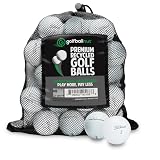
Retailers don’t find balls in a warehouse. They recover them from water hazards, woods, and rough on golf courses, then sort, clean, and grade them for resale. The source determines everything about quality. Balls recovered quickly from dry rough are very different from those that sat in a pond for six months. Reputable sellers in 2026 retrieve balls through course contracts and dive teams, then process millions per year in industrial facilities. The grades they assign tell you how much original performance is left.
Recycled vs. Refinished vs. Refurbished: The Three Grades
These terms are not interchangeable. They describe completely different processes and the difference shows up in flight and feel.
1. Recycled (Also Called Recycled / Used)
This is the least processed and highest performing option among lost balls. The ball is found, sorted by model and condition, then cleaned with soap, water, and light abrasion. No paint, no clear coat, no cover repair. What you get is exactly what was lost, just cleaned. Surface blemishes like light scuffs, faded logos, or minor discoloration may remain, but the original cover, dimple pattern, and core are untouched.
2. Refinished
A refinished ball is sandblasted or chemically stripped, then repainted and re-clear-coated to look like new. The original cover is altered. A new coat of paint and clear coat is applied, and logos are often re-stamped. They look glossy and white, but the added layers add weight and can slightly fill dimples, which affects aerodynamics. Expect a slightly harder feel and less consistent spin.
3. Refurbished
This is the lowest tier and the most heavily altered. Refurbished is essentially a refinished ball that needed more repair. Deep scuffs or cuts are sanded down, heavy paint is applied to hide damage, and the ball is re-coated. These are often sold with generic labeling like “refurbished Pro V1 style.” They are the cheapest for a reason: original specifications for weight, roundness, and cover hardness are no longer reliable.
| Feature | New Ball | Recycled (Grade A / Mint) | Refinished | Refurbished |
|---|---|---|---|---|
| Processing | None | Washed, sanitized, sorted | Stripped, repainted, re-coated | Sanded, heavily repainted, re-coated |
| Cover & Dimples | Factory urethane or ionomer, 100% intact | Original cover, intact | Original cover + 0.1-0.3g paint/clear coat | Original cover heavily altered |
| Weight (Conforms to 45.93g max) | 45.1 – 45.6g | 45.1 – 45.7g | 45.4 – 46.1g (can exceed conforming limit) | 45.5 – 46.5g (often non-conforming) |
| Visual Appearance | Perfect | Minor scuffs, logo may be faded | Looks new, glossy, logo re-stamped | Looks new but paint can be thick/uneven |
| Performance vs. New (Robot Test Avg.) | Baseline | -0.5% to -2% distance | -3% to -6% distance, -10% to -15% wedge spin | -5% to -10% distance, unpredictable spin |
| Typical Price Per Ball (2026 Range) | $2.50 – $5.50 | $0.65 – $2.20 | $0.50 – $1.40 | $0.35 – $0.90 |
| Best For | Tournaments, handicaps, fitting | Practice, casual rounds, water courses | Novelty/shag balls only | Shag / backyard practice only |
How Lost Balls Are Cleaned and Graded
Understanding the process explains why grades matter so much. A professional operation follows these steps:
- Recovery: Divers or course staff collect balls daily or weekly. Balls submerged in water for more than 3-4 months begin to absorb moisture, which can degrade the core over time.
- Sorting by Model: Balls are sorted using optical scanners and by hand. Titleist Pro V1/Pro V1x, Callaway Chrome Tour, TaylorMade TP5, Bridgestone Tour B, and Srixon Z-Star are separated from ionomer distance balls like Callaway Supersoft or Titleist TruFeel because their value and construction differ.
- Cleaning: Recycled balls go through industrial washers with warm water, detergent, and UV sanitization. No harsh chemicals. Refinished/refurbished balls go through chemical baths and tumblers to strip the original clear coat.
- Grading: This is where sellers differ, but the standard is consistent:
- Mint / Grade A (5A): Like new, no scuffs, bright white, only player markings.
- Near Mint / Grade A- (4A): Minor fading or light scuffs visible only up close.
- Good / Grade B (3A): Visible scuffs, discoloration, but no cuts through cover.
- Practice / Grade C: Heavy scuffs, yellowing, or cart-path marks. Usable for hitting nets only.
- Inspection: Balls with cuts, cracks, or out-of-round shapes are discarded. Good sellers also reject any ball with water damage bloating.
The key takeaway: A recycled Mint Titleist Pro V1 is still a Pro V1. A refinished Pro V1 is a Pro V1 core with a new paint job that changes how it flies.
Performance Trade-Offs: Do You Lose Distance?
For recycled balls in Mint or Near Mint condition that have not sat in water for years, independent robot testing consistently shows almost no measurable difference versus new. The loss is typically within manufacturing tolerance. Where you do see a gap is with refinished and refurbished balls. Added paint adds weight beyond the USGA limit of 45.93 grams, and filling the dimples even slightly increases drag and reduces lift. For a 250-yard driver, a 4% loss is 10 yards. On wedge shots, refinished urethane covers lose the tackiness that creates spin, so balls that should check up will release 6-10 feet farther.
Water absorption is the other hidden factor. A ball submerged for 12+ months can gain 0.2-0.5 grams of water weight and lose core resilience. That is why reputable recycled sellers now advertise “not water-harvested for more than 90 days” or similar – it matters. A pond ball from last week plays like new. A pond ball from 2019 does not.
Price-Per-Ball Breakdown: When Recycled Saves You Real Money
Recycled ball value depends entirely on how many balls you lose.
Worked Calculation – The 12-Ball Comparison:
Take a premium urethane ball like the Titleist Pro V1, which retails for about $55 per dozen in 2026 ($4.58 per ball).
- Recycled Mint Pro V1: ~$22-$26 per dozen ($1.83 – $2.16 per ball)
- Recycled Good (3A) Pro V1: ~$14-$18 per dozen ($1.16 – $1.50 per ball)
If you lose 3 balls per round and play twice a month (24 rounds/year):
New balls: 72 balls lost x $4.58 = $329.76 per year
Recycled Mint: 72 balls lost x $2.00 = $144.00 per year
Annual savings: ~$185.76 with no meaningful performance loss if you stay with Mint recycled.
If you lose 6 balls per round on a tight or water-heavy course, the savings more than doubles. For two-piece distance balls like the Callaway Supersoft or Srixon Soft Feel, the math is less dramatic (New ~$25/dozen vs Recycled Mint ~$12/dozen), but you still save 40-50% per ball.
Decision Matrix: Which Grade Should You Buy?
Don’t buy by price alone. Match the grade to your situation.
| Your Situation | Best Choice | Why |
|---|---|---|
| High handicapper, lose 4+ balls/round, play for fun | Recycled Good (3A) ionomer balls | Cheapest conforming option, distance matters more than wedge spin, losing them doesn’t hurt |
| Mid handicapper, want premium feel on a budget | Recycled Mint (5A) urethane balls | 90-98% of new performance at 40-50% cost, best value for regular play |
| Practicing seriously / lessons / driving range | Recycled Near Mint (4A) of your gamer ball | Same model as you play in competition, slight cosmetic flaws don’t matter for practice |
| Tournament, handicap round, or club fitting | New balls only | Eliminates any variable in distance, spin, and consistency |
| Shag balls, backyard net, junior golfer | Refurbished or Practice (C) grade | Appearance doesn’t matter, absolute lowest cost per swing |
Durability and Ownership Realities
Lost balls are already used, so their remaining lifespan is shorter. Here’s what to expect:
- What wears first: The cover. Urethane covers on Pro V1, TP5, and Chrome Tour will show wedge grooves and scuffs after 1-2 rounds anyway, whether new or recycled. Ionomer covers last longer but already feel firmer.
- What doesn’t wear: The core doesn’t degrade from normal play, but prolonged water submersion before recovery is the real durability killer. Ask sellers if balls are “pond balls” or land-harvested.
- Cleaning at home: Soak recycled balls in warm soapy water for 10 minutes and wipe with a microfiber towel. Never use bleach, acetone, or abrasive pads – they damage the cover and dimples just like the refinishing process does.
- Common mistakes to avoid: Don’t buy refinished balls expecting tour-level spin, don’t mix refurbished balls into your tournament bag (they may be non-conforming for weight), and don’t store any balls in extreme heat or cold – trunks and garages accelerate core breakdown. If a recycled ball has a visible cut through the white cover to the black or colored layer underneath, throw it in the shag bag.
Final Verdict: Are They Worth It?
Recycled balls in Mint or Near Mint grades are the smartest buy in golf for anyone not playing tournament golf. You get a real premium ball with its original engineering intact for less than half price. Refinished and refurbished balls may look whiter, but that shine costs you the very performance you paid for. If the price gap between a recycled Mint and a refinished ball is only 20 cents, always take the recycled ball.
For the best experience, buy recycled Mint in the exact model you would buy new, and save the new boxes for when every shot counts.
Frequently Asked Questions
Are recycled golf balls legal for handicap and tournament play?
Yes, if they are true recycled balls with an unaltered cover. They were conforming when new and remain conforming. Refinished and refurbished balls that have been repainted often exceed weight limits or have altered dimples and are technically non-conforming, so avoid them for any USGA-sanctioned event.
Do recovered water balls perform worse?
Briefly submerged balls (days to a few weeks) show no difference. Balls submerged for many months can absorb water, gain weight, and lose 5-12 yards of distance due to reduced core compression. This is why grade and seller transparency matter more than just the model name.
How can you spot a refinished ball?
Look for an overly glossy, almost plastic shine, slightly thick or blurry logos, paint that chips easily on a wedge groove, and dimples that look shallow or partially filled. True recycled balls have a slightly matte, factory-like finish with minor imperfections.