Key takeaways
- Strength: the carrying strap makes it simple to move between rooms.
- Strength: it is positioned for mixed use, from yoga flows to floor workouts.
- Limit: the title cuts off before listing a size or thickness, so check the size chart on the listing.
A yoga mat has one job that is easy to overlook until it fails: staying put under your palms while your knees and spine stay comfortable on a hard floor. The real decision behind “best yoga mats” is a trade between cushion and stability. A thick mat feels kind during kneeling poses and floor core work, but it can wobble in standing balances. A thin mat feels planted yet offers little padding on tile or hardwood.
This guide is for people setting up a home practice, a Pilates corner or a stretching spot next to the weights, not for hot-studio specialists who need a towel-grade surface. We worked from the listing details of seven mats, covering thickness, length, foam type and carry strap, so you can match a mat to your floor and your routine instead of buying on color alone.
Quick Picks
| Product | Best for | Key spec from the listing |
|---|---|---|
| Eco-friendly non-slip mat (unbranded listing) | Everyday yoga and Pilates | Non-slip, eco-friendly, carrying strap |
| Gaiam Essentials Thick | Cushion on hard floors | 72″ x 24″, 10mm thick, Easy-Cinch strap |
| Basics Extra Thick | Value-minded home workouts | 74″ x 24″ x 0.5″, non-slip, strap |
| Circuit Fitness by Marcy | Lighter, easy-to-carry mat | 6mm (1/4″) thick, carry strap |
| CAP 1/2″ Thick | Kneeling poses and core work | 1/2″ latex-free NBR foam, strap |
| Retrospec Solana 1/2″ | Pilates and general floor work | 72″ x 24″ x 1/2″, padded, strap |
| Retrospec Solana Extra Thick 1″ | Maximum floor padding | 72″ x 24″ x 1″, non-slip, strap |
How to Choose
Thickness: match it to your floor and your poses
Mats on this list run from 6mm (about 1/4 inch) to 1 inch. Around 6mm is a common travel and studio thickness: stable for standing poses, modest padding. Around 10mm to 12.7mm (1/2 inch) suits carpet-free floors and kneeling work. A full 1 inch is a floor-comfort choice for stretching and abdominal work, but balance poses such as tree or warrior III can feel unsteady because your foot sinks into the foam. If most of your practice is standing flow, stay at or below 1/2 inch.
Length and width: measure yourself
A good rule is a mat at least as long as your height, so your head and heels do not land on bare floor in a lying pose. The listings here show 72 inches and 74 inches by 24 inches. If you are over 6 feet tall, the 74-inch option gives a little extra margin. Width is nearly always 24 inches; if you need more room for wide-legged poses, check whether the listing offers a wider size before buying.
Material and grip
Most mats in this range are foam: NBR (nitrile butadiene rubber) is soft and thick, while other blends lean toward a firmer surface. Look for the words “latex-free” if you have a latex sensitivity, and expect a smooth foam face to feel slick once palms get sweaty. Try the grip at home by doing a few downward dogs: if your hands creep forward, wipe the surface down and keep a small towel nearby. Bare feet on a clean, dry mat grip better than any marketing claim. New foam can also feel slick for the first few sessions, so give it a week of regular use before judging the surface.
Strap, weight and storage
Every pick here ships with a carry strap or carrier, which matters more than it sounds if you roll the mat away after each session. Thicker mats take more space rolled up, so measure your closet or car trunk before choosing a 1-inch model. Budget-tier foam tends to flake at the edges or develop a persistent crease when stored folded, so keep the roll loose and flat. Ignore claims about “pro” status and focus on thickness, size and surface texture instead. Also decide where the mat will live: a roll standing in a corner is used more often than one buried in a closet, so a strap that keeps the roll tight makes a real difference to how often you unroll it.
The 7 Best Options
Eco-Friendly Non-Slip Yoga Mat (unbranded listing)
As an Amazon Associate we earn from qualifying purchases at no extra cost to you.

This listing leans on a general-purpose pitch: a non-slip, eco-friendly exercise mat with a carrying strap, framed for yoga, Pilates and floor exercises at home. It suits a beginner who wants one mat for several routines without hunting through thickness charts.
- Strength: the carrying strap makes it simple to move between rooms.
- Strength: it is positioned for mixed use, from yoga flows to floor workouts.
- Limit: the title cuts off before listing a size or thickness, so check the size chart on the listing.
Skip it if you need a confirmed length and thickness before ordering, since that detail is not visible in the title. It works best as a general-purpose starter once you have checked the size chart.
Gaiam Essentials Thick Yoga Mat
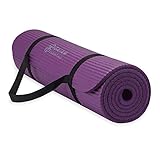
A familiar name in entry-level yoga gear, this model is for people who want noticeable cushion without going to a full inch of foam. At 10mm, it sits in the sweet spot for hard-floor comfort while remaining workable for standing poses.
- Strength: 72″ x 24″ with 2/5 inch (10mm) thickness gives a solid mid-thick feel.
- Strength: the Easy-Cinch carrier strap keeps the roll tidy.
- Limit: the listing shows a purple finish, so color choice may be narrower than other models.
Skip it if you are taller than about 6 feet, because 72 inches leaves little extra room for lying poses. Shorter users get the most from it on a hard floor.
Basics 1/2 Inch Extra Thick Yoga Mat

The house-brand option for buyers who want a long, cushioned mat without paying for a name. The listing highlights a non-slip surface and cushioned support, aimed at home workouts and general fitness rather than a specific yoga style.
- Strength: 74″ x 24″ x 0.5″ is slightly longer than many 72-inch rivals.
- Strength: it includes a carrying strap for transport.
- Limit: half-inch foam may feel soft for balance-heavy flows.
Skip it if your practice is mostly standing balance work, where a thinner and firmer mat usually feels steadier.
Circuit Fitness by Marcy Non-Slip Exercise Mat

This is the thinnest option here, at 6mm (1/4 inch), and it is the one to look at if you roll a mat into a gym bag. A slim profile is easier to carry and keeps standing poses stable, with the trade-off of less padding underfoot.
- Strength: 6mm thickness keeps your hands and feet close to the floor for stability.
- Strength: a portable carry strap is included.
- Limit: the listing does not state length or width, so confirm dimensions on the size chart.
Skip it if you plan to kneel often on tile or hardwood, where thin foam tends to feel harsh on the knees.
CAP 1/2″ Thick Yoga Mat

CAP markets this mat toward Pilates, stretching and core training, with a half-inch NBR foam build. It is a practical fit for floor-based strength sessions where you spend a lot of time on your knees and forearms.
- Strength: latex-free NBR foam, which suits buyers avoiding latex.
- Strength: 1/2 inch of cushion for kneeling and core exercises, plus a strap.
- Limit: black finish only on this listing, and dimensions are not visible in the title.
Skip it if you want a firmer, thinner feel for fast vinyasa flows. It is a better match for slower, floor-based sessions.
Retrospec Solana Thick Yoga Mat 1/2″

The Solana is built for general floor exercise: Pilates, home workouts and gentle yoga. It is the mid-point of Retrospec’s two Solana listings, offering half-inch padding in a standard 72-inch length.
- Strength: 72″ x 24″ x 1/2″ is a widely usable size for most adults.
- Strength: described as extra cushioned and padded, with a strap included.
- Limit: a 72-inch length can feel short for taller users.
Skip it if you are tall or if you prefer a very low-profile mat for balance work.
Retrospec Solana Extra Thick Yoga Mat 1″

At a full inch, this is the cushiest mat on the list, best for stretching, mobility drills and floor core work on hard surfaces. It also helps people who find standard mats too firm under the knees and hips.
- Strength: 1 inch of padding, the most of any mat in this guide.
- Strength: non-slip surface with a carrying strap.
- Limit: thick foam can make standing balance poses feel unstable and takes up more storage room when rolled.
Skip it if you do standing yoga flows or need a mat that packs small for travel.
Which One Fits Your Situation
You practice on hardwood or tile
Go thick. The Gaiam Essentials Thick (10mm), the CAP 1/2″ and the Retrospec Solana 1/2″ all offer cushion without total instability. If knees are your main concern during lunges and cat-cow, the Retrospec Solana Extra Thick 1″ gives the most padding.
You carry your mat to class or the gym
The Circuit Fitness by Marcy mat at 6mm rolls tighter than the half-inch models, and its strap makes shoulder carrying easy. If you want a little more cushion without much bulk, the Gaiam Essentials Thick is a reasonable step up.
You are taller than 6 feet
Start with the Basics 1/2 Inch Extra Thick, listed at 74 inches. The extra two inches over the 72-inch models can keep your feet or head from falling off the end in lying poses.
You are new and unsure
Pick a mid-thickness mat such as the Gaiam Essentials Thick or the Retrospec Solana 1/2″. Both sit between flimsy and overly squishy, and you can move up or down in thickness once you know your habits.
Common Mistakes
- Choosing the thickest mat for standing yoga, then fighting wobble in every balance pose.
- Skipping the length check and ending up with feet hanging off the end in lying poses.
- Assuming “non-slip” means grip when palms are sweaty; a clean surface and a small towel matter more.
- Storing a mat folded for weeks, which creates creases that never fully flatten.
- Buying on color or brand name without reading the thickness and dimensions on the listing.
Frequently Asked Questions
What thickness is best for a beginner?
Half an inch (about 10mm to 12.7mm) is a forgiving starting point. It cushions your knees and wrists but is still stable enough for basic standing poses. Move thinner if you feel unstable or thicker if floors bother you.
Is a thicker mat always better for joints?
No. Extra thickness cushions pressure points but reduces your connection to the floor, so balance poses get harder. Match the thickness to what you actually do most often.
How do I clean a foam yoga mat?
Wipe it with a damp cloth and mild soap, then let it air dry flat before rolling. Avoid harsh cleaners and direct sun for long periods, since both can make foam surfaces degrade faster.
Can I use a yoga mat for home workouts that are not yoga?
Yes. Planks, sit-ups, stretching and bodyweight circuits all work on a foam mat. For heavy jumping or weighted floor work, a denser mat or tile set made for gym use is a better match, as mats this soft compress under load.