Key takeaways
- Strength: 123 sports modes cover most hobbies
- Strength: IP68 rating handles sweat and rain
- Limit: a long feature list does not mean polished app support, so read the listing
The first thing to decide is whether you want a tracker or a smartwatch. A fitness tracker is lighter, usually lasts longer between charges, and focuses on steps, heart rate, sleep, and workout logging. A smartwatch adds GPS maps, bigger displays, and apps. If your goal is nudging yourself to walk more, sleep on a schedule, and log your gym sessions, a tracker covers it without the bulk of a full watch.
This guide is for first-time buyers and returning users who want a wrist tracker for everyday movement, sleep patterns, and workouts. The eight models below range from simple budget bands to a GPS sports watch from Garmin and two Google devices. Specs come from the listing titles, so confirm band sizes, app support, and battery life on the product page before buying in 2026. Readings are for general fitness awareness only, not medical use.
Quick Picks
| Product | Best for | Key spec from the title |
|---|---|---|
| Zeacool Fitness Tracker | Sport variety on a budget | 123 sports modes, IP68, 24/7 heart rate |
| Fitbit Inspire 3 | Simple, app-backed tracking | Sleep tracking, 24/7 heart rate, small and large bands |
| AMOLED Touch Fitness Tracker | Brighter screen | 1.10 inch AMOLED touch screen |
| Fitbit Air | Screen-free wearing | Screenless tracker, up to 7 days battery |
| Slim Pedometer Fitness Watch | Slim wrist profile | Step, distance, calories, IP68 |
| Heart Rate Step Counter Tracker | Basic daily counting | Pedometer, sleep monitor, IP68 |
| Smart Fitness Watch (IP68) | All-in-one budget watch | 24/7 heart rate, sleep tracker, step counter |
| Garmin vivoactive 5 | Serious training | GPS, 42mm, Body Battery, Sleep Coach |
How to Choose
Decide what you will really check
Most people use three things daily: steps, sleep, and workout time. Anything beyond that, such as dozens of sports modes, only matters if you will open the app to use it. Count how many of those modes you could actually name, and ignore the rest. A tracker you wear every day beats a feature-packed one that stays in a drawer. Comfort counts too: a soft strap you forget about will log far more nights of sleep data than a stiff one you take off at bedtime.
Screen type and size
An AMOLED display is brighter and easier to read outdoors than a basic LCD. A 1.10 inch screen is large enough for a few lines of text but still fits slim wrists. A screenless band is lightest and best for sleep wear. Check the listing for case size, since small wrists suit narrower bodies and large wrists need longer straps.
Water rating and battery
IP68 means the device resists dust and water immersion, which handles sweat, rain, and handwashing, but it is not a swimming promise unless the listing says so. For battery, look for at least five to seven days between charges on a tracker. GPS watches drain faster, so expect more frequent charging if you track outdoor runs.
Accuracy, app support, and where budget models cut corners
Wrist heart rate is an estimate and can drift during fast interval work or with loose straps. Wear the band snug, a finger width above the wrist bone. Budget models often use weaker apps, fewer updates, and looser step counting when you push a stroller or carry bags. Treat wellness readings as trends, not diagnoses, and ask a doctor or physical therapist about pain, dizziness, or any medical condition.
The 8 Best Options
Zeacool Fitness Tracker
As an Amazon Associate we earn from qualifying purchases at no extra cost to you.

Zeacool leans on variety: the title lists 123 sports modes, 24/7 heart rate, a sleep monitor, calorie and step counting, and an IP68 waterproof rating. It targets shoppers who want a long feature list in the budget tier, such as casual runners, walkers, and gym-goers who like switching activities and seeing every session logged. Treat the mode count as a menu rather than a promise, since most people settle on three or four activities.
- Strength: 123 sports modes cover most hobbies
- Strength: IP68 rating handles sweat and rain
- Limit: a long feature list does not mean polished app support, so read the listing
Skip it if you want a big-name ecosystem with long-term software updates.
Google Fitbit Inspire 3

Fitbit’s Inspire 3 comes in Midnight Zen/Black with small and large bands included, which helps fit. The title lists stress management, sleep tracking, 24/7 heart rate, and a three-month Google Health Premium offer. It is a slim, mid-range tracker for beginners who want a clear app and gentle daily guidance without a bulky watch face. Check the size chart on the listing, because the two bands are meant to cover a wider range of wrists.
- Strength: both band sizes included
- Strength: sleep tracking and 24/7 heart rate with an established app
- Limit: the premium trial is temporary, and some features may sit behind a subscription
Skip it if you want built-in GPS or a large color display.
AMOLED Touch Fitness Tracker

The headline here is a 1.10 inch AMOLED touch screen, rare in a budget tracker. The title lists 24/7 heart rate, sleep monitoring, a step counter, and waterproofing. A brighter screen helps outdoors and during workouts, when glancing down at a dim display gets frustrating. The brand is not visible in the title, so check the listing for app name and support. Touch screens can also misfire with wet fingers, so try the controls after a rinse.
- Strength: AMOLED touch display for readability
- Strength: heart rate, sleep, and step tracking in one band
- Limit: brand and app details are not in the title
Skip it if you want a recognizable app and a track record of software updates.
Google Fitbit Air

Fitbit Air drops the screen entirely. The title calls it a screenless activity tracker in Obsidian with fitness, heart rate, and sleep tracking, personalized AI-powered coaching, and up to 7 days of battery. It suits people who find watches distracting, wear a tracker to bed, and prefer reading everything in the phone app. Without a display, buttons and notifications are minimal, so the app becomes your dashboard for sleep and activity trends.
- Strength: no screen means a light, low-distraction band
- Strength: up to 7 days of battery per the listing
- Limit: no display, so you need your phone for every reading
Skip it if you want to check steps or time on your wrist without a phone.
Slim Pedometer Fitness Watch
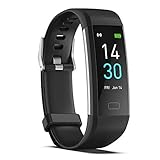
This slim-style watch counts steps, distance, and calories, with heart rate monitoring, a sleep monitor, a pedometer, and IP68 waterproofing. It is aimed at people who dislike chunky wrist gear and want something understated for an office and a walk. It is a budget-tier pick for basic daily tracking rather than serious training. Look at the strap material and clasp on the listing, since slim bands can rub during longer wear.
- Strength: slim design suits smaller wrists
- Strength: IP68 rating with core tracking features
- Limit: no GPS or advanced coaching in the title
Skip it if you plan to track outdoor runs with route maps.
Heart Rate Step Counter Tracker

A basic activity tracker listing a heart rate monitor, step counter, calorie counter, sleep monitor, pedometer, and IP68 rating. There is nothing flashy here, which is the point: it is meant for walkers and casual gym users who want daily totals and a sleep log without learning a complicated app or paying a high price. It is the sort of pick that rewards patience with the setup, so pair it with your phone before your first walk and set a daily step goal.
- Strength: covers steps, calories, heart rate, and sleep
- Strength: IP68 water resistance for daily wear
- Limit: the title names no brand, so check support and app quality
Skip it if you need a screen that stands out in bright sun.
Smart Fitness Watch (IP68)

Another budget smartwatch-style tracker, with 24/7 heart rate monitoring, a sleep tracker, a calorie and step counter, and IP68 waterproofing. The title also lists additional health-style readings. Treat those as rough wellness estimates only, since a budget wrist sensor is not a medical device. It suits shoppers comparing a lot of similar models on features alone. If you go this route, wear it for a week and see whether the daily totals feel believable before trusting any of the extras.
- Strength: all-day heart rate and sleep logging
- Strength: IP68 rating for sweat and rain
- Limit: extra readings are estimates, not clinical measurements
Skip it if you want guidance you can rely on for health decisions.
Garmin vivoactive 5

The premium pick, a 42mm GPS smartwatch in black with 24/7 health monitoring, built-in sports apps, a Sleep Coach, and Body Battery energy monitoring. It is meant for people who run, ride, or lift and want training structure plus recovery cues, with GPS built in so you can leave the phone at home. Its 42mm case suits average to smaller wrists, and the sports app list is far broader than anything a basic band offers.
- Strength: built-in GPS and sports apps
- Strength: Sleep Coach and Body Battery for recovery trends
- Limit: it costs more than every other pick here and needs regular charging
Skip it if you only want step counts and a sleep log.
Which One Fits Your Situation
You want to walk more and sleep better
The Fitbit Inspire 3 and Fitbit Air are simple and sleep-friendly. Choose the Inspire 3 if you want a screen, or the Air if you prefer a screenless band.
You are on a tight budget
Zeacool, the Slim Pedometer Fitness Watch, and the Heart Rate Step Counter Tracker offer core tracking in the budget tier. Zeacool has the widest list of sports modes.
You train hard and want GPS
The Garmin vivoactive 5 is the clear choice for outdoor runs and structured training, with recovery insights built in.
You want a bright screen without a big spend
The AMOLED Touch Fitness Tracker and the Smart Fitness Watch deliver a larger display for a modest price. Verify the app and support before buying.
Common Mistakes
- Buying on the longest feature list instead of the three things you will check daily.
- Wearing the band loose, then blaming it for patchy heart rate readings.
- Treating wellness readings as medical results; ask a doctor about pain, dizziness, or health conditions.
- Ignoring band size, and the strap that does not fit your wrist.
- Skipping the app check, since a weak app wastes good hardware.
Frequently Asked Questions
Do I need a tracker with GPS?
Only if you run or ride outdoors and want maps without a phone. Otherwise a tracker that borrows your phone’s location is fine, and it usually saves you battery and money.
How accurate are step counts?
They are good for trends but can over- or under-count when your arms stay still, such as pushing a cart. Compare against a known walk to see how yours behaves.
Can I wear a tracker in the shower?
IP68 devices generally handle splashes and brief immersion, but soap and hot water can wear straps. Check the listing before swimming or hot showers.
Are budget trackers worth it?
For steps, sleep, and basic workouts, yes. Expect weaker apps and fewer updates than the well-known names, and read the return terms in case the band or app does not suit you.