
Key takeaways
- Measure chest circumference (and bust for women’s models) with a flexible tape measure, and compare to the maker’s size chart. Some vests also list torso length.
- Try the vest loaded with water and gear. An empty vest feels very different from a full one.
- The vest should be snug, not constricting. You should still breathe deeply and the pack should not bounce when you jog.
- Women’s-specific vests from Salomon, Ultimate Direction, Nathan and Osprey generally adjust for bust shape and use shorter harness lengths. Unisex or men’s models may suit runners with a broader chest.
- Adjust the sternum straps and side cords so that they do not rub on collarbones or ribs.
The best running hydration vest for most runners is a 5 to 12 litre vest with front soft-flask pockets, such as the Salomon Active Skin or ADV Skin, Nathan VaporAir or Pinnacle, or Ultimate Direction Race Vesta or Ultra Vest, with smaller packs suiting short trail runs and larger ones suiting ultras or mountain days with mandatory kit. Fit and bounce control matter more than capacity, so start with how far you run between refills and how much gear you must carry.
Our top picks
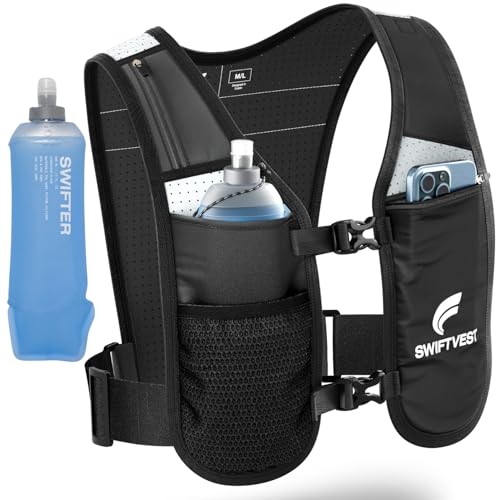


As an Amazon Associate we earn from qualifying purchases at no extra cost to you.
Running Hydration Vests at a Glance
| Vest (maker) | Best for | Stated features | Limits |
|---|---|---|---|
| Salomon Active Skin (around 8 L) and ADV Skin (12 L) | Trail running, races, long training runs | Close-fitting stretch fabric, front soft flasks, multiple pockets | Sizing is snug; sizing chart important |
| Nathan VaporAir / VaporHowe / Pinnacle | Road and trail runners wanting comfort and vents | Soft flasks or bladder options, breathable back, size options | Check chest and bust compatibility |
| Ultimate Direction Race Vesta / Ultra Vest | Racers and ultra runners | Women’s and men’s designs, front pockets, large capacity options | Capacity and bottle sizes vary by version |
| CamelBak Zephyr / Circuit | Runners who prefer a bladder reservoir | Reservoir-based designs with comfortable harness | Bladders need more cleaning |
| Osprey Duro / Dyna | Everyday trail runners wanting comfort | Stretch pockets, soft flasks, women’s Dyna fit | Check sizing for chest and torso length |
| Orange Mud HydraQuiver / Gear Vest | Runners who dislike chest straps | Two-strap backpack style with bottle holsters | Different feel; less secure on technical terrain |
| Decathlon Kiprun and similar budget vests | Beginners and budget buyers | Basic vest with flasks sometimes included | Simpler fit and fewer adjustments |
Models and capacities change from year to year, so read the maker’s page for the specific version. Independent outlets such as Outside Online, Runner’s World, Trail Runner Magazine, Gear Junkie and iRunFar publish vest roundups that describe fit and carrying comfort in detail.
Choose Capacity by Run Length
Up to 5 L (short runs)
Small vests or belts carry a phone, keys and one or two flasks. They suit runs of one to two hours, hot-weather road runs and races with frequent aid stations. They are light and minimal.
5 to 8 L (most trail runs)
This size carries two soft flasks (commonly 500 ml each), a windbreaker, snacks, phone and a few small items. It suits half-marathon to marathon distance runs on trails and many ultras with aid stations.
10 to 12 L and above (long, remote or mandatory-kit runs)
Larger vests carry extra layers, a headtorch, a first-aid kit, extra food and trekking poles in some designs. They suit mountain ultras and races with mandatory kit lists. Always check the race kit list rather than relying on a vest size.
Bladder or Soft Flasks
| Option | Strengths | Trade-offs |
|---|---|---|
| Front soft flasks | Easy to see how much you have left, quick to refill, less sloshing when flasks are collapsed | Smaller volume per flask; you need to reach and re-stow them |
| Rear bladder with hose | Large volume, drink without removing a bottle | Harder to refill mid-run, more cleaning, may slosh |
| Hard bottles in holsters | Durable, good for filling with ice | Rigid and can bounce more |
| Mixed setup | Flasks plus a small bladder for long days | Heavier and more complex |
Many vests are sold with soft flasks, while some are sold without them, so check what is included. Flask threads and neck sizes differ between makers, and a bite valve or cap system that suits one vest may not fit another.
Fit and Sizing
- Measure chest circumference (and bust for women’s models) with a flexible tape measure, and compare to the maker’s size chart. Some vests also list torso length.
- Try the vest loaded with water and gear. An empty vest feels very different from a full one.
- The vest should be snug, not constricting. You should still breathe deeply and the pack should not bounce when you jog.
- Women’s-specific vests from Salomon, Ultimate Direction, Nathan and Osprey generally adjust for bust shape and use shorter harness lengths. Unisex or men’s models may suit runners with a broader chest.
- Adjust the sternum straps and side cords so that they do not rub on collarbones or ribs.
Pockets, Storage and Extras
- Easy-access front pockets for gels, phone and keys reduce the need to stop.
- Rear stretch pockets hold jackets, spare layers and rubbish.
- Look for a whistle on the sternum strap, a zipped valuables pocket, reflective details for dawn or dusk runs and pole-carry loops if you use poles.
- Check whether the phone pocket fits your phone size with its case.
Budget Tiers
Budget
Entry vests such as basic Decathlon, Nathan and other value options include simple vests with one or two flasks. Expect fewer adjustment points and plainer fabrics, which is fine for short runs and beginners.
Mid-range
Salomon Active Skin, Nathan VaporAir, Osprey Dyna/Duro and Ultimate Direction vests are common here. They offer better fit, more pockets, stretch mesh and often include flasks.
Premium
Premium vests such as Salomon ADV Skin and Ultimate Direction Ultra Vest focus on large capacity with stable carry, advanced materials and refined fit. The gains are most obvious on long runs with heavy loads.
Pick X If… Decision Table
| Pick this if you… | Choose | Why |
|---|---|---|
| Run 1-2 hours and need just water and phone | 3-5 L vest or belt | Minimal weight |
| Run trail halves and marathons | 5-8 L vest with two flasks | Balanced capacity and comfort |
| Do ultras or mountain races | 10-12 L vest with front flasks | Carries mandatory kit |
| Prefer sipping from a hose | Reservoir-compatible vest | Hands-free drinking |
| Dislike chest pressure | Looser backpack style such as Orange Mud | Fewer chest straps |
| Have a smaller frame or bust | Women’s or extra-small fit | Reduces bounce and chafing |
| Are new to trail running | Budget vest with included flasks | Low commitment |
Hydration and Safety Notes
- Plan fluids and electrolytes for your run length and temperature. General guidelines vary, and a doctor or sports dietitian can advise on personal needs, especially for health conditions or medication.
- Drinking too much water without electrolytes on very long runs can cause problems, and symptoms such as confusion, severe headache or nausea warrant medical attention.
- Carry a phone, whistle and the essentials the race or land manager requires. Tell someone your route on solo trail runs.
- Rinse and dry flasks and bladders after each use, and follow the maker’s cleaning instructions to limit mould and odour. Some makers advise against dishwashers.
Care and Maintenance
- Hand-wash the vest in lukewarm water with mild soap if the maker permits, and air dry away from direct heat.
- Empty bladders fully and hang them open to dry, or freeze them if the maker suggests this.
- Replace worn bite valves, hoses and flask caps as the maker advises.
- Check seams, elastic and zips regularly, particularly after heavy use.
Alternatives
- Hydration belts: suit shorter road runs and runners who dislike chest straps.
- Handheld bottles: simple and cheap, good for short to mid runs.
- Running backpacks: larger packs for mountain runs with more gear.
- Aid-station reliance: on races with frequent stations, a small vest or none may be enough.
Frequently Asked Questions
What size hydration vest do I need for a half marathon?
Many runners use a small vest of about 2 to 5 litres, or a belt, with one or two soft flasks. If there are frequent aid stations, you may need even less. For trail halves with changing weather, a slightly larger vest that carries a light jacket is a practical option.
How do I stop a hydration vest from bouncing?
Choose the correct size, tighten the sternum and side straps, and keep the load balanced with heavy items close to the body. Soft flasks that are collapsed as they empty reduce sloshing. If bounce persists, try a different size or brand.
Are soft flasks better than a bladder?
Many trail runners prefer front soft flasks because they are easy to refill and monitor. Bladders hold more and let you drink hands-free but are harder to clean and refill. The right choice depends on run length and personal preference.
Can women use men’s hydration vests?
Yes, if the fit works, but women’s models are shaped for narrower shoulders and bust, which can reduce chafing and bounce. Try several sizes and read the maker’s size chart.
How do I clean a hydration vest and bladder?
Follow the maker’s instructions. Generally, rinse flasks and bladders with warm water and mild soap, brush the hose, and air dry fully. Wash the vest gently and avoid heat. Replace parts if mould or odour persists.
Do I need a hydration vest for road running?
Not always. For short runs with water fountains, you may not need one. For long road runs in hot weather, a light vest or belt with flasks can help you plan hydration, although some runners prefer handheld bottles.



