Key takeaways
- Hide thickness and type: 1.1-1.2mm cowhide is the sweet spot for abrasion resistance and comfort for street use. 1.2-1.4mm is track-oriented and needs serious break-in but offers higher slide time. Kangaroo leather can match cowhide protection at ~0.9-1.0mm with less weight.
- Armor compatibility: Look for CE Level 1 or Level 2 protectors at shoulders and elbows included, plus a pocket for a CE Level 1 or 2 back protector. A jacket without a back protector pocket is fashion, not protection.
- Fit in riding position: A good jacket feels slightly tight and bunchy standing up, but smooths out with arms forward and shoulders rotated. Pre-curved sleeves, rotated shoulder seams, and a dropped back hem prevent the collar digging and lower back exposure.
- Seam quality: Triple-stitched main seams with high-strength bonded nylon thread hold during a slide. Single-stitched fashion seams can burst on impact.
- Ventilation: Perforated panels or zip vents matter more than you think. Non-perforated 1.2mm leather is unbearable above 75°F without vents.
- Weather resistance: Uncoated leather is not waterproof. If you ride in rain, you want either a water-resistant treated hide or a removable waterproof membrane liner, not a claim of “water-resistant leather” alone.
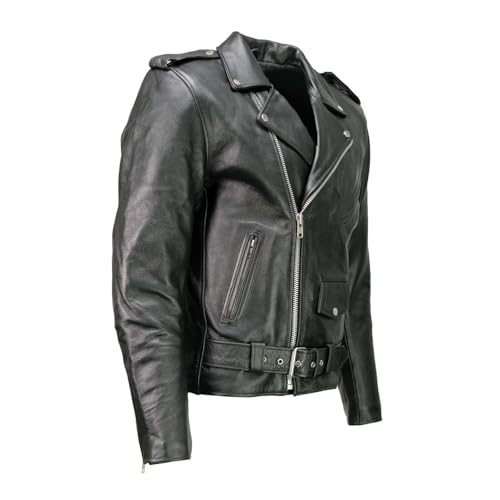
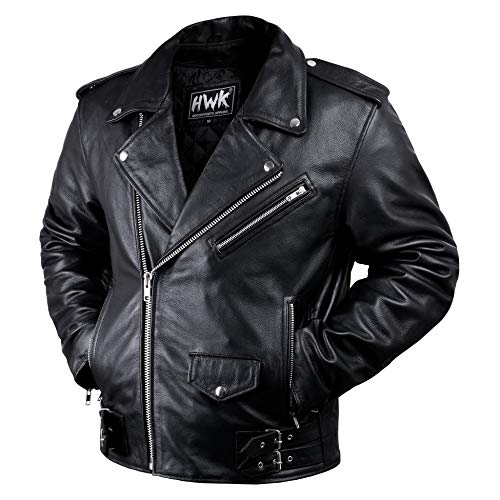
The best motorcycle leather jackets in 2026 for protection-first riding are the Dainese Racing 4, Alpinestars Missile v2, REV’IT! Eclipse 2, Vanson Model B, and Roland Sands Design Ronin, with the best pick depending on hide thickness, armor setup, and whether you need track-level protection or daily street versatility.
Our top picks


As an Amazon Associate we earn from qualifying purchases at no extra cost to you. Ratings are shown as listed on Amazon.
How to Choose by Protection Priorities
Leather jackets are not interchangeable. A 1.1mm cowhide café jacket and a 1.3mm race-spec kangaroo-cowhide hybrid protect very differently, even if they look similar on a hanger. Use these criteria before you look at style:
- Hide thickness and type: 1.1-1.2mm cowhide is the sweet spot for abrasion resistance and comfort for street use. 1.2-1.4mm is track-oriented and needs serious break-in but offers higher slide time. Kangaroo leather can match cowhide protection at ~0.9-1.0mm with less weight.
- Armor compatibility: Look for CE Level 1 or Level 2 protectors at shoulders and elbows included, plus a pocket for a CE Level 1 or 2 back protector. A jacket without a back protector pocket is fashion, not protection.
- Fit in riding position: A good jacket feels slightly tight and bunchy standing up, but smooths out with arms forward and shoulders rotated. Pre-curved sleeves, rotated shoulder seams, and a dropped back hem prevent the collar digging and lower back exposure.
- Seam quality: Triple-stitched main seams with high-strength bonded nylon thread hold during a slide. Single-stitched fashion seams can burst on impact.
- Ventilation: Perforated panels or zip vents matter more than you think. Non-perforated 1.2mm leather is unbearable above 75°F without vents.
- Weather resistance: Uncoated leather is not waterproof. If you ride in rain, you want either a water-resistant treated hide or a removable waterproof membrane liner, not a claim of “water-resistant leather” alone.
Best Motorcycle Leather Jackets Compared
These five cover the main rider situations without sacrificing protection. All are available with men’s and women’s sizing in 2026 and accept upgraded armor.
| Model | Leather & Thickness | Weight (Size 50/M) | Armor Included / Pockets | Ventilation | Main Seam Construction |
|---|---|---|---|---|---|
| Dainese Racing 4 Leather Jacket | Tutu cowhide, 1.2-1.3mm | 4.6 kg / 10.1 lbs | CE Level 2 shoulders/elbows, pocket for CE Level 2 back protector + chest protector | Perforated chest, zip vents at sides | Triple-stitched, reinforced stitching in impact zones |
| Alpinestars Missile v2 Leather Jacket | Bovine leather 1.3mm, Tech-Air ready | 4.4 kg / 9.7 lbs | CE Level 1 Bio-Flex shoulders/elbows, pocket for CE Level 2 back + Tech-Air 5 airbag compatible | Perforated front and back panels, DFS shoulder sliders vented | Triple-stitched with Aramid reinforcement |
| REV’IT! Eclipse 2 | Cowhide 1.1mm, PWR|Shell | 3.5 kg / 7.7 lbs | CE Level 1 SEESMART shoulders/elbows, pocket for CE Level 2 back protector | Fully perforated front, back, and sleeves | Double and triple-stitched, safety seams |
| Vanson Model B | Competition-weight cowhide 1.4mm | 5.1 kg / 11.2 lbs | No armor included, pockets for CE armor at shoulders/elbows/back (aftermarket) | Non-perforated, optional perforation on custom order | Double-stitched with bonded nylon, reinforced elbows |
| Roland Sands Design Ronin | Cowhide 1.1-1.2mm, waxed finish | 3.8 kg / 8.4 lbs | CE Level 1 shoulders/elbows, pocket for CE Level 1 back protector | Zippered pit vents, non-perforated body | Double-stitched main seams, single-stitched cosmetic seams |
What The Numbers Mean On The Road
Weight and thickness directly affect fatigue and heat. A Vanson Model B at 5.1 kg offers maximum abrasion time and will last decades, but it requires 20-40 hours of riding to break in and is hot in summer without perforation. The REV’IT! Eclipse 2 at 3.5 kg and 1.1mm perforated leather is comfortable from day one and flows air at city speeds, but gives up some slide time compared to a 1.3mm race jacket.
Airbag compatibility is the biggest protection gain since armor itself. The Alpinestars Missile v2 is cut to integrate with the Tech-Air 5 vest without compressing the chest or restricting deployment. If you plan to add an airbag vest later, buying a Tech-Air or Dainese Smart Jacket-ready cut now prevents you from buying twice.
Picks By Riding Situation
Best for Track Days and Aggressive Sport Riding: Dainese Racing 4 and Alpinestars Missile v2
Choose either if you ride a supersport, do track days, or want the highest certified protection. Both use 1.2mm+ leather, have CE Level 2 elbows/shoulders or upgrade paths, and are shaped for a tuck. The Dainese includes aluminum shoulder sliders and a more aggressive pre-curve. The Alpinestars is the pick if you want airbag integration without sizing up. General market range for this class is $700 to $1100.
Best for Hot Weather and Daily Commuting: REV’IT! Eclipse 2
Fully perforated 1.1mm cowhide with CE Level 1 armor keeps you protected without overheating in traffic. It fits more upright than a race jacket, has a shorter break-in, and works over a hoodie in shoulder seasons. It is not waterproof, so pair it with a packable rain shell. General market range is $400 to $550.
Best for Maximum Durability and Custom Fit: Vanson Model B
1.4mm competition-weight leather with minimal perforation is built for long-term ownership and high-speed slides. Vanson jackets are made in the USA and can be ordered with custom sleeve/body lengths and perforation options. You will need to buy CE armor separately and budget for break-in. Ideal if you keep gear for 10+ years and prioritize abrasion resistance over summer airflow. General market range is $650 to $900 off-the-rack, higher for custom.
Best for Classic Style With Real Protection: Roland Sands Design Ronin
The Ronin looks like a vintage moto jacket but includes CE Level 1 armor and a back protector pocket, plus a riding-specific cut with pre-curved arms. The 1.1-1.2mm waxed cowhide has better water resistance than raw cowhide but still needs treatment. It is less ventilated than perforated sport jackets, so it suits spring, fall, and cooler summer nights. General market range is $550 to $750.
Decision Matrix: Match Your Situation to The Right Spec
| Your Situation | Prioritize This Spec | Go With This Type |
|---|---|---|
| Ride 4+ days per week, need one jacket year-round | 1.1-1.2mm leather, full perforation + removable thermal/waterproof liner | REV’IT! Eclipse 2 type or similar perforated street sport jacket |
| Track days or canyon riding on a sport bike | 1.2-1.4mm leather, CE Level 2, airbag-ready cut | Dainese Racing 4 / Alpinestars Missile v2 |
| Ride vintage, cruiser, or scrambler and want style + protection | 1.1-1.2mm leather, CE Level 1, pit vents, waxed finish | Roland Sands Ronin / Belstaff Brooklands type |
| Want a 10-year jacket and don’t mind heavy break-in | 1.3-1.4mm competition cowhide, triple-stitched, custom sizing | Vanson Model B / Schott Perfecto 618HH type |
| Ride in frequent rain | Treated leather + removable waterproof membrane, sealed seams | Any of the above with a Gore-Tex or Hydratex liner, or add a dedicated textile waterproof jacket |
Fit In Riding Position: How To Size It Right
Leather does not stretch lengthwise, only widthwise about 0.5 to 1 inch after break-in. Never buy a jacket that feels perfect standing upright with arms at your sides.
- Sit on your bike or mimic the position: arms forward, hands on bars, back slightly rounded. The sleeves should cover your wrists with gloves on and not pull at the shoulders.
- With armor in place, you should be able to zip fully without the chest pulling. If you need to inhale to zip it, size up.
- Check the back length: the hem should cover your belt line when seated. If it rides up more than 1.5 inches, the jacket is too short or not cut for riding.
- Between sizes? Choose the tighter one if it is 1.1-1.2mm perforated street leather (it will give). Choose the larger if it is 1.3mm+ race leather or you plan to add an airbag vest, which needs 1-2 cm of extra chest room.
Worked Sizing Calculation
If your chest measures 42 inches and the size chart shows a size 42 jacket with a 44-inch chest circumference and 1.1mm leather, expect about 1 inch of stretch at the chest after break-in. That gives an effective 45-inch circumference. With a 1-inch thick back protector and a mid-layer, you lose about 1.5 inches of effective room. Your net fit is 43.5 inches, which gives 1.5 inches of ease over your body – ideal for a snug sport fit. If the same jacket were non-perforated 1.4mm, expect only 0.5 inch stretch, so net fit would be 43 inches – too tight for layering.
Seam Quality, Ventilation, and Weather Resistance Details
Seams fail before leather does. Look inside the jacket: safety seams will be folded and double or triple-stitched, often with a contrasting Aramid thread in shoulders and elbows. Single visible stitching on the outside with no reinforcement inside is a red flag for protection use.
For ventilation, perforation placement matters more than total perforation. Perforated chest and inner arms cool you at 30-45 mph. A solid chest with only back vents creates a sauna at stoplights. If you ride above 85°F regularly, prioritize full perforation. If you ride below 60°F, choose zip-closing vents or a solid front with a perforated back.
Leather is naturally water-resistant for light mist, not rain. Waxed or oil-treated hides bead water for 15-30 minutes, but seams wick water through. For true weather resistance, you need a jacket with a removable waterproof membrane or you need to carry a lightweight waterproof over-jacket. Never rely on silicone sprays to make a perforated jacket waterproof – they clog perforations and trap sweat.
Durability and Ownership Realities
What wears first is not the leather panel but the high-stress points: cuff zippers, collar snaps, liner at the collar, and stitching at the armpits. Heavy 1.3mm+ jackets also wear at the shoulder seams from backpack straps.
- Cleaning: Wipe with a damp cloth and pH-neutral leather cleaner 2-3 times per year. Condition with a light leather balm once a year, not after every ride. Over-conditioning softens 1.2mm+ leather and reduces abrasion resistance.
- Drying: If soaked, air dry at room temperature away from heat. Never use a dryer or radiator – it shrinks and hardens the hide and cracks seam thread.
- Common mistakes: Buying too large and adding thick armor that floats, storing folded instead of on a wide hanger, and using mink oil or heavy waterproof wax on perforated leather.
- Consumables: Plan to replace CE armor every 3-5 years if exposed to sweat and UV, and replace zippers/sliders every 4-6 years of daily use. Back protectors should be replaced after any significant impact.
- Cost per wear: A $500 perforated street jacket worn 150 days a year for 4 years costs about $0.83 per wear. A $900 heavy jacket worn 80 days a year for 10 years costs about $1.12 per wear but often offers higher protection throughout. Durability does not always mean lower cost per use if you ride in hot weather and need airflow.
Final Buying Advice
Start with protection, then fit, then climate. If you can only own one leather jacket, a 1.1-1.2mm perforated cowhide jacket with CE Level 1 shoulders/elbows, a back protector pocket, triple-stitched seams, and a removable thermal liner covers 80 percent of street riding. Add a dedicated 1.3mm airbag-ready jacket if you do track days, and keep a cheap packable rain shell for wet days instead of expecting leather to stay dry.
FAQ
Is 1.1mm leather thick enough for street protection?
Yes, if it is real cowhide with CE armor and safety seams. It meets CE AA standards for street use when constructed correctly. Riders who want AAA-level abrasion time or who ride at track speeds should move to 1.2-1.4mm.
Can I add a better back protector to any jacket?
Only if the jacket has a back protector pocket in the correct size. Measure the pocket and match the insert shape. A Forcefield, D3O, or SAS-TEC CE Level 2 insert that is too large will fold and create pressure points.
How tight should a new leather jacket be?
Snug but not restrictive with armor in. You should be able to zip it easily and breathe deeply, with slight resistance at the chest and shoulders. Light perforated jackets will loosen half a size; heavy race jackets will loosen less. When in doubt, try it in riding position, not standing in a store.