Key takeaways
- Depth: For meaningful core aeration, look for a design capable of extracting cores around 2–3 inches deep under suitable conditions. Tines that only puncture the surface may be inadequate for substantial compaction.
- Spacing and coverage: Wider machines cover more ground per pass, but can be harder to store and maneuver. Closely spaced tines may produce more holes per pass, but the actual pattern depends on walking speed or towing speed.
- Construction: Steel tines and a sturdy frame are useful where soil is firm. Check whether tines are replaceable and whether replacement parts are available before purchasing.
- Power and towing: For powered models, account for fuel or charging, transport, and service needs. For tow-behind models, verify hitch compatibility, towing limits, and the space needed to turn.
- Cost per use: If a suitable powered rental costs $80 per day and you aerate once every two years, that is about $40 per year of use before transport or delivery. A $1,200 purchase used on the same schedule works out to $600 per year over that period, before maintenance or resale value. Rental is often the sensible comparison for occasional jobs.
Best Lawn Aerators for Healthier Grass
For compacted soil, the best lawn aerators are usually plug aerators: choose a manual model for a small lawn, a tow-behind for a large one, or a powered machine if frequent work or limited physical effort makes the higher cost worthwhile. Spike, rolling, and tow-behind tools suit different conditions, but they are not interchangeable—especially in dense clay, where removing soil cores generally relieves compaction more effectively than pushing holes into the ground.
Match the aerator to the job
| Aerator type | Typical working width or tine depth | Best fit | Ownership trade-off |
|---|---|---|---|
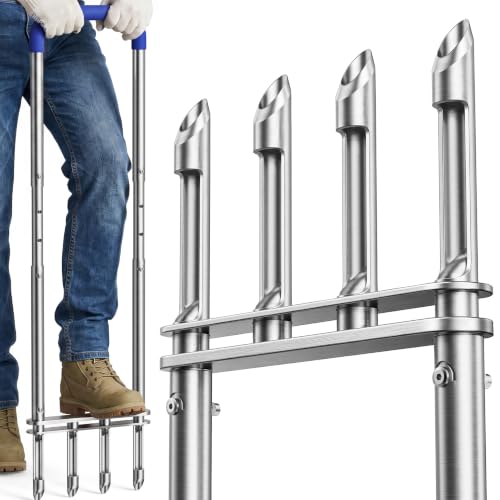
| Manual plug | About 8–12 in. wide; 2–3 in. core depth | Small lawns, isolated compacted areas, clay soil | Low purchase cost and easy storage; slow and physically demanding |
| Manual spike | About 8–12 in. wide; 2–3 in. penetration | Light compaction, small lawns, occasional use | Simple to maintain; can press soil sideways rather than remove it |
| Rolling aerator | About 12–24 in. wide; commonly 1–2 in. penetration | Small-to-medium lawns needing a quick surface pass | Faster than step tools, but often shallow and less effective in hard ground |
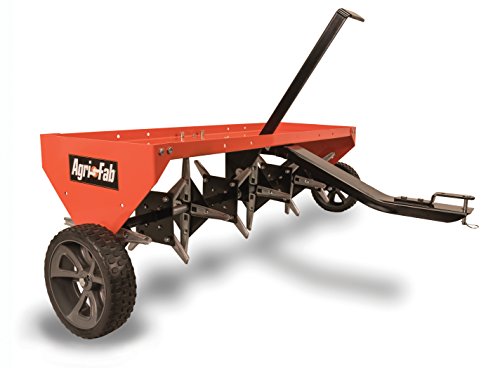
| Tow-behind plug | About 36–48 in. working width; roughly 2–3 in. cores | Large lawns and owners with a riding mower or lawn tractor | Efficient coverage; takes shed space and needs secure hitching |
| Powered walk-behind plug | About 18–24 in. working width; roughly 2–3 in. cores | Repeated aeration, larger residential lawns, reduced manual effort | Fast and consistent; highest cost, maintenance, and storage burden |
These are representative ranges, not guarantees: tine shape, soil moisture, machine weight, and design affect actual penetration. Check the manufacturer’s specifications before buying, and do not treat a claimed tine depth as a guaranteed depth in dry, compacted ground.
Our top picks


As an Amazon Associate we earn from qualifying purchases at no extra cost to you. Ratings are shown as listed on Amazon.
Which type makes sense for your lawn?
Choose a plug aerator for clay or recurring compaction
Plug aerators pull small soil cores to the surface, creating space for water, air, and roots while reducing the amount of soil displaced around each hole. They are the stronger choice for dense clay, heavily used paths, and lawns that regularly puddle or feel hard underfoot. Manual plug tools are affordable for patch-sized jobs; for broad areas, a tow-behind or powered model saves time.
Core aeration still takes effort. Soil must be moist enough for the tines to enter, but not saturated: very wet ground can smear, while dry ground can stop tines short. Make a test pass and inspect the cores before committing to the whole lawn.
Use spikes or a roller for light, localized work
Spike aerators make holes without removing cores. They can suit a small lawn with mild compaction or a quick, occasional pass, but in clay they may compress soil around the hole. A rolling aerator is convenient across a modest open area, though many models penetrate less deeply than core tools. Neither is a reliable substitute for plug aeration where compaction is severe.
Go tow-behind only if you have the right towing setup
A tow-behind aerator covers ground quickly on a larger, relatively open lawn. It requires a compatible mower or tractor, a suitable hitch, room to turn, and enough storage for a wide implement. Its performance depends on added weight and soil conditions; confirm the model’s ballast instructions rather than assuming that extra weight is always safe or effective.
Pay for power when time or effort is the limiting factor
Powered walk-behind aerators make sense for larger lawns, recurring seasonal work, or owners who find manual aeration too strenuous. They cost more and need routine checks of the engine or battery system, tine assembly, fasteners, and drive components. For a small lawn aerated once in a while, renting a machine may be more practical than storing and maintaining one.
Decide by lawn size, budget, and storage
| Your situation | Best starting point | Why |
|---|---|---|
| Small lawn, tight budget, occasional use | Manual plug tool for hard spots; spike tool for light work | Low upfront cost and minimal storage space |
| Small-to-medium lawn with mild compaction | Rolling aerator | Easy to store and quicker to push than a step aerator |
| Large open lawn and existing riding mower | Tow-behind plug aerator | Broad coverage without walking every pass |
| Large lawn, frequent jobs, or limited ability to push | Powered walk-behind plug aerator | Reduces manual labor and keeps coverage more consistent |
| One-time project or no suitable storage | Rent a powered plug aerator | Avoids long-term storage and maintenance for infrequent use |
Manual aerators commonly cost from under $50 to around $150; rolling tools often fall around $50–$200. Tow-behind units generally run from a few hundred dollars to over $1,000, while powered machines can cost roughly $1,000–$3,000 or more. These are broad market ranges, not quotes; width, construction, power source, and seasonal availability change prices.
Before buying: check tine depth, upkeep, and fit
- Depth: For meaningful core aeration, look for a design capable of extracting cores around 2–3 inches deep under suitable conditions. Tines that only puncture the surface may be inadequate for substantial compaction.
- Spacing and coverage: Wider machines cover more ground per pass, but can be harder to store and maneuver. Closely spaced tines may produce more holes per pass, but the actual pattern depends on walking speed or towing speed.
- Construction: Steel tines and a sturdy frame are useful where soil is firm. Check whether tines are replaceable and whether replacement parts are available before purchasing.
- Power and towing: For powered models, account for fuel or charging, transport, and service needs. For tow-behind models, verify hitch compatibility, towing limits, and the space needed to turn.
- Cost per use: If a suitable powered rental costs $80 per day and you aerate once every two years, that is about $40 per year of use before transport or delivery. A $1,200 purchase used on the same schedule works out to $600 per year over that period, before maintenance or resale value. Rental is often the sensible comparison for occasional jobs.
Use and maintain an aerator without damaging the lawn
- Check the ground: Aerate when the soil is moist, not waterlogged or baked hard. Test a small area first; if tines cannot penetrate, wait or water lightly and let moisture move into the soil.
- Mark hazards: Identify irrigation heads, shallow cables, and other buried or surface obstacles. Keep the machine away from them to avoid damage.
- Set up safely: Assemble and ballast the tool only as directed. For powered equipment, inspect guards and controls; for tow-behind equipment, check the hitch and pin before moving.
- Make overlapping passes where needed: Cover compacted areas methodically, but avoid excessive repeated passes that churn or tear the turf. Turn carefully, especially with a heavy tow-behind implement.
- Clean and inspect after use: Remove soil and plant debris before they dry onto the tines. Check for bent or worn tines, loose bolts, and damaged hitch parts; replace worn components rather than relying on blunt or bent tines.
For a typical residential lawn, annual or occasional aeration is often enough; the right schedule depends on soil, foot traffic, and turf condition. If the ground remains severely compacted, drainage problems persist, or you are unsure about buried utilities or suitable lawn timing, consult a local lawn-care professional.