Key takeaways
- At least 3 distinct heat levels, not just on/off
- A digital or slide controller you can adjust without looking
- Even heat distribution with no exposed wires when bent
- Moist-heat option on some models, which uses absorbed moisture from air or a damp sponge insert to feel warmer at the same setting
The best heating pad for arthritis for most people is a flexible electric pad with at least 3 heat levels, 2-hour auto shutoff, and a size matched to the joint: a small 7 x 12-inch wrap for hands and fingers, and a medium-large 12 x 15-inch or 12 x 24-inch pad for knees, shoulders, and back.
Arthritis stiffness affects very different areas, so one pad rarely works for everything. Small finger joints need a soft, wrappable pad that holds contact without bulk. Knees and hips need broader coverage and straps or extra length to stay in place. The comparison below focuses on heat control, shutoff safety, and flexibility so you can match the pad to where you will use it most. This is general product information only, not medical advice. If you have circulation problems, diabetes, nerve damage, or severe joint pain, talk to a healthcare professional before using heat.
What matters most for arthritic joints
1. Heat levels and control
Most electric pads offer 3 to 6 heat settings, typically ranging from about 110°F / 43°C on low to 150-160°F / 65-71°C on high. For stiff hands in the morning, low to medium heat for 15-20 minutes is what most users choose. For larger areas like knees, a higher setting may be needed because blankets, clothing, and room air pull heat away.
Look for:
- At least 3 distinct heat levels, not just on/off
- A digital or slide controller you can adjust without looking
- Even heat distribution with no exposed wires when bent
- Moist-heat option on some models, which uses absorbed moisture from air or a damp sponge insert to feel warmer at the same setting
2. Auto shutoff for safety
Auto shutoff is essential if you fall asleep, lose track of time, or have reduced sensation in hands or feet. Most current models shut off after 2 hours. Some allow you to select 30, 60, 90, or 120 minutes.
For arthritis use, a selectable shutoff is better than a fixed 2-hour shutoff because hand sessions are usually short, while knee or back sessions while reading or watching TV run longer. Avoid any electric pad without automatic shutoff.
3. Flexibility and fit
Stiffness makes it hard to hold a rigid pad in place. Flexibility determines whether heat actually reaches the joint:
- Hands and fingers: need soft microplush or fleece, 7 to 9 inches wide, able to fold or roll around knuckles
- Wrists and elbows: need a narrow rectangular or mitt shape with elastic strap
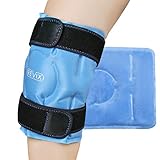
- Knees: need 12+ inches width or a contoured wrap with straps to curve over the kneecap
- Shoulders, neck, and lower back: need 12 x 24-inch or larger to drape without slipping
Microwavable bead-filled wraps are the most flexible and conform well to knobby joints, but they cool in 20-30 minutes and cannot hold a steady temperature. Electric pads hold heat longer but are less conforming unless the fabric is thin and quilted.
Comparison: common types used for arthritis
The following compares types widely available from established brands such as Sunbeam, Pure Enrichment PureRelief, Thermophore by Battle Creek, Beurer, and ThermaCare disposable wraps. Check the exact model specs before buying, as sizes and shutoff times vary by version.
| Type | Typical size | Weight | Heat settings | Auto shutoff | Best for |
|---|---|---|---|---|---|
| Standard electric pad, microplush | 12 x 15 in / 30 x 38 cm | 1.0 – 1.5 lb / 0.45 – 0.68 kg | 3 – 6 levels, up to ~150°F / 65°C | 2-hour fixed | Knee, back, shoulder |
| Extra-large electric pad | 12 x 24 in / 30 x 61 cm | 1.5 – 2.2 lb / 0.68 – 1.0 kg | 4 – 6 levels, up to ~160°F / 71°C | Selectable 30-120 min | Back, hips, both knees |
| Moist-heating electric pad, no water added | 14 x 14 in / 35 x 35 cm | 2.5 – 4.0 lb / 1.1 – 1.8 kg | 3 levels, high ~150-165°F / 65-74°C | 25-min timer | Knee, shoulder, intense spot use |
| Small electric hand / wrist wrap | 7 x 12 in / 18 x 30 cm | 0.6 – 0.9 lb / 0.27 – 0.41 kg | 3 levels, up to ~140°F / 60°C | 2-hour fixed | Fingers, hands, wrists |
| Microwavable clay-bead mitt or wrap | 8 x 10 in to 10 x 14 in | 1.2 – 2.0 lb / 0.54 – 0.9 kg | No settings, starts ~130-140°F then cools | None, cools naturally in 20-30 min | Fingers, elbows, travel |
| Disposable air-activated heat wrap | Contoured for knee / back | 0.2 – 0.4 lb / 0.09 – 0.18 kg | Single level, ~104-113°F / 40-45°C | Single use, up to 8 hours | Outdoors, work, when no outlet |
Best picks by situation
Best for hands and finger stiffness: small electric wrap or microwavable mitt
Choose a small electric pad around 7 x 12 inches if you want steady heat while reading or using a computer. It can fold over knuckles and secure with a light wrap. Choose a microwavable mitt filled with clay beads or flaxseed if you want full enclosure and portability. It conforms better to swollen joints but must be reheated after each use.
Tip for fit: measure across your knuckles. Most adult hands need at least 7 inches of width to wrap without pulling. If the pad cannot make full skin contact around the sides of fingers, a mitt shape will work better than a flat rectangle.
Best for knees: medium electric pad with strap or moist-heat pad
Knees lose heat quickly and move a lot. A 12 x 15-inch pad draped over the knee works if you are seated, but it slips when walking. A wrap with elastic straps or a 14 x 14-inch heavier moist-heat pad stays in better contact.
Heavier pads in the 2.5 to 4-pound range provide natural compression that helps them stay curved over the kneecap. They are less convenient for travel but preferred for 20-minute stationary sessions.
Best for multiple joints: extra-large 12 x 24-inch pad
If arthritis affects back, hips, and shoulders in addition to knees and hands, an extra-large pad covers more area per session and can be folded in half for double thickness on one knee. Look for a selectable timer and machine-washable cover. These models generally fall in the mid to upper general market range for heating pads, while small basic pads fall in the budget range and specialty moist-heat units cost more.
Best for work or travel without an outlet: disposable heat wraps
Adhesive-backed disposable wraps provide low, long-duration warmth and allow movement. They do not get as hot as electric pads and cannot be adjusted, but they are useful for commuting or desk work where a cord is impractical.
Decision matrix: which type fits you
| Your situation | Choose this | Why |
|---|---|---|
| Morning finger stiffness, daily 15-min use | Small electric wrap or microwavable mitt | Conforms to small joints, quick to apply |
| One arthritic knee, seated in evening | 12 x 15-in electric or 14 x 14-in moist-heat | Enough coverage, stays warm for full session |
| Back + knees + shoulders | 12 x 24-in extra-large electric | One pad covers large and small areas when folded |
| Reduced hand strength or poor grip | Electric with large-button controller | No microwave lifting, no ties or small straps |
| Need heat away from home | Microwavable wrap or disposable wrap | No cord, portable, usable at office |
Coverage calculation: do you need one pad or two
A common mistake is buying a knee-sized pad for hands, which leaves excess fabric bunched and uneven heating. Use this quick check:
Hand coverage: palm area is roughly 3.5 x 7 inches, or about 25 square inches. A 7 x 12-inch pad provides 84 square inches, enough to wrap top and bottom of one hand with overlap. One small pad serves both hands if used one at a time.
Knee coverage: front of knee plus 3 inches on each side is roughly 10 x 12 inches, or about 120 square inches. A standard 12 x 15-inch pad provides 180 square inches, enough for one knee with drape. An extra-large 12 x 24-inch pad provides 288 square inches, enough to wrap a large knee fully or cover lower back in one placement.
If hands and knees both need heat at the same time in the morning, two sizes are more practical than trying to fold a large pad small enough for fingers.
Safe use and ownership realities
Always place a cloth cover between the heating element and bare skin, start on low, and limit sessions to 15-20 minutes per area. Do not fold an electric pad tightly while on, sit on it, or use it on high while sleeping. Inspect cords yearly for cracking where the cord meets the controller, which is the most common failure point.
What wears first:
- Outer fleece cover: pills and thins after 12-18 months of daily use. Machine-washable covers last longer. Wash the cover only, never immerse the heating element.
- Elastic straps and Velcro: lose grip after repeated stretching, especially on knee wraps. Hand-wash straps to extend life.
- Controllers: buttons become less responsive if pulled by the cord. Disconnect by the plug, not the wire.
- Microwavable fills: develop hot spots or faint odor after 100+ heat cycles. Replace if heating becomes uneven or fabric scorches.
Avoid using high heat to compensate for a pad that is too small. Better contact at medium heat warms more evenly than high heat with air gaps. If skin shows blotchy redness that does not fade within 30 minutes, lower the setting or shorten the time and consult a professional if it recurs.
Frequently asked questions
Is moist heat better than dry heat for arthritis stiffness
Many users report moist heat feels more penetrating at the same temperature setting because damp fabric transfers heat more efficiently. Electric moist-heat pads pull humidity from the air and do not require adding water. They are heavier and heat in one spot rather than wrapping easily, so they suit knees and shoulders more than fingers.
Can I sleep with a heating pad on
No. Even with auto shutoff, prolonged contact during sleep increases burn risk, especially for people with reduced sensation. Use a timer for 20-30 minutes before bed, then turn the pad off and remove it.
How hot should the pad be
Start on the lowest setting that feels comfortably warm, never painful. Hands are more heat-sensitive than knees or back, so use a lower level for fingers. If you need maximum heat to feel warmth, the pad is likely too small or poorly positioned. Reposition for full contact rather than increasing heat.