Key takeaways
- Compare the best heart rate monitors in chest strap and armband form, with dual Bluetooth and ANT+ picks for running, cycling, swimming and gym training.
If you train by heart rate zones, the sensor matters more than the screen. Wrist-based readings can lag during intervals, drift in cold weather, and lose contact when you grip a bar or handlebar. A dedicated chest strap reads the electrical signal from your heart, while a dedicated armband uses an optical sensor on your forearm or upper arm, away from the movement that troubles a wrist. Both are built for one job, and both usually connect to the watch, bike computer, phone, and gym equipment you already own.
This guide covers only dedicated chest straps and armbands, not running watches or general fitness bands, which have their own guides on this site. The five picks come from five different brands: a highly connected chest strap for all-round training, a premium strap with running dynamics, a forearm armband for riders, a light armband for everyday sessions, and an armband built for long, wet workouts. Read the fit and battery notes closely — they decide whether a sensor becomes part of your routine or stays in a drawer.
Disclosure: As an Amazon Associate, I earn from qualifying purchases.
1. Polar H10 Heart Rate Sensor
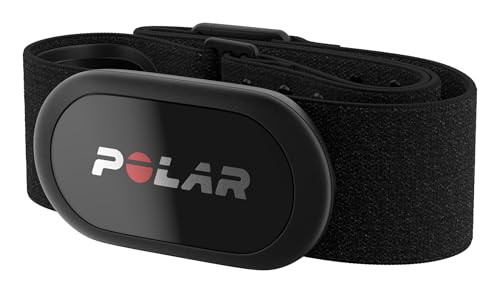
The Polar H10 is the safe first choice for athletes who want a chest strap that works with almost everything. Its listing highlights Bluetooth, ANT+, and 5 kHz transmission, so it can talk to phones, watches, bike computers, and compatible gym equipment without you rebuilding your setup around one brand. That helps if you run with one device, ride with another, and use gym rowers or treadmills during the week.
The Polar Pro strap uses improved electrodes, silicone dots, and an easy buckle to stay in place, and the textile strap is machine-washable. The sensor is waterproof up to 30 m and has internal memory for one training session, so you can record a swim and sync later. Battery life is listed at 400 hours from a CR2025 button cell. For multi-sport athletes who need dependable zone data first, the H10 is the most versatile place to begin.
Specs
– Type: Chest strap sensor with Polar Pro strap
– Connectivity: Bluetooth, ANT+, and 5 kHz
– Water resistance: Waterproof up to 30 m
– Battery: CR2025 button cell, listed life 400 hours
– Memory: Internal memory for 1 training session
– Strap size covered: M-XXL, Black
– Item weight: 60 grams
– ASIN: B07PM54P4N
2. Garmin HRM-Pro Plus

The Garmin HRM-Pro Plus is for Garmin users who want more than heart rate from the strap itself. Alongside real-time heart rate and heart rate variability over ANT+ and Bluetooth Low Energy, it captures running dynamics such as vertical oscillation, ground contact time, stride length, and vertical ratio. On a compatible Garmin watch, that data can also enable running power.
Away from the road, it computes pace and distance for treadmill and indoor track workouts, stores heart rate data during swimming or other activities out of range of your watch, then sends it to the watch when the activity ends. It also stores steps, calories, intensity minutes, and all-day heart rate, updating devices through Garmin Connect and TrueUp. Battery life is listed at up to 12 months, and the unit weighs 52 grams. Choose it if you live in the Garmin system.
Specs
– Type: Premium chest strap
– Connectivity: ANT+ and Bluetooth Low Energy
– Extra data: Running dynamics, plus pace and distance indoors
– Storage: Stores heart rate data during swimming and out-of-range activities
– Battery life: 12 months, replaceable battery
– Item weight: 52 grams
– Model part number: 010-13118-05
– ASIN: B0B3PNFK9H
3. Wahoo TICKR FIT Heart Rate Armband

The Wahoo TICKR FIT suits athletes who want optical convenience without giving up dual connectivity. Worn on the forearm, it provides heart rate and calorie burn data and pairs over Bluetooth and ANT+ with fitness apps, smartphones, and GPS bike computers and watches. That makes it a clean option for cycling, where a chest strap can feel restrictive, and for classes where you want to put a sensor on and forget it.
The adjustable band is designed for running, cycling, and fitness classes, and the unit is described as water-resistant. Power comes from a rechargeable Lithium-Ion battery. Product information lists a battery average life of 35 hours, while the product description notes up to 30 hours, so plan around the lower figure. The unit weighs 0.1 pounds. Pick it if you prefer an armband fit and train with Wahoo, phone apps, or a bike computer.
Specs
– Type: Forearm armband, optical sensor
– Connectivity: Bluetooth and ANT+
– Battery: Lithium-Ion, rechargeable, listed average life 35 hours
– Item weight: 0.1 pounds
– Model number: WFBTHR03
– Color covered: Black
– Included: TICKR FIT, quick guide, charger
– ASIN: B078GRMFSN
4. COOSPO HW706 Armband Heart Rate Monitor

The COOSPO HW706 is a straightforward armband for everyday training, indoor cycling, and app-based workouts. It uses patented optical sensor technology to measure real-time heart rate and help you track training zones and calories burned with compatible apps. Dual-mode Bluetooth 4.0 and ANT+ support means it can connect to smartphones, tablets, Garmin and Wahoo sport watches, Peloton equipment, and many other devices.
The listing notes support for apps including Strava, Polar Beat, Runkeeper, Map My Fitness, and DDP Yoga, where the app supports the standard Bluetooth protocol. Protection is listed as IP67: rain, sweat, and brief immersion up to 1 meter are fine, but the brand advises against swimming with it. The table lists 20 hours of battery life and a weight of 17 grams, and the package includes two fabric straps. Choose it for a light armband with simple LED feedback and broad app compatibility.
Specs
– Type: Armband, optical sensor
– Connectivity: Bluetooth 4.0 and ANT+, dual mode
– Water resistance: IP67, up to 1 meter, not for swimming
– Battery: Lithium-Ion, rechargeable, listed life 20 hours
– Item weight: 17 grams
– Model name: HW706 Armband Heart Rate Monitor Sensor
– Included: Armband monitor, with 2 straps in the package
– ASIN: B07HHZQ85Y
5. Scosche Rhythm+ 2.0 Heart Rate Monitor Armband

The Scosche Rhythm+ 2.0 suits athletes who want an armband for wet and dusty conditions that still feeds data to many apps and devices. It is listed as IP68 waterproof and dustproof, submersible up to 1.5 meters, with a rechargeable battery offering up to 24 hours of workout time. That works well for long rides, trail runs, rowing, and gym circuits where you do not want to recharge midweek.
Its optical system uses patented technology with green and yellow LEDs to measure blood flow, plus a built-in accelerometer to improve precision across exercise types. The listing also notes heart rate variability and RRi data support for recovery apps. Dual-mode ANT+ and Bluetooth, a wireless range noted at 100 ft, and compatibility with over 200 fitness apps give it unusual flexibility. The gray version weighs 2.39 ounces. Pick it if arm comfort, strong sealing, and recovery data matter more than chest strap dynamics.
Specs
– Type: Armband, optical sensor with green and yellow LEDs
– Connectivity: Bluetooth and ANT+, dual mode
– Water resistance: IP68 waterproof and dustproof, submersible up to 1.5 meters
– Battery life: 24 hours, rechargeable
– Item weight: 2.39 ounces
– Model number: RTHM2.0GY-AZ
– Color covered: Gray
– Included: Band, charger, tracker
– ASIN: B0CS5987F9
How to Choose the Right Heart Rate Monitor
Begin with placement. A chest strap reads an electrical signal at the chest, which is why many athletes trust it for intervals and variability. It needs good skin contact and a snug strap, and some people dislike the feeling around the ribs. An armband reads blood flow optically from the forearm or upper arm. It avoids chest pressure, but placement matters: too loose and it moves, too tight and it can affect the reading.
Next, check connectivity. Dual Bluetooth and ANT+ is the most flexible choice, because phones favor Bluetooth while many bike computers and gym machines use ANT+. If you train with two devices at once, confirm the sensor supports your combination. A 5 kHz link, as on the Polar H10, can help with certain gym equipment.
Then look beyond the watch. Built-in memory lets a strap record a swim or no-phone session and sync later. Running dynamics and indoor pace help only if your watch and app can display them, so match extras to your platform. For armbands, check whether variability data reaches your recovery apps.
Battery style shapes ownership. Coin-cell straps run for hundreds of hours with only an occasional swap. Rechargeable armbands avoid spare cells but need regular charging. Compare listed life with your weekly load.
Finally, consider water and care. Note the difference between sweat resistance, brief immersion, and a depth figure for swimming. Check whether the strap can be washed and whether spares are included.
FAQ
Is a chest strap more accurate than an armband?
A chest strap usually responds faster because it reads the electrical signal at the chest. A well-fitted armband can be very steady for continuous running, cycling, and gym work, but depends more on placement and tension. For short intervals and variability tracking, most athletes would lean toward a chest strap.
Can I use one of these monitors without a watch?
Yes, if the sensor connects by Bluetooth to a phone app you like. Some models also store a session internally and sync later, which helps for swimming. Check the memory note in the specs above first.
Will these work with Peloton, Zwift, and Strava?
Models with Bluetooth and ANT+ generally pair with indoor platforms, bike computers, and phone apps that accept an external sensor. The COOSPO and Scosche listings name broad app compatibility, and the Wahoo and Polar models are built for multi-device use. Confirm your app version accepts external sensors.
How should an armband fit?
Wear it on the forearm or upper arm as the maker directs, snug enough that it does not slide, but not so tight that it feels numb. Keep the sensor flat on the skin, and move it away from tattoos if readings look erratic.
Conclusion
For most people, the Polar H10 is the balanced choice: broad connectivity, long coin-cell life, a washable strap, and session memory. The Garmin HRM-Pro Plus is the upgrade for running dynamics and indoor pace. If you prefer an armband, the Wahoo TICKR FIT keeps cycling and classes simple, the COOSPO HW706 is a light pick for daily app-based training, and the Scosche Rhythm+ 2.0 adds strong sealing and variability data. Match placement, connections, and battery style to your routine, and any of these five will give you cleaner zone training than guessing effort alone.
More from Amazon
Programs that pair well with the guide above. Offers and eligibility are set by Amazon and may change.
Free shipping on eligible items, Prime Video and more. Eligible new members can start with a free trial.
Start a Prime free trialA Prime membership for ages 18-24 with a trial period. Eligibility is set by Amazon.
See Prime for Young AdultsAudiobooks and podcasts to listen to on the go. Eligible new members can start with a free trial.
Try Audible freeAd-free music streaming. Eligible new subscribers can start with a free trial.
Try Music Unlimited freeAs an Amazon Associate we earn from qualifying purchases.