Key takeaways
- Inspect the head and edges: Repeated turf contact and striking can wear the toe and lower edges first. Look for cracks, splintering, or soft spots; stop using a stick that appears structurally damaged.
- Replace worn grip tape: A slick or unraveling grip compromises secure handling. Clean and dry the handle before rewrapping, and avoid layering so much tape that the handle becomes difficult to hold.
- Wipe off dirt and moisture: Use a damp cloth, then let the stick air-dry. Avoid prolonged storage in a hot car or damp bag, which can age materials and grip adhesives.
- Use it on the intended surface: Turf, sand-dressed, and other playing surfaces create different wear conditions. Don’t use a composite stick as a lever or pry against hard objects; impact away from normal ball contact can damage the shaft.
- Don’t confuse a cosmetic mark with a safe stick: Small scuffs are expected, but cracks or exposed fibers merit attention. Replace a compromised stick rather than continuing to play with it.
Best Field Hockey Sticks for Control, Power, and Speed
The best field hockey sticks depend on your position and priorities: choose a lower bow and a lighter, carbon-rich stick for quick skills and powerful hits, or a mid bow with more forgiving composition for all-around control and development. Before buying, check the stick’s length, bow profile, weight, balance, composition, and grip—not just its carbon percentage.
Compare the choices that matter
The figures below are practical selection ranges, not specifications for a single model. Brands measure and describe bow, weight, and balance differently, so compare products within the same size and manufacturer where possible.
Our top picks

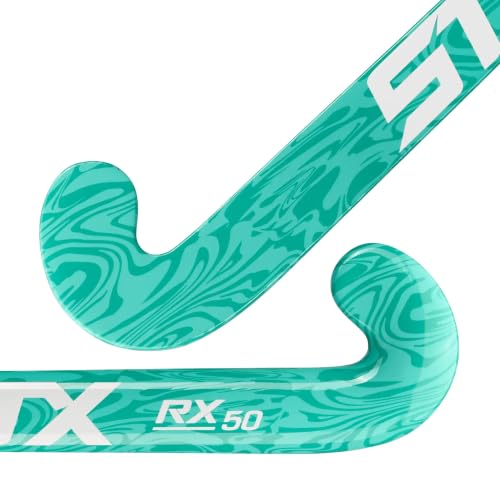


As an Amazon Associate we earn from qualifying purchases at no extra cost to you. Ratings are shown as listed on Amazon.
| Player or priority | Bow profile | Typical stick weight | Carbon starting point | What you gain—and give up |
|---|---|---|---|---|
| Beginner or all-round midfielder | Mid bow; peak about 20–24 cm from the head | 530–570 g | 0–40% | Forgiving touch and versatile positioning; less assistance with advanced aerial skills |
| Defender prioritizing receiving and long passing | Mid bow; about 20–24 cm | 540–580 g | 20–60% | Stable feel for trapping and distribution; heavier options may feel slower in tight play |
| Forward focused on drag-flicks and 3D skills | Low bow; peak about 19–22 cm | 510–560 g | 40–90% | Facilitates low-stick skills and quick releases; demands more precise control |
| Experienced hitter or drag-flick specialist | Extra-low bow; peak about 18–20 cm | 510–560 g | 60–100% | Designed for specialized power and advanced skills; less forgiving for basic receiving |
| New junior player | Mid bow | Often 450–530 g, depending on length | 0–30% | Manageable weight and approachable touch; choose fit over adult-level power |
Weight ranges vary with stick length and construction. Carbon percentages are not standardized measurements of overall performance: resin, fiberglass, aramid, layup, and design also affect feel and durability.
Choose by position and playing style
For midfielders and developing players: prioritize a useful touch
A mid bow is the adaptable starting point for dribbling, receiving, passing, and shooting. Beginners often benefit from a fiberglass-rich or moderate-carbon composite, which tends to feel less unforgiving on imperfect contact than a very stiff, high-carbon stick. That does not make every low-carbon stick soft or every high-carbon stick powerful; construction varies by model.
Midfielders cover ground and change direction constantly, so consider a stick you can maneuver comfortably rather than choosing the lightest specification automatically. A slightly heavier, well-balanced stick can feel steadier through tackles and passes.
For defenders: look for confident receiving and distribution
Defenders often need to stop hard passes, clear under pressure, and send accurate long balls. A mid bow and a stable-feeling head are sensible priorities. A moderate or higher-carbon model may suit an experienced defender who wants a firmer response, but a very stiff stick can make off-center traps feel harsher. Test whether you can control a fast pass cleanly before paying extra for maximum carbon.
For forwards and drag-flickers: consider a lower bow
A low bow places the curve closer to the head, helping experienced players get beneath the ball for lifts, aerials, and drag-flicks. It can also support rapid close control, but it does not automatically make a player faster or improve accuracy. If your basics are still developing, the adjustment can make ordinary receiving and flat passing less intuitive.
Extra-low bows and very stiff constructions are specialist choices. Buy one because its shape matches skills you already use or are actively training—not simply because the spec sounds more advanced.
Fit the length, weight, and balance—not just the bow
A common first check is to stand the stick upright beside the player: many players use a stick that reaches around the top of the hip, though body proportions, preference, and local coaching advice matter. Size charts differ by brand, so confirm the manufacturer’s guidance and, for a junior, leave room for comfortable control rather than buying a much longer stick to “grow into.”
Two sticks with the same total weight can feel different because their balance points differ. A head-heavy stick can feel steadier for striking but slower to reposition; a more evenly balanced stick may feel quicker in close control. If possible, hold the stick in playing position and make several controlled movements. If the head feels difficult to lift or the stick strains your wrist during repeated handling, choose another balance or weight.
Grip size is another practical fit issue. The handle should feel secure without requiring a tight squeeze. If it feels too slim, add an overgrip; if it already feels bulky, extra layers can interfere with control. Check that your hands can shift naturally on the handle and that the grip stays secure when damp.
Match your budget and experience
| Situation | Good starting choice | General market price range |
|---|---|---|
| First stick; learning core skills | Correctly sized mid bow, fiberglass-rich composite, comfortable weight | About $30–$80 |
| Regular club player seeking an upgrade | Mid or low bow selected for position; moderate carbon and preferred balance | About $80–$180 |
| Experienced specialist wanting a firmer, tailored feel | Low or extra-low bow; higher-carbon construction if it suits technique | About $180–$350 or more |
These are broad retail ranges in the United States, not quotes for a particular model; sales, junior sizes, and premium constructions can shift them. A costly stick is poor value if its bow or balance slows your development. For a regular player, a comfortable midrange stick that fits the game is often a better buy than a premium stick selected by carbon percentage alone.
Keep the stick performing well
- Inspect the head and edges: Repeated turf contact and striking can wear the toe and lower edges first. Look for cracks, splintering, or soft spots; stop using a stick that appears structurally damaged.
- Replace worn grip tape: A slick or unraveling grip compromises secure handling. Clean and dry the handle before rewrapping, and avoid layering so much tape that the handle becomes difficult to hold.
- Wipe off dirt and moisture: Use a damp cloth, then let the stick air-dry. Avoid prolonged storage in a hot car or damp bag, which can age materials and grip adhesives.
- Use it on the intended surface: Turf, sand-dressed, and other playing surfaces create different wear conditions. Don’t use a composite stick as a lever or pry against hard objects; impact away from normal ball contact can damage the shaft.
- Don’t confuse a cosmetic mark with a safe stick: Small scuffs are expected, but cracks or exposed fibers merit attention. Replace a compromised stick rather than continuing to play with it.
Bottom line
For a versatile first or all-round stick, start with a correctly sized mid bow and a comfortable, moderate-weight composite. Defenders should emphasize stable receiving and passing; forwards who already use aerial skills may prefer a low bow. Choose carbon level, balance, and grip by how the stick feels in your hands and supports your technique—the best field hockey sticks are the ones that fit the player, not just the specification sheet.