Key takeaways
- Buy the right card: use a high-endurance microSD card that meets the camera maker’s capacity and speed requirements. Continuous rewriting wears cards, so replace one if the camera reports errors or recordings become inconsistent.
- Route the rear cable carefully: run it along trim and away from airbags. Do not tuck wiring across an airbag deployment path; have an installer handle uncertain routes.
- Check framing after installation: keep the front lens clear of wipers and the rear lens aimed through a useful part of the window. Confirm both channels appear in a test recording.
- Review and maintain: wipe lenses with a soft cloth, check recordings periodically, and format the card in the camera when the manufacturer recommends it. Heat, vibration, and repeated overwriting are common causes of failures.
Best Dash Cams Front and Rear: The Short Answer
The best dash cams front and rear are the ones that record both plates clearly in the conditions you actually drive in, keep recording reliably, and are installed so the rear camera captures the road rather than your headrests. For most drivers, a dual-channel kit with a 2K front camera, at least 1080p rear video, a supercapacitor, and buffered parking mode is a better-balanced choice than paying extra for 4K front video while neglecting the rear view.
Consider established dual-channel models such as the VIOFO A229 Plus, VIOFO A229 Pro, and Garmin Dash Cam X310 with a compatible rear camera. They represent different priorities: value and strong front-and-rear resolution, higher-detail 4K front recording, and a compact ecosystem with app features. Check the exact package before buying: rear cameras and hardwire cables are not always included, and model bundles can differ by region.
Our top picks


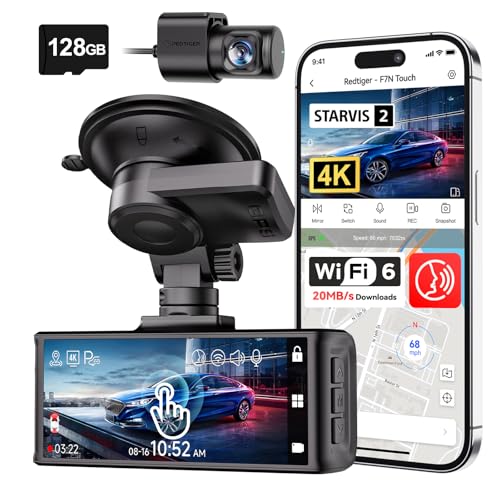

As an Amazon Associate we earn from qualifying purchases at no extra cost to you. Ratings are shown as listed on Amazon.
Compare the Features That Affect Real-World Evidence
Resolution is only one part of useful footage. A high-resolution front camera cannot compensate for a rear camera with a narrow view, a windshield reflection, or a recording gap when the car is parked. The figures below describe common configurations for these models; confirm the specification of the particular bundle, since recording modes and accessory requirements can vary.
| Model or setup | Front recording | Rear coverage | Best fit | Key ownership consideration |
|---|---|---|---|---|
| VIOFO A229 Plus, dual-channel | Up to 2K (1440p) | Up to 2K (1440p) | Drivers wanting detailed footage from both directions without prioritizing 4K | Check whether the box includes the rear camera and plan for a high-endurance microSD card. |
| VIOFO A229 Pro, dual-channel | Up to 4K (2160p) | Up to 2K (1440p) | Frequent highway drivers who want more front-scene detail | Higher-resolution recording uses storage quickly; heat and card quality still matter. |
| Garmin Dash Cam X310 with compatible rear camera | Up to 4K (2160p) | Depends on the paired rear-camera setup | Drivers who value a compact front camera and Garmin app features | Verify rear-camera compatibility and whether your preferred parking features need extra hardware. |
| Budget dual-channel kit, typically 1080p front and rear | 1080p (1920 × 1080) | 1080p (1920 × 1080) | Occasional drivers or buyers watching the total installed cost | Night detail, app reliability, and parking-mode options vary substantially by model. |
“4K” describes pixel count, not guaranteed license-plate readability. Exposure, lens focus, motion blur, bitrate, and the plate’s distance all affect the result. A plate moving quickly in low light may remain unreadable even in a 4K clip. Dual-channel recording can also reduce available resolution or frame rate compared with front-only mode, so check the simultaneous front-and-rear recording specifications.
Choose by Driving and Parking Situation
| Your situation | What to prioritize | Practical choice |
|---|---|---|
| Mostly daytime commuting, limited budget | Reliable 1080p or 2K recording on both channels; a reputable card | A basic dual-channel kit from an established dash-cam brand |
| Frequent highway or night driving | Good low-light sensor, controlled exposure, strong front detail, clear rear view | VIOFO A229 Plus or A229 Pro, selected according to your front-resolution needs |
| Street parking or frequent hit-and-runs | Buffered parking mode, hardwire compatibility, low-voltage cutoff | A dual-channel camera with documented parking recording and a correctly installed hardwire kit |
| Minimal installation and simple app access | Compact camera, stable phone connection, straightforward clip export | Garmin Dash Cam X310 with a compatible rear camera, after checking accessory costs |
If your car has a steeply sloped rear window, a large hatch, or dark factory glass, inspect the rear camera’s view before settling on a model. Some kits place the rear camera inside the cabin; others use an exterior-mounted camera better suited to certain vehicles. Tint and defroster lines can reduce clarity, and a camera pointed through glass cannot record as though it were outside.
Night Vision, Parking Mode, and App Connectivity
Night footage
Look for real sample clips recorded at night, not just a “night vision” label. A useful camera balances bright headlights against darker surroundings without turning every plate into a white blur. Wide dynamic range or HDR processing can help manage contrast, but results depend on implementation. Keep the lens clean, avoid placing the camera behind a heavily tinted windshield strip, and angle it so the dashboard is not reflected in the glass.
Parking recording
Parking mode can record continuously at a reduced rate, start recording when motion is detected, or save footage after an impact. Buffered recording is especially useful: it can preserve a short period from before the trigger, not only the seconds afterward. Parking surveillance generally requires a hardwire kit or an appropriate external power source. Use a kit with a low-voltage cutoff to reduce the risk of draining the vehicle’s starter battery; the cutoff is a safeguard, not a guarantee for an old or weak battery.
Phone apps
Wi-Fi connections are useful for checking framing and downloading a short clip, but large 4K files can take time to transfer. Before buying, check whether the app lets you browse, save, and share recordings without a cloud subscription. Many dash cams store footage locally on microSD, so Wi-Fi or Bluetooth should be treated as a convenience—not a substitute for confirming that the card is recording.
Storage, Setup, and Long-Term Ownership
For a rough capacity check, assume a dual-channel camera records about 20 megabits per second total. That is approximately 9 gigabytes per hour: 20 ÷ 8 × 3,600 seconds, with units converted to gigabytes. A 128GB card might therefore hold around 14 hours before overhead and reserved space; actual retention varies with bitrate, audio, resolution, and file management. Loop recording overwrites older unlocked clips, so save an important incident promptly.
- Buy the right card: use a high-endurance microSD card that meets the camera maker’s capacity and speed requirements. Continuous rewriting wears cards, so replace one if the camera reports errors or recordings become inconsistent.
- Route the rear cable carefully: run it along trim and away from airbags. Do not tuck wiring across an airbag deployment path; have an installer handle uncertain routes.
- Check framing after installation: keep the front lens clear of wipers and the rear lens aimed through a useful part of the window. Confirm both channels appear in a test recording.
- Review and maintain: wipe lenses with a soft cloth, check recordings periodically, and format the card in the camera when the manufacturer recommends it. Heat, vibration, and repeated overwriting are common causes of failures.
The camera is only one part of the cost. General market pricing varies by sales, region, and bundle, but budget dual-channel kits often fall around $80–$180; better-equipped 2K systems around $180–$300; and premium 4K dual-channel setups around $250–$450 or more. Add the cost of a high-endurance card, hardwire kit, and professional installation if needed. A low-priced camera without the required rear unit or parking-power accessories may not be the cheaper complete setup.
Which One Should You Buy?
Choose a dual-channel 1080p kit if you mainly need basic documentation and want to keep the full setup affordable. Choose the VIOFO A229 Plus if balanced front-and-rear detail matters more than a 4K front image. Step up to the A229 Pro if you drive often at speed and want extra front-scene resolution, while accepting greater storage demands. Consider the Garmin Dash Cam X310 with a compatible rear camera if compact design and its app ecosystem suit you, but confirm the rear-camera and parking-mode costs before comparing totals.
Whichever you choose, prioritize simultaneous front-and-rear recording, credible night footage, reliable power, and a careful installation. Those details are more likely to determine whether the best dash cams front and rear deliver useful evidence than a headline resolution alone.